 EveryMemory
Memory Quiz for Adults
A memory quiz for adults checks everyday recall - names, lists, where you put things - as a non-medical baseline you track against your own past results.
Part of the guide: Understanding Memory Loss and Forgetfulness: A Calm, Reassuring Guide →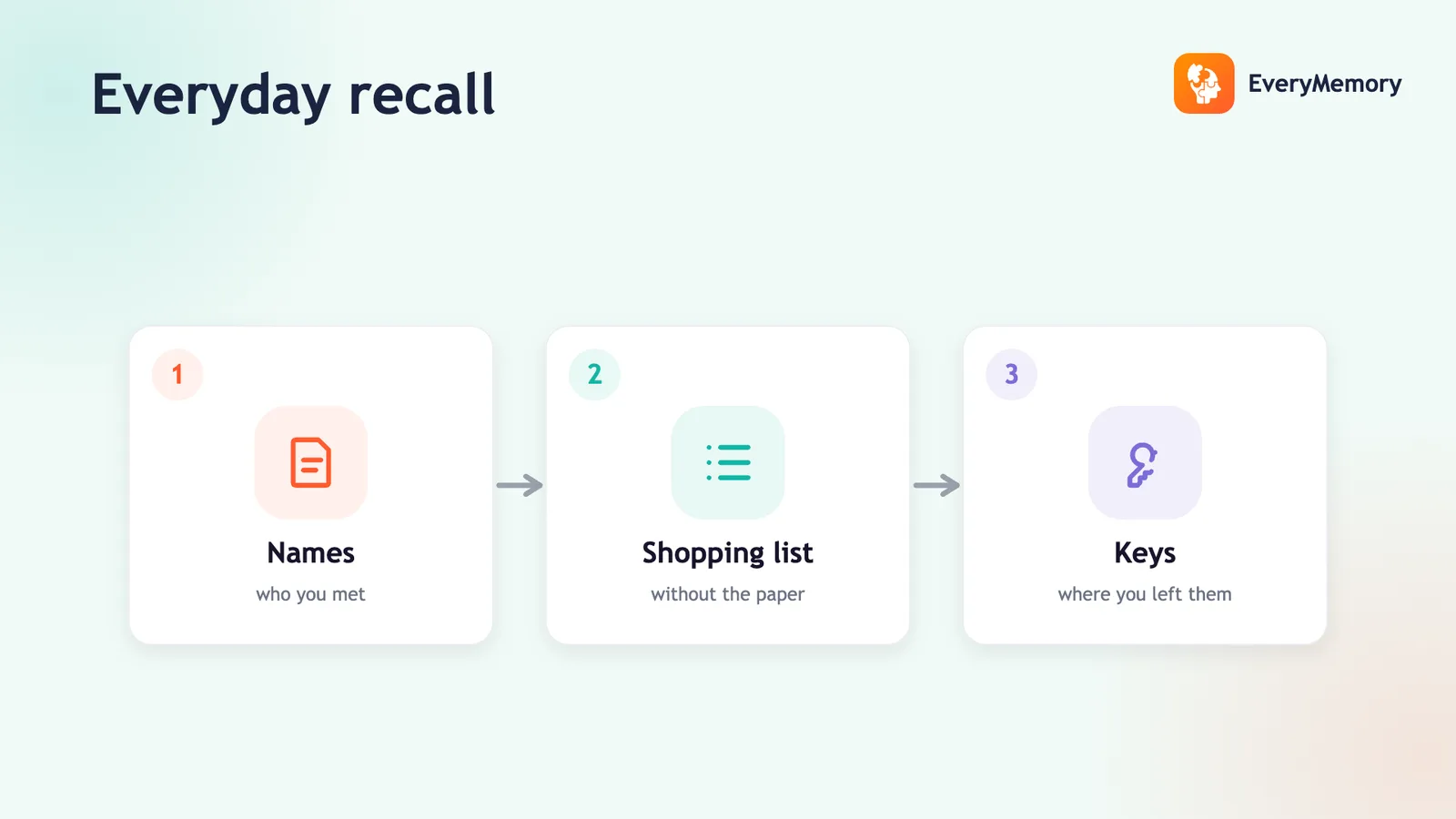
⚡ Quick answer
A memory quiz for adults is a short, non-medical check of everyday recall - names, lists, positions, and brief sequences. It gives a snapshot of your short-term and working memory and attention. It can't diagnose anything. Take it rested and undistracted, expect normal day-to-day variation, and track your own score over time rather than comparing to other people.
Key takeaways
- Adult quizzes lean on everyday recall: names, lists, short spans, and remembering to do things.
- Some slowing of recall is a normal part of aging while knowledge usually holds.
- Take it rested, not at the end of a hard day, and expect day-to-day variation.
- Persistent changes affecting daily life warrant a professional, not a quiz.
A memory quiz for adults usually checks the everyday stuff that adults actually notice slipping: names, short lists, where you parked, the thing you walked into the room to do.
Here's what an adult-focused quiz covers, what counts as normal across the decades, and how to take one without spooking yourself over a tired day.
What an adult memory quiz checks
It tends to lean on practical, daily-life recall rather than abstract puzzles:
- Names and faces - meet new people, recall them later. The most common everyday complaint.
- Lists - a shopping list or set of errands, recalled after a short delay.
- Short-term span - a phone number or code held just long enough to use.
- Prospective memory - remembering to do a thing later (take the meds, send the email).
Underneath, these tap short-term memory, working memory, and attention - the same systems a general memory quiz measures, framed around adult routines.
What's normal as an adult
Some changes with age are normal and not a cause for alarm. Processing speed and the speed of retrieval often dip gradually from your 30s onward, while vocabulary and well-learned knowledge usually hold or grow. "It's on the tip of my tongue" and walking into a room and forgetting why are near-universal and not signs of anything wrong. Sleep, stress, busyness, and doing three things at once explain far more everyday lapses than age does.
How to take it fairly
Don't quiz yourself at 11pm after a hard day and then panic at the score. Take it rested, quiet, phone away, and do a practice round first. Retake it under the same conditions every couple of weeks - your own trend is the signal, not a single bad night (reading your progress).
When to look past the quiz
A quiz is for interest, not diagnosis. If memory changes are persistent, getting worse, and interfering with work or daily life - missing important obligations, getting lost in familiar places, repeating questions - that's a reason to speak with a qualified healthcare professional. A quiz can't reassure or diagnose; a professional can assess properly.
⚠ When to talk to a professional
A memory quiz for adults is a non-medical, for-interest self-check, not a diagnosis. Some forgetting and slower recall is a normal part of aging. If memory changes are persistent and affect daily life, speak with a qualified healthcare professional.