EveryMemory
A Simple Mental Fitness Routine
A good mental fitness routine is small enough to keep - a few minutes of skill practice wrapped in the everyday basics - and built to track against your own past, not anyone else's.
Part of the guide: How to Keep Your Brain Healthy: A Complete Lifestyle Guide →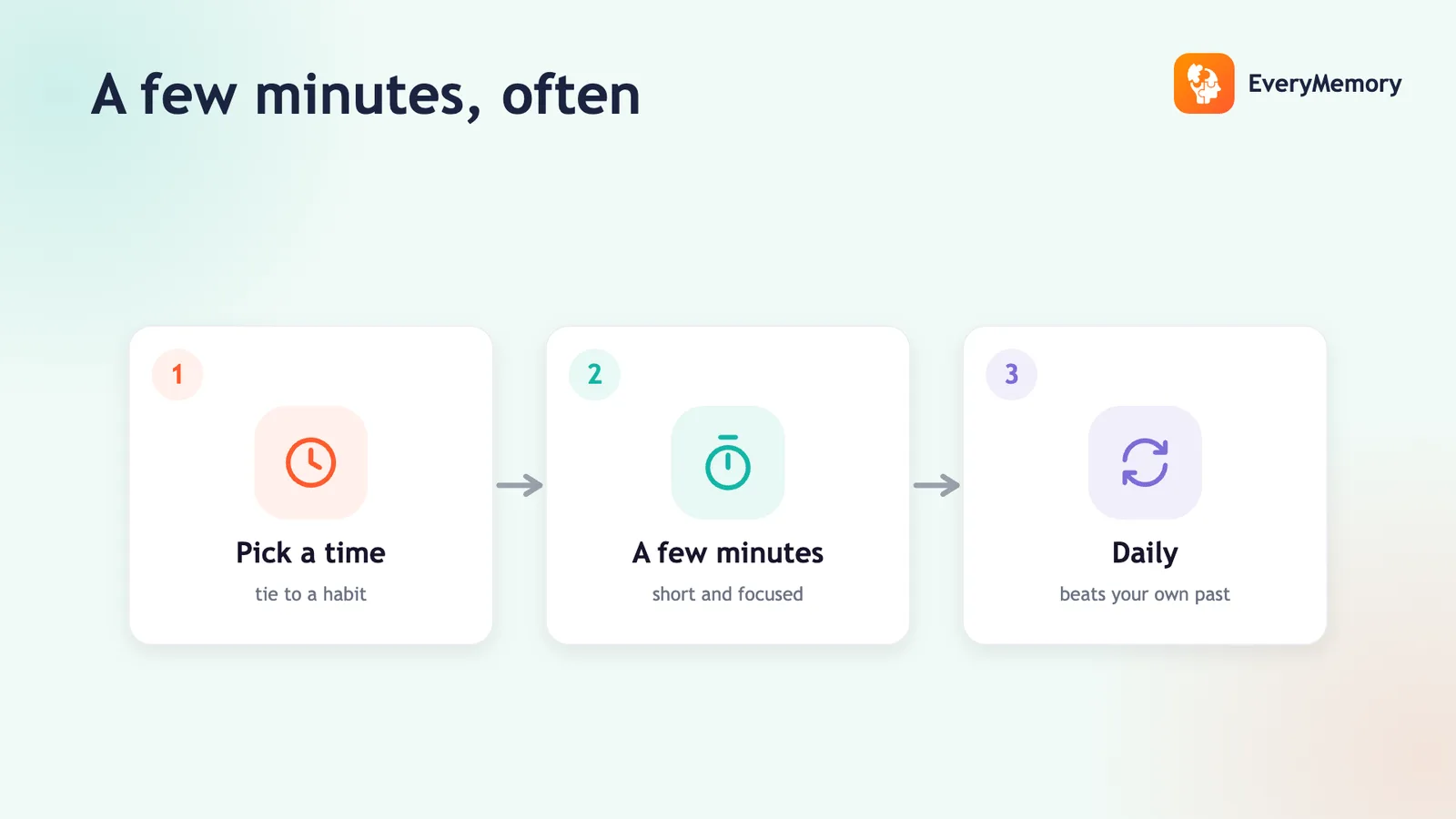
⚡ Quick answer
A simple mental fitness routine pairs a few minutes of daily skill practice - a focus or memory exercise - with the everyday basics: movement, daylight, learning one small thing, and good sleep. Keep it small enough to repeat, anchor it to existing habits, and track your own trend over weeks rather than comparing to anyone else.
Key takeaways
- The best routine is small enough to repeat - a few minutes of practice plus the basics.
- Little and often beats long and rare; support the conditions practice runs on.
- Add a light weekly layer for variety and a self-relative checkpoint.
- Anchor each piece to an existing habit so it sticks; rest days are fine.
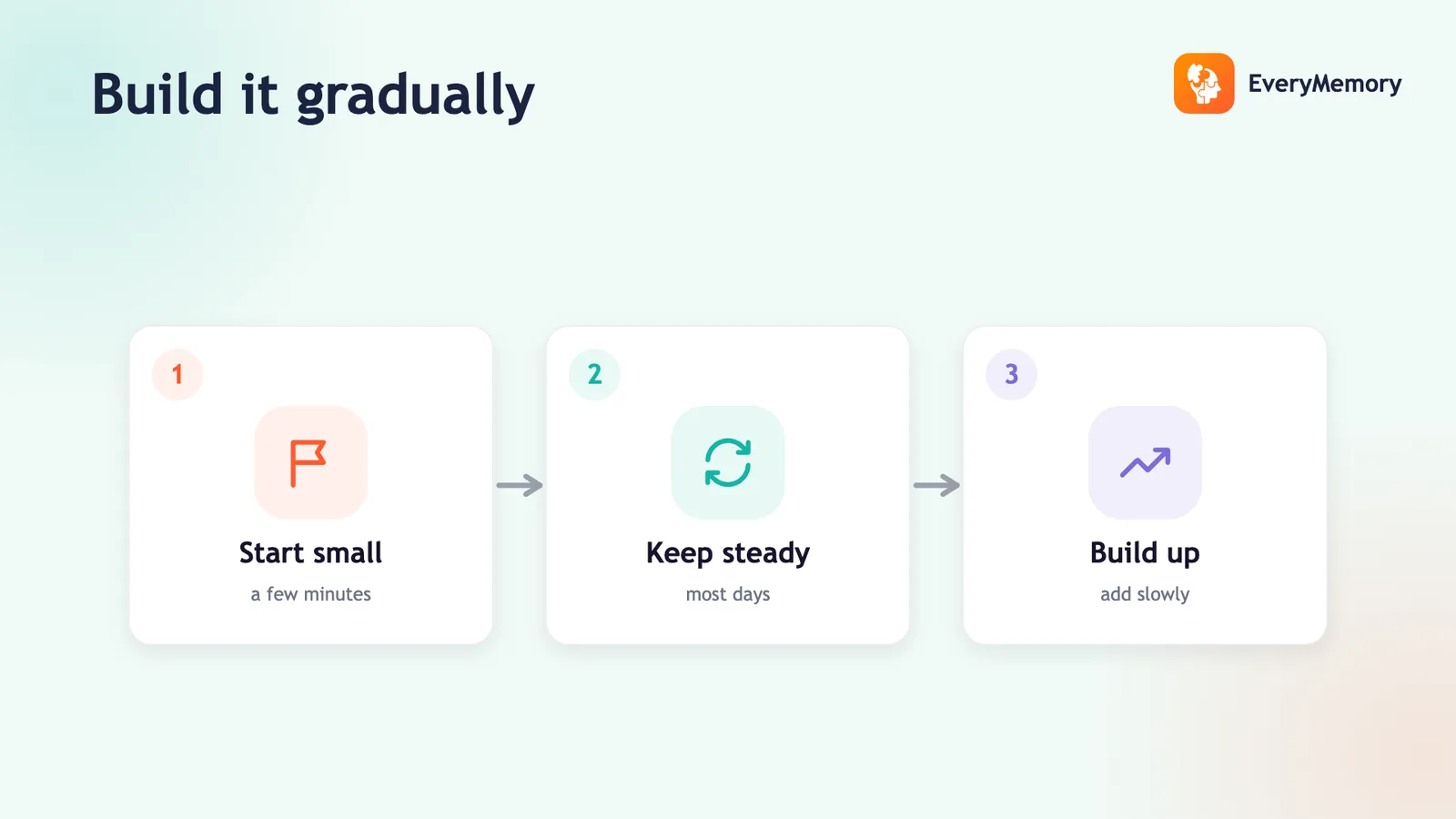
The best mental fitness routine is the one you'll actually repeat. Ambitious plans collapse within a week; a small, anchored routine survives. So this is deliberately modest - a few minutes of skill practice wrapped in the everyday basics that keep your mind well supplied.
It's built on two ideas from mental fitness generally: practise the trainable skills a little and often, and protect the conditions they run on. Get both turning over daily and the routine quietly does its work.
The principles behind it
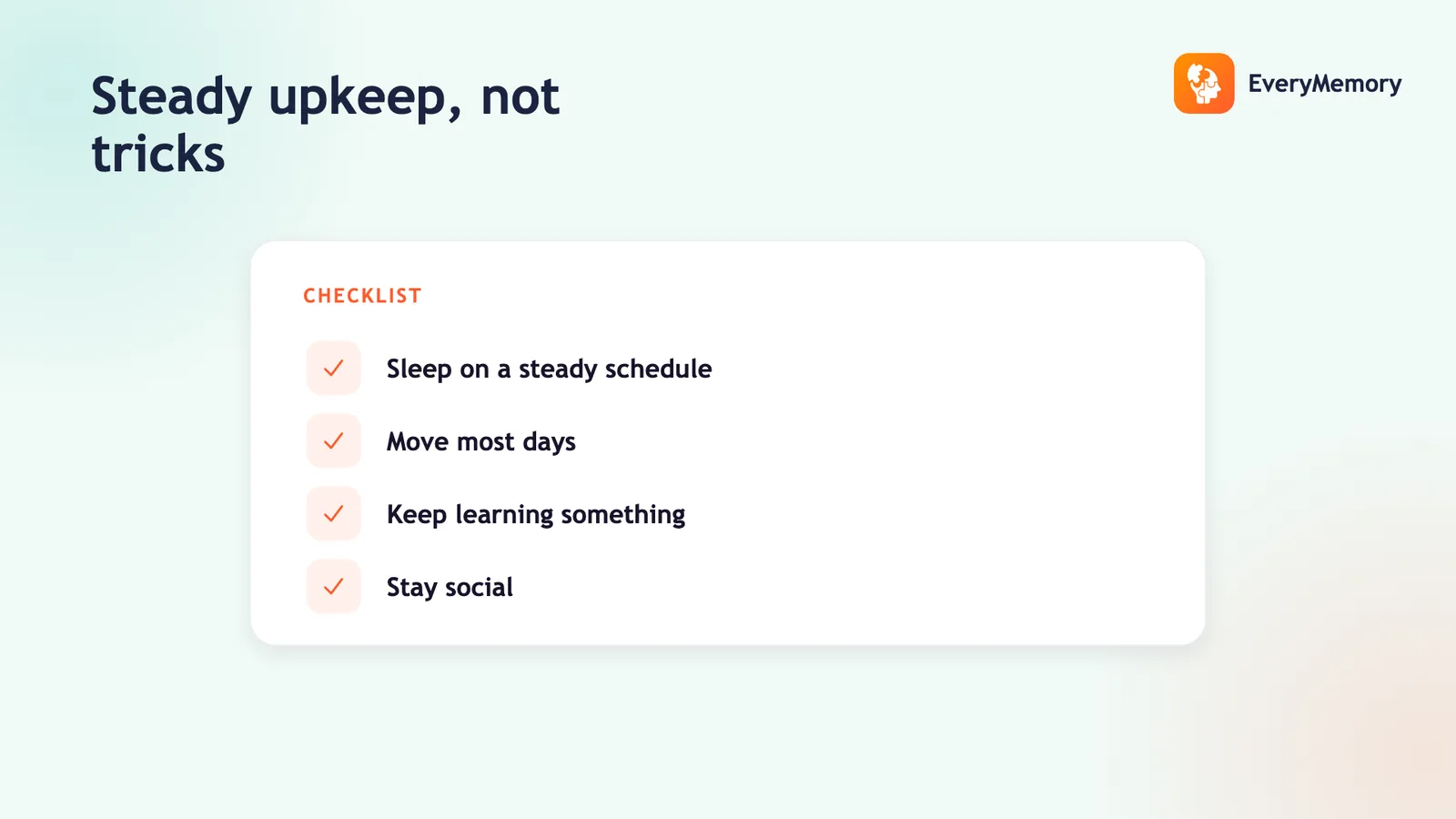
Two rules keep a routine effective. First, little and often beats long and rare - five focused minutes most days outperforms an hour once a week. Second, support the conditions: practice does little on no sleep, so the basics aren't optional extras, they're part of the routine.
A third, honest rule: keep your expectations sane. This sharpens the skills you practise and supports everyday focus, not your IQ. For the foundations, see mental fitness.
A daily core
Here's a compact daily core you can do in well under fifteen minutes total. The point is repeatability, so trim it to fit your day rather than dropping it entirely on busy ones.
- Five minutes of one focus or memory exercise, unhurried.
- A few minutes of movement and daylight, ideally earlier in the day.
- Learn one small new thing and use it once.
- One real conversation, however brief.
- Protect a steady wind-down and wake-up time.
A weekly layer
On top of the daily core, a light weekly layer adds variety and a self-relative checkpoint - the variety keeps practice from going stale, and the checkpoint shows whether things are steady.
| Weekly element | Why it's there |
|---|---|
| A new or harder skill to dabble in | Adds mild challenge and novelty |
| A longer walk or active session | Banks the movement benefit |
| A social activity | Real cognitive exercise plus mood |
| The same short self-check, same conditions | Tracks your own trend |
| A rest day from formal practice | Recovery matters, as in any training |
Make it stick
Anchor each piece to something you already do - practice after morning coffee, the walk after lunch, the wind-down after dinner. Habits riding on existing ones survive; free-floating intentions don't. Start with just the daily core and add the weekly layer once it's automatic.
Use the weekly self-check as a gentle trend line, not a daily verdict - and never as a comparison with strangers. For making practice stick, see how to make brain training a habit; for reading the trend, see how to track your memory.
⚠ When to talk to a professional
This is a general wellbeing routine, not medical advice or a treatment for any condition, and the self-check is self-relative, not a diagnosis. If you have a genuine or persistent concern about your memory or thinking, please speak with a doctor or qualified professional.