 EveryMemory
How to Stay Mentally Sharp
Staying mentally sharp is less about any single trick and more about steady upkeep - protecting attention, keeping your skills in use, and looking after the body your mind runs on.
Part of the guide: How to Keep Your Brain Healthy: A Complete Lifestyle Guide →
⚡ Quick answer
To stay mentally sharp, protect your attention by single-tasking and cutting needless interruptions, keep your skills in active use with mild challenge and learning, and look after the basics - sleep, movement, daylight, and managing stress. Sharpness rises and falls with these day to day, so steady upkeep matters far more than any one-off effort.
Key takeaways
- Most felt dullness is fractured attention - single-task and cut needless interruptions.
- Keep skills in active use with mild challenge and learning.
- Sharpness is downstream of sleep, movement, daylight, and managing stress.
- Consistency beats intensity; a persistent, worsening fog is worth a doctor's view.
Mental sharpness is the everyday feeling of a mind that's awake and responsive - quick to focus, ready to recall, unhurried under pressure. It isn't a fixed trait; it rises and falls with sleep, stress, and how engaged you are. That's the good news, because it means daily choices move it.
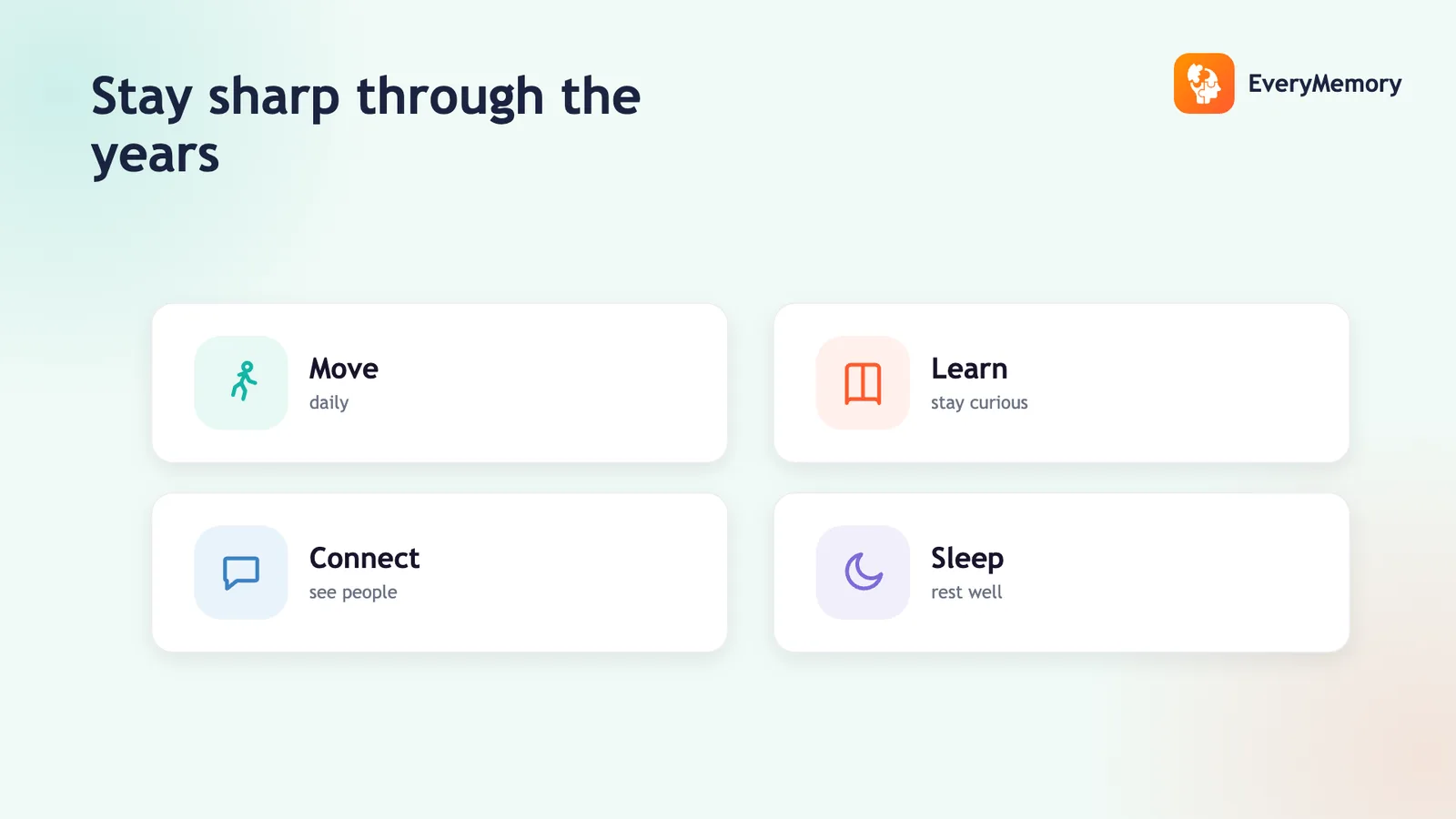
What keeps you sharp is upkeep, not heroics. A few protected habits - guarding your attention, keeping your skills in play, and looking after the body your mind runs on - do far more than the occasional brain-training binge.
Protect your attention
Most felt dullness is really fractured attention. Constant notifications, half-finished tasks, and background multitasking leave your mind running thin, so nothing lands cleanly. Guarding attention is the highest-leverage thing you can do for everyday sharpness.
Single-task on purpose, batch interruptions, and give one thing your full focus before the next. The difference is immediate - the same brain, simply less divided. For practical steps, see how to make brain training a habit.
Keep your skills in use
Skills you stop using get rusty, so staying mentally engaged keeps sharpness from drifting. The key is mild challenge and variety rather than the same easy routine - a little stretch is what keeps the edge.
Learn small new things, vary your routes and methods, take the slightly harder option now and then. A short daily skill practice helps too, as one strand among others. See daily brain exercises for ideas.
Look after the body your mind runs on
Sharpness is downstream of the basics. Tired, sedentary, stressed, or running on poor fuel, even a capable mind feels foggy. These levers are unglamorous but they do the heavy lifting.
| Basic | Effect on sharpness |
|---|---|
| Good sleep | Restores attention; clears the fog |
| Regular movement | Lifts focus, mood, and energy |
| Daylight, especially morning | Steadies your body clock and alertness |
| Managing stress | Frees attention from the worry loop |
| Short breaks | Stop attention from draining to empty |
Make it a steady habit
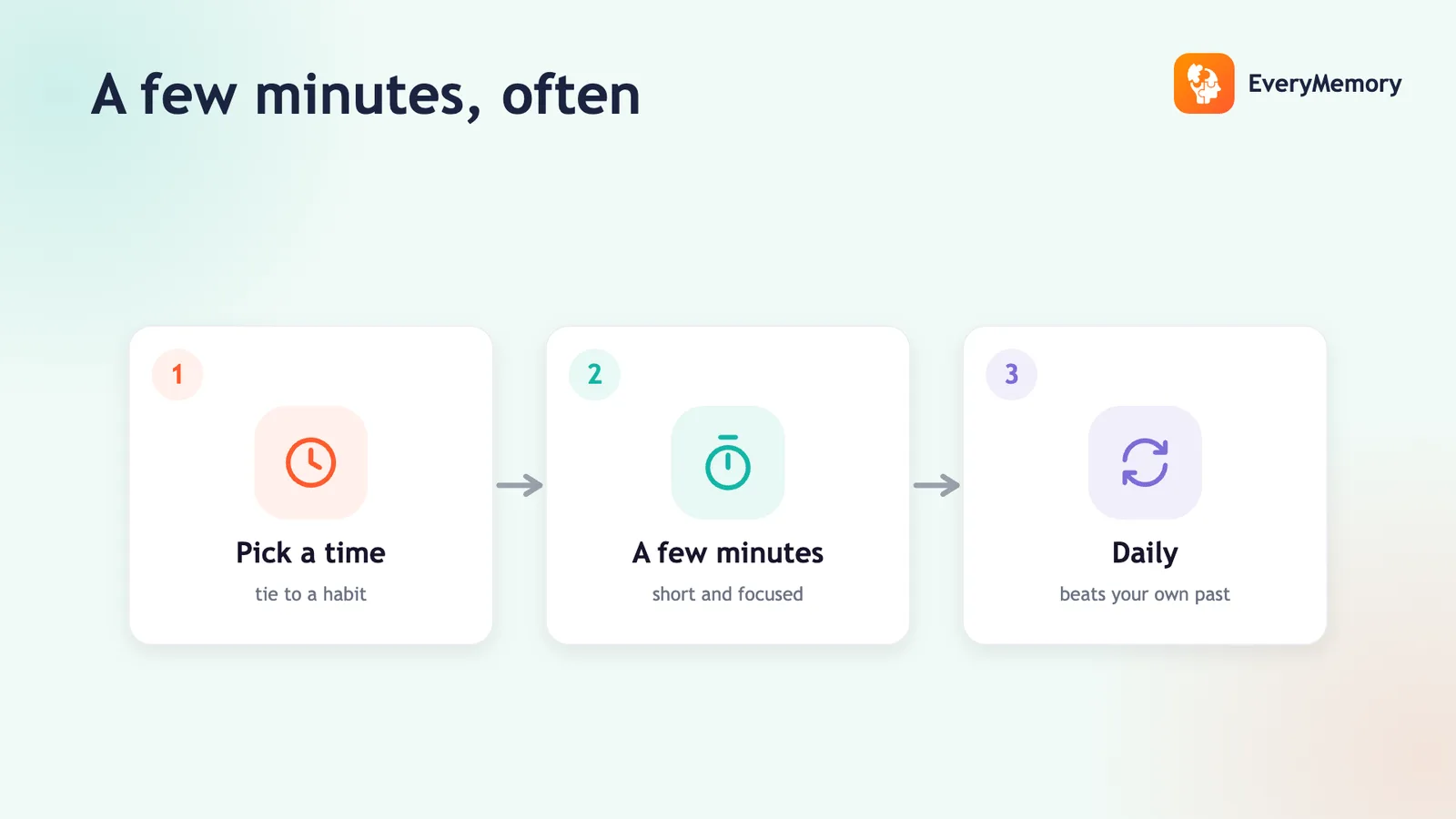
Sharpness comes from consistency, not intensity. A modest routine you keep - a daily walk, a short skill practice, a fixed wake time, single-tasking by default - beats an ambitious plan you abandon. Anchor new habits to things you already do so they stick.
Keep your expectations honest, too: this supports everyday focus and recall, not a leap in general intelligence. And if you notice a persistent, worsening dullness that everyday upkeep doesn't touch, that's worth raising with a doctor. For tracking your own trend, see how to track your memory.
✅ Try this today - A daily sharpness mini-routine
A small set that touches attention, skills, and the basics.
- Pick one task and give it your full focus for a single block, no multitasking.
- Do one short skill practice - five minutes of a focus or memory exercise.
- Get outside for daylight and a brisk few minutes of movement.
- Take real, screen-free micro-breaks between work blocks.
- Protect a steady wake-up time to bank tomorrow's attention.
⚠ When to talk to a professional
This is general wellbeing information, not medical advice and not a treatment for any condition. If you notice a persistent or worsening change in your mental sharpness that everyday upkeep doesn't help, please speak with a doctor or qualified professional.