 EveryMemory
Mental Fitness: What It Is and How to Build It
Mental fitness is a mix of trainable skills like attention and working memory plus the everyday habits that keep them well supplied - and you build it the way you build any fitness, gradually.
Part of the guide: How to Keep Your Brain Healthy: A Complete Lifestyle Guide →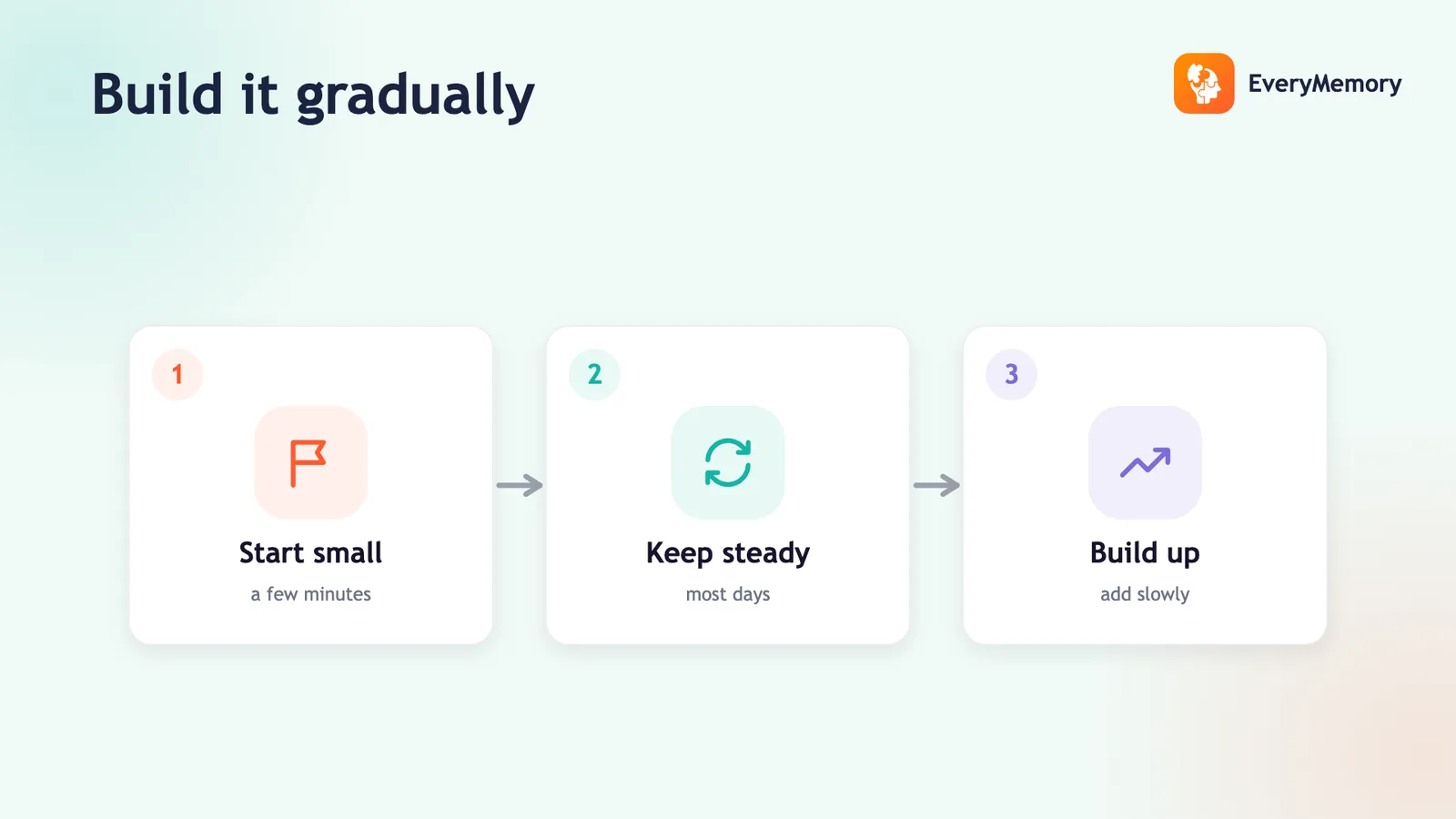
⚡ Quick answer
Mental fitness is the everyday sharpness of your thinking - built from trainable skills like attention and working memory plus supporting habits such as sleep, movement, social contact, and novelty. You build it the way you build physical fitness: small, consistent practice and good conditions, tracked against your own past rather than anyone else's.
Key takeaways
- Mental fitness has two halves: trainable skills (attention, working memory) and supporting habits (sleep, movement, novelty, connection).
- Build it like physical fitness - small, consistent practice plus good conditions.
- Practising a skill mostly improves that skill, not your IQ or unrelated abilities.
- Track your own trend over weeks, never a benchmark against strangers.
Mental fitness is a useful, plain idea: the everyday sharpness you bring to thinking, focusing, and remembering. Like physical fitness, it has two parts - skills you can practise, such as holding things in mind and steering your attention, and the conditions that keep those skills well fuelled, such as sleep, movement, and connection. Neither half does much alone.
It isn't a fixed score you're born with or a number to chase. It's a state you tend, and it shifts with how you live and what you practise. That makes it practical: small, repeatable things move it, and you don't need to overhaul your life to feel the difference.
The two halves of mental fitness
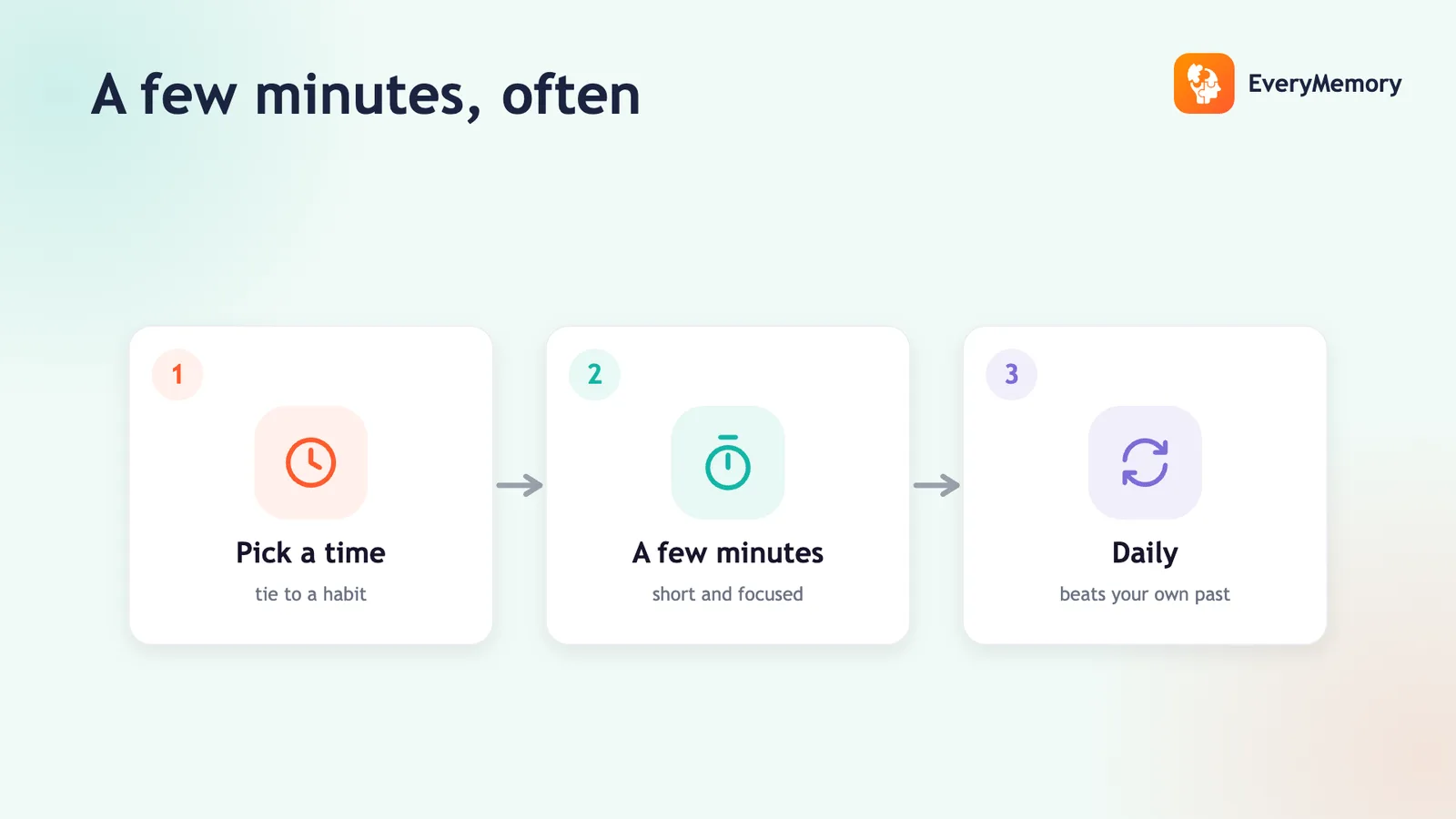
The first half is trainable skill: directing attention, holding several things in mind at once, switching between tasks, and recalling on cue. These respond to practice the way muscles respond to use - a little, often, beats a lot, rarely.
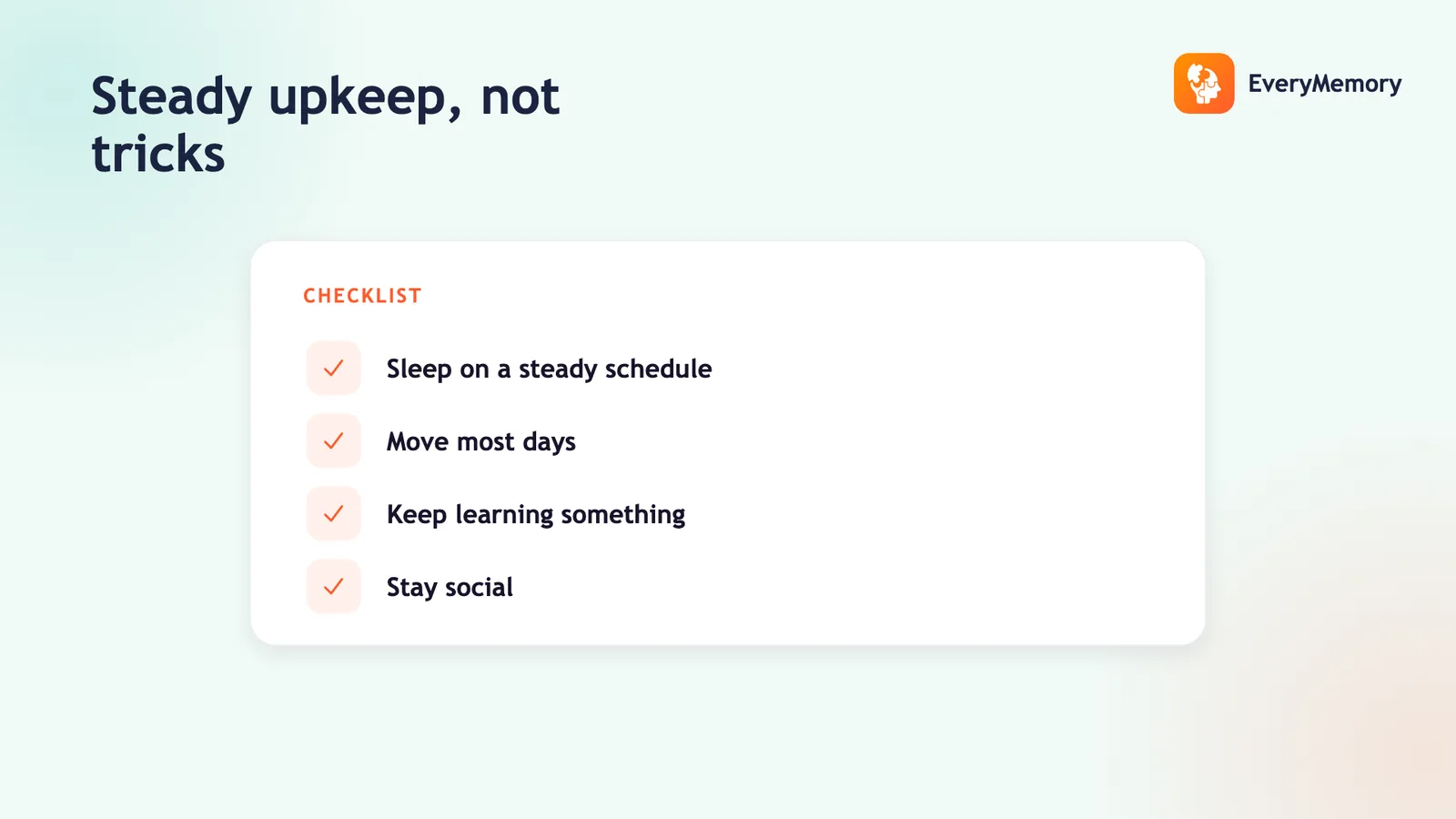
The second half is the conditions those skills run on. Sleep restores attention and files the day's learning, movement and daylight lift focus, social contact and novelty keep the mind engaged. You can practise hard, but if you're short on sleep the skills have nothing to work with. For the habit side, see habits for a healthy brain.
What actually builds it
No single thing makes you mentally fit; a stack of small, repeatable ones does. The list below is unglamorous on purpose - the point is what you'll keep doing.
- Practise attention and working memory a little each day rather than in rare long bursts.
- Protect sleep - it restores attention and consolidates what you learned.
- Move your body and get daylight; both reliably sharpen focus.
- Seek mild novelty - new routes, recipes, skills - to keep the mind engaged.
- Stay socially connected; conversation is genuine cognitive exercise.
Be honest about what it does
Practising a skill mostly makes you better at that skill and things close to it. Getting sharper at a focus game won't raise your IQ or transform unrelated abilities - the benefit is real but specific, plus the steady habit and the conditions you've improved around it.
Held to that honest standard, mental fitness is still well worth building. Sharper everyday attention means fewer dropped details and smoother recall, and the supporting habits help your whole day. Just skip anyone promising a wholesale upgrade. For the broader idea, see keep your brain active.
Track your own trend, not a benchmark
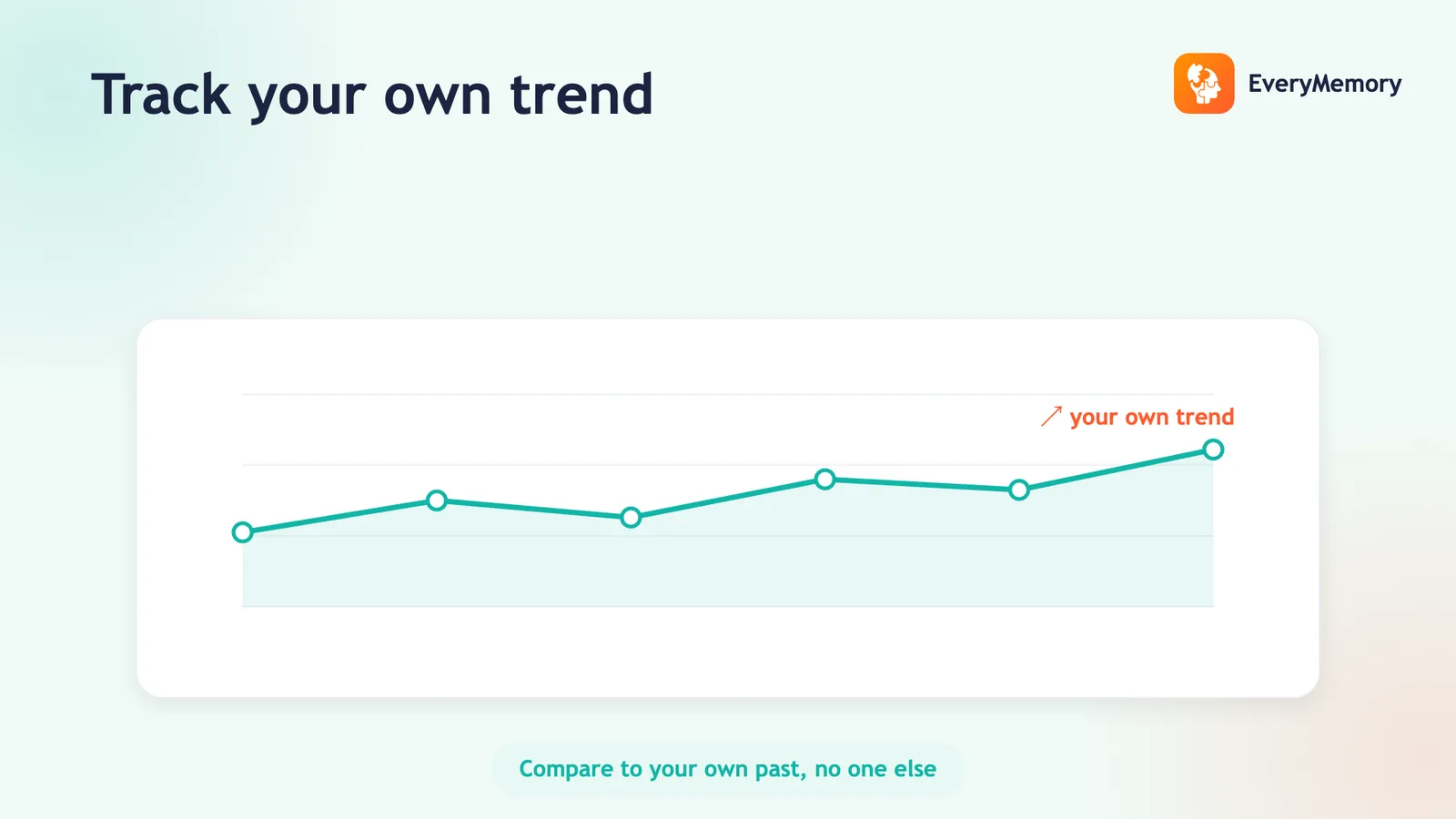
Because mental fitness shifts with sleep, stress, and practice, a single snapshot tells you little. What's useful is your own trend over weeks - checked the same way, under similar conditions - so you can see whether your steady habits are paying off.
Comparing yourself to strangers is the wrong move; everyone starts from a different place and tests on different days. The honest yardstick is you, last month. A simple repeatable self-check makes that visible - see how to track your memory.
✅ Try this today - A five-minute mental-fitness mini-routine
A small daily set that touches both halves - skill and conditions.
- Do one short focus or memory exercise - five minutes is plenty.
- Step outside for a few minutes of daylight and movement.
- Learn one tiny new thing: a word, a route, a fact.
- Have one real conversation, even a short one.
- Keep a steady wake-up time tonight to protect tomorrow's attention.
⚠ When to talk to a professional
This is general wellbeing information, not medical advice, and mental fitness is not a clinical measure or a treatment for any condition. If you have a genuine or persistent concern about your thinking or memory, please speak with a doctor or qualified professional.