 EveryMemory
The MIND Diet for Brain Health: A Beginner's Guide
The MIND diet blends Mediterranean and DASH eating into a brain-focused pattern linked with better cognitive outcomes - here is how it works and how to start.
Part of the guide: How to Keep Your Brain Healthy: A Complete Lifestyle Guide →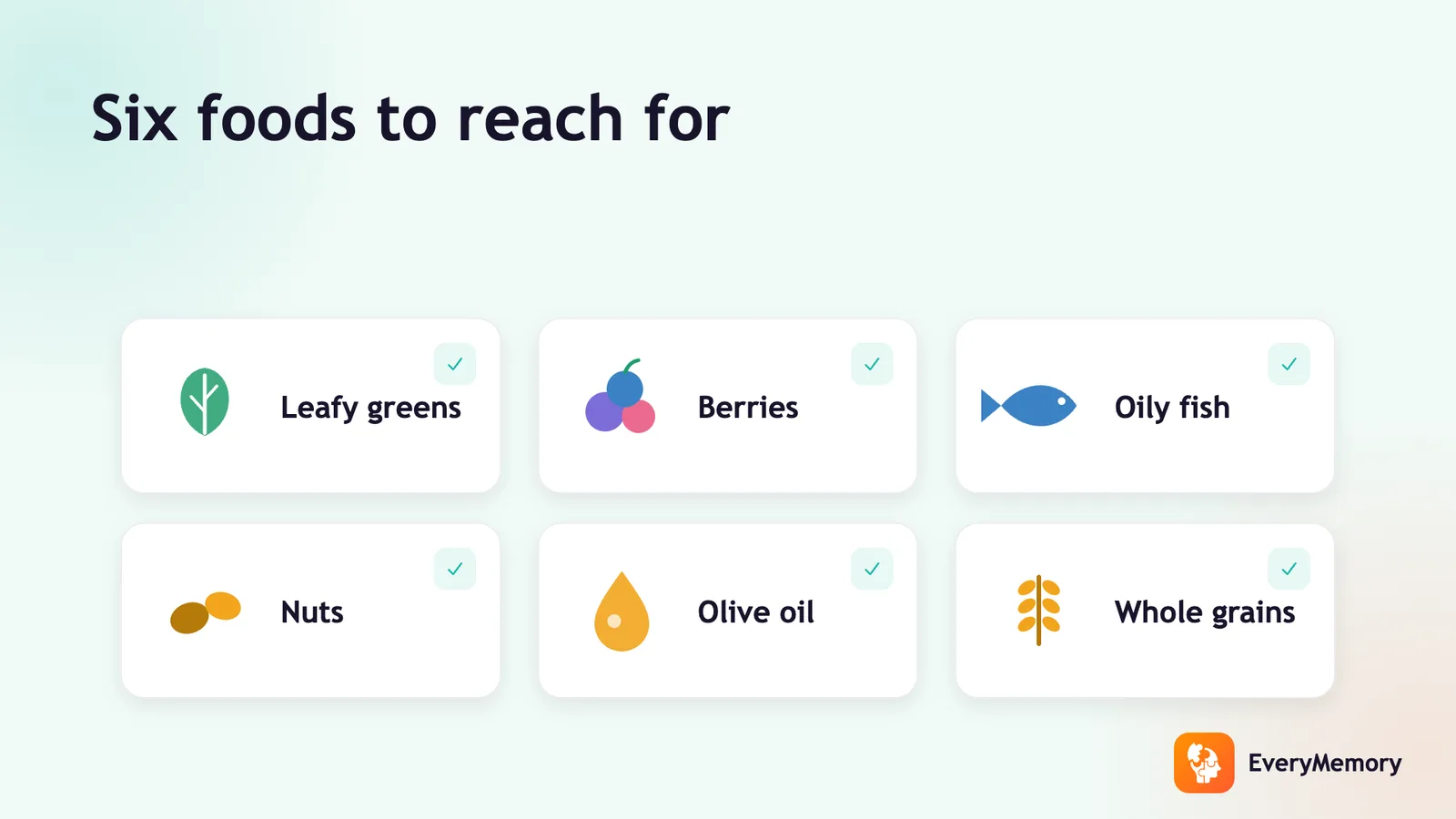
⚡ Quick answer
The MIND diet (Mediterranean-DASH Intervention for Neurodegenerative Delay) emphasises leafy greens, vegetables, berries, nuts, whole grains, fish, poultry, beans, and olive oil, while limiting red meat, butter, cheese, fried food, and sweets. Research associates closer adherence with better performance on memory and thinking tasks over time, though results from clinical trials are mixed. It is one of the most studied dietary patterns for brain wellness.
Key takeaways
- The MIND diet blends Mediterranean and DASH eating patterns with a focus on foods specifically studied in cognitive ageing research.
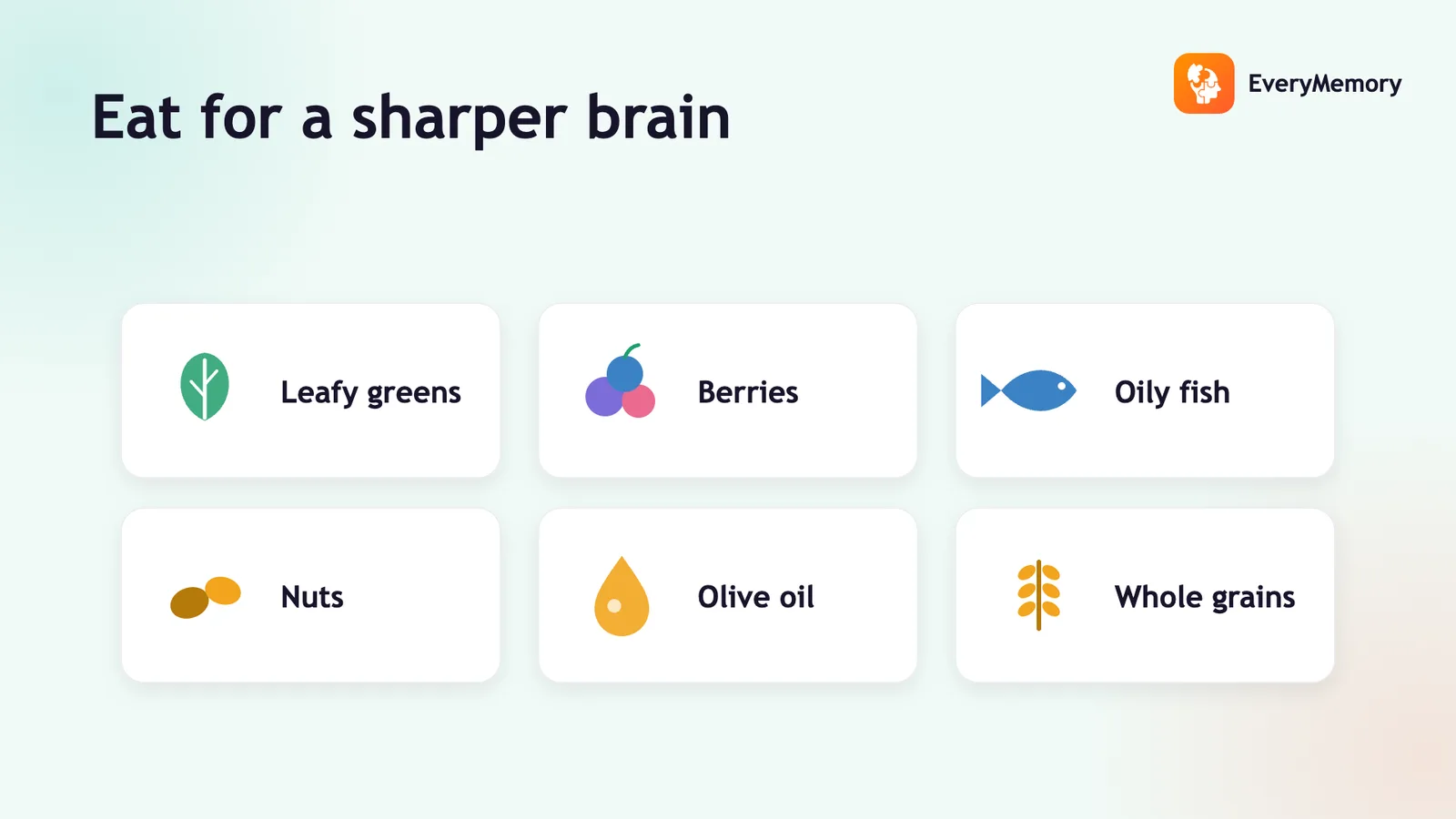
- It emphasises leafy greens, berries, nuts, fish, beans, whole grains, and olive oil, while limiting red meat, butter, cheese, fried food, and sweets.
- Observational studies link closer adherence with better memory and thinking scores; clinical trial results are more mixed, and science is still developing.
- Even partial adherence appears more beneficial than no adherence - small, consistent changes are a sensible starting point.
The MIND diet is a way of eating designed specifically with brain health in mind. It was developed by nutritional epidemiologist Martha Clare Morris and her colleagues at Rush University in 2015, drawing on the best available evidence about which foods and nutrients appear most closely linked with how the brain ages. Rather than starting from scratch, it takes two well-studied eating patterns - the Mediterranean diet and the DASH diet - and refines them around the foods that show up most consistently in brain health research.
If the word 'diet' makes you picture restrictions and calorie counts, the MIND approach is a little different. There is no counting, no food group is banned entirely, and the research actually suggests that even partial adherence may support better outcomes than eating nothing like it at all. This guide explains what the pattern involves, what the evidence shows, and five practical steps to ease into it.
What makes the MIND diet different from Mediterranean or DASH
Both the Mediterranean and DASH diets have broad health benefits - cardiovascular, metabolic, and otherwise. The MIND diet (full name: Mediterranean-DASH Intervention for Neurodegenerative Delay) narrows the focus. It keeps the core of both patterns - plenty of plants, healthy fats, fish, and whole grains - but adjusts the specifics based on which foods appeared most consistently relevant in studies of cognitive ageing.
The most notable adjustments: it elevates leafy green vegetables and berries to a much more prominent role than either parent diet does, and it draws a clearer line around five food groups linked with less favourable outcomes - red meat, butter and margarine, cheese, fried or fast food, and pastries and sweets. Our broader article on best foods for memory and brain health covers the wider eating-pattern evidence if you want the bigger picture.
Foods the MIND diet emphasises
The pattern centres on ten food groups. Each has a loosely defined target frequency, though the general principle matters more than hitting every number precisely.
- Leafy green vegetables - spinach, kale, collard greens, Swiss chard, romaine: at least six servings per week. Researchers have singled these out for their folate, vitamin K, and lutein content.
- Other vegetables - peppers, broccoli, carrots, tomatoes, courgette: at least one serving daily, on top of the leafy greens.
- Berries - blueberries, strawberries, blackberries, raspberries: two or more servings per week. Berries are the only fruit singled out specifically, valued for their flavonoid and antioxidant content.
- Nuts - walnuts, almonds, pistachios, cashews: five or more servings per week. Walnuts are frequently highlighted for their omega-3 profile.
- Whole grains - oats, brown rice, quinoa, whole wheat bread or pasta: three or more servings daily.
- Fish - especially oily fish such as salmon, sardines, mackerel, or trout: at least once a week, ideally twice.
- Poultry - chicken or turkey: at least twice per week.
- Beans and legumes - lentils, chickpeas, black beans, kidney beans: four or more meals per week.
- Olive oil - as the primary cooking and dressing fat, with extra-virgin varieties most often recommended.
Foods the MIND diet limits
The MIND diet does not eliminate any food group, but it sets loose upper limits on five categories that appeared less favourable in the research Morris and her colleagues reviewed.
- Red meat (beef, pork, lamb): fewer than four servings per week.
- Butter and margarine: less than one tablespoon daily; olive oil used in its place.
- Cheese: less than one serving per week.
- Fried or fast food: less than one serving per week.
- Pastries and sweets: fewer than five servings per week.
These are guidelines, not rigid rules. The emphasis is on a consistent overall direction rather than eliminating any single item from your life.
What the research suggests - and where it's mixed
The original 2015 observational study by Morris and colleagues followed almost 1,000 older adults over roughly four years and found that those with the highest MIND diet scores showed noticeably slower cognitive decline than those with the lowest - and that even moderate adherence was associated with better outcomes than low adherence.
A comprehensive 2024 systematic review drawing on 39 studies across 14 countries found the MIND diet showed significant promise for global cognition, memory, and executive function in observational data. Randomised controlled trial evidence is more nuanced: a large 2023 trial in the New England Journal of Medicine found that both a MIND diet group and a healthy-eating control group improved, with smaller differences between them than earlier observational studies had suggested. The science is still developing, and you can explore the key studies via our Library.
How it fits alongside other lifestyle habits
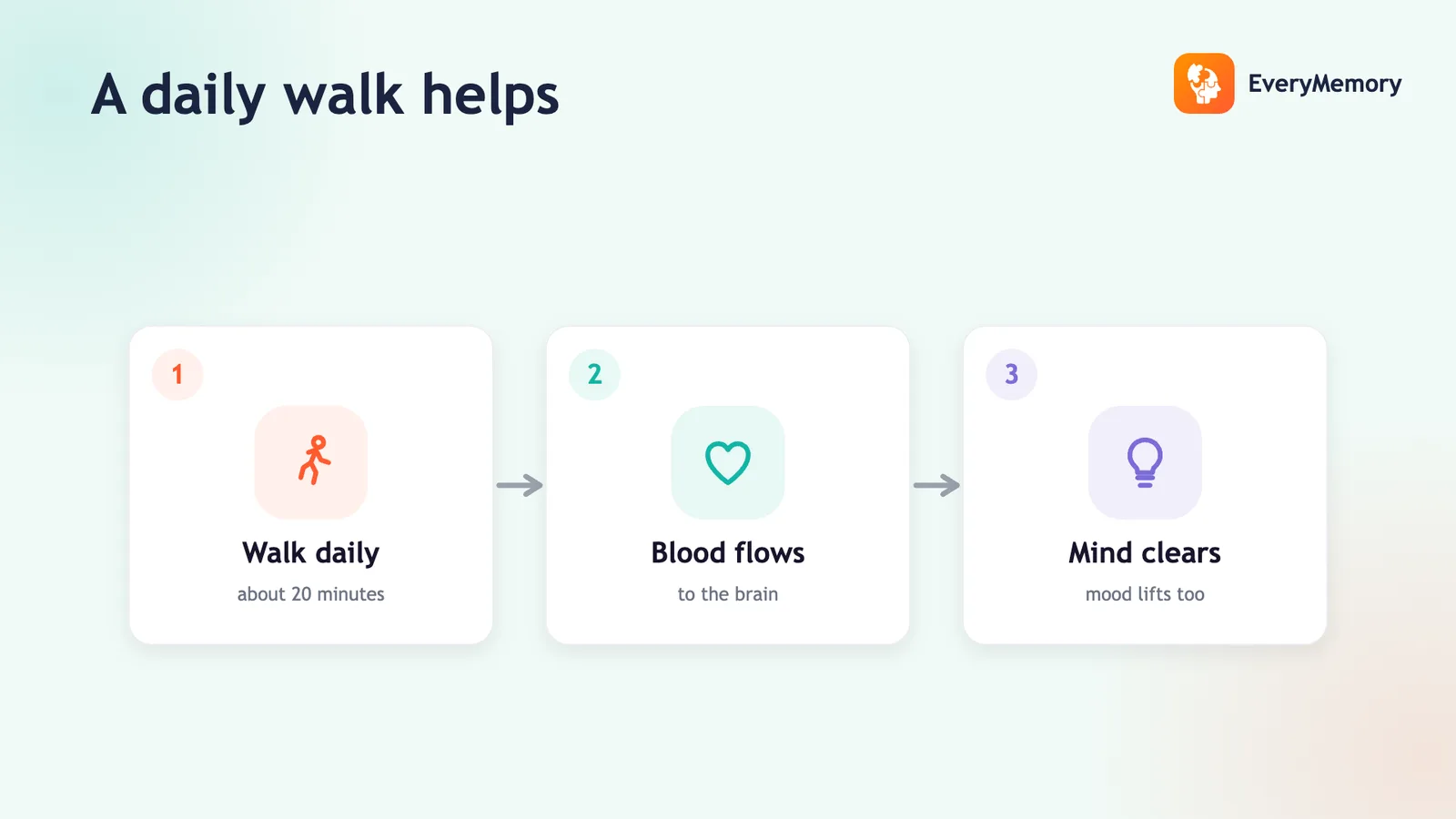
Diet rarely works in isolation. Research on brain wellness consistently highlights physical activity alongside dietary patterns - our piece on walking and brain health looks at one of the most accessible habits you can add alongside a dietary shift.
Hydration matters too: even mild under-hydration affects concentration and recall in older adults, and eating more whole grains, vegetables, and legumes makes staying well hydrated more important. Our article on hydration and focus in older adults has the details. Think of the MIND diet as one reliable pillar of a consistent daily approach, not a standalone fix.
✅ Try this today - 5 First Steps Into the MIND Diet
You do not need to overhaul your kitchen overnight. These five changes build the pattern gradually.
- Swap one lunch or dinner this week to include a large handful of leafy greens - add spinach to eggs, stir kale into soup, or start a meal with a simple salad.
- Add berries to your breakfast three times this week: a handful of blueberries or strawberries stirred into oats or yoghurt is all it takes.
- Replace butter with olive oil for cooking at least five days in a row - drizzle it on vegetables, use it to sauté onions, or mix it into a simple dressing.
- Swap one red-meat meal per week for fish (grilled salmon, tinned sardines on toast, or baked mackerel) or a bean-based dish like lentil soup.
- Stock two MIND-friendly snacks - a small bag of walnuts and a piece of fruit - so that when hunger hits mid-afternoon you reach for something that fits the pattern.
⚠ When to talk to a professional
Diet changes are generally low-risk, but if you have an existing health condition, take medication affected by certain foods (such as blood thinners and vitamin K-rich greens), or have noticed sudden or rapidly worsening changes in memory or thinking, speak with your doctor or a registered dietitian before making significant shifts.