 EveryMemory
A Non-Medical Memory Self-Check for Seniors
A calm, non-diagnostic self-awareness tool for seniors searching for a free memory test - compare yourself to your own past, spot gentle trends, and know when to seek professional guidance.
Part of the guide: Understanding Memory Loss and Forgetfulness: A Calm, Reassuring Guide →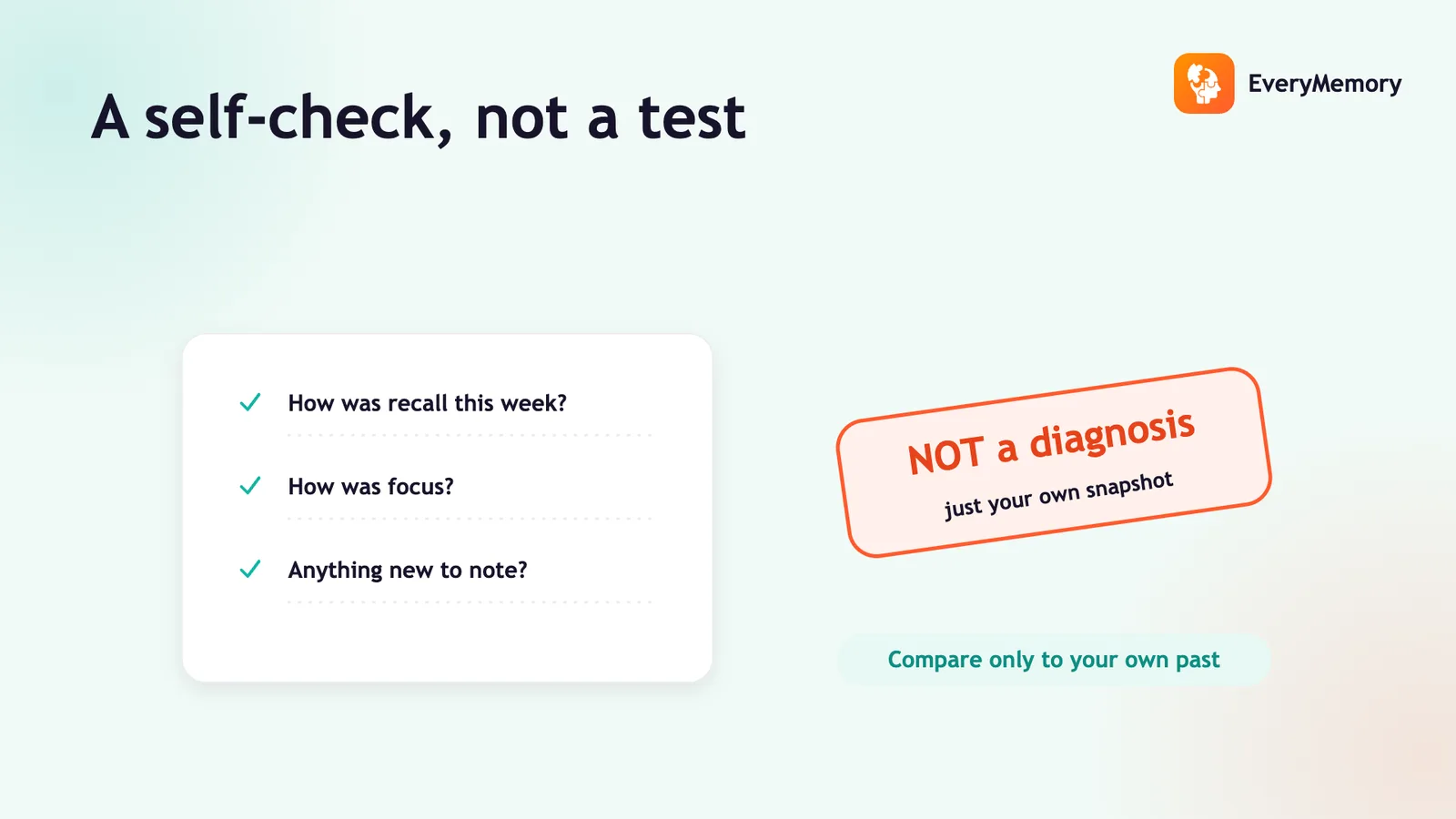
⚡ Quick answer
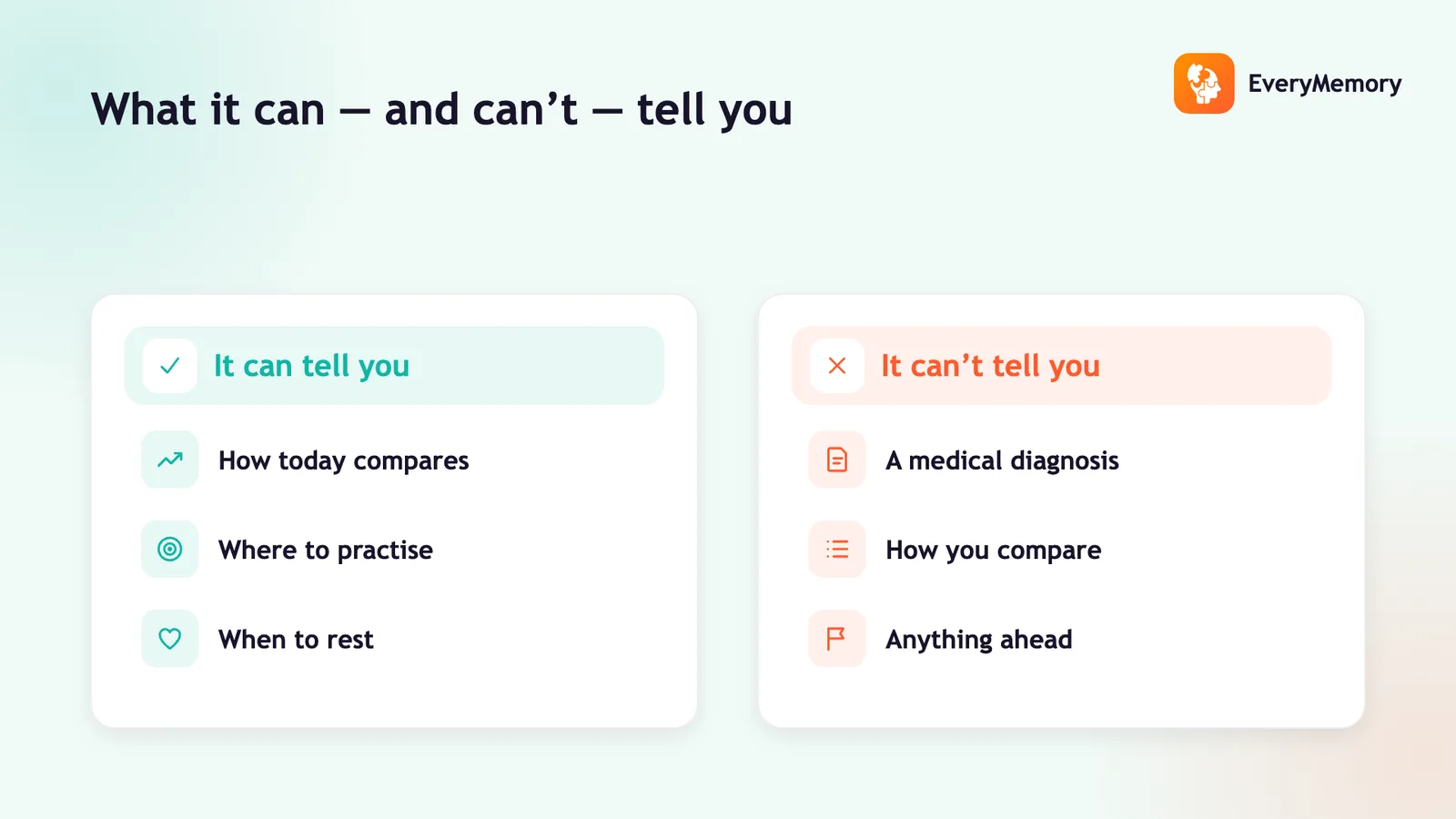
A non-medical memory self-check for seniors is a personal awareness tool - not a diagnostic test. It helps you observe your own recall habits compared to your own recent past and notice gradual personal trends. It cannot diagnose, rule out, or indicate any medical condition. For any genuine concern, especially sudden or worsening changes, a qualified healthcare professional is the right person to consult.
Key takeaways
- This is not a diagnostic test - it cannot indicate, confirm, or rule out any medical condition.
- Compare yourself to your own personal past, not to other people: the shift from your own normal is what matters.
- A brief monthly written log of self-observations builds a far more reliable picture of trends than memory alone.
- For sudden, worsening, or daily-life-affecting changes, speak to a qualified healthcare professional rather than seeking more self-checks.
If you have searched for a "free memory test" online, you have probably landed on pages offering screeners, scoring systems, and results that range from reassuring to alarming. It is worth saying clearly upfront: this is not one of those pages. What follows is not a diagnostic test, not a dementia screen, and not a tool that can tell you whether anything is medically wrong. No article, app, or online quiz can do that.
What this is instead is a quiet self-awareness check - a way to compare yourself to your own past, notice any personal trends over time, and build a calm, informed picture. If you do have real concerns, this page will also help you understand when to take those concerns to a qualified professional, which is always the right next step when something feels off.
What a self-check is - and what it is not
A self-check in this context means a structured moment of honest self-observation: how am I doing today compared to how I was doing six months ago? Not compared to someone else your age, but measured against you. This self-relative approach is the only comparison that makes sense for everyday awareness, because memory varies so much from person to person.
A self-check of this kind cannot diagnose any condition, including dementia or Alzheimer's disease. It cannot tell you whether a change is medically significant and cannot rule anything in or out. Its only purpose is to help you become a more thoughtful observer of your own mind. See our guide on what is a non-medical memory check for more on how this differs from clinical assessments.
Why self-relative comparison matters
Some degree of slower recall is a normal part of ageing - it takes a moment longer to retrieve a name, you rely more on a written list, or you occasionally walk into a room and briefly forget why. These mild changes are common and do not, by themselves, indicate a medical problem.
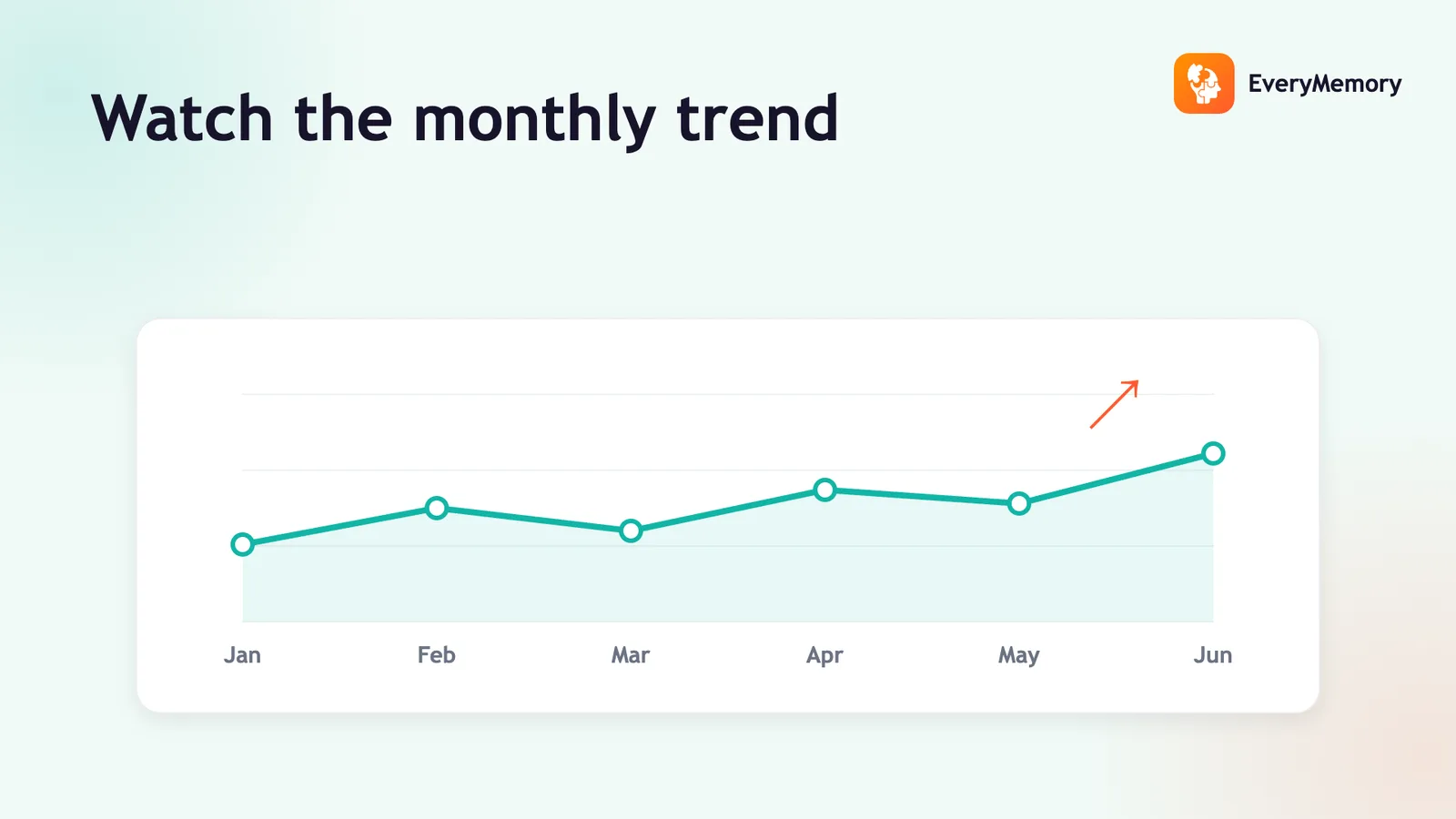
What is worth paying closer attention to is a change from your own normal. If you have always been sharp with names and that has shifted noticeably over several months, that is more personally meaningful than if you have always found names tricky. The signal is in the trend - a shift from your own baseline - not in a single bad day.
Gentle self-observation prompts to try
These prompts are not a scored test - no right or wrong answers, nothing that implies anything medical. They are invitations to honest reflection about your own recent experience.
- Day-to-day recall: Am I remembering recent conversations, plans, and appointments about as well as I usually do - or has this felt different over the past few months?
- Names and faces: Has the difficulty I have always had with names changed noticeably from what feels normal for me?
- Familiar tasks: Are everyday tasks - a familiar meal, managing bills, navigating a usual route - feeling meaningfully harder than they used to?
- Misplacing things: Has the frequency with which I misplace items changed from my own normal?
- Orientation in time: Do I know the day and what I have planned without it feeling effortful, in roughly the same way as before?
The key question: do any of these feel noticeably different from your own normal over a sustained period - not just a tired week, but a genuine ongoing shift? If the honest answer is yes, that is worth exploring further. See the simple at-home memory check for a structured version you can return to regularly.
Building a simple tracking habit
Turn occasional self-observation into a brief monthly habit. On the first of each month, spend five minutes writing a few sentences: how has recall felt lately, anything noticeably different, and any context that might explain a harder patch (illness, poor sleep, a new medication). Over several months, even brief notes give you a picture of your own trends that is far more reliable than memory alone.
Specific, dated observations are also what a healthcare professional finds useful if you do raise a concern. Our guide on how to track memory changes month by month walks through a simple template, and what to track before talking to a doctor explains how to organise your notes for a clinical conversation.
What this self-check cannot tell you
A self-check of this kind cannot diagnose any medical condition. It cannot confirm or rule out dementia, Alzheimer's disease, mild cognitive impairment, or any other condition, and it produces no score that carries medical meaning.
The prompts on this page are awareness questions, not a test. Their purpose is self-knowledge, not diagnosis. If you are genuinely worried about your memory, the most useful step is not to search for more online tests - it is to make an appointment with a qualified healthcare professional and bring your observations with you.
When to speak to a professional
Most occasional forgetfulness does not need medical attention. However, some changes are worth taking to a professional rather than monitoring from home:
- Changes that are sudden or rapid - a noticeable shift over days rather than gradual over months.
- Changes that are consistently worsening rather than staying stable.
- Changes affecting daily life or safety - medications, finances, or navigating familiar places.
- Changes that concern people who know you well - someone close noticing things you may not be seeing yourself.
- Any change causing significant ongoing anxiety - worry itself is worth a professional conversation.
A GP or family doctor is a calm first step. Many such visits end in reassurance or in identifying a simple cause - disrupted sleep, a new medication, a vitamin deficiency. Going earlier, rather than waiting for something to feel more serious, is almost always the better choice.
✅ Try this today - Your first monthly self-check
Set aside five minutes today - no scoring, no right answers, just honest observation.
- Open a notebook or notes app and write today's date. Write two or three sentences about how your memory has felt over the past month - not compared to anyone else, just compared to how you usually are. Note any context that might explain a harder patch (stress, illness, disrupted sleep).
- Read back through the self-observation prompts in the section above. If any of them prompts a genuine 'yes, that has changed', note it down specifically - what changed, and roughly when you first noticed it.
- Set a reminder to repeat this on the first of next month. Three to six months of brief notes will give you a far more reliable picture of your personal trends than any single snapshot.
⚠ When to talk to a professional
This page contains general non-medical information only and is not a substitute for professional medical advice. If you notice sudden, rapid, or worsening changes in your memory or thinking - or any change affecting your safety or daily functioning - speak with a qualified healthcare professional promptly.