 EveryMemory
Questions to Ask a Doctor About Memory Concerns
Walking into a short appointment with the right questions already written down means you leave with real clarity - not a foggy sense that you forgot to ask what mattered most.
Part of the guide: Helping a Parent With Memory Changes: The Complete Family Guide →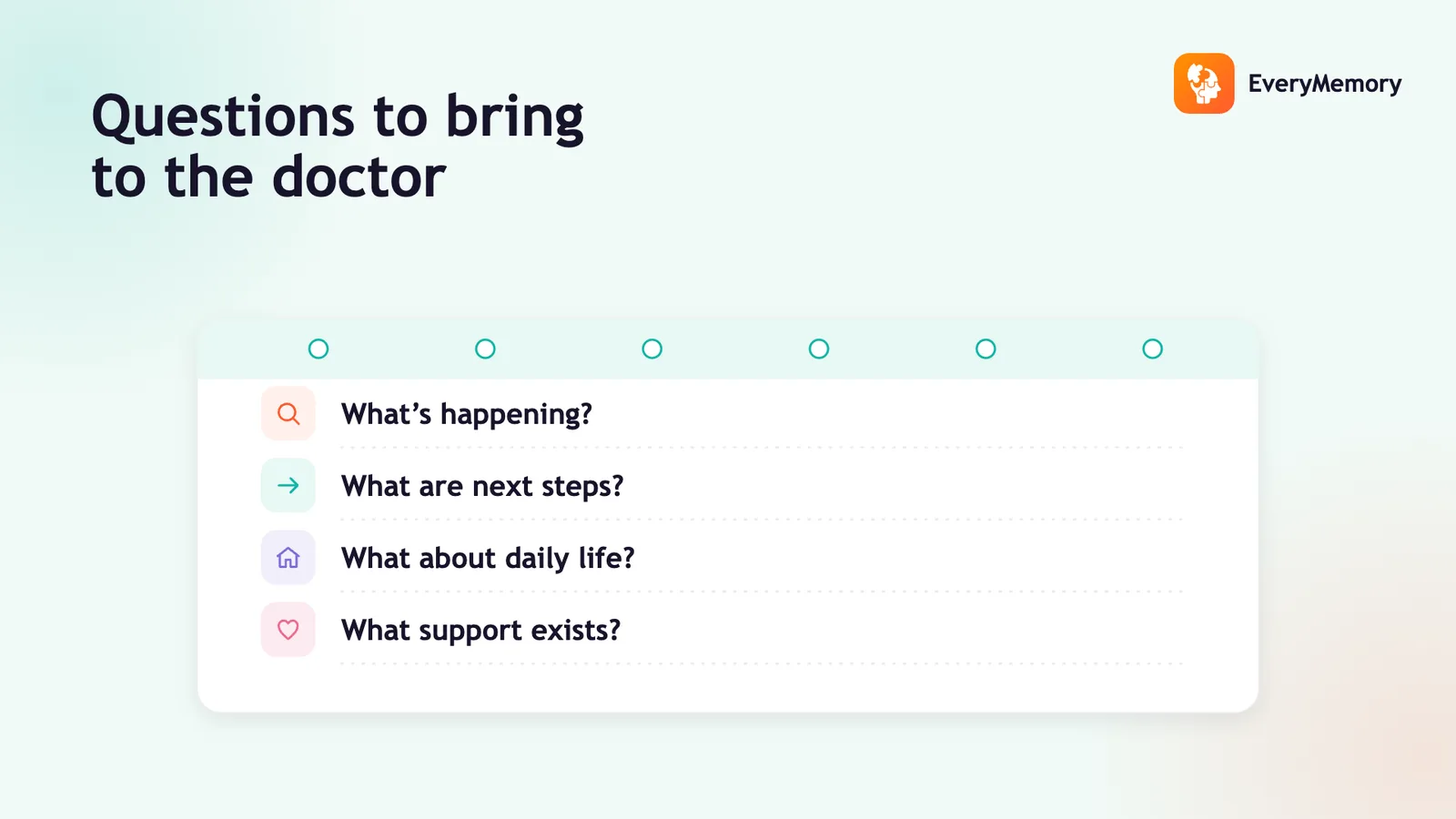
⚡ Quick answer
Bring a written list of questions grouped by theme: what's happening, what the next steps are, how to manage daily life, what support is available, and when to follow up. Write down the answers during the appointment, and bring someone with you so nothing important slips by. A qualified healthcare professional is the right person to provide the answers - your job is to show up prepared.
Key takeaways
- Arriving with written, grouped questions helps you use a short appointment fully and leave with real clarity.
- Bring a trusted person to listen, take notes, and ask follow-up questions - two sets of ears are better than one.
- State your most important concern at the very start of the visit so there's time to address it properly.
- Write down the doctor's answers during the appointment rather than relying on memory of a stressful conversation.
Deciding to bring up a memory concern with a doctor - whether your own or a parent's - takes courage. Then the appointment arrives, and it's over in fifteen minutes. You walk out with a referral form and a faint sense that you didn't quite ask what you needed to ask. It's a frustratingly common experience.
The good news is that a little preparation makes an enormous difference. When you arrive with grouped, written questions and a trusted person beside you, even a short appointment can give you real answers and a clear sense of what comes next. This guide is designed to help you do exactly that - not to provide medical answers, but to help you ask better questions of the professional who can.
Why preparation makes such a difference
Primary care appointments are often short, and memory concerns can be difficult to describe under pressure. Without a written list, it's easy to focus on whatever comes to mind first and leave without touching what matters most. A structured list signals that you're taking this seriously, helps you stay focused, and means you won't drive home replaying the question you forgot to ask.
If you've been keeping notes on what you or your parent has been noticing - dates, patterns, specific examples - bring those too. Concrete detail helps a doctor far more than a general sense of feeling forgetful. Our article on what to track before talking to a doctor offers a simple framework for doing this in the weeks before an appointment. And tell the doctor your most important concern right at the start - if you wait until the last two minutes, there may not be time to discuss it properly.
Bring someone with you
Having a trusted family member or friend in the room is one of the most useful things you can do. A second set of ears notices things the first one misses - it's easy to feel certain you understood the doctor's explanation in the moment, then find the details gone by the time you reach the car park.
Agree beforehand on who takes notes and who asks questions. Share your written list with them so they can speak up if the doctor moves on before something's been answered. If a parent is reluctant, frame it as practical help: "I'd like to come along so we can both remember what was said."
Questions about understanding what's happening
These questions help you come away with a clearer picture of the situation - not a diagnosis necessarily, but a grounded sense of what's being looked at and why.
- Could you explain what you're seeing or hearing in plain language - what might account for these changes?
- Is this level of forgetfulness typical for someone of this age, or does something seem worth investigating further?
- Are there other factors - such as sleep, stress, physical health, or recent life events - that might be contributing?
- Could any current medications be playing a role? Is it worth reviewing the full list?
- What kinds of assessments or tests might help get a clearer picture, and what would they involve?
You don't need to understand every answer immediately. Write them down, and ask the doctor to rephrase anything unclear - that's entirely appropriate.
Questions about next steps
Once you have a sense of what the doctor is thinking, these questions help you understand what's planned and what you can do to move things forward.
- What do you suggest as the next step - a referral, further tests, or a follow-up in a certain amount of time?
- If a referral is appropriate, what kind of specialist would be most helpful, and how long might that take?
- Is there anything I should watch for or write down before the next appointment?
- If things change before we're scheduled to meet again - either improving or getting worse - at what point should I get in touch sooner?
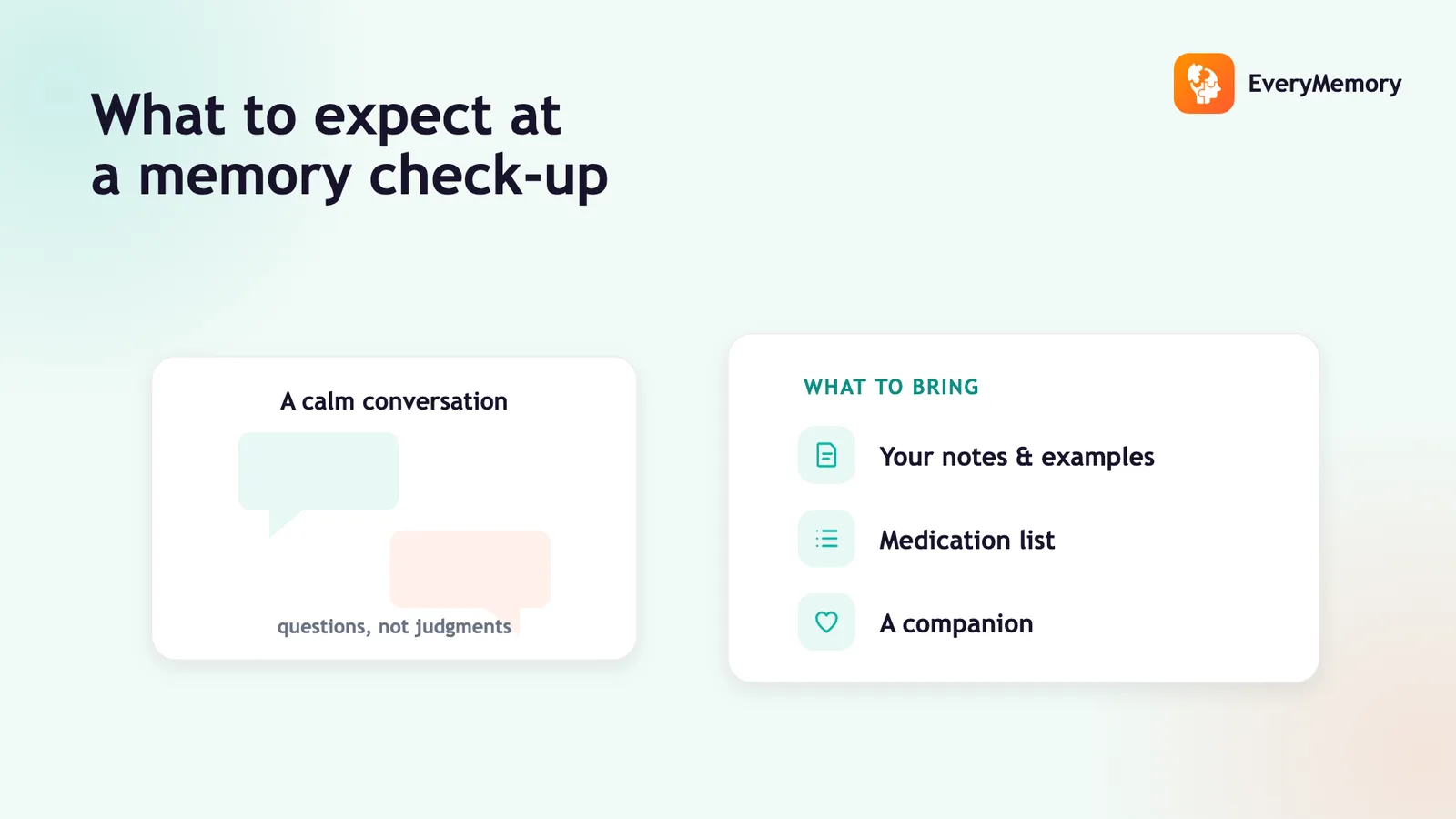
Our article on what to expect at a memory check-up walks through what a more detailed assessment typically looks like, which can be reassuring to read before any referral arrives.
Questions about everyday life and practical management
Medical conversations often focus on tests and outcomes - but daily life doesn't pause while you wait. These questions help bridge the gap between an appointment and the weeks that follow.
- Are there things we could do differently day-to-day that might help - with routines, sleep, activity, or social engagement?
- Are there any activities that are worth continuing or starting, given what we're seeing?
- Is it worth keeping a written log of changes? If so, what should we be tracking?
- Are there things that might be making this harder - like isolation, disrupted sleep, or stress - that are worth addressing in the meantime?
If you're helping an older parent navigate this, our article on how to help an aging parent with memory concerns covers the practical and emotional side of that role.
Questions about support and follow-up
Knowing where to turn matters just as much as the appointment itself. These questions give you a map for what comes after.
- Are there community resources, support groups, or information services you'd suggest for families in this situation?
- Who is the best person to contact with questions between appointments - a nurse, a coordinator, the practice directly?
- When should we plan to follow up, and what would prompt an earlier visit?
- If we want a second opinion, is that something you can help facilitate, or should we arrange it separately?
Our article on memory loss vs normal aging can help frame what you're noticing in the days after an appointment - and clarify what level of change is worth contacting the practice about sooner.
✅ Try this today - Your take-to-the-appointment question list
Print or copy this list, add the doctor's answers in the space beside each question, and bring someone to help you write them down.
- UNDERSTANDING: Could you explain what you're seeing in plain language? Is this typical for someone of this age? Could medications or other health factors be contributing? What assessments might help?
- NEXT STEPS: What do you suggest as the next step? If referral, what kind and how long? What should I watch for before we meet again? When should I contact you sooner?
- DAILY LIFE: Are there routines, activities, or habits worth adjusting? Should I keep a written log - and if so, what should I track?
- SUPPORT & FOLLOW-UP: Are there community resources or support groups you'd suggest? Who should I contact between appointments? When is our follow-up, and what would prompt an earlier visit?
- BEFORE YOU LEAVE: Check - did you get an answer to every question on the list? If not, ask now. Write down anything you're uncertain about so you can call the practice to clarify.
⚠ When to talk to a professional
This article is general, non-medical information about appointment preparation. If you notice sudden, severe, or rapidly worsening changes in memory or thinking - especially alongside new physical symptoms - contact a qualified healthcare professional promptly rather than waiting for a scheduled appointment.