EveryMemory
What to Expect at a Memory Check-Up
A memory check-up with a doctor is a normal, supportive appointment - not a test you can pass or fail. Here's a calm, practical guide to what usually happens and how to prepare.
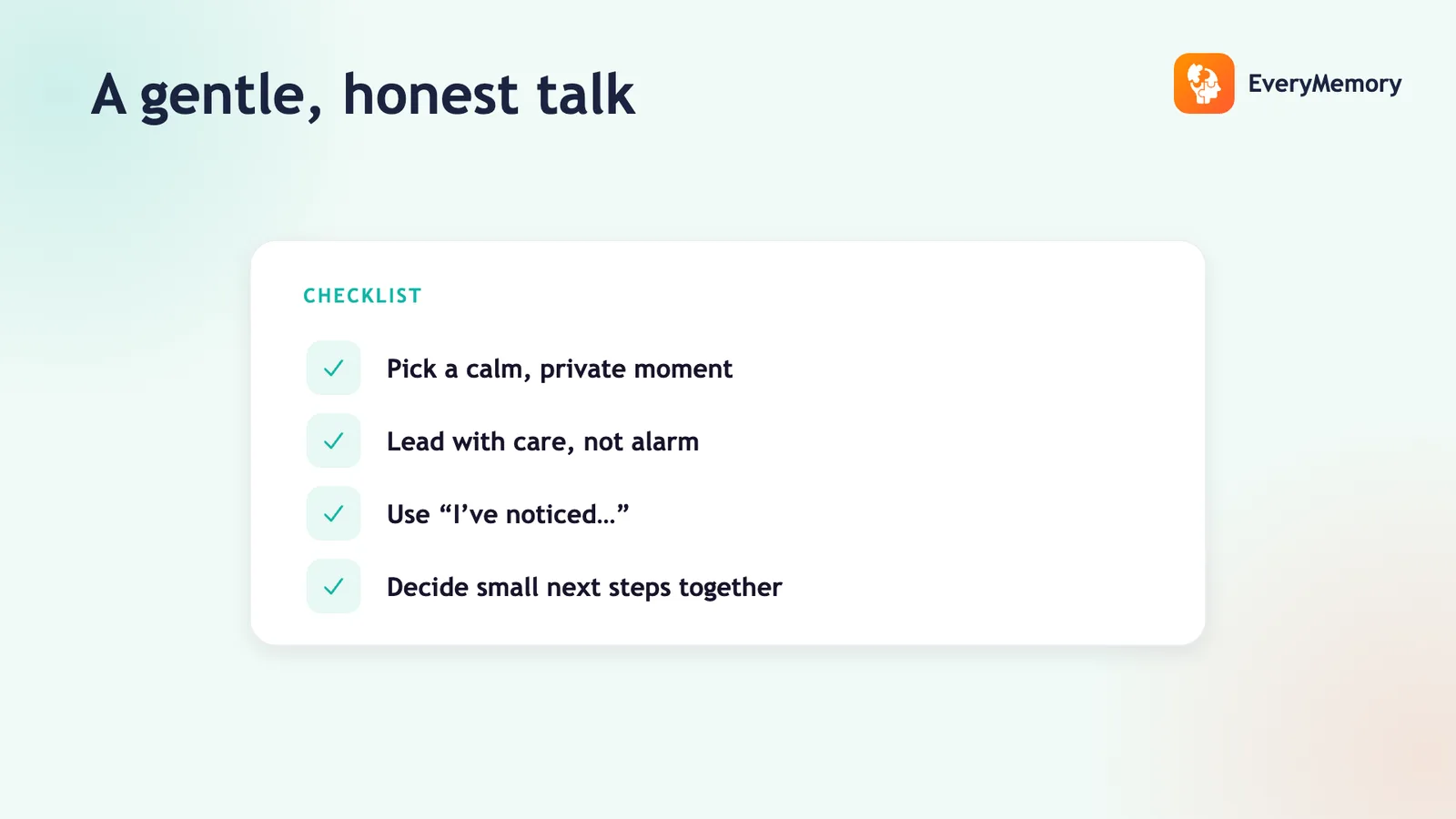
Part of the guide: Helping a Parent With Memory Changes: The Complete Family Guide →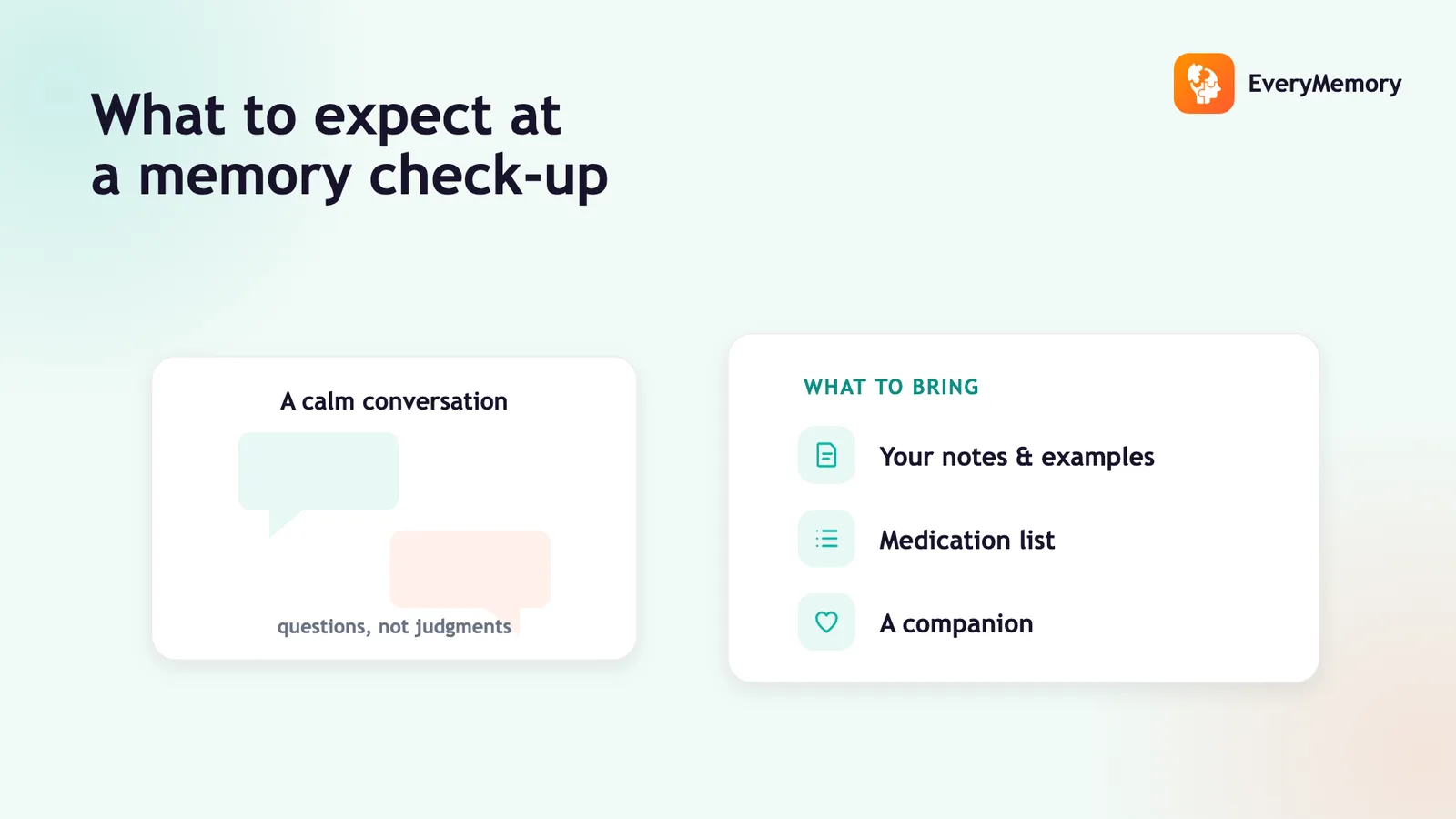
⚡ Quick answer
A memory check-up is a normal doctor's appointment focused on understanding how you're feeling, reviewing your health history, and having a gentle conversation about any changes you've noticed. The doctor - not you - leads any assessment. You can prepare by noting what you want to mention, bringing a list of medicines, and considering bringing a trusted companion. Most people come away feeling heard and reassured.
Key takeaways
- A memory check-up is a supportive conversation with a doctor - not a test to pass or fail.
- Prepare by writing down specific changes you've noticed, a full medicines list, and the questions you want answered.
- Bringing a trusted companion helps with both emotional support and remembering what was discussed.
- Going early, when questions first arise, most often brings reassurance - and gives the best chance to address anything that does need attention.
Booking a memory check-up can feel like a big step. For many older adults - and the family members going along - it brings a mix of relief and nerves. Will the doctor think we're being dramatic? What if something is found? What exactly will happen in the room?
The good news is that a memory check-up is, in most respects, a conversation. It is a supportive, routine part of looking after your health as you get older - and in the majority of cases, it ends with reassurance. Going sooner, when questions first arise, is nearly always better than waiting.
It's a conversation, not a test you can fail
The most important thing to understand about a memory check-up is that there is no pass or fail. The doctor is not there to catch you out - the appointment exists to give you both a clearer picture of how you are doing and to make sure nothing obvious is being overlooked.
Memory concerns are among the most common things people raise with their doctor in later life. A qualified professional has had these conversations many times. Coming in with a worry does not label you or set anything irreversible in motion. It simply opens a dialogue - and that is exactly what a good doctor wants.
If you have been gently tracking changes to share, our guide on what to track before talking to a doctor offers a practical way to prepare your notes without over-interpreting what you've noticed.
How to prepare before you go
A little preparation makes the appointment easier and more useful. You don't need to bring a dossier - just a few things that help the doctor understand your full picture.
- A brief note of any changes you've observed and roughly when they started. Being specific is more helpful than general.
- A complete list of all medications, vitamins, and supplements, including the dosage. Some medicines affect memory and concentration, and your doctor will want to review this.
- A note of any significant recent events - bereavement, poor sleep, high stress. Context matters in how a doctor interprets what you share.
- Your questions, written down, so you leave the room feeling everything was covered.
Consider bringing a companion - a family member or trusted friend. They can share their own observations if asked, help you remember what was discussed, and make the appointment feel less daunting. Our article on how to help an aging parent with memory concerns has guidance on that supporting role.
What a doctor might do during the appointment
Every appointment is different, and your doctor will tailor what they do to what you share. In general, you can expect a warm, unhurried conversation rather than anything clinical or intimidating.
A doctor might ask about your day-to-day life - how you're managing at home, your mood, your sleep. They will want to know what prompted the appointment: what you've noticed, roughly when it started, and whether it feels like it is changing. They will review your medical history, current medicines, and any relevant family history.
They may ask a few gentle questions about recent events or familiar information - not to trick you, but to get a calm, brief sense of how things are. Any structured questions are standard tools a qualified professional uses routinely; they are not something you can study for, and you should not try to.
Depending on what the conversation reveals, a doctor might suggest simple blood tests to rule out common and very fixable causes of forgetfulness - things like low vitamin B12, thyroid changes, or disrupted sleep. They may refer you to a specialist, or simply reassure you and suggest a follow-up in six months.
Why a companion in the room can help
Having someone you trust at the appointment is not a sign of dependence - it is practical good sense. A companion can share observations the person may have missed or minimised, help recall what was discussed, and simply make it easier to speak openly when nerves are running high.
If you are the family member attending, your role is to support - not to answer questions on their behalf or escalate the appointment into something bigger than it needs to be. A quiet, calm presence is often the most helpful thing you can offer. Our article on how to talk about memory without scaring a parent has advice on striking the right tone.
It helps to agree beforehand what each of you will and won't raise - this avoids one person contradicting the other mid-appointment, or something being brought up that the other person does not want discussed.
Going early is nearly always the right call
One of the most common things people say after a memory check-up is: "I wish I'd come sooner." The anxiety about going tends to be larger than the appointment itself. In most cases, what the doctor finds is reassuring - changes are within the normal range of ageing, a fixable factor explains things, or nothing needs to be acted on right now.
Going early also means that if anything does need attention, it can be addressed in good time. Early engagement with a qualified professional is simply good health practice - no different from a blood pressure check or a hearing test.
Our article on memory loss versus normal aging offers a calm overview of what typically changes with age, which may help frame any conversation you have with your doctor.
EveryMemory is not a diagnostic tool - and that's intentional
The exercises and check-ins in EveryMemory are designed for everyday mental engagement and self-awareness - not to assess, screen, or diagnose any condition. They are non-medical tools for adults who want to stay mentally active and notice their own patterns over time.
If you notice something that concerns you, that is a reason to speak with a qualified healthcare professional - not to draw conclusions from an app. The app can help you articulate patterns to share with your doctor. The professional assesses; EveryMemory simply supports daily mental engagement.
✅ Try this today - Your pre-appointment checklist
If a memory check-up is coming up - for you or a family member - this takes about five minutes and makes the appointment more useful.
- Write down two or three specific things you've noticed. Be concrete: 'forgetting names of people I know well, started about three months ago' is more useful than 'my memory has been bad'.
- Gather your full medicines list - prescription, over-the-counter, vitamins, supplements - with the name, dose, and how often you take each.
- Write one or two questions you want answered before you leave, and leave space to jot down the answers during the appointment.
⚠ When to talk to a professional
This article contains general information only and is not a substitute for professional medical advice. If you or someone you care for is experiencing sudden, rapid, or significantly worsening changes in memory or thinking, please speak with a qualified healthcare professional promptly.