 EveryMemory
Reading Speed Test: What's Your WPM?
Time yourself on a short passage, get your words-per-minute, then a quick comprehension check. A non-medical skill metric you can track against your own past results.
⚡ Quick answer
Your reading speed (words per minute) is the passage word count divided by the seconds you took, scaled to a minute. Most adults land around 200-250 wpm for general prose with solid comprehension. The score is a snapshot of a trainable skill on this specific text - not a measure of intelligence or memory.
Key takeaways
- Words per minute is your passage word count divided by reading time - a rate, not a grade.
- Most adults read general prose at roughly 200-250 wpm with solid comprehension.
- Speed without understanding is just skimming, so the comprehension check is the real scoreboard.
- A trainable skill shaped by practice and topic, not a measure of intelligence; track it against your own past runs.
Reading speed is one of the few mental skills you can measure in under two minutes. The test above shows you a short passage, starts a timer the moment you begin, and stops when you finish - then it divides the word count by your time to give you a words-per-minute figure. A few comprehension questions follow, because raw speed without understanding is not really reading at all.
Treat the number as a starting line, not a verdict. Reading pace shifts with the material, your mood, how tired you are, and how familiar the topic is. The useful comparison is always against your own earlier runs on similar text, never against someone else.
What the WPM number actually means
Words per minute is a rate, not a grade. The test above counts the words in the passage, measures how long you took, and reports the ratio. That is all the headline number is - a measurement of how fast your eyes and brain moved through this particular block of text on this particular day.
For context, here is roughly where general-prose reading speeds fall. These are typical ranges, not targets, and they assume the reader still understands what they read:
| Reader type | Typical WPM | What's happening |
|---|---|---|
| Beginning / cautious reader | 100-150 | Sounding words out, re-reading lines |
| Average adult reader | 200-250 | Comfortable pace, good comprehension |
| Practised / fluent reader | 300-400 | Smooth eye movements, less backtracking |
| Skimming (not full reading) | 500-700+ | Scanning for gist, comprehension drops |
If your result sits below the average band, that often just means the topic was unfamiliar or you were reading carefully - both perfectly reasonable. Run it again on a different day and a different passage before drawing any conclusion.
Speed without comprehension is just skimming
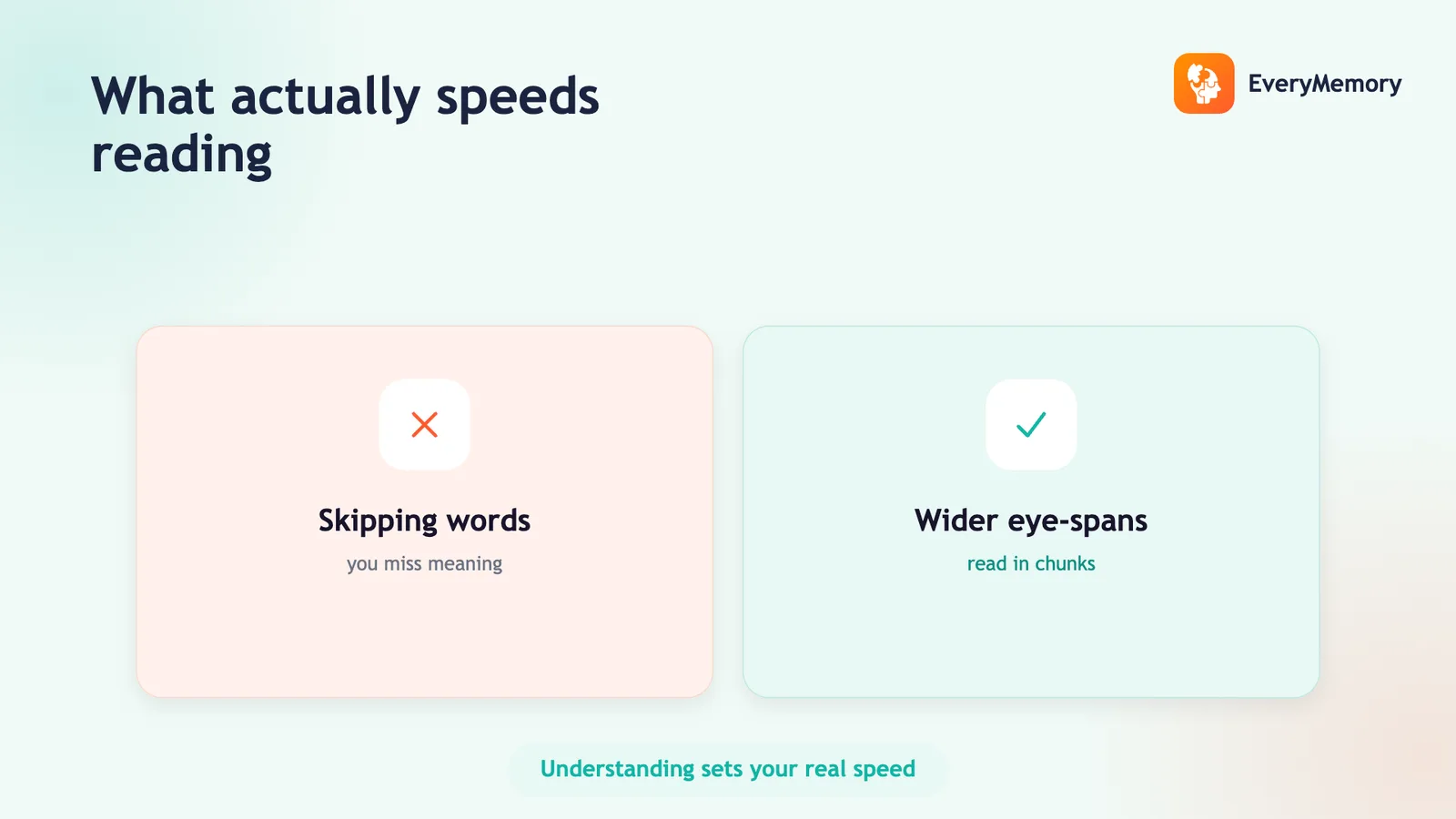
It is easy to inflate a wpm score: skip ahead, glide over sentences, and the timer rewards you. But that is skimming, not reading, and the comprehension check exists precisely to catch it. A pace of 600 wpm with two of five questions wrong tells you less than 220 wpm with everything understood.
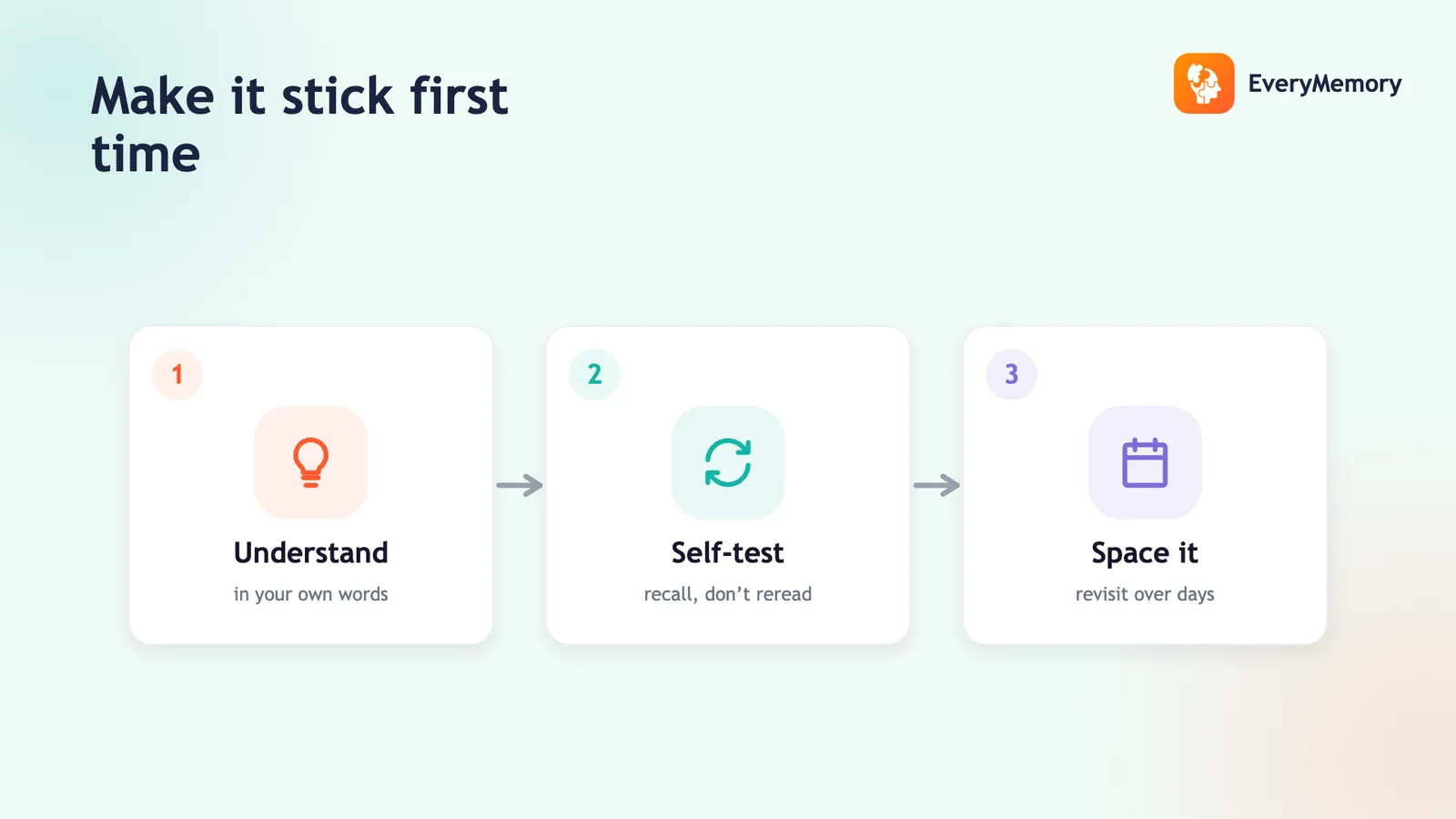
The honest goal is the fastest pace at which you still grasp the meaning. That balance point is personal and it moves with practice. If you want to push it higher, these speed-reading techniques explain which methods genuinely help and which are mostly hype, and our guide to learning faster covers how reading pace fits into actually retaining material.
- Re-read the comprehension result, not just the wpm headline
- Compare like with like - similar length, similar difficulty
- A slower, fully-understood read beats a fast, hollow one
It's a skill, not an intelligence score
Reading speed responds to practice, exposure, and the type of text - which is exactly what makes it a skill rather than a fixed trait. People who read a lot tend to read faster, the same way people who type a lot type faster. It does not measure how clever you are, and it certainly is not a health or memory readout.
Sustained reading does lean on attention, though, which is one reason a tired or distracted run produces a lower, choppier score. If you notice your focus wandering mid-passage, our piece on attention span looks at what actually moves the needle there. As with every tool on this blog, the only scoreboard worth watching is your own trend over time.
⚠ When to talk to a professional
This is a non-medical skill check for personal interest and self-tracking only - it does not assess intelligence, memory, or any health condition, and it is not a diagnostic tool.