 EveryMemory
Conversation Starters for Seniors
Good questions open up an older parent's stories and keep a visit warm - here are dozens of conversation starters that invite real memories rather than yes-or-no answers.
Part of the guide: Helping a Parent With Memory Changes: The Complete Family Guide →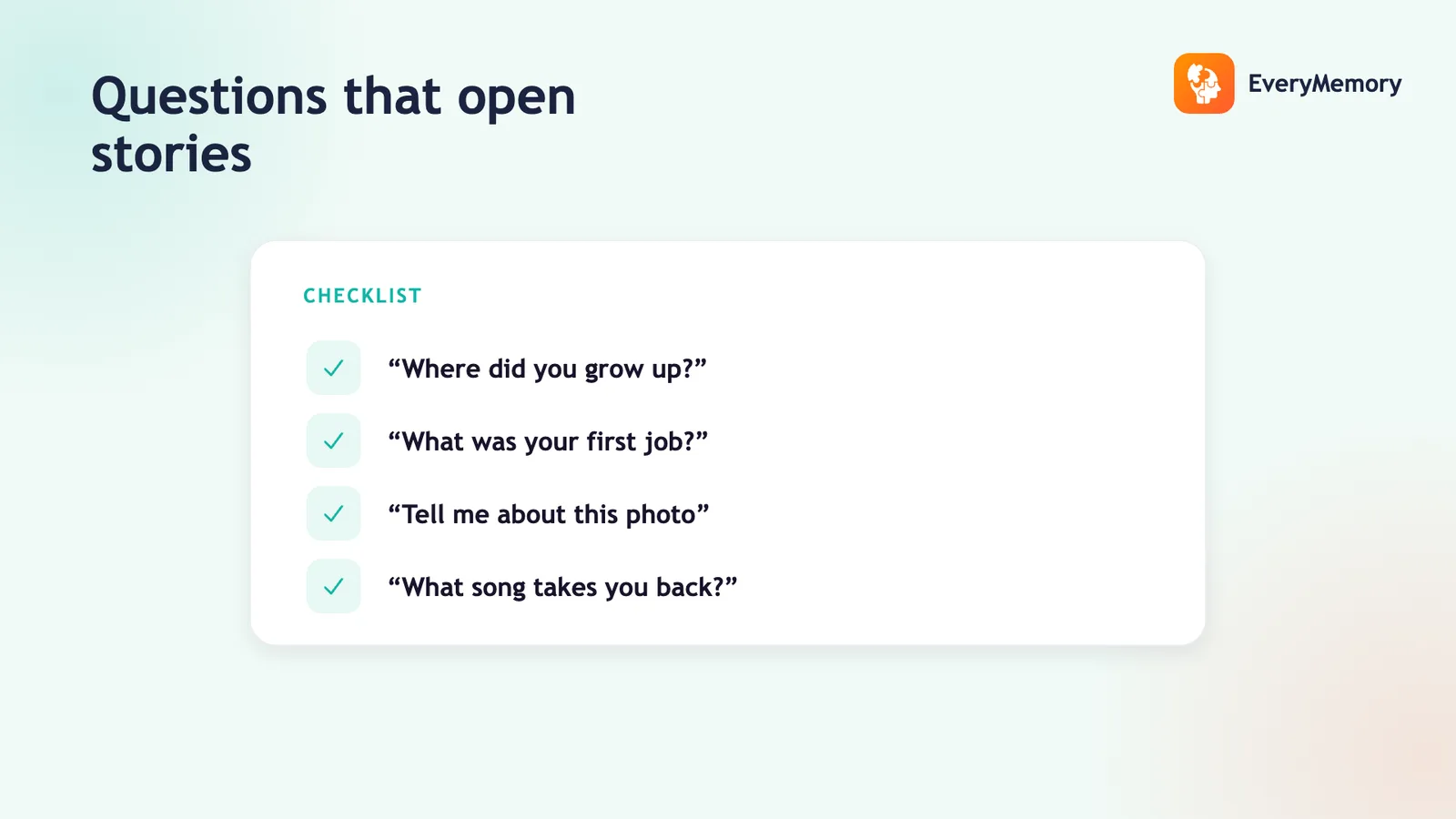
⚡ Quick answer
The best conversation starters for seniors are specific, open-ended questions about their own life - their childhood home, first job, how they met their partner, favourite meals, or the music they loved at twenty. These invite detailed stories rather than yes-or-no answers, and they let an older person be the expert in the room, which keeps the conversation warm and genuinely two-way.
Key takeaways
- Specific, open questions about the past beat yes-or-no small talk.
- Distant memories are easier and more pleasant to reach than recent ones.
- Follow-ups and props (photos, songs) keep the conversation flowing.
- It's connection, not a quiz - there are no wrong answers.
Visits with an older parent can fall into the same loop - how are you, did you eat, are you sleeping. Those questions matter, but they rarely open anyone up. A good conversation starter does something different: it hands your parent a story they already love telling and gives you a side of them you may not know.
The best prompts are specific and open. "What was your first job?" goes further than "How was your week?" because it points at a vivid memory instead of asking for a summary. You're not testing recall - you're giving them the floor.
Why open questions work better
A closed question - did you have a nice day? - can be answered in one word, and often is. An open question about a real moment gives your parent somewhere to go. Ask what their street looked like when they were ten and you'll usually get the corner shop, the neighbours' names, and a story you've never heard.
This also takes the pressure off recent memory. Long-ago stories are often easier and more pleasant to reach for than what happened yesterday, so starting there keeps the mood light and confident. The point is connection, not a quiz - there are no wrong answers, and gentle silences are fine.
Starters by topic
Pick a theme and follow wherever it leads. One good answer usually opens three more questions.
| Topic | Conversation starters |
|---|---|
| Childhood | What games did you play outside? Who was your best friend? What did your kitchen smell like on a Sunday? |
| Work | What was your very first job? Who taught you the most? What were you proud of finishing? |
| Love & family | How did you and Dad meet? What did you wear that day? What were weddings like then? |
| Home | Which house did you love most? What was your favourite room? Who lived next door? |
| Music & fun | What song takes you straight back? Where did you go dancing? What film did everyone see? |
How to keep it flowing
Follow-ups are where the real conversation lives. When your parent mentions a person, ask what they were like. When they name a place, ask what it looked like. "And then what happened?" is the most useful phrase you have.
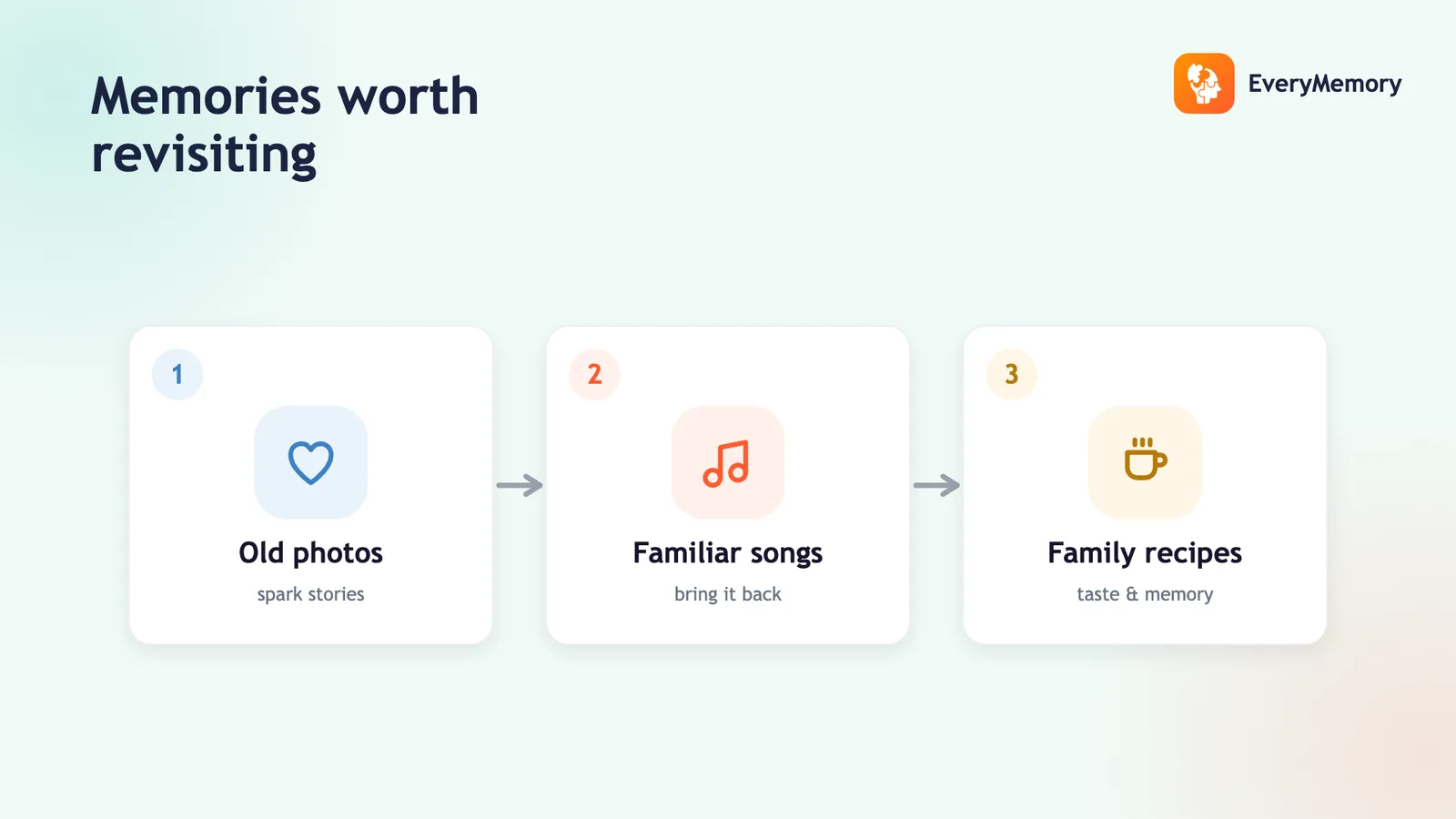
Props help enormously. A photograph, an old recipe, or a song from their twenties can unlock more than any question. For a fuller approach to story-based activities, see reminiscence activities for seniors, and for keeping minds engaged between visits, how to keep an elderly mind active.
Questions for harder days
On days when recent details are slippery, lean fully into the distant and the sensory. Smells, songs, and hands-on memories tend to stay accessible and feel good to revisit. Avoid anything that puts your parent on the spot - "Do you remember what I told you yesterday?" can sting; "Tell me about your mother's cooking" almost never does.
- What did your home smell like at Christmas?
- Which song did you sing as a child?
- What was your favourite meal growing up?
- Where did you feel happiest - the garden, the kitchen, the seaside?
- What did you do on a summer afternoon as a kid?
✅ Try this today - A ten-question visit
Bring a short list and let one good answer lead to the next.
- Pick one theme before you arrive - work, childhood, or how they met your other parent.
- Open with the most specific question you have, not a general one.
- When they pause, ask a follow-up about a person or place they named rather than moving on.
- Bring one prop - a photo or an old song on your phone - to restart the conversation if it stalls.
- Leave the list unfinished. Trailing off mid-story is a good reason to come back.
⚠ When to talk to a professional
These are conversation ideas for connection and enjoyment, not a memory test or assessment. If you're genuinely concerned about an older relative's memory, speak with their doctor or a qualified professional.