 EveryMemory
Working Memory vs Short-Term Memory: The Difference
Short-term memory holds; working memory holds and works. The simple distinction, with examples, and why the terms get used interchangeably.
Part of the guide: How to Keep Your Brain Healthy: A Complete Lifestyle Guide →
⚡ Quick answer
Short-term memory is the brief holding of a few items for seconds; working memory is short-term memory plus the active manipulation of that information - holding it and doing something with it, like recalling a number and adding to it. Short-term memory stores; working memory stores and works. The terms overlap and are often used loosely.
Key takeaways
- Short-term memory holds a few items for seconds; working memory holds them and actively works with them.
- Repeating a phone number is short-term; recalling it and adding to it is working memory.
- The terms overlap and are often used interchangeably; working memory is the broader idea.
- Both have small capacity - chunking, sequence/mental-math practice, and fewer distractions help.
These two terms get swapped constantly, and the difference is small but real - and worth knowing if you want to understand how your mind handles information in the moment.
Here's the plain distinction.
The simple distinction
Both hold a small amount of information for a few seconds. The difference is what you do with it. Short-term memory just holds - keeping a phone number in mind long enough to dial it. Working memory holds and manipulates - keeping the number in mind while you do something with it, like reversing it or adding to it. Working memory is short-term memory put to work.
Everyday examples
- Short-term: repeating a name you just heard; holding a price until you reach the till.
- Working: doing mental math; following directions while tracking where you are; cooking from a recipe you're holding in mind.
Why the terms get confused
They're closely related and overlap, so in everyday use people say 'short-term memory' for both. In psychology, working memory is the more complete idea - it includes the holding and the active processing. Both are part of the wider picture in types of memory explained.
Strengthening working memory
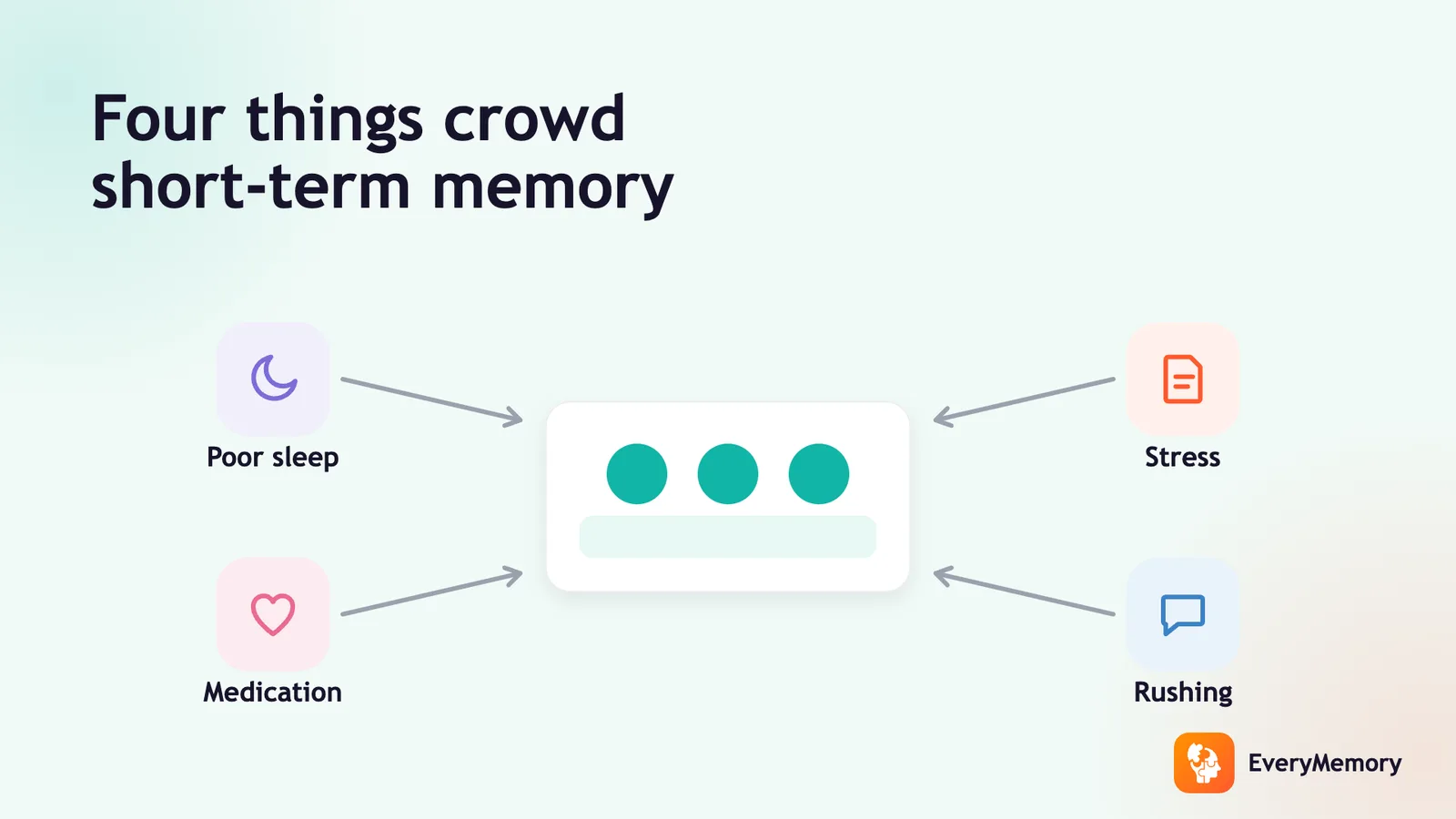
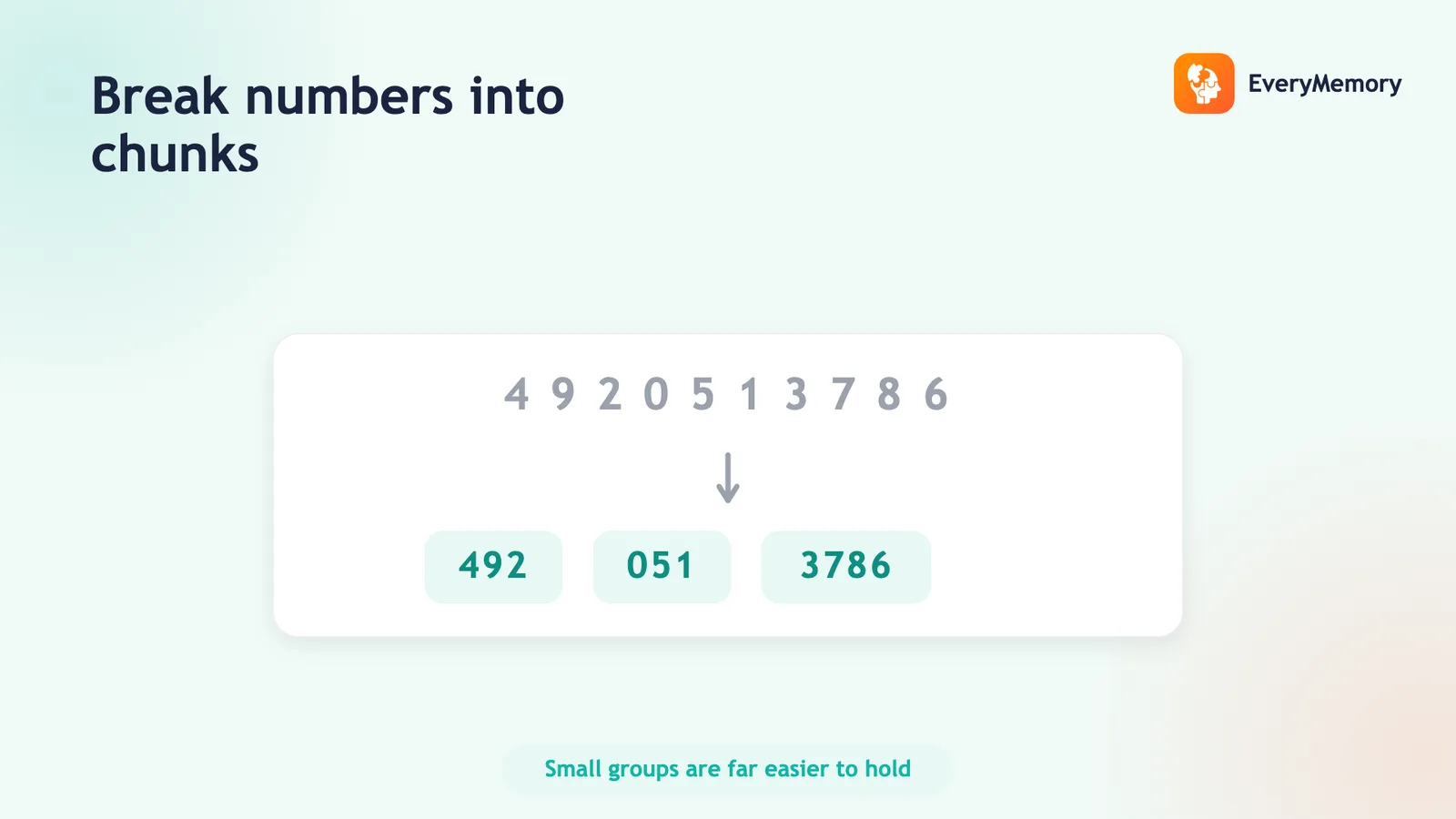
Both have a small, limited capacity, which is why long numbers and juggling tasks overwhelm them - and why chunking helps. Sequence and mental-math games give working memory regular practice, and reducing distractions frees up its limited space for what matters.