 EveryMemory
Why Do I Forget Things So Quickly?
Forgetting something seconds after hearing it usually means it was never stored - not that your memory is failing. Here's why it happens and how to make things stick.
Part of the guide: Understanding Memory Loss and Forgetfulness: A Calm, Reassuring Guide →
⚡ Quick answer
Forgetting something seconds after hearing it usually means it never got stored. Working memory only holds a few items for a few seconds, and without attention or repetition the information fades fast - this is normal. It happens more when you're distracted, rushed, stressed, or tired. Slowing down and repeating the thing once is usually enough to keep it.
Key takeaways
- Forgetting something seconds later usually means it was never stored - working memory holds only a few items for a few seconds.
- The biggest cause is divided attention: doing or thinking about two things at once means neither gets encoded.
- Forgetting things you never encoded is different from losing stored memories, and is far easier to fix by changing how you pay attention.
- Saying a name or location aloud once forces the brief attention that encodes it - the simplest in-the-moment fix.
- Occasional quick forgetting is normal; it's worth professional input only if it steadily worsens, disrupts daily life, or others notice it.
Someone tells you their name and it's gone before you've shaken hands. You read a sentence and couldn't repeat it a second later. It feels like your memory is failing in real time - but usually the opposite is true: there was never a memory to lose, because nothing got stored in the first place.
Understanding that one distinction takes most of the worry out of it, and points straight at the fix.
Quick forgetting usually means it was never stored
Your working memory - the mental notepad for what's happening right now - is tiny and short-lived. It holds only a handful of items for a few seconds. For anything to last beyond that, it has to be encoded: given a moment of attention and meaning so it can move into longer-term storage.
When a name vanishes instantly, encoding never happened - you were half-listening, or already thinking about your reply. There's nothing wrong with the memory system; the information simply never entered it. That's a very different problem from losing a memory you once had, and a far easier one to fix.
The everyday reasons it happens
Fast forgetting spikes for ordinary, fixable reasons:
- Divided attention - doing or thinking about two things at once means neither gets encoded. This is the biggest cause by far.
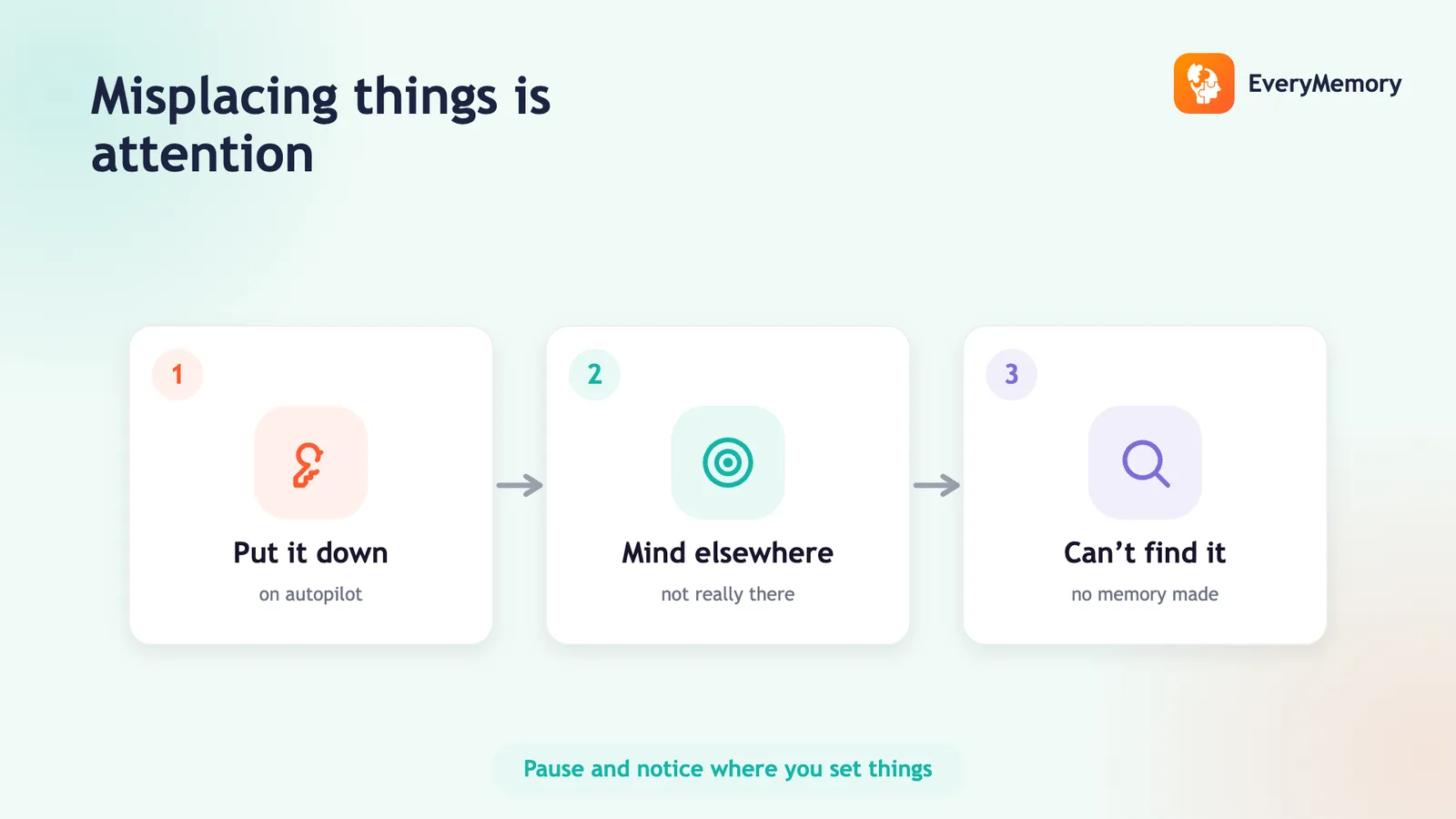
- Autopilot - acting without paying attention (putting keys down mid-conversation), so no memory is formed of where or what.
- Poor sleep - short or broken sleep shrinks working-memory capacity the next day.
- Stress and worry - a busy, anxious mind has little room left to hold new information.
- Trying to hold too much at once - past a few items, earlier ones drop out to make room.
Forgetting fast vs losing memories
These two get confused constantly, and the difference is reassuring. Forgetting something you never encoded (a name you didn't really catch) is about attention in the moment. Slower recall of things you did store - a word on the tip of your tongue that surfaces later - is a normal feature of how retrieval works, and it eases a little once you stop straining. Neither is the same as memories themselves disappearing. For where the ordinary line sits, see memory loss vs normal aging.
How to make things stick in the moment
Because the problem is usually encoding, the fixes are small and immediate:
- Do one thing at a time. Give the name, the instruction, or the task a clear three seconds of full attention before moving on.
- Say it aloud. Repeating a name or "keys on the hook" out loud forces the flicker of attention that encodes it.
- Link it to meaning. Connect the new thing to something you already know - a face, a rhyme, a picture. Meaning is what memory holds onto.
- Write it down. For anything that matters, don't rely on working memory at all - a note or a fixed home for your keys removes the need to remember.
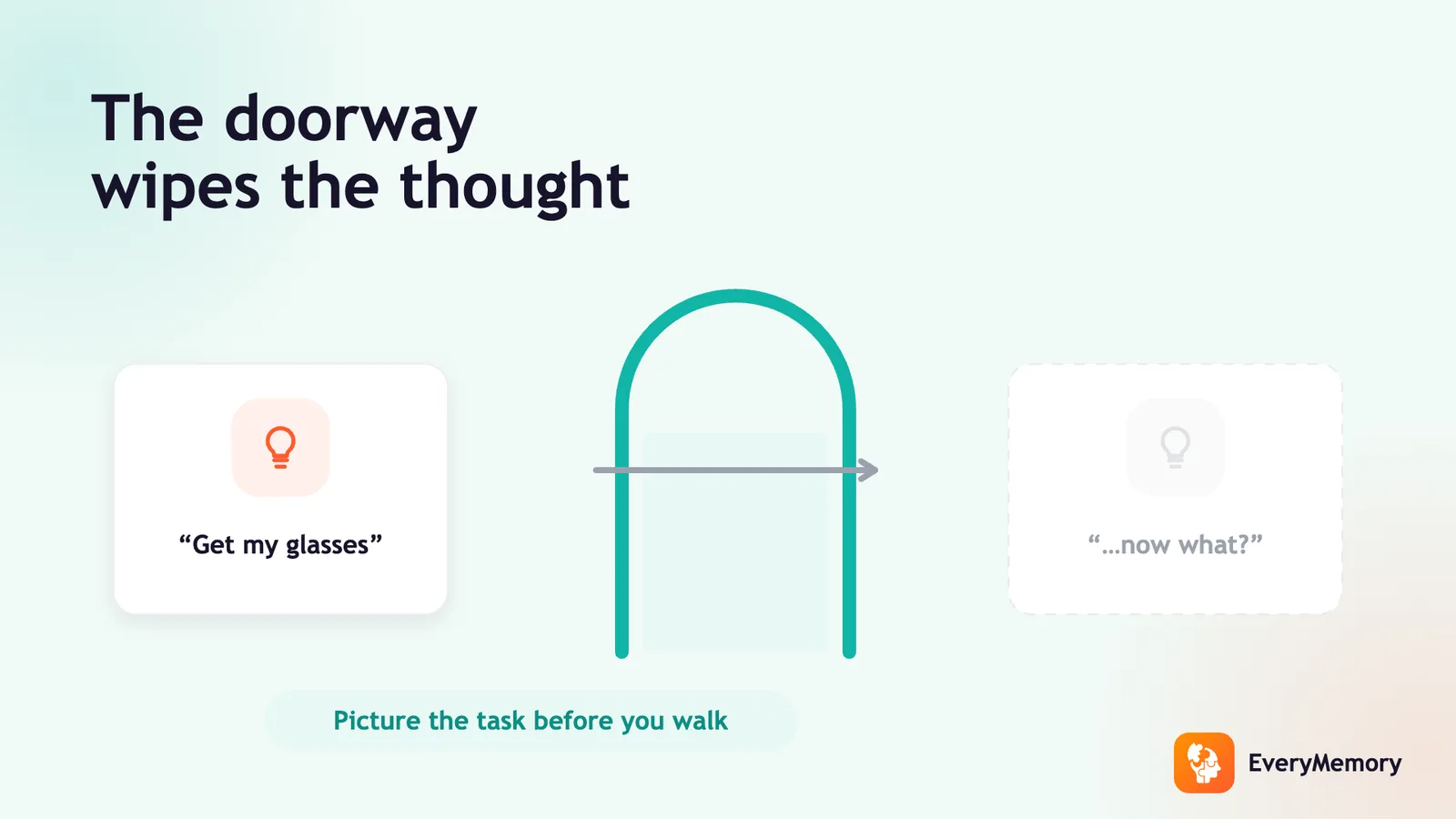
- Pause at transitions. Before walking off or switching tasks, take one second to register what you're carrying - this blunts the kind of slip behind forgetting why you entered a room.
If you mostly lose objects, the same encoding fix applies - see why you keep misplacing things.
When fast forgetting is worth a closer look
Occasional quick forgetting, worse on tired or busy days, is ordinary. It's reasonable to speak with a qualified professional if it gets noticeably and steadily worse over a short period, starts to disrupt daily tasks, or comes with confusion about familiar people or places - especially if others notice before you do. Tracking a few specific, dated examples first makes that conversation much more useful.
✅ Try this today - say-it-once
A one-second habit that fixes most in-the-moment forgetting:
- The next time you hear a name, say it back: "Good to meet you, Sarah."
- When you put something down somewhere unusual, say the spot out loud: "glasses on the bookshelf."
- That's it - the single repetition forces the attention that stores it.
⚠ When to talk to a professional
Forgetting things quickly is, on its own, usually about attention and is not a sign of a medical problem. If it is clearly worsening over weeks, disrupting daily life, or noticed by others alongside confusion, talk to a qualified professional.