 EveryMemory
Why Do I Keep Misplacing Things?
Constantly hunting for your keys, glasses, or phone usually points to attention - not memory. Here's why it happens, and how two small habits can end the daily search.
Part of the guide: Understanding Memory Loss and Forgetfulness: A Calm, Reassuring Guide →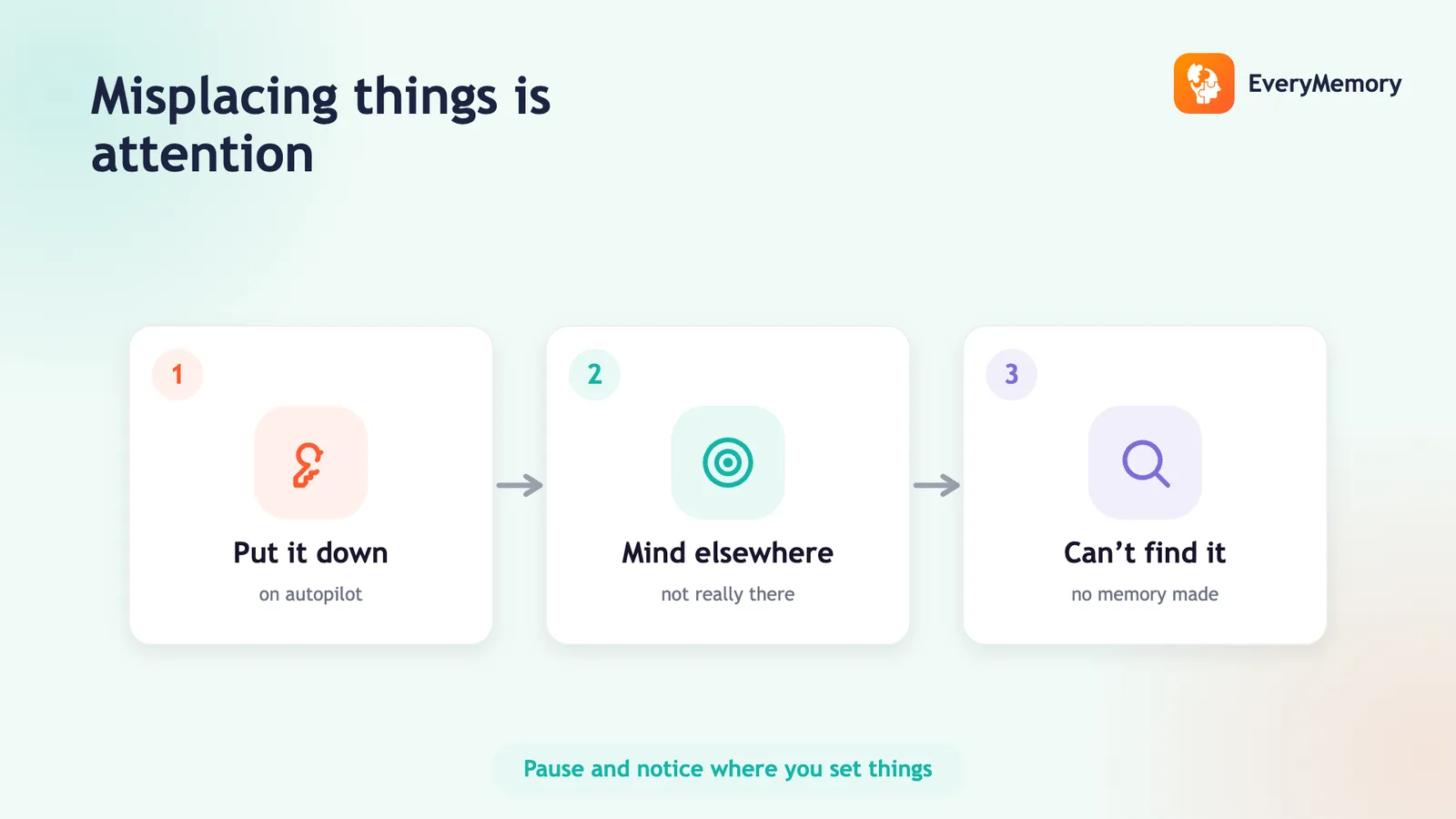
⚡ Quick answer
You misplace things mostly because you put them down on autopilot while your attention was elsewhere, so the location was never encoded - there's nothing to recall because nothing was stored. The fix isn't about training memory; it's about giving everyday items consistent 'homes' and pausing for one second to notice when you set something down somewhere unusual.
Key takeaways
- Misplacing objects is almost always an attention lapse at the moment of setting something down, not a memory failure - there is no location memory to find because none was stored.
- The fix is to give each frequently lost item one fixed home and return it there every time, removing the need to remember at all.
- When you must put something somewhere unusual, saying the location aloud - even quietly - forces the brief flicker of attention needed to actually encode it.
- Things feel worse on busy or stressed days because divided attention means fewer moments get properly registered in the first place.
It's one of the most universal little frustrations there is: you set your keys down "just for a second," and ten minutes later you're retracing your steps through the whole house, patting your pockets, checking the same drawer twice. By the time you find them - in the fridge, somehow - you feel a flicker of worry. Is my memory going?
Here's the genuinely reassuring part: misplacing everyday objects is rarely a memory problem at all. More often, the location was never stored in the first place, because your attention was somewhere else entirely. That's a different problem with a much easier fix.
Let's unpack why it happens, when it's worth a second thought, and the two simple habits that quietly eliminate most of the searching.
Autopilot is the real culprit
When you drop your keys on the counter while reading a text, listening to the radio, and thinking about dinner, your brain is busy - and it never bothers to record where the keys landed. The action was automatic and unattended. Later, when you try to "remember" where you put them, there's simply no memory to find, because the moment was never encoded.
This is why the harder you try to recall, the more useless it feels. You're searching for a file that was never saved. The problem happened a moment before you set the item down - your attention was divided - not afterward when you tried to remember.
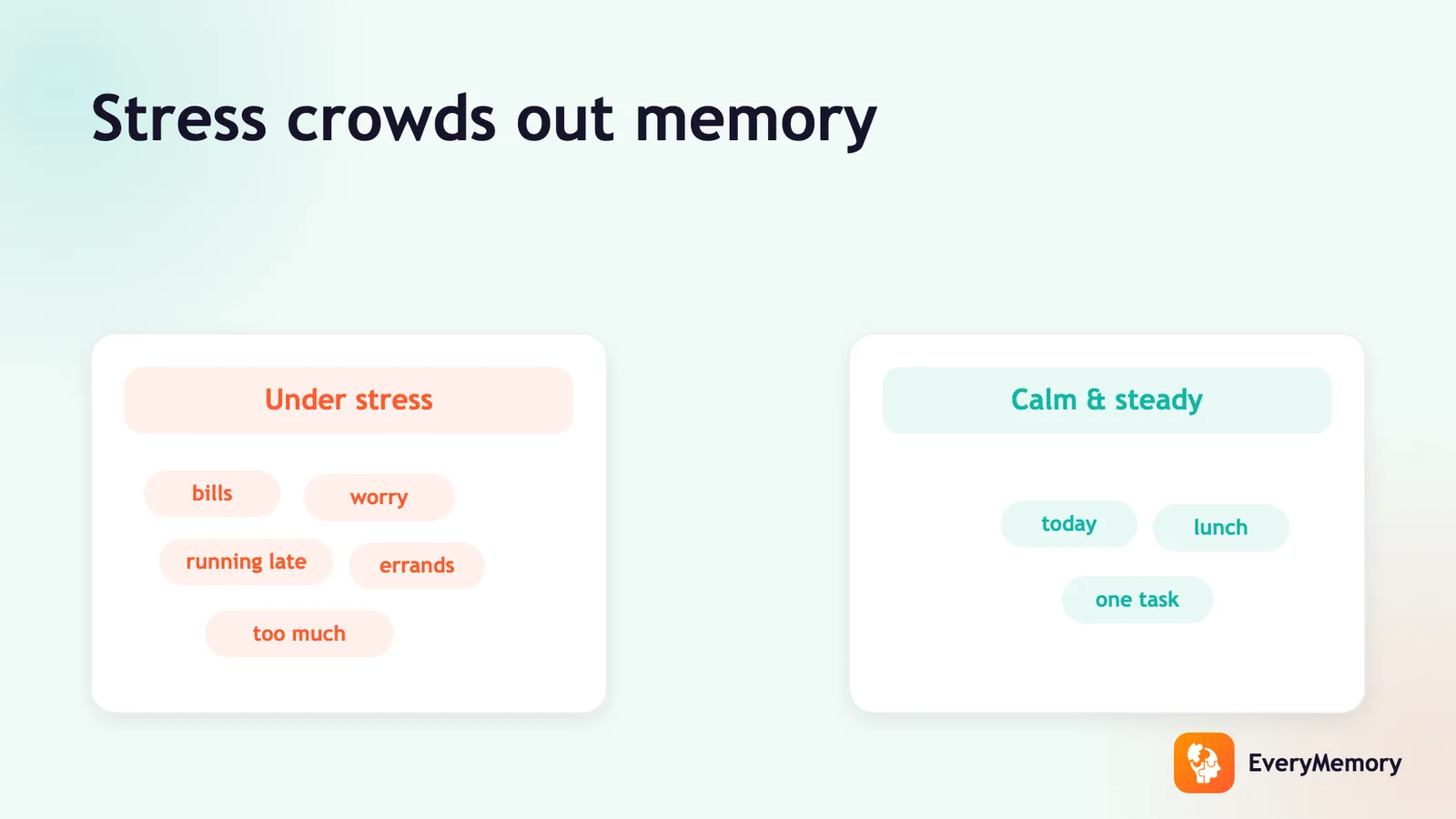
It also explains why misplacing things feels worse on busy, stressful, distracted days. The more your attention is split, the less gets encoded. If that resonates, our piece on stress and forgetfulness is worth a read.
Habit 1 - Give every important item a home
The single most effective fix removes the need to remember at all. Choose one fixed spot for each thing you lose most - a bowl by the door for keys, a hook for glasses, a small tray for your phone - and commit to returning it there every single time.
Once a habit like this sets in, you no longer rely on memory; you rely on the system. You don't have to recall where your keys are because they're always in the bowl. This is also why decluttering helps: fewer surfaces and fewer "temporary" spots means fewer places for things to disappear.
Start with just three items - the three you lose most often. Trying to assign a home to everything at once usually collapses. Three reliable homes will end the majority of your daily searches.
Habit 2 - The one-second narration
Life isn't tidy, and sometimes you have to set something down in an unusual place. For those moments, there's a tiny trick that works surprisingly well: say the location out loud. "Keys on the windowsill." "Glasses on the bookshelf."
That one second of narration forces a flicker of attention onto the action, which is exactly what was missing. It converts an unattended automatic movement into something your brain actually registers - so this time, there's a memory to find. It feels almost too simple, but it's the difference between encoding and not encoding.
Build it into a light daily routine
Habits stick best when they're attached to something you already do. A brief end-of-day reset - keys in the bowl, glasses on the hook, phone on the tray before bed - means tomorrow starts without a search. Pair it with an existing anchor like locking the front door or switching off the lights.
If you'd like a gentle structure for habits like this, our simple daily memory routine shows how to stack small, supportive habits onto things you already do - no willpower required.
When misplacing things is worth a closer look
For the vast majority of people, misplacing items is an attention story with a tidy ending. Occasionally, though, it's worth paying more attention to - particularly when items consistently turn up in genuinely strange places (the keys in the freezer, the remote in the bathroom cabinet) on a regular basis, or when it comes alongside other changes that others are noticing.
If you're unsure where ordinary forgetfulness ends and something more begins, our guide on memory loss vs. normal aging lays out the difference clearly. And if you'd like to keep a calm eye on patterns over time, a non-medical memory check can help.
✅ Try this today - Set up three 'home bases' this week
Don't try to fix everything - just the three items you lose most.
- Pick the three things you search for most often (likely keys, glasses, phone).
- Choose one fixed, obvious home for each and put it there now.
- For one week, return each item to its home every single time.
- When you must break the pattern, narrate the new spot out loud: "keys on the windowsill."
⚠ When to talk to a professional
Occasionally misplacing things is normal and usually about attention, not memory. If items regularly turn up in very unusual places, or this comes alongside other changes that others notice, consider a conversation with a qualified healthcare professional.