 EveryMemory
Why Do We Forget Our Dreams?
Dreams vanish within minutes because the sleeping brain isn't set up to store them. Why it happens, why some dreams stick, and how to remember more of them.
Part of the guide: Understanding Memory Loss and Forgetfulness: A Calm, Reassuring Guide →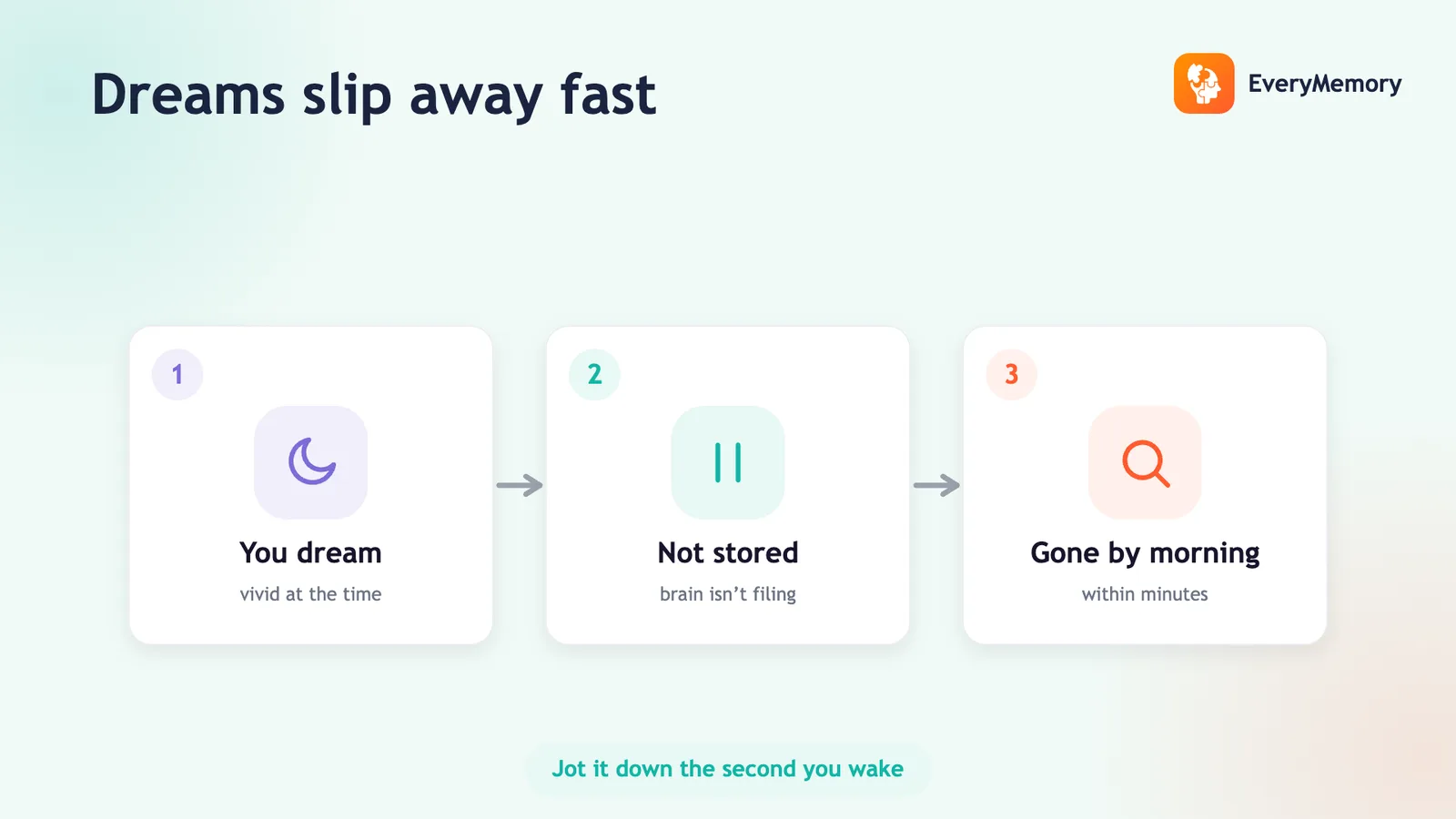
⚡ Quick answer
We forget most dreams because the brain isn't primed to store them: during dream sleep the chemicals that fix memories are at a low ebb, and we usually drift straight from dreaming back into sleep without the wakeful attention that encodes a memory. The dreams we do remember are typically the ones we wake during or right after.
Key takeaways
- We forget most dreams because the sleeping brain barely encodes them - memory-fixing chemistry is at a low during dream sleep.
- A memory needs a wakeful moment to consolidate, and we usually drift back to sleep without it.
- The dreams we remember are typically the ones we wake during or right after.
- Forgetting dreams says nothing worrying about waking memory; to recall more, wake gently and replay the dream before moving.
You can wake gripped by a vivid dream and lose it completely before your feet hit the floor. It feels like a glitch, but forgetting dreams is the normal state - remembering them is the exception.
Here's why dreams slip away so fast, why a few stick, and how to catch more of them.
The sleeping brain isn't set up to store memories
Forming a lasting memory needs the brain in a particular, attentive, awake-like state. During the dreaming stage of sleep, the brain chemistry that normally helps fix memories is at its lowest, so dreams are barely encoded as they happen. They're experienced vividly but written down faintly, if at all.
You usually never wake to catch them
A memory needs a moment of wakeful attention to be consolidated. Most of the time you dream and then slide on into more sleep or a different sleep stage, never giving the dream that waking moment. With nothing to anchor it, it's gone - the same 'never stored' problem behind forgetting things so quickly while awake.
Why some dreams stick
The dreams you remember are almost always the ones you woke up during or immediately after - waking gives the dream the brief attention it needs to be saved. Especially vivid, emotional, or strange dreams are also more likely to survive, because intensity helps encoding.
How to remember more of your dreams
- Wake gently - sudden alarms jolt you past the dream; waking naturally helps you catch it.
- Recall before you move - stay still with your eyes closed and replay the dream the instant you wake, before the day floods in.
- Keep a dream journal - writing dreams down immediately trains you to notice and hold them.
- Tell yourself you'll remember - a simple intention before sleep modestly improves dream recall.
What forgetting dreams doesn't mean
Forgetting your dreams says nothing worrying about your waking memory - it's simply how dream sleep and memory interact. Most people forget the vast majority of their dreams, and that's entirely normal.