 EveryMemory
Word Recall Practice: A Simple Daily Exercise
A clear, step-by-step word recall drill you can do in ten minutes a day to keep everyday verbal memory sharp and track your own progress over time.
Part of the guide: Brain Exercises for Seniors: The Complete Guide →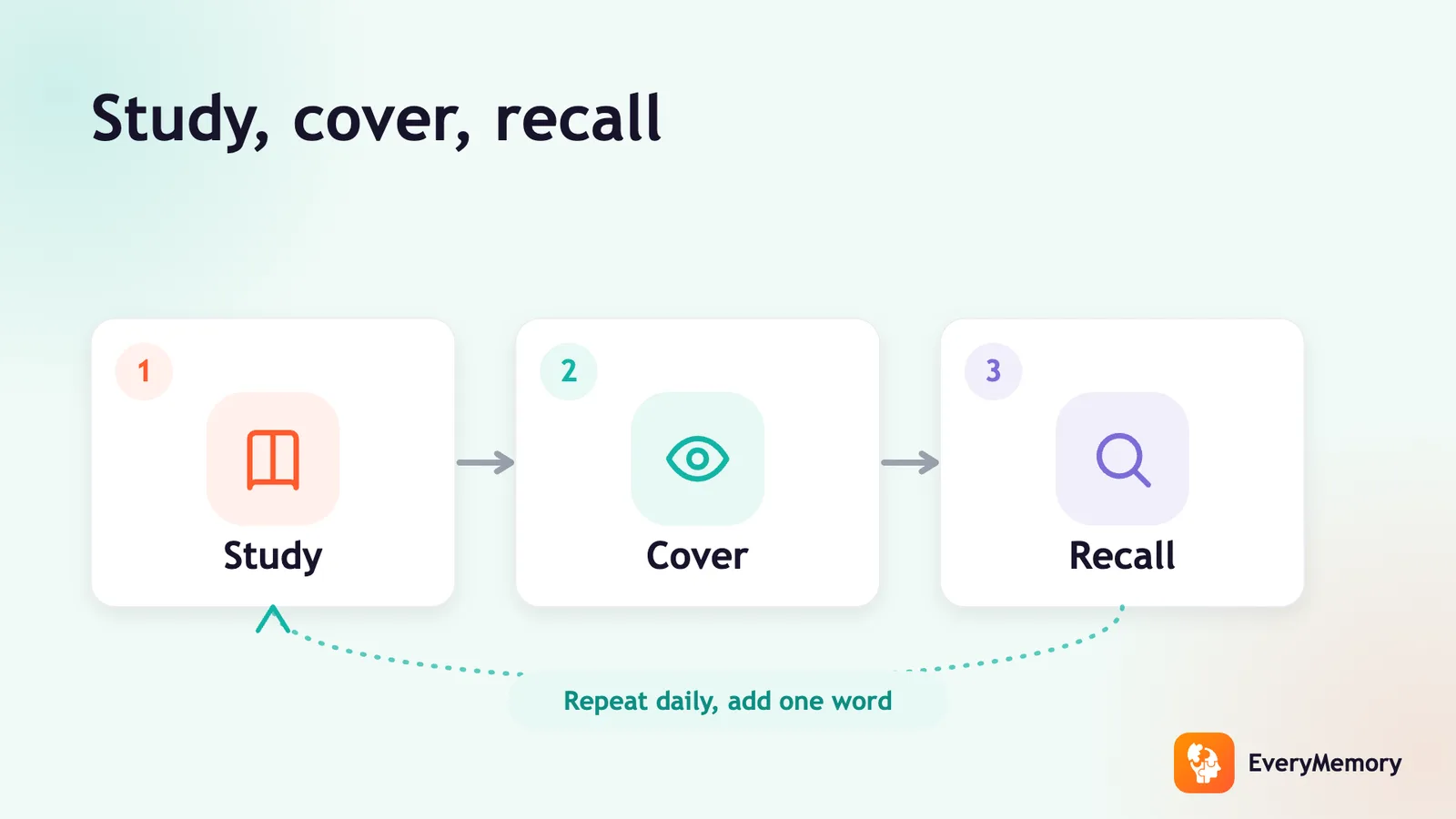
⚡ Quick answer
Word recall practice is a simple drill: read a short list of words, do something else for a few minutes, then write down as many as you remember. Repeating this daily trains verbal short-term memory, keeps retrieval pathways active, and lets you see measurable progress week by week. Most people notice a real difference within two to three weeks of consistent practice.
Key takeaways
- The drill is a study-then-retrieve loop: read a list, wait two to three minutes, then write as many words as you can without looking.
- Actively retrieving words - even imperfectly - strengthens memory more than re-reading the list, a well-established effect called the testing effect.
- Ten words is the recommended starting point; adjust up or down so the drill feels mildly effortful but not discouraging.
- Most people see their scores rise within one to two weeks, and a simple daily log makes that progress visible and motivating.
Have you ever reached for a word mid-sentence and found it stubbornly missing? Or tried to remember what someone said to you ten minutes ago and drawn a near-blank? This kind of everyday verbal slipping is one of the first things people notice as they move into their fifties and sixties - and it responds surprisingly well to a simple, consistent practice.
Word recall practice is exactly what it sounds like: a short, structured drill in which you study a list of words, then try to bring them back from memory a few minutes later. It trains the part of short-term memory that handles language, keeps your retrieval pathways active, and gives you a concrete way to track whether you are actually improving. No special equipment, no app required - just a pen, some paper, and ten minutes.
Watch the guided session
What word recall practice actually is
At its core, word recall is a study-then-retrieve loop. You expose your brain to a set of words, give it a short delay (which separates memory from mere repetition), and then try to pull those words back without looking. The challenge is not vocabulary - you know every word on the list. The challenge is encoding and retrieval: did your brain store the words, and can it find them again?
This matters in daily life because the same mechanism handles all kinds of short-term verbal information: names you just heard, instructions you were given, items on a mental shopping list, and the thread of a conversation. Practising with a word list is a safe, measurable way to keep that system exercised.
You can do this alongside other drills in a 10-minute memory workout for beginners, or build it into a simple daily memory routine that takes under a quarter of an hour from start to finish.
Why this drill works
Each time you try to retrieve something from memory - even imperfectly - you strengthen the neural pathway that holds it. Psychologists call this the testing effect: the act of retrieval is itself a form of learning, and it outperforms re-reading the same material multiple times.
The short delay between study and recall matters too. During that gap your brain briefly consolidates what it just saw. Trying to retrieve words across even a two-minute gap forces deeper encoding than immediate repetition would. Over days and weeks, repeated practice keeps those retrieval pathways well-worn and quick.
Adding a slight challenge - a longer list, a longer delay, or a distraction task between study and recall - works on attention as well as memory. You are training the brain to stay engaged while under mild cognitive load, which is exactly what everyday conversations and tasks demand.
Step-by-step: the basic ten-minute drill
This version works well as a starting point for most adults. All you need is a notebook and something to write with.
- Write out ten common, unrelated words on a piece of paper. Use nouns: chair, envelope, mountain, curtain, hospital, umbrella, candle, festival, notebook, compass.
- Read the list slowly, once. Say each word aloud and picture it briefly. Give yourself about thirty seconds total.
- Flip the paper over and spend two minutes doing something else: make tea, fold a napkin, or just sit quietly and breathe.
- Without looking, write down as many words as you can remember. Order does not matter.
- Flip back and count your score. Note it in a small log: date, list size, score.
- Review any words you missed. Read them once more and picture them before closing the notebook.
That is the entire drill. Plan for roughly five to eight minutes including the rest period. Do it at the same time each day - after breakfast, before bed, or while your morning coffee cools - so it becomes automatic.
Making it easier or harder
The drill should feel mildly effortful - not impossible, not trivial. If you are scoring nine or ten out of ten every day, it is time to increase the challenge. If you are regularly scoring below four, scale it back so it feels achievable.
- Easier: Use a list of seven words. Shorten the delay to thirty seconds. Choose words with strong visual associations (apple, beach, lion).
- Harder: Stretch the list to fifteen words. Extend the delay to five minutes. During the delay, do a short arithmetic task (count backwards from 100 by threes) to add a distraction.
- Extra challenge: Try to recall the words in the original order, not just any order. Or ask someone to read the list to you so you are working from sound rather than sight.
- Category variation: Use words from one category (animals, foods, countries) - these are slightly easier. Mixed categories are harder and more realistic.
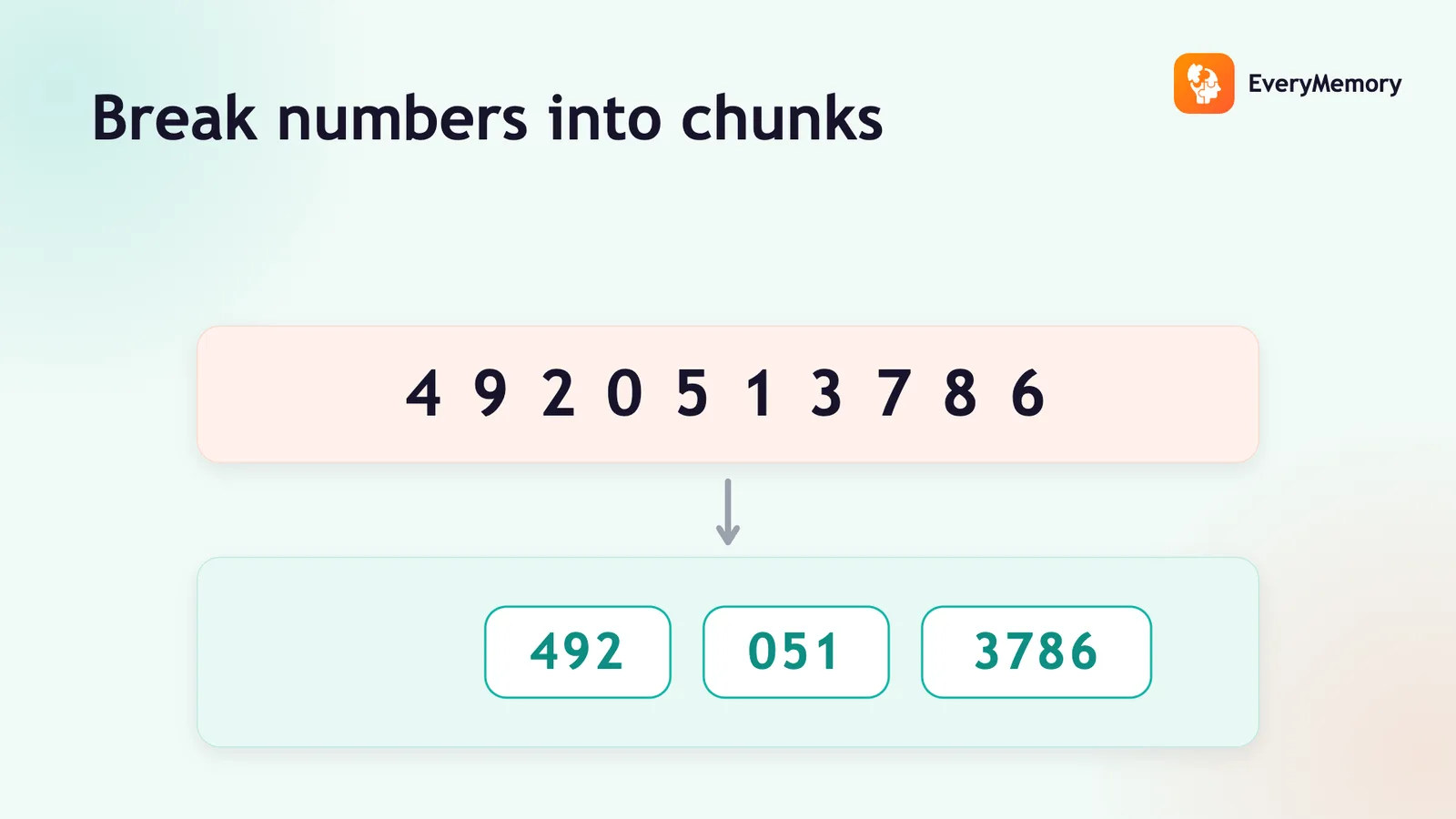
Once you have been practising for a month, try the chunking technique alongside this drill - grouping words into clusters of two or three can sharply lift your score and mirrors how memory works in real conversations.
Tracking progress and building the habit
A simple log is the most motivating thing you can keep. Each day, write three numbers: the date, the number of words on your list, and your score. After two weeks you will have a visible trend - most people see scores climb from around five or six out of ten to eight or nine within that time.
If you want a more structured approach, the weekly memory check-in template and the printable memory tracker for older adults give you a ready-made framework for logging both word recall scores and other everyday memory observations.
Consistency matters far more than duration. A five-minute drill done every day outperforms a thirty-minute marathon once a week. Attach it to something you already do reliably - the habit stacks onto the anchor and the new behaviour costs far less willpower to maintain.
After two to three weeks of daily practice you are ready to explore the broader daily brain training routine, which weaves word recall into a fuller programme alongside attention and visual memory drills.
✅ Try this today - Your first word recall session
Right now, with no preparation, try this three-step version:
- Write these ten words on paper: lamp, river, jacket, market, telescope, blanket, cabinet, sparrow, fountain, glove.
- Read the list once aloud, picturing each object. Then flip the paper over and make yourself a cup of tea or drink a glass of water - take at least two full minutes.
- Without looking, write every word you can remember. Flip back and count your score. Write today's date and score in a notebook. Tomorrow, try a fresh list and see whether your score changes.