 EveryMemory
Acronyms and Acrostics: Simple Memory Tricks
An acronym makes a word from first letters; an acrostic makes a sentence. The simplest mnemonics there are - and exactly when to use them.
Part of the guide: How to Improve Your Memory: The Complete Beginner's Guide →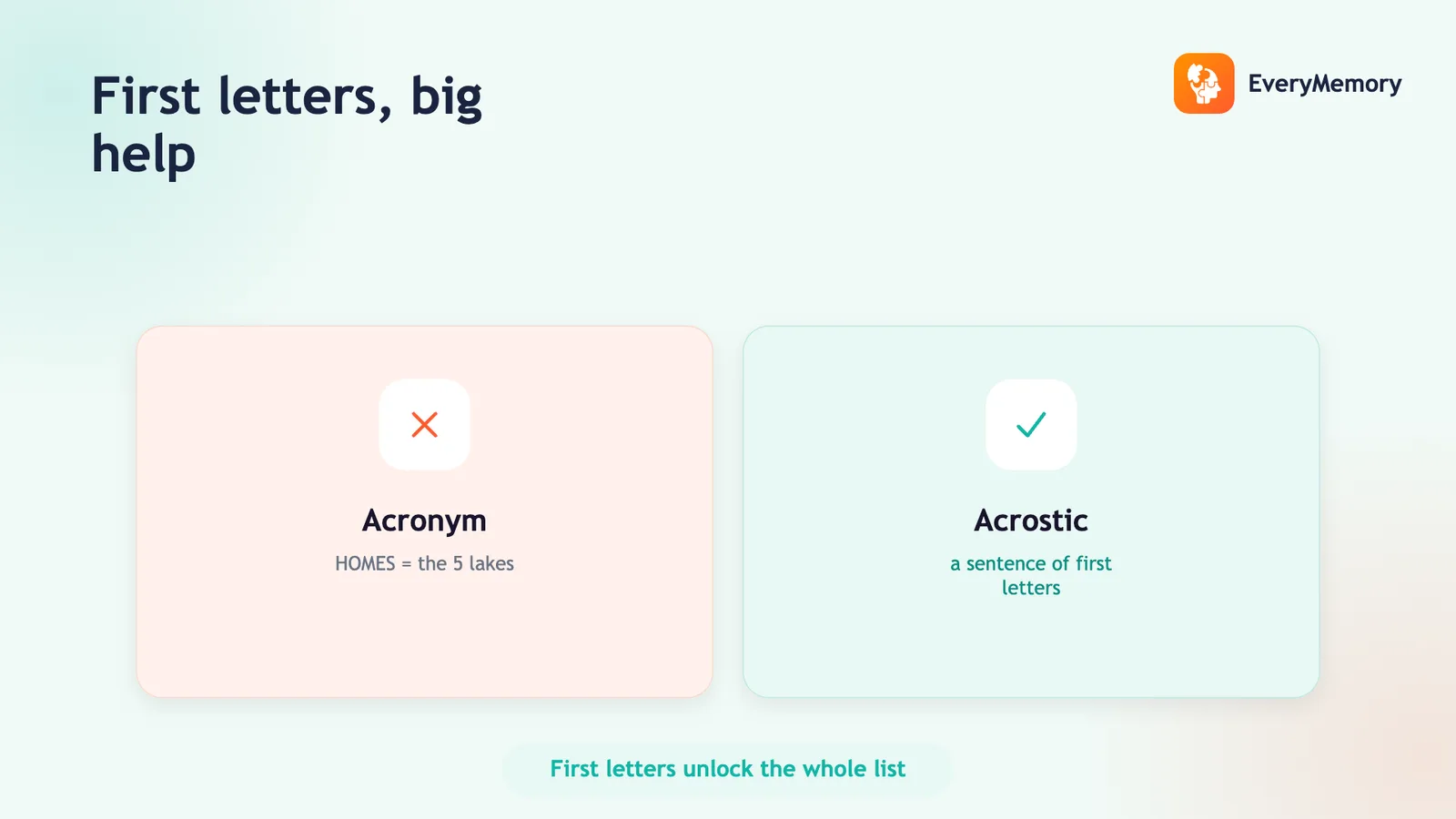
⚡ Quick answer
An acronym makes a word from the first letters of a list (ROYGBIV for the rainbow); an acrostic makes a memorable sentence from them ('Every Good Boy Deserves Fruit' for the notes E-G-B-D-F). Both compress a list into one easy cue. They work best for short, fixed, ordered lists you need to recall exactly.
Key takeaways
- An acronym forms a word from the first letters of a list; an acrostic forms a memorable sentence from them.
- They compress a whole list into one easy cue, so recall is remembering the cue and unpacking the first letters.
- Make the word or phrase vivid and keep the order fixed if the list is ordered.
- Best for short, fixed lists recalled verbatim; use a memory palace or story method for longer lists.
These are the mnemonics you already know - 'ROYGBIV', 'Every Good Boy Deserves Fruit'. They're simple on purpose, and for the right job nothing beats them.
Here's the difference between the two, what makes a good one, and the lists they're built for.
The difference between them
An acronym takes the first letter of each item and makes a single word - 'HOMES' for the Great Lakes (Huron, Ontario, Michigan, Erie, Superior). An acrostic takes those first letters and makes a sentence, useful when the letters don't spell anything - 'My Very Eager Mother…' for the planets. Same idea, two formats: pick whichever the letters allow.
Why they work
They replace a list - which memory handles poorly - with one word or phrase, which it handles easily. Recall becomes: remember the cue, then unpack the first letters. A whole list collapses into a single, sturdy handle.
How to make a good one
- Write the first letter of each item.
- Try to arrange them into a real word (acronym). If they won't, build a short sentence where each word starts with a letter, in order (acrostic).
- Make it vivid or funny - a memorable phrase outlasts a bland one.
- Keep the order fixed if the list is ordered; the cue must preserve sequence.
What they're best for - and their limits
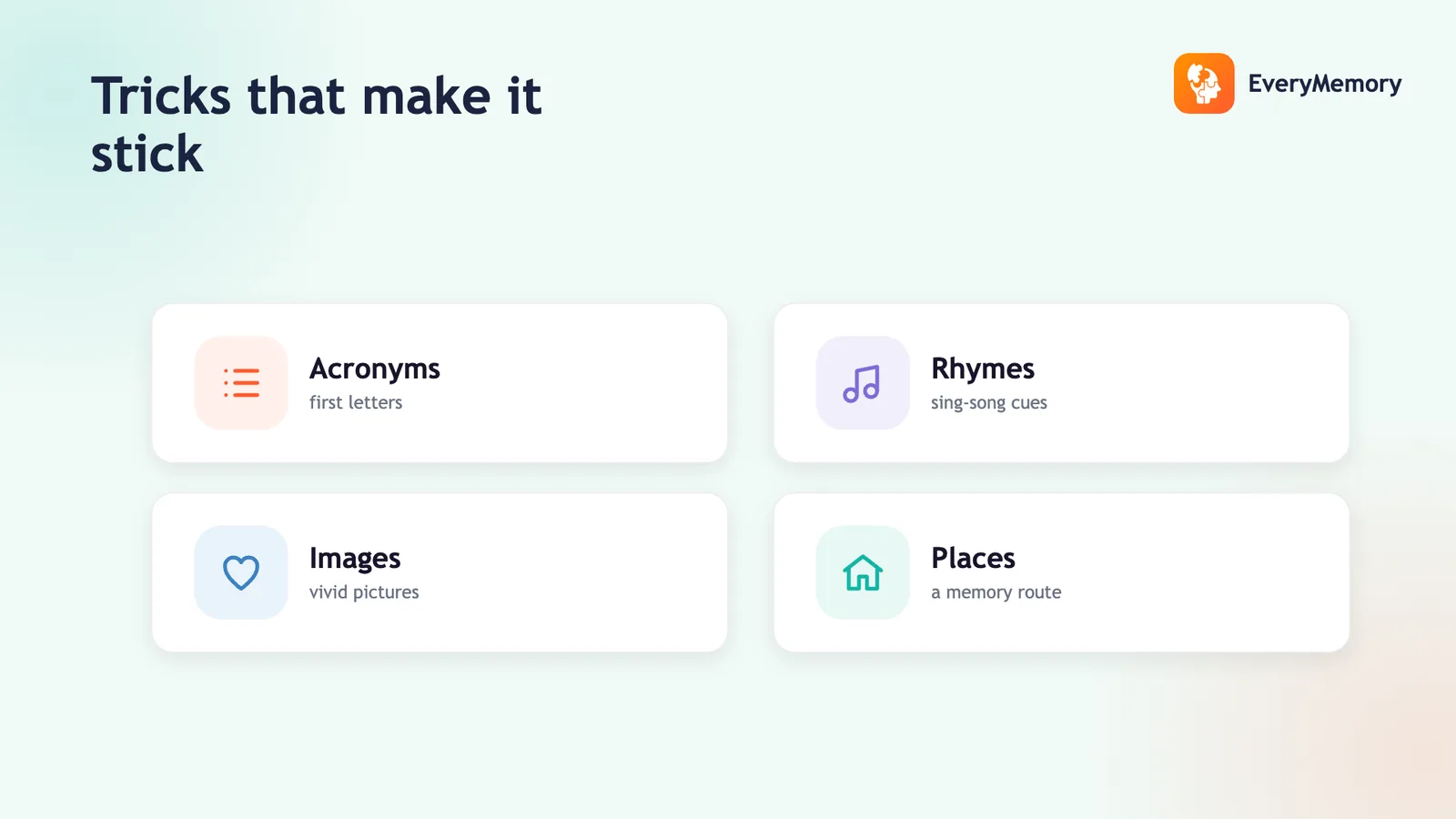
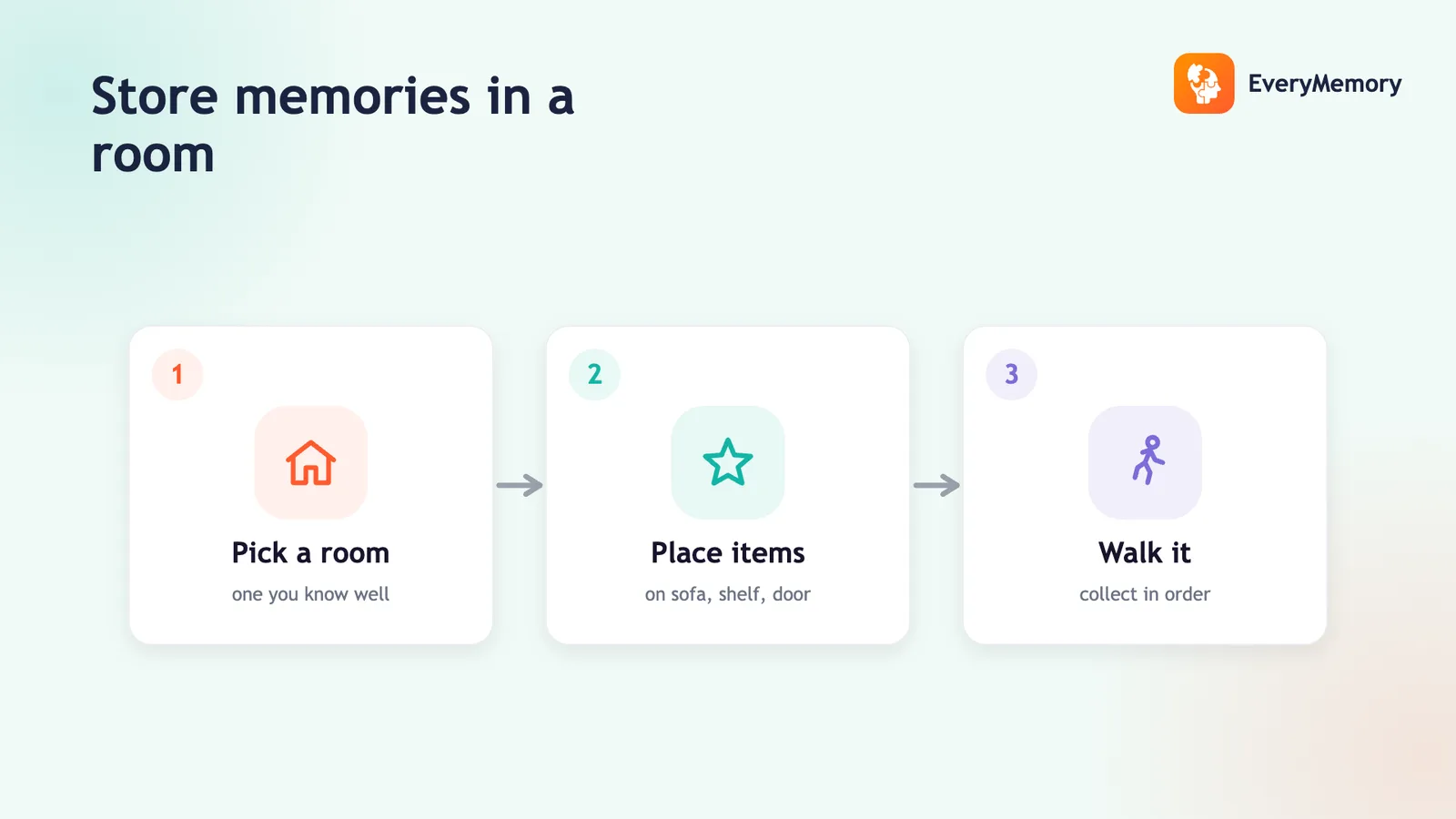
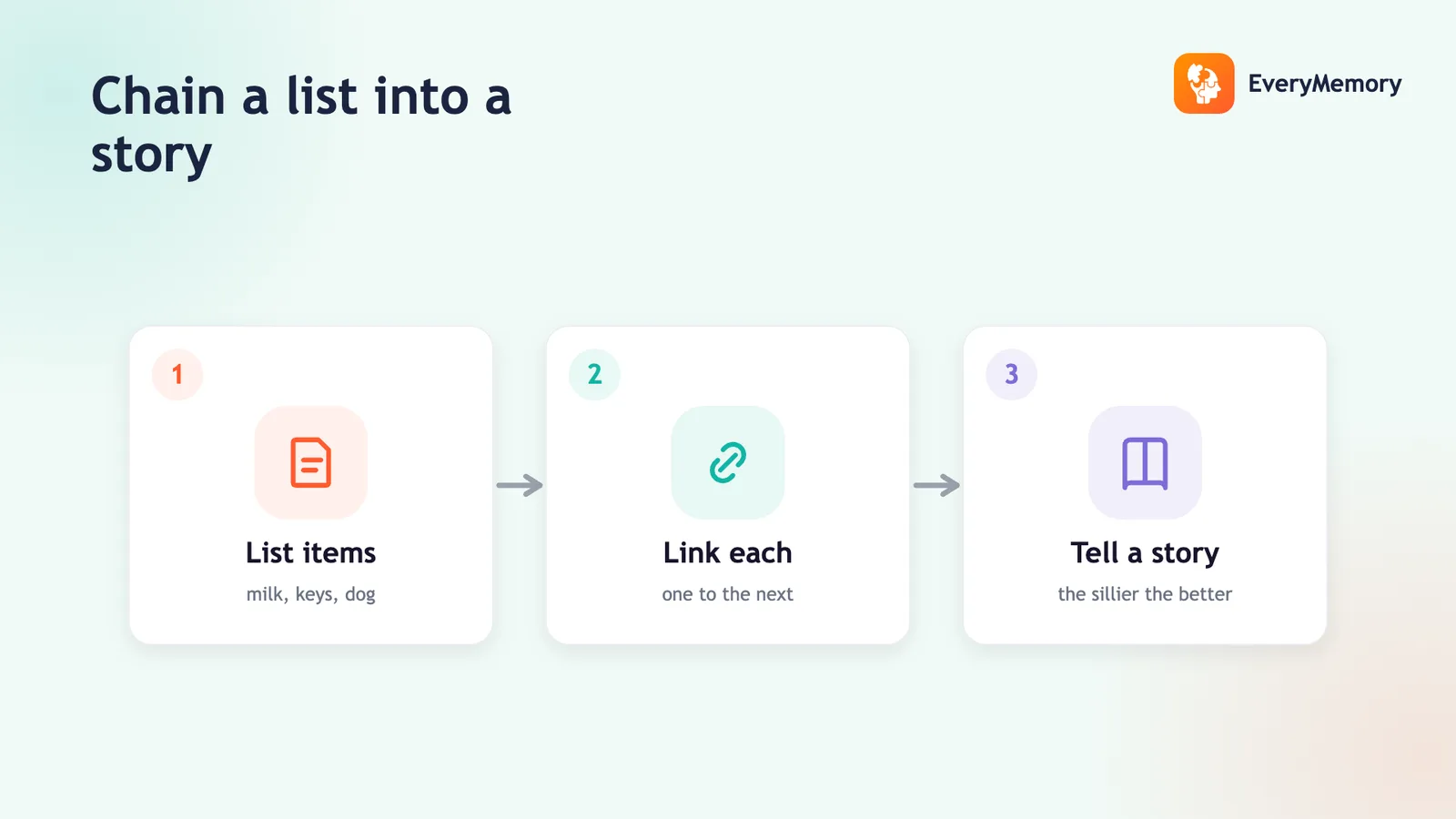
Acronyms and acrostics are perfect for short, fixed lists you must recall verbatim - colours, notes, classifications, a checklist. They struggle as lists grow long, and they don't help you understand anything; they only cue recall. For longer or reusable lists, reach for the memory palace or the link and story method. They're one of several mnemonics worth knowing.