 EveryMemory
Active Recall: The Most Effective Study Method
Active recall means retrieving information from memory instead of rereading it. Why it's the most effective way to study, and exactly how to do it.
Part of the guide: How to Improve Your Memory: The Complete Beginner's Guide →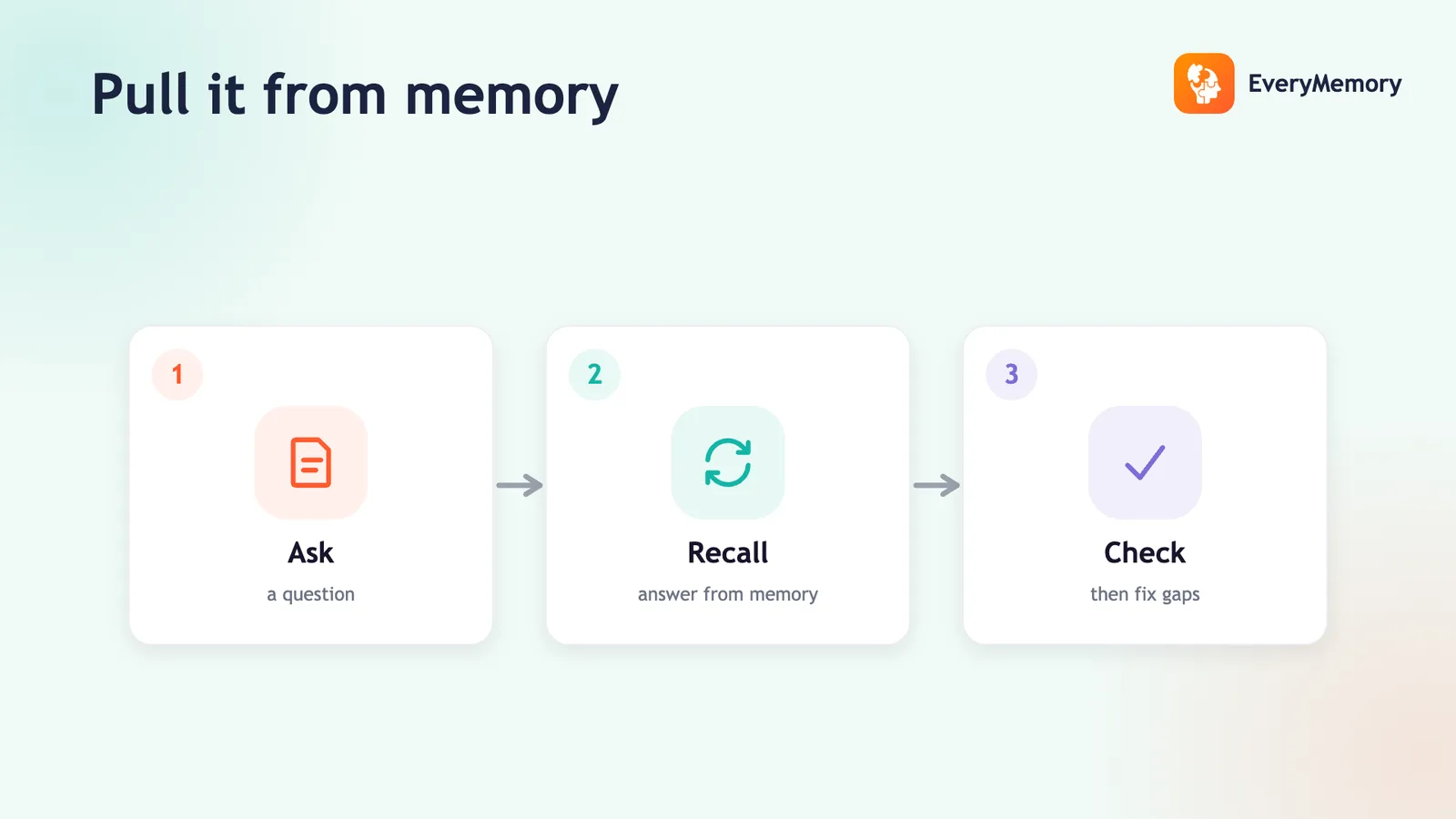
⚡ Quick answer
Active recall means studying by retrieving information from memory - closing the book and reproducing it - instead of rereading or highlighting. It's the most effective study method there is, because the effort of pulling information out is what strengthens the memory. Use practice questions, flashcards, or a blank page, and check only after you've tried.
Key takeaways
- Active recall means retrieving information from memory - not rereading - and it's the most effective study method.
- Each successful retrieval strengthens the memory (the testing effect); rereading only builds false familiarity.
- Do it with practice questions, flashcards, blank-page recall, or by teaching the material aloud.
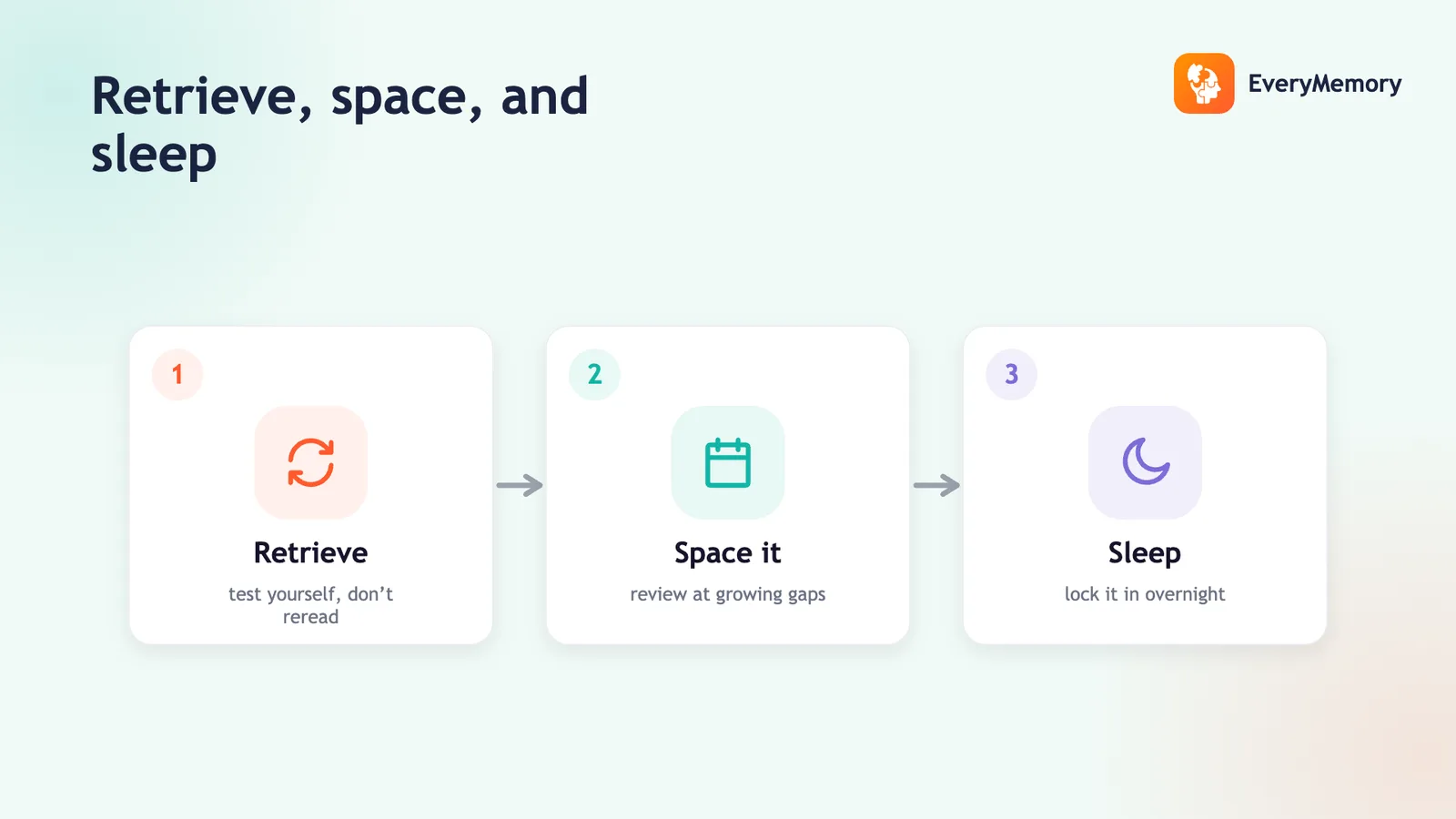
- Don't check too soon or settle for recognition, and combine it with spaced review for the strongest effect.
If you learn one study method, learn this one. Active recall is the closest thing to a free lunch in studying: it takes the same time as rereading and works several times better.
Here's what it is, why it works, and how to do it well.
What active recall is
Active recall is testing yourself: instead of looking at the answer, you try to produce it from memory first. Close the notes and write what you remember; cover the answer on a flashcard and say it; attempt the question before checking. The defining feature is effortful retrieval, not review.
Why it beats rereading
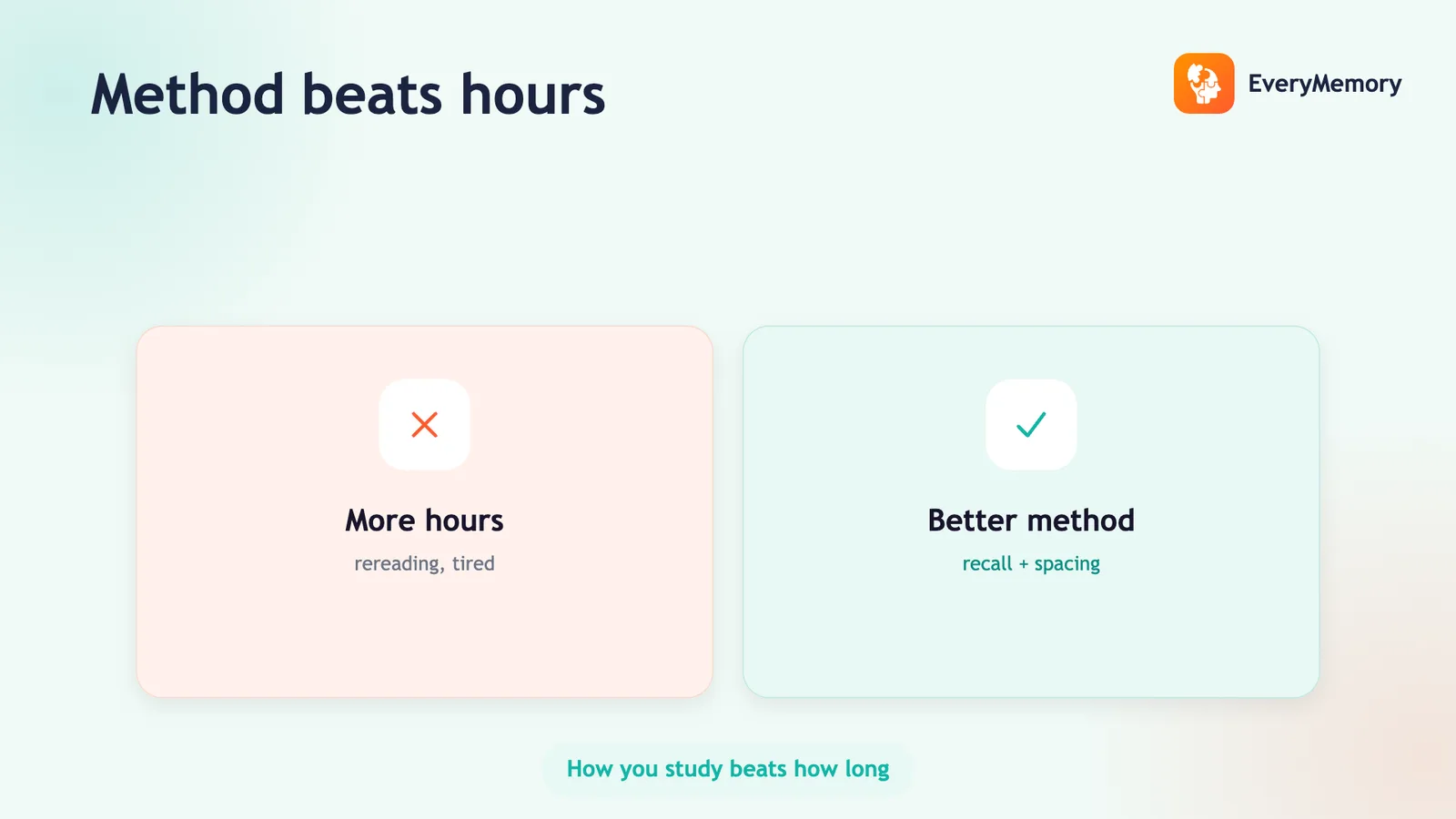
Every time you successfully pull information from memory, you strengthen the path to it and make the next recall easier - the testing effect. Rereading, by contrast, only makes material feel familiar, and familiarity is routinely mistaken for knowledge. That's why students who reread feel ready and then blank in the exam, while self-testers don't.
How to do it
- Practice questions - answer from memory before checking; past papers are ideal.
- Flashcards - see the prompt, say the answer aloud, then flip.
- Blank-page recall - after studying a topic, write everything you remember, then fill the gaps.
- Teach it - explain it aloud without notes; the gaps appear instantly.
Common mistakes
Three things blunt active recall: checking the answer too soon (the struggle is the point), settling for recognition instead of full recall ('I knew that' isn't the same as producing it), and only doing it once. Sit with the effort, reproduce the whole answer, and revisit it.
Combine it with spacing
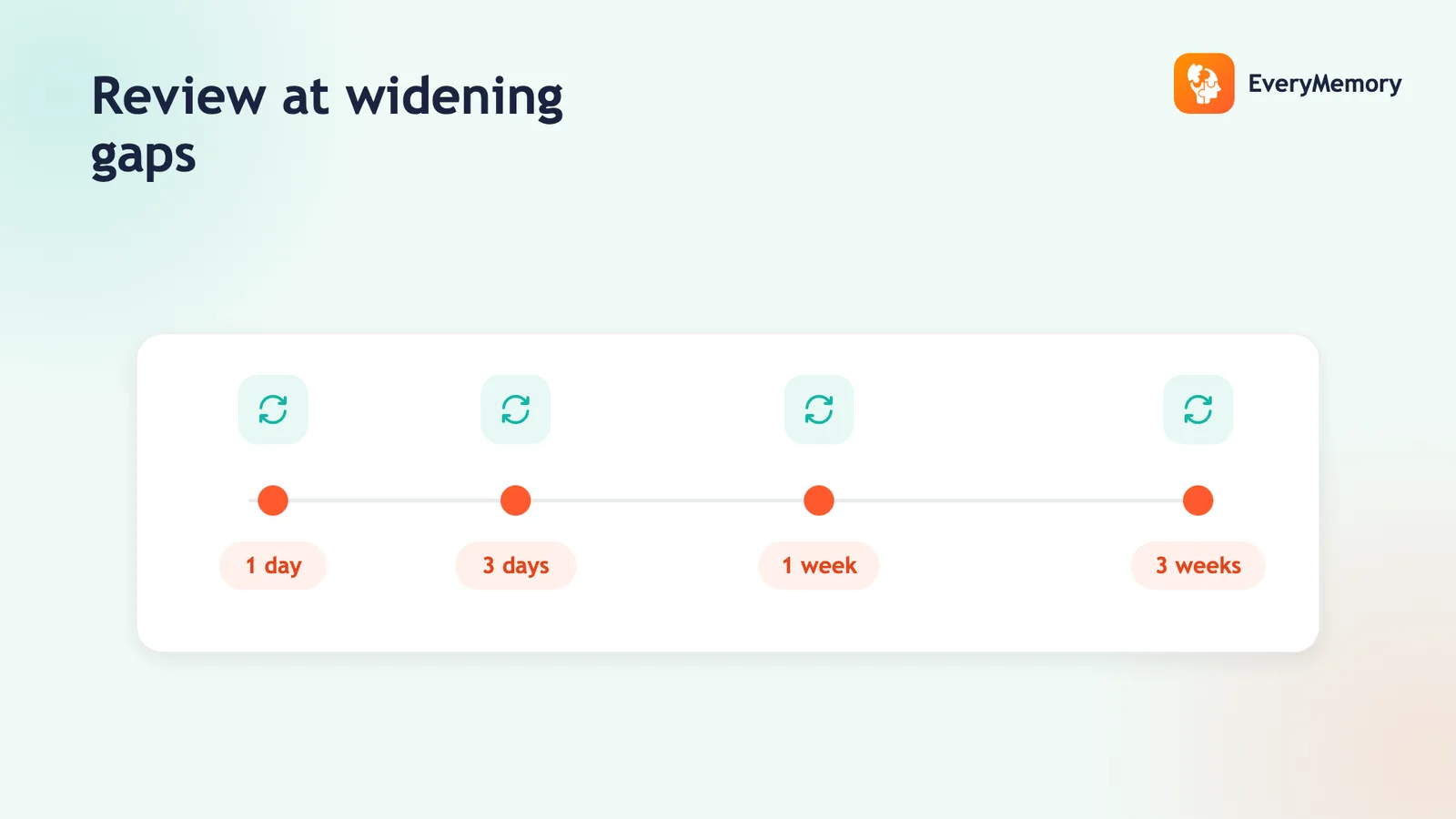
Active recall is most powerful spread out. Recall a topic today, then again in a few days and a week - each spaced retrieval resets the forgetting curve. Together they're the backbone of effective study; see spaced repetition and the wider guide to retention.
✅ Try this today - the blank-page method
Replace one reread with one recall:
- Study a topic, then close everything.
- Write everything you can remember on a blank page.
- Check against your notes, mark the gaps, and restudy only those.
- Repeat the blank page tomorrow - the gaps will have shrunk.