 EveryMemory
Spaced Repetition for Studying
Reviewing material at widening intervals keeps it for far less effort than cramming. How spaced repetition works, and how to schedule it.
Part of the guide: How to Improve Your Memory: The Complete Beginner's Guide →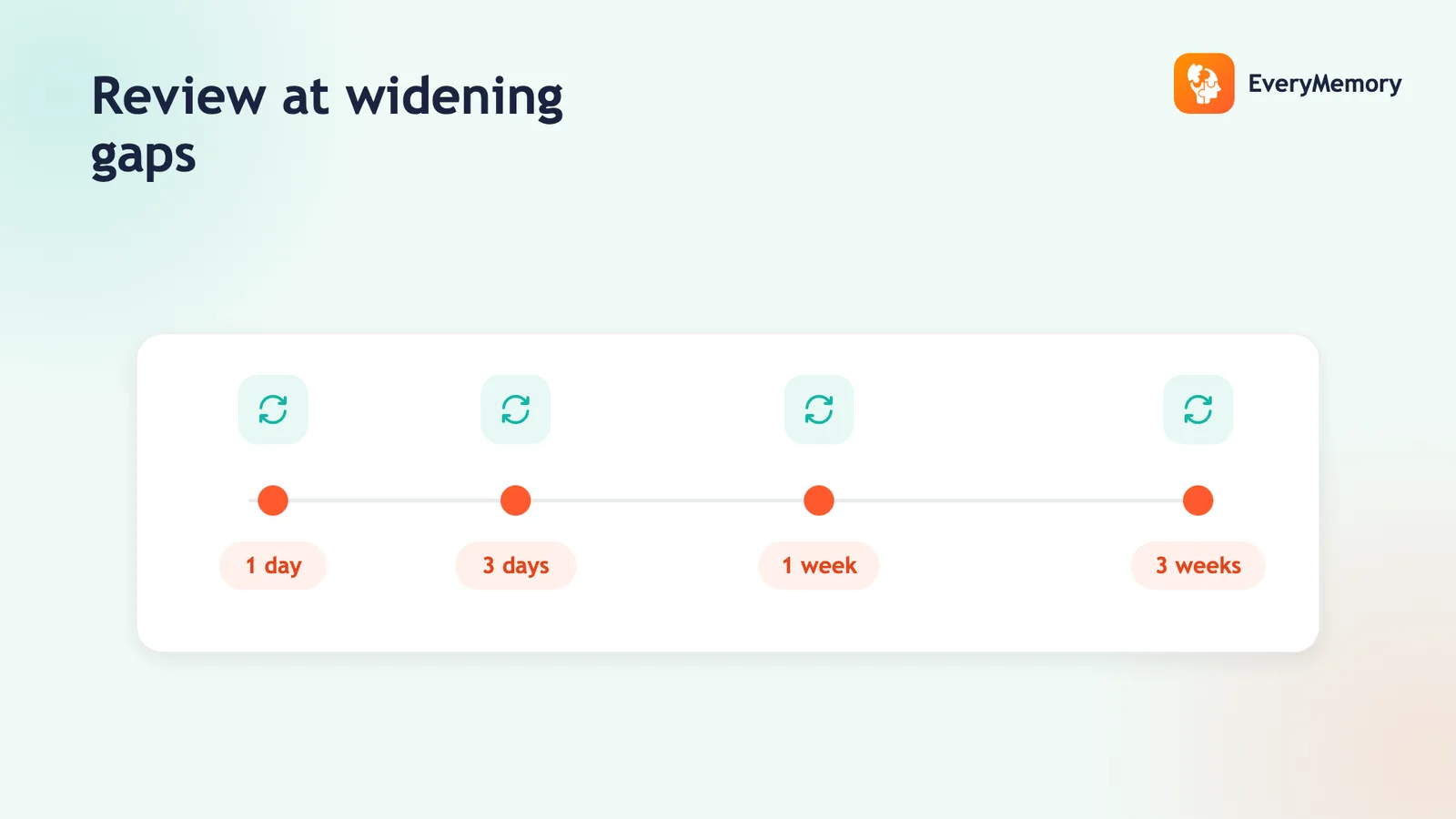
⚡ Quick answer
Spaced repetition means reviewing material at increasing intervals - a day later, a few days, a week - instead of all at once. Each review, timed for just as you're about to forget, resets the forgetting curve so the memory lasts longer for less total effort. It's the antidote to cramming, and works best paired with active recall.
Key takeaways
- Spaced repetition means reviewing at widening intervals - a day, a few days, a week - instead of all at once.
- Each review, timed for just as you start to forget, flattens the forgetting curve, so the memory fades more slowly.
- It's the antidote to cramming and works best when each review is a self-test, not a reread.
- Schedule simple intervals by hand, sort flashcards by difficulty, or let an app schedule it for you.
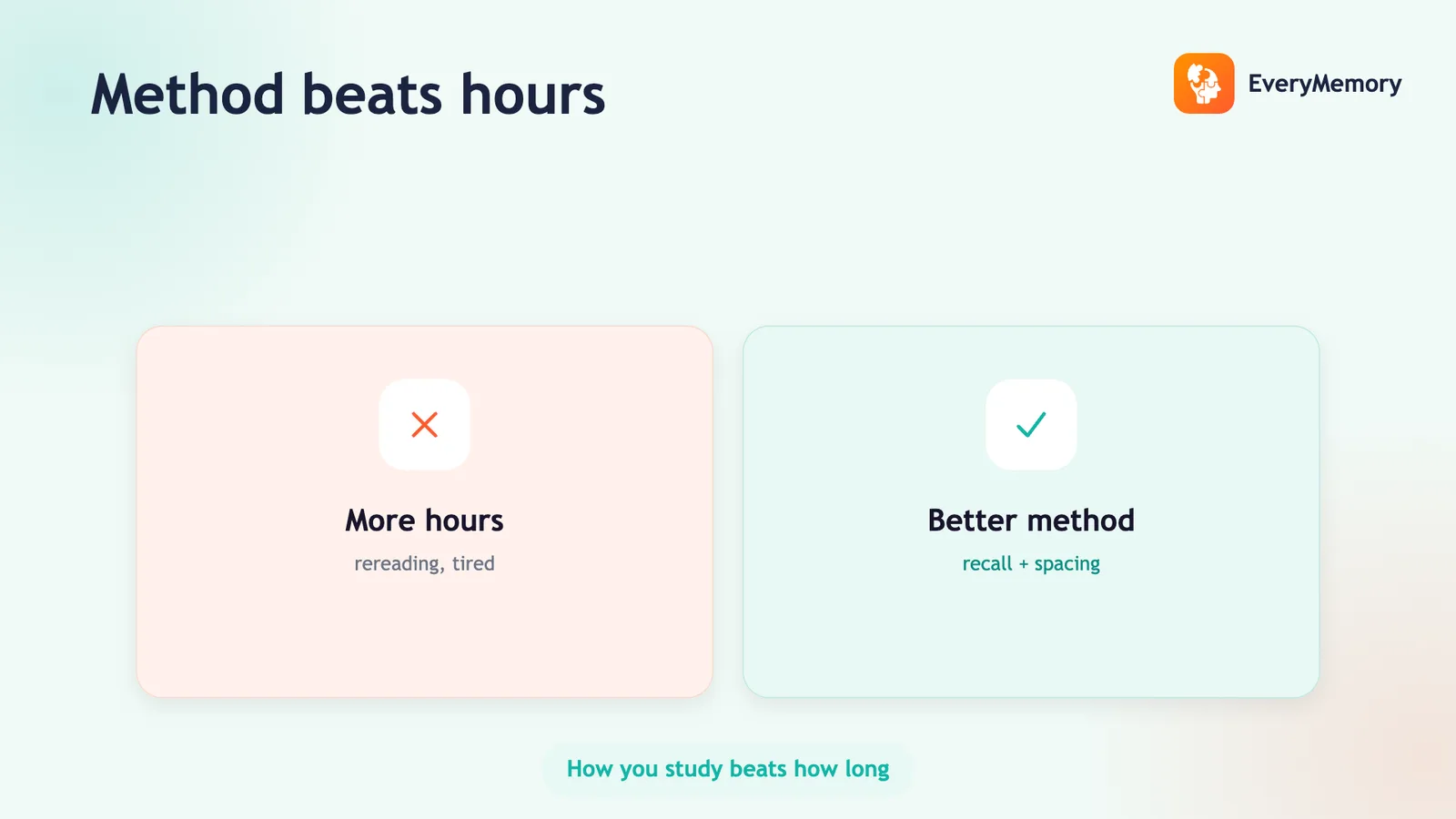
Cramming feels efficient and fails reliably, because it gives the brain no time to consolidate. Spaced repetition is its opposite - and the difference in what you keep is dramatic.
Here's how spacing works, and a simple way to schedule it without any special software.
What spaced repetition is
Instead of studying something five times in one sitting, you study it once and then review it at growing gaps - tomorrow, in three days, in a week, in a fortnight. Each review comes just as the memory starts to fade, which is exactly when reinforcing it does the most good.
Why spacing beats cramming
Newly learned material follows a forgetting curve, dropping away over days. A well-timed review flattens that curve, and each successive review flattens it further, so the memory decays more slowly each time. Cramming, by contrast, packs everything into one session with no spacing, so it all fades together within days. The mechanism is detailed in improving retention.
How to schedule it
- Simple intervals - review new material after 1 day, 3 days, 1 week, then 2–3 weeks.
- Flashcards - sort cards into 'knew it' and 'didn't'; review the 'didn't' pile sooner and more often.
- Spaced-repetition apps - flashcard apps schedule the intervals for you based on how well you recall each card.
- A study calendar - for bigger topics, block short reviews across the weeks before an exam.
Pair it with active recall
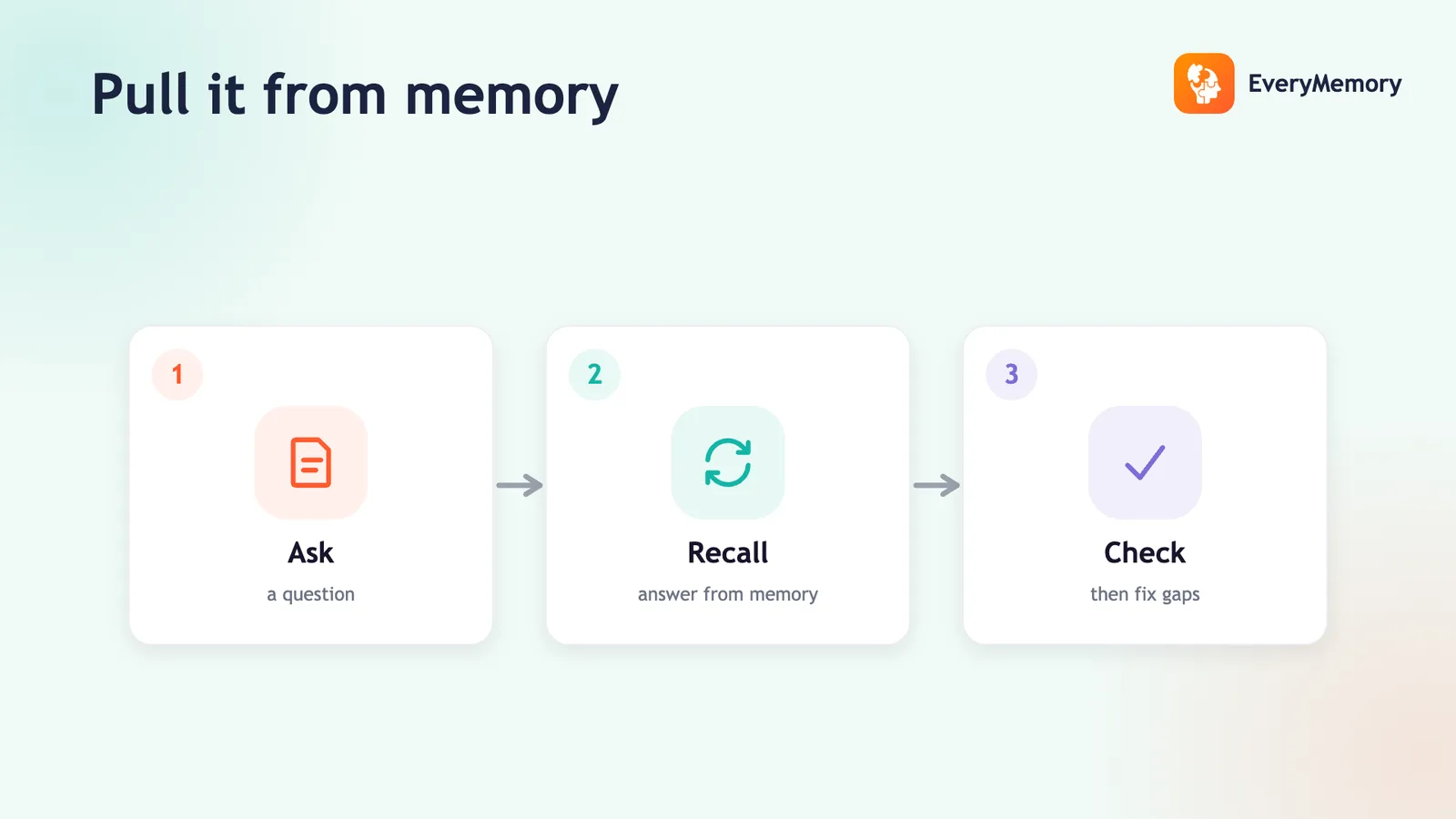
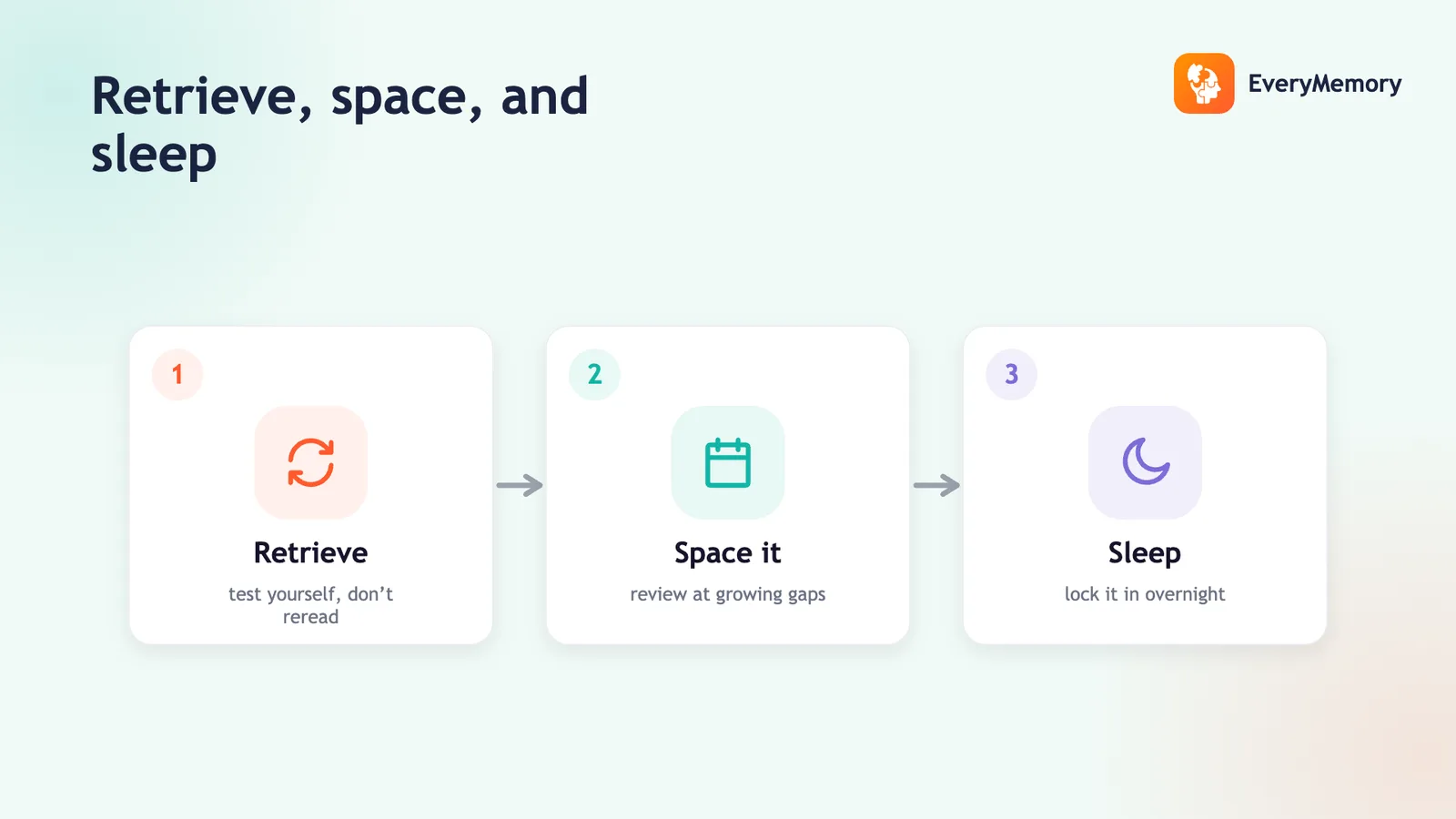
Spacing tells you when to review; active recall tells you how. Make each spaced review a retrieval - recall from memory, then check - rather than a reread. Spacing plus retrieval is the most effective study combination there is.
Using it for exams
Start early enough to space, working backwards from the exam date so each topic gets several reviews. A topic seen once and reviewed three times across two weeks will hold under pressure far better than one crammed the night before. More on exam-specific tactics in how to memorise for exams.