 EveryMemory
How to Study Effectively
Effective studying is about method, not hours. The handful of evidence-backed techniques that learn more in less time - and the popular habits that waste it.
Part of the guide: How to Improve Your Memory: The Complete Beginner's Guide →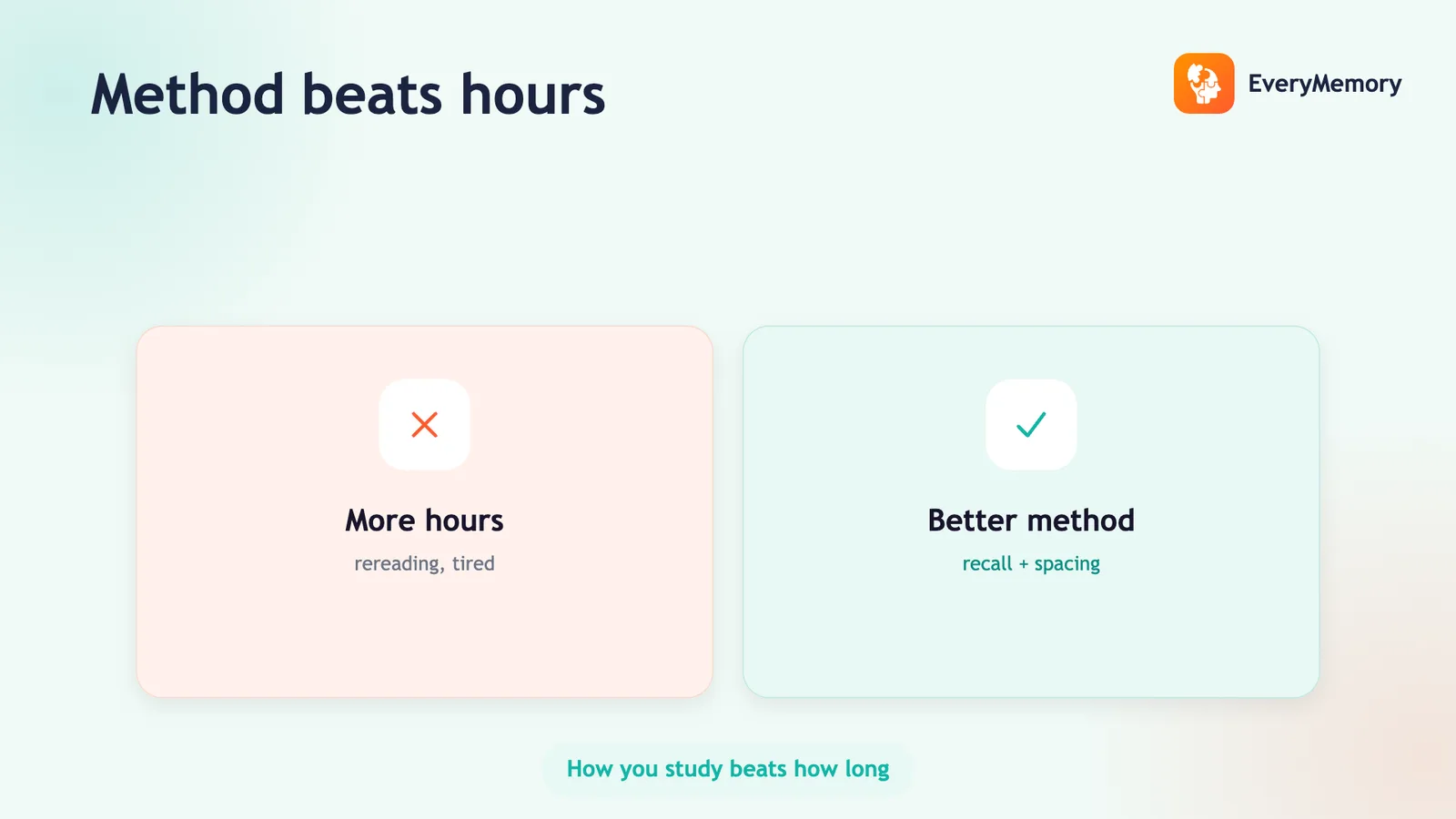
⚡ Quick answer
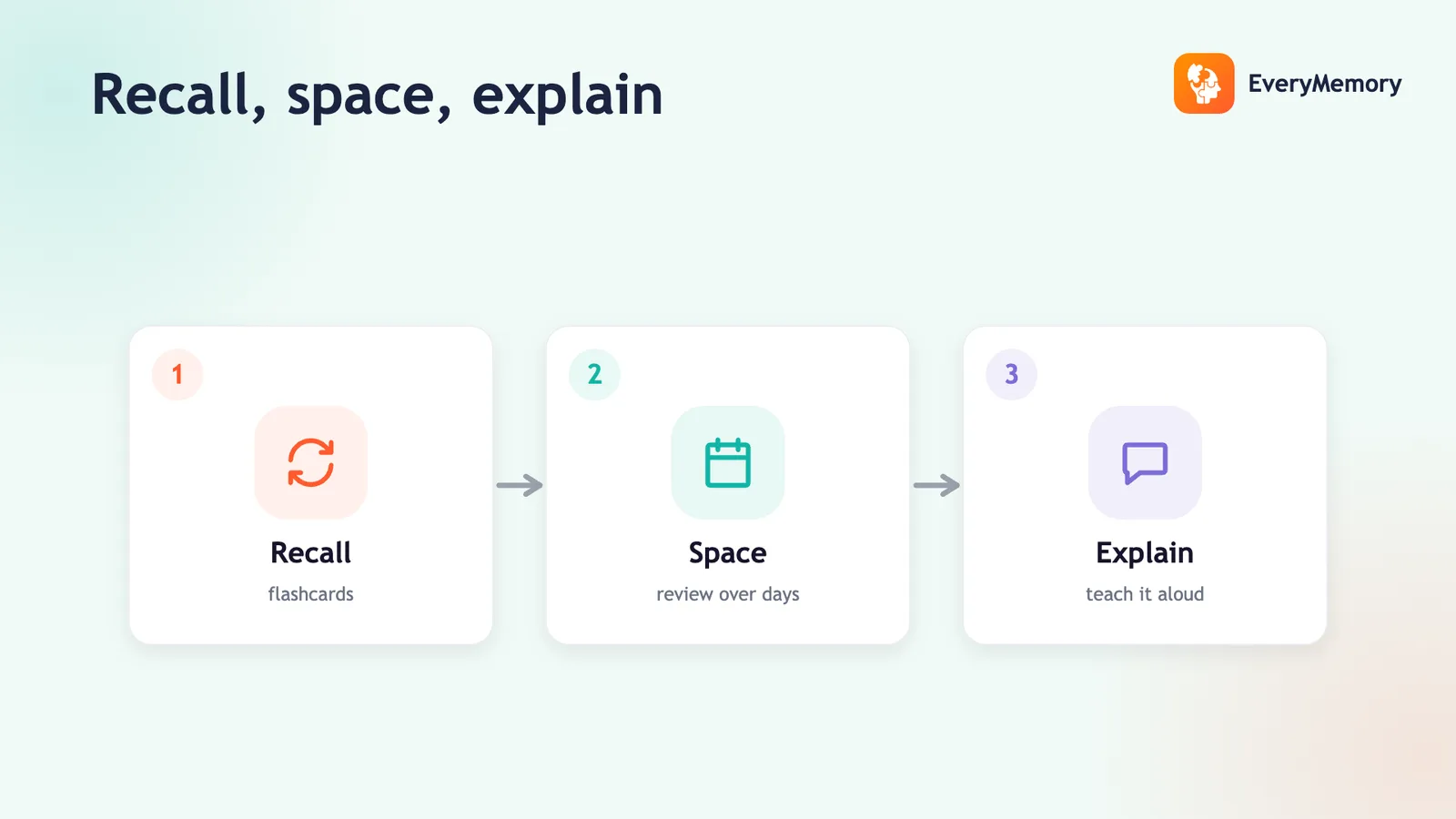
Studying effectively is less about hours and more about method: test yourself instead of rereading (active recall), space your study across days rather than cramming, study in focused blocks, and explain ideas in your own words. Add a quiet setup, enough sleep, and a simple plan, and you'll learn more in less time than passive rereading ever delivers.
Key takeaways
- Effectiveness is about method, not hours - rereading and highlighting feel productive but teach little.
- Test yourself instead of rereading (active recall) and space study across days rather than cramming.
- Explain ideas in your own words to turn memorised facts into understanding.
- Study in focused blocks, protect sleep so learning consolidates, and drop the low-value habits.
Most students study for hours and remember little, because effort and effectiveness aren't the same thing. Rereading and highlighting feel productive and teach almost nothing; a few specific methods do the real work.
Here's how to study effectively - the methods that move the needle, and the habits to drop.
Effort isn't the same as effectiveness
Rereading and highlighting are the most common study methods and among the least effective. They feel like learning because the material grows familiar - but familiarity isn't recall. The methods below feel harder precisely because they make your brain do the work that builds memory.
Test yourself instead of rereading
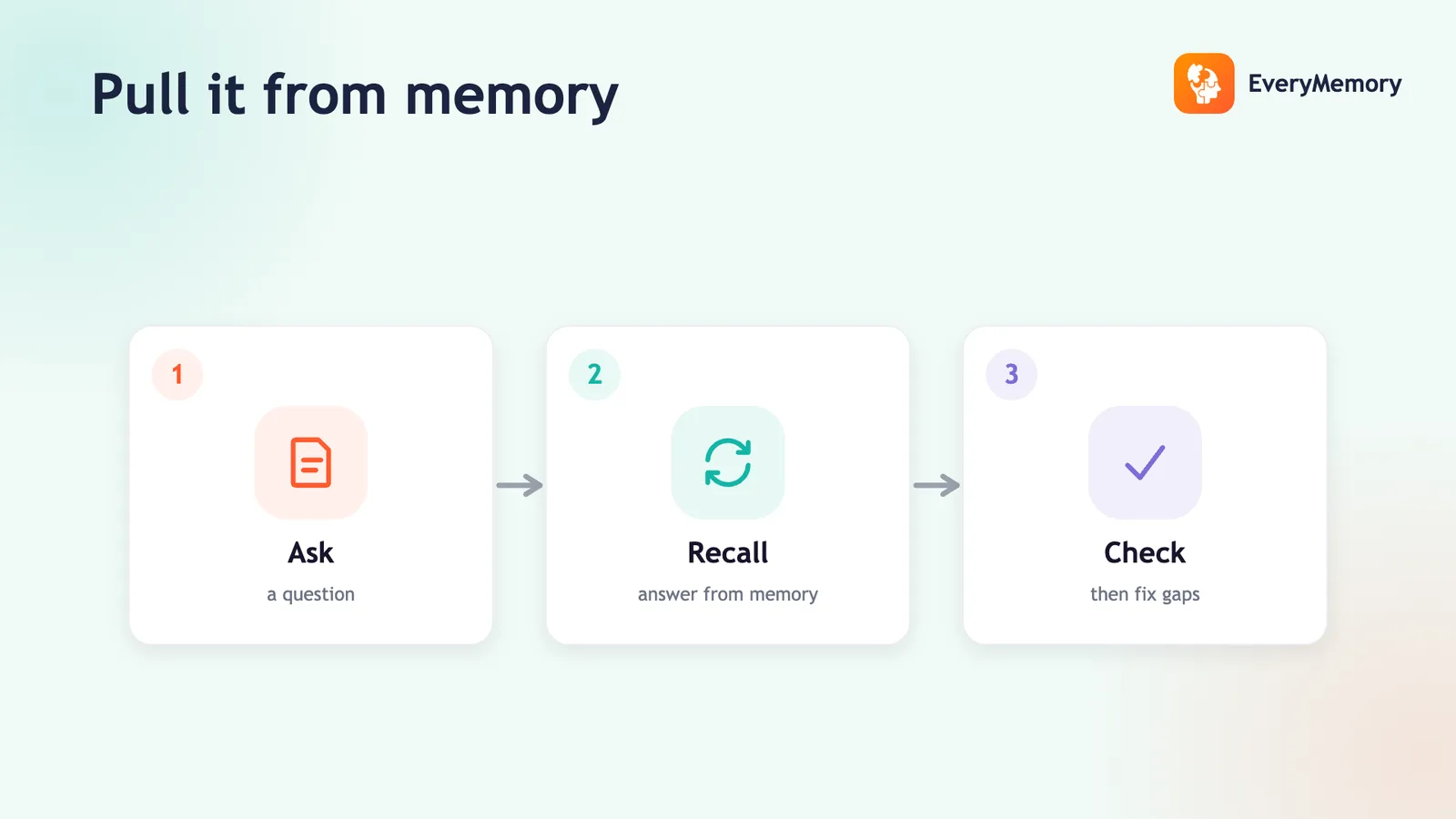
The single highest-value method is active recall: close the book and retrieve the material from memory, then check. Each retrieval strengthens the memory far more than another read-through. Use practice questions, flashcards, or a blank page - the full method is in active recall.
Space it across days
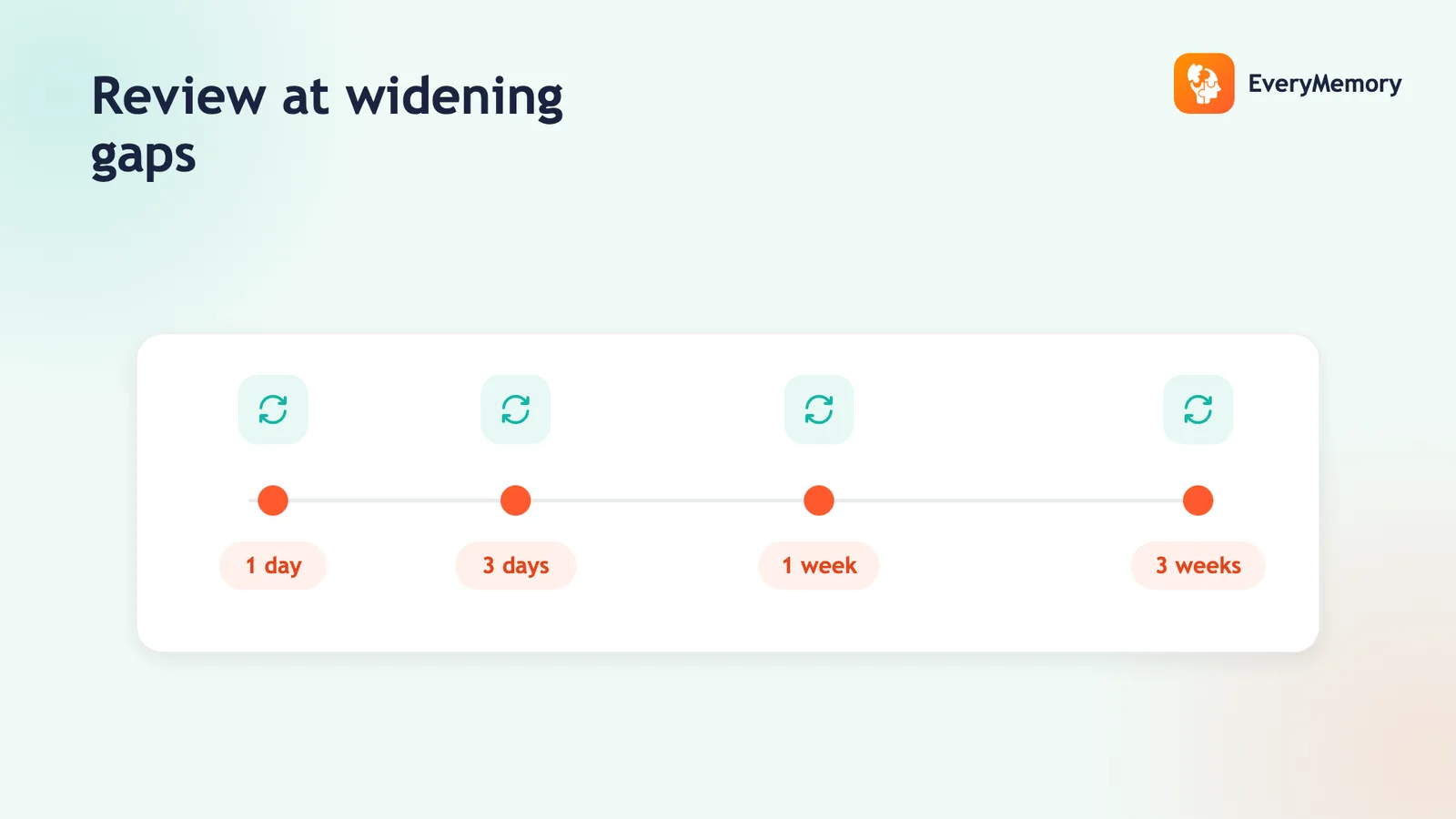
Studying the same material in spaced sessions beats cramming it into one, for less total time. Review a topic the next day, a few days later, then a week on; each spaced recall resets the forgetting curve. See spaced repetition.
Explain it in your own words
If you can teach an idea simply, you understand it; if you can't, you've found the gap. Explaining material aloud - to a friend or an empty room - forces you to reconstruct and organise it, turning memorised facts into understanding.
Set up to focus, and plan
Study in short focused blocks with distractions removed (see how to concentrate on studying), and make a simple plan: what to cover, broken into sessions across the days you have. A plan turns 'study more' into specific, doable steps.
Sleep, breaks, and what to stop
Sleep consolidates what you learned, so it's part of studying, not a reward for finishing - see how sleep affects memory. And stop the low-value habits: rereading, highlighting, marathon sessions, and studying with your phone in reach. For the memory techniques that help with facts and lists, see memory techniques for studying.