 EveryMemory
Blue Light and Focus: What's Actually True
The evidence that blue light directly harms your brain or focus is weak - the real problems with evening screens are disrupted sleep and fragmented attention, not the wavelength.
Part of the guide: How to Keep Your Brain Healthy: A Complete Lifestyle Guide →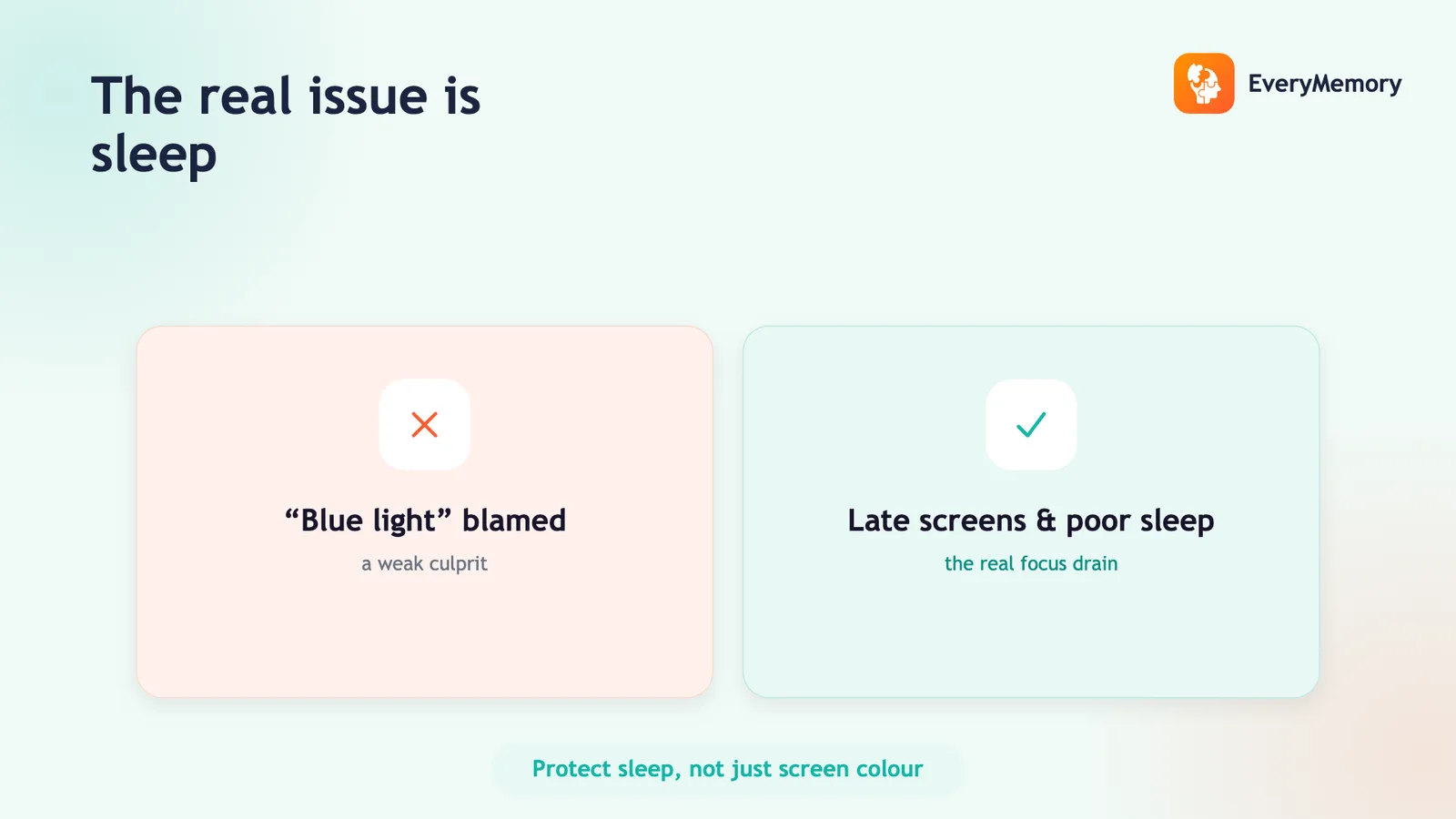
⚡ Quick answer
The evidence that blue light directly harms your brain or daytime focus is weak. Blue light's clearest effect is on the body clock: bright light in the evening can delay sleep. But the bigger reasons evening screens hurt you are the stimulating content keeping you alert and the fragmented attention from constant switching - not the wavelength itself. Sleep and attention habits matter far more than blue-light glasses.
Key takeaways
- Evidence that blue light directly harms the brain or daytime focus is weak.
- Its one clear effect is on the body clock - evening light can delay sleep.
- The real evening-screen problems are stimulating content and fragmented attention.
- A pre-bed wind-down and single-tasking help far more than blue-light glasses.
Blue light has become a convenient villain. Glasses, screen filters, and "night modes" all promise to protect your focus and your brain from it. The honest picture is less dramatic, and worth getting right so you spend your effort where it actually helps.
Blue light is real and it does influence one thing in particular - the body clock. But the popular story, that staring at blue light damages your brain or wrecks your focus during the day, isn't well supported. The genuine problems with evening screens lie elsewhere.
What blue light actually does
Blue light's one well-established effect is on your circadian rhythm. Light in the evening, blue light included, can suppress melatonin and nudge your body clock later, making it harder to fall asleep. That part is real.
What's not well supported is the leap from there to "blue light damages your brain" or "blue light ruins your focus during the day." Daytime blue light, from the sun and screens alike, is normal and not a problem for focus. The wavelength is not the villain it's sold as.
Myth versus reality
| Common claim about blue light | What the evidence actually says |
|---|---|
| Blue light damages your brain | No good evidence for this from screen-level exposure. |
| Blue light ruins your daytime focus | Daytime blue light is normal; it doesn't harm focus. |
| Blue-light glasses improve focus and sleep | Evidence is weak; benefits are modest at best. |
| Blue light at night delays sleep | Partly true - evening light can shift the body clock, but content matters more. |
| Night mode fixes evening screen problems | It barely helps if stimulating content keeps you alert. |
The real problems with evening screens
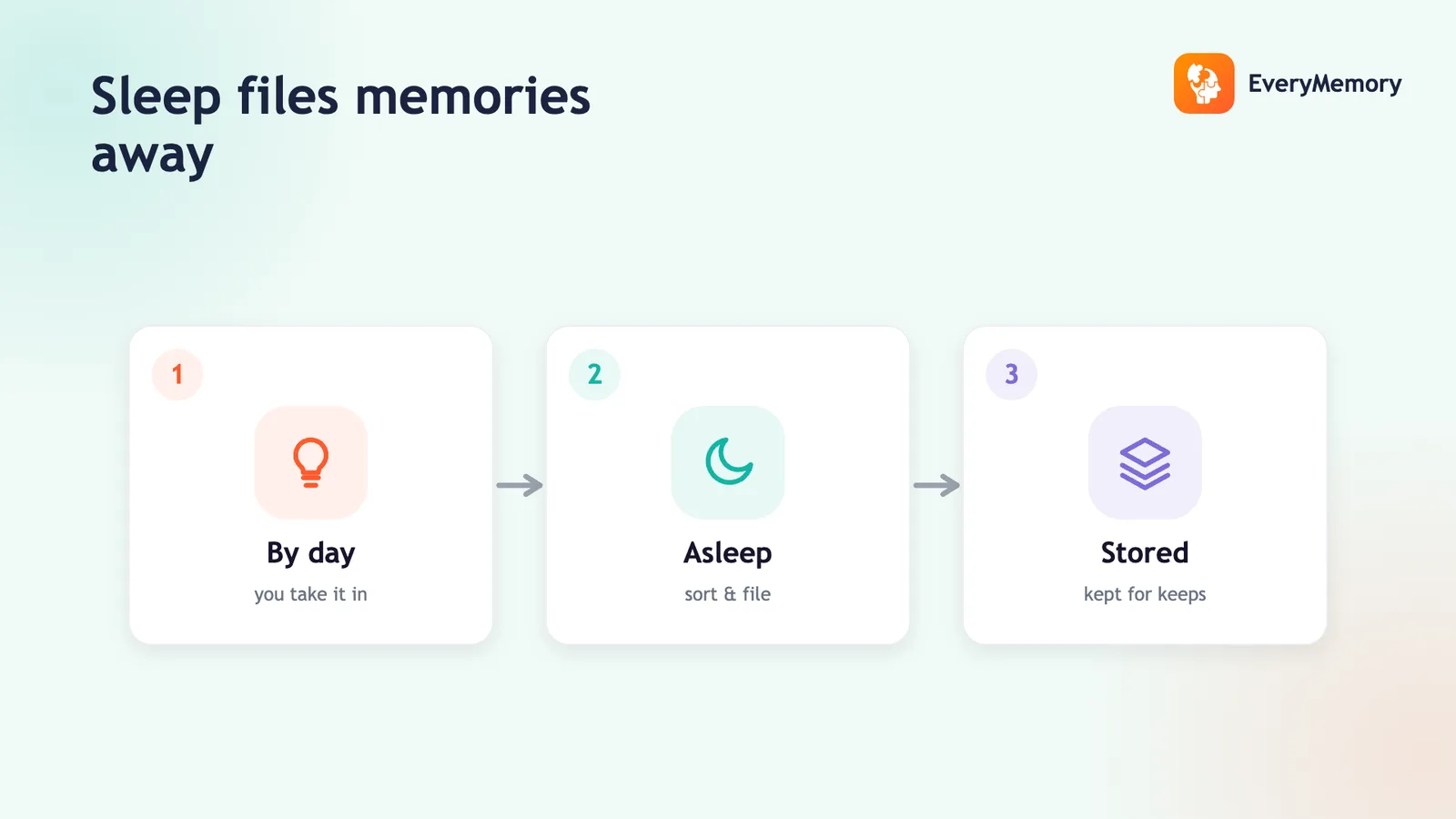
Two things make late-night screens bad for you, and neither is the colour of the light. The first is content: an engaging show, feed, or game keeps your mind alert and aroused when it should be powering down. That delays sleep far more than the wavelength does - see how sleep affects memory.
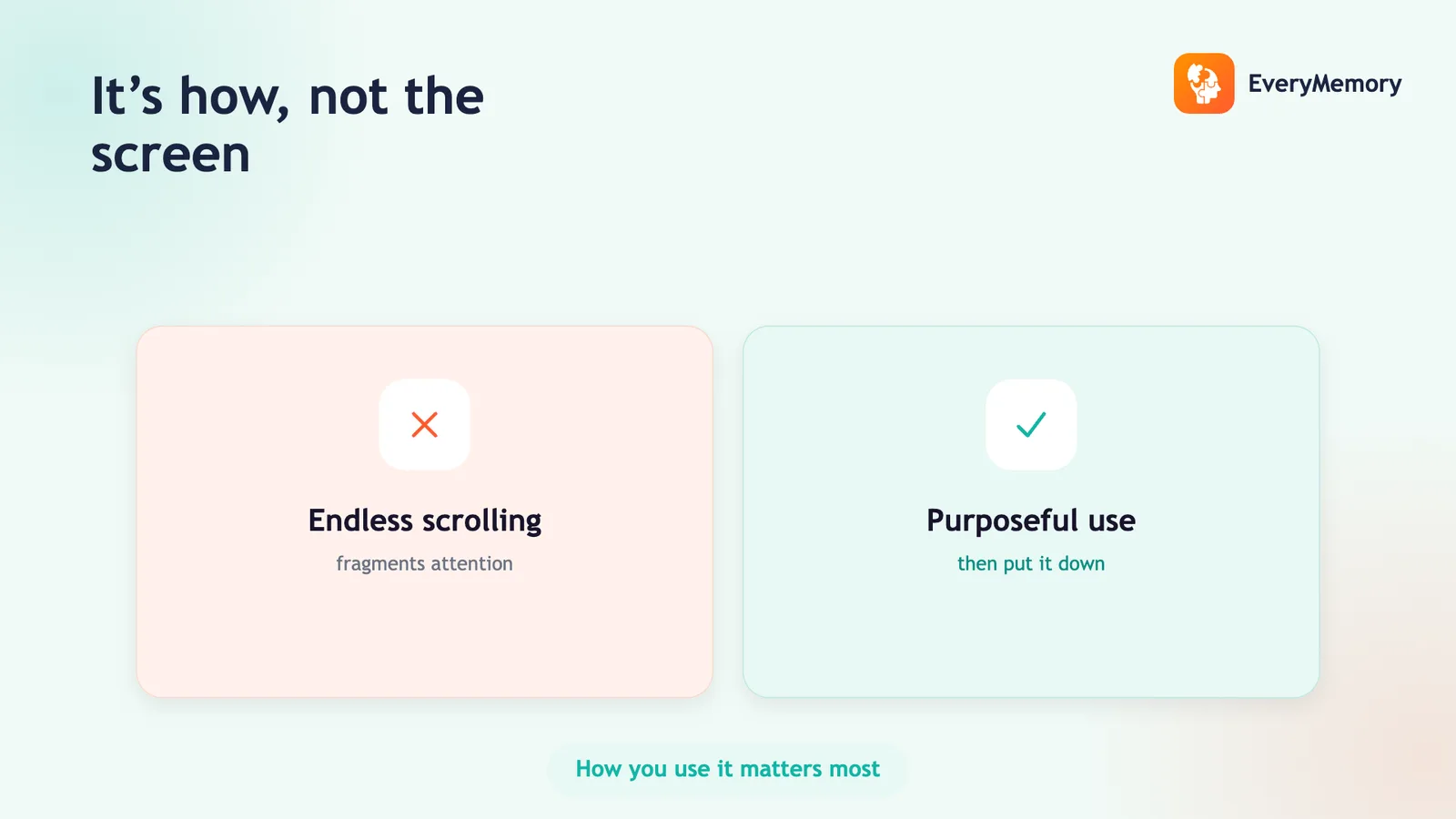
The second is attention. Constant switching between apps and tabs fragments focus and trains a restless, distractible state of mind. That has nothing to do with blue light and everything to do with how the device is used - covered in avoiding distractions and screen time and memory.
What actually helps
Spend your effort on the things that matter, not on the wavelength:
- Set a screen cutoff 30–60 minutes before bed - the wind-down does far more than any filter.
- Choose calming, not stimulating, content if you do use a screen in the evening.
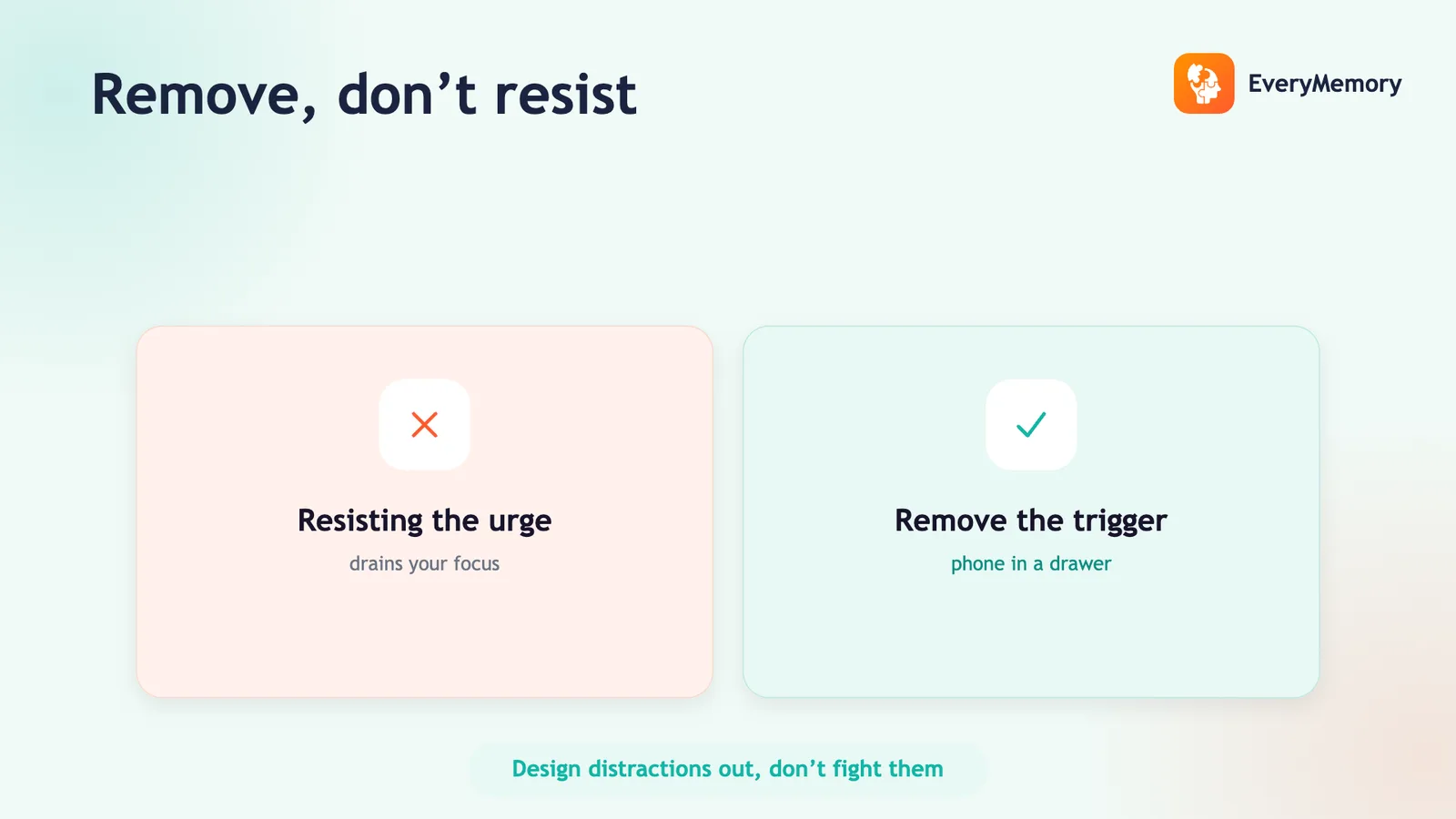
- Single-task during the day so your attention isn't fragmented - that's the real focus lever.
- Get plenty of bright light in the morning, which anchors your body clock better than avoiding it at night.
Blue-light glasses aren't harmful, but they're not the fix they're marketed as. The wind-down and the attention habits are.
⚠ When to talk to a professional
This is general, non-medical information about screens and sleep, not medical advice. If you have persistent sleep problems or trouble focusing, speak to a doctor rather than relying on a single product.