 EveryMemory
Screen Time and Memory
Screen time rarely damages memory directly, but the way we use screens - fragmented attention, shallow encoding, and lost sleep - quietly weakens how well things get remembered.
Part of the guide: How to Keep Your Brain Healthy: A Complete Lifestyle Guide →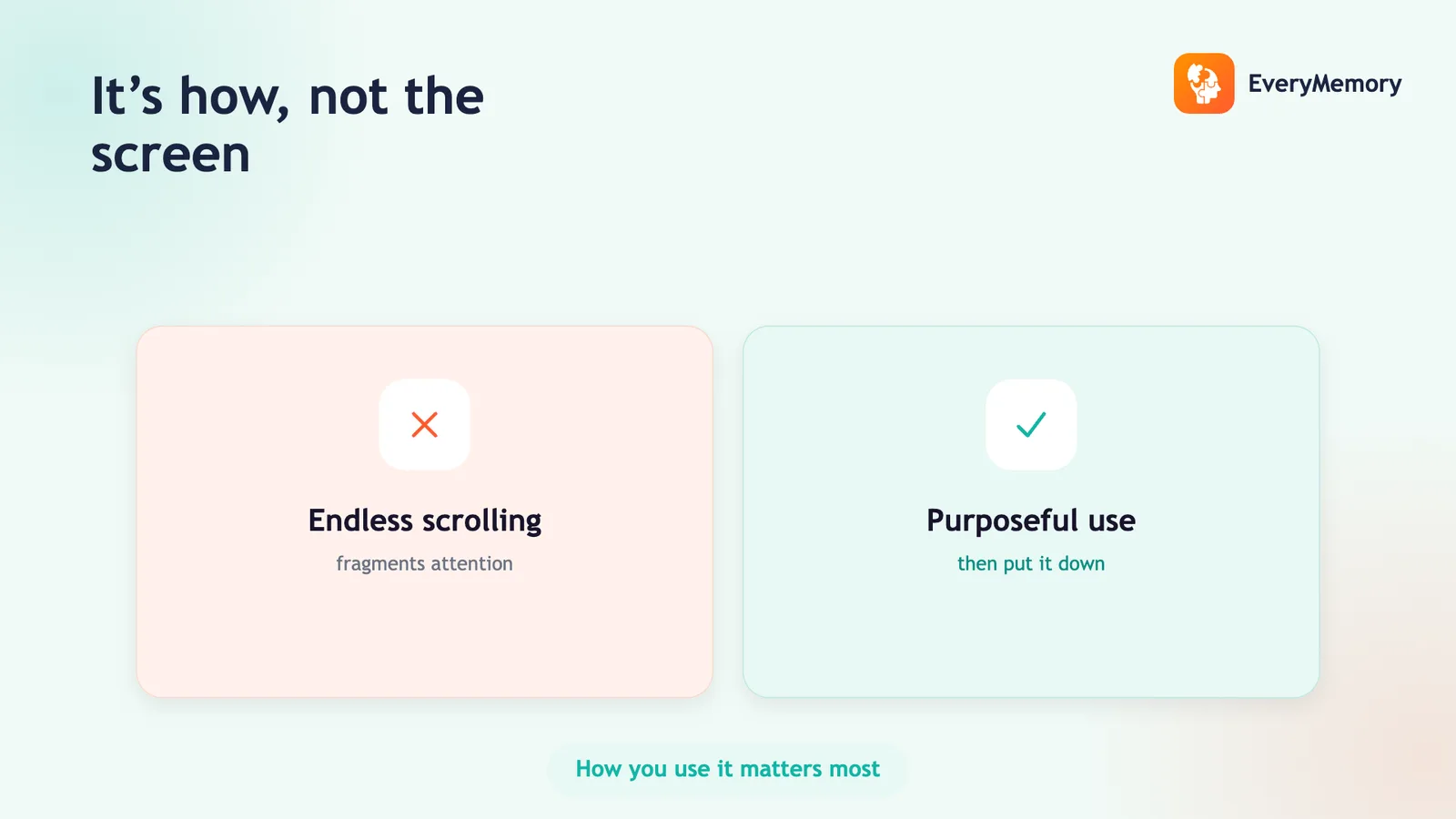
⚡ Quick answer
Screen time itself doesn't directly harm memory, but how screens are typically used can. Constant switching between apps fragments attention, so new information is encoded shallowly and forgotten. Late-night screens cut into the sleep that consolidates memories. The fix isn't zero screens - it's single-tasking when learning and protecting your sleep window.
Key takeaways
- Screens don't damage memory directly; fragmented attention and lost sleep are the real culprits.
- Split attention means new information is encoded too shallowly to stick.
- Late-night screens cut into the sleep that consolidates memories.
- The fix is single-tasking while learning and a pre-bed screen cutoff, not zero screens.
It's tempting to blame screens for every lapse - you forget a name, lose your train of thought, can't recall what you read, and the phone in your hand looks like the obvious culprit. The honest picture is more specific than "screens are bad for your memory."
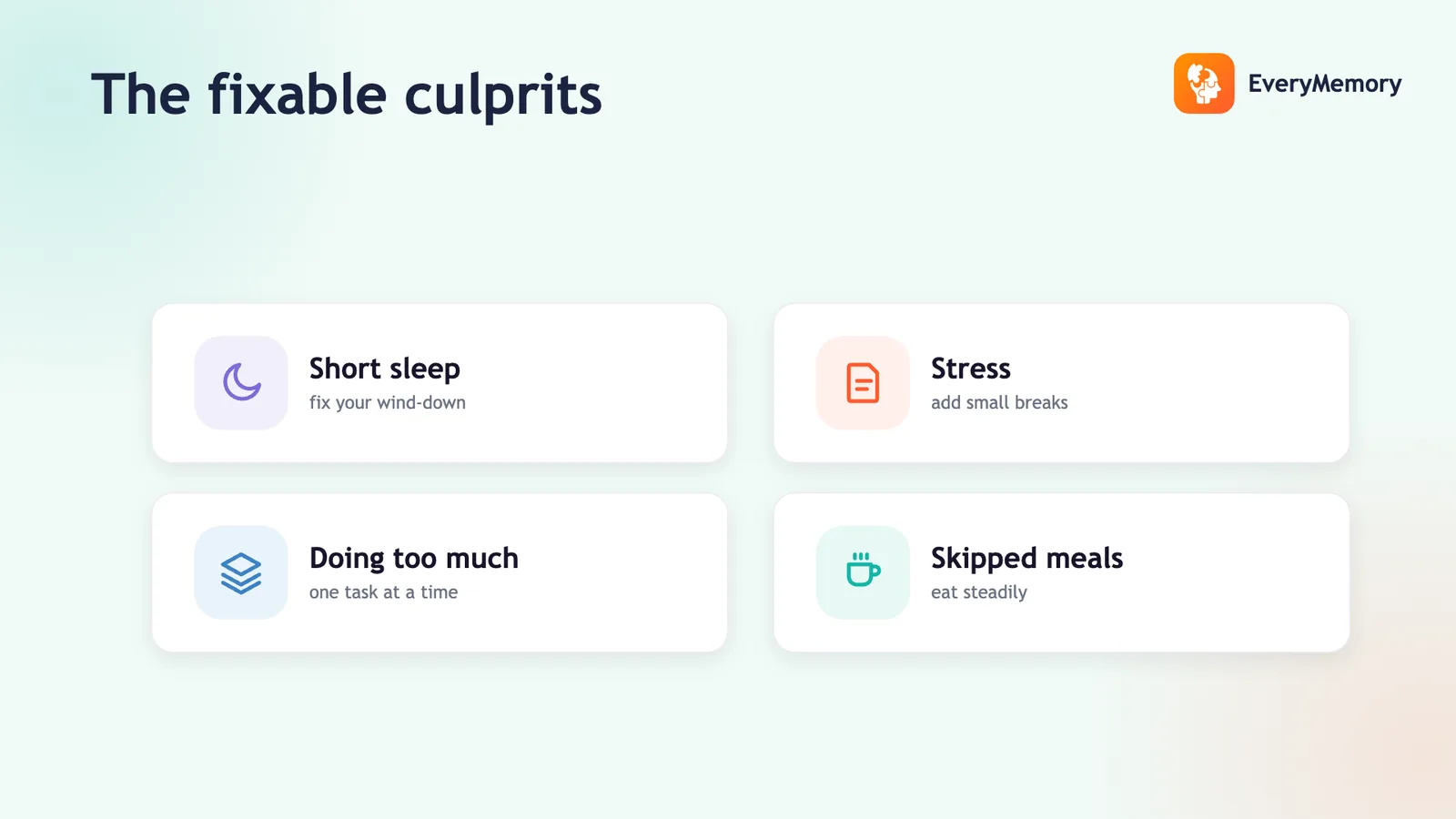
Screens don't erase memories. What heavy, fragmented screen use does is interfere with the moments when memories are formed and stored: when you're encoding new information, and when you sleep. Fix those moments and most of the "screen brain fog" eases.
Attention is where memory is won or lost
You can't remember what you never properly encoded, and you can't encode well while your attention is split. Phones are engineered to split it - every notification, feed, and tab is a tug away from whatever you're doing. When you read an article with a chat open, you're sampling both and absorbing neither.
This is the real mechanism behind "I read it but can't remember it." The information passed through working memory without ever being processed deeply enough to stick. More on protecting input in avoiding distractions and keeping your brain active.
Screens before bed: the sleep cost
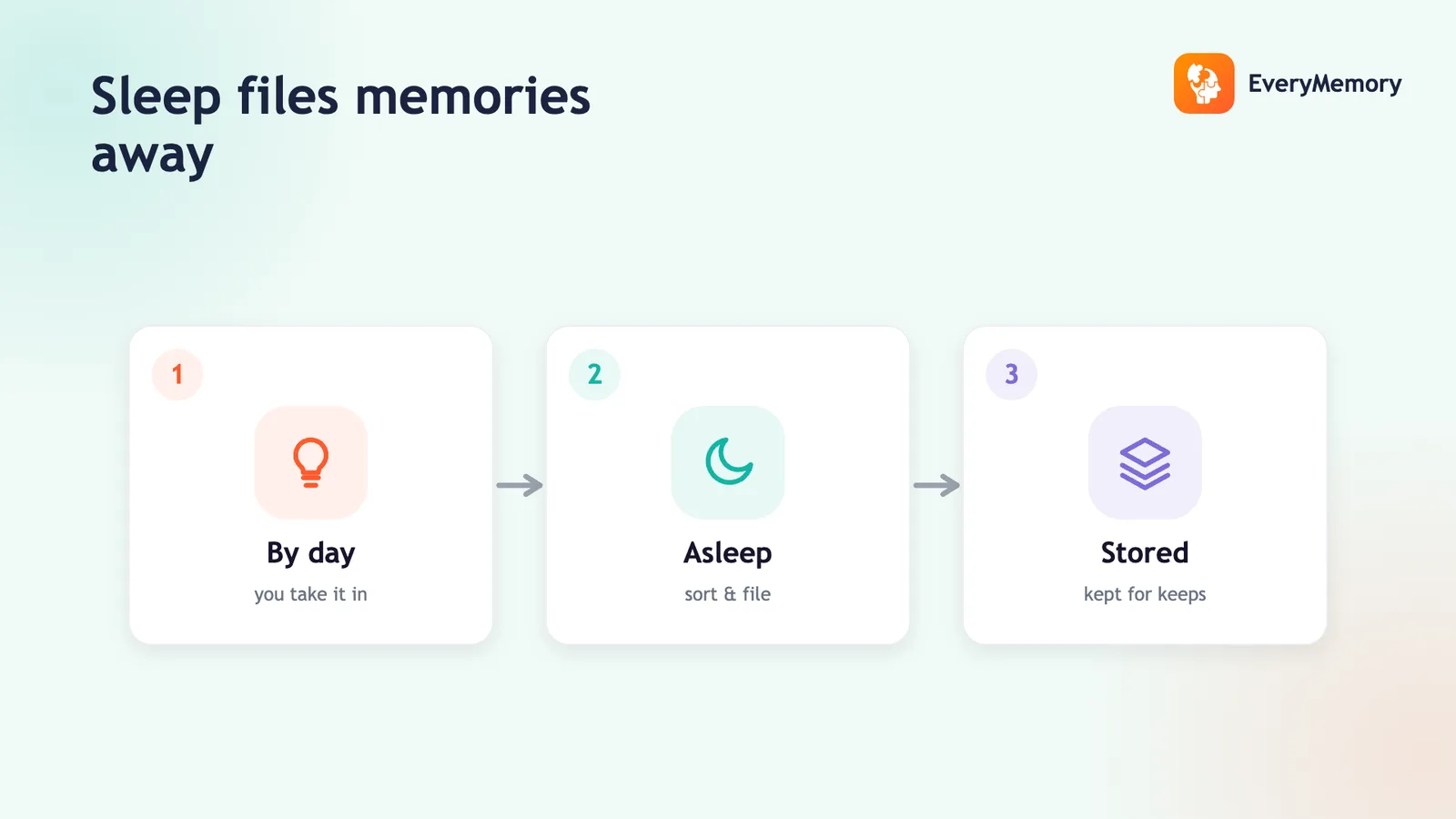
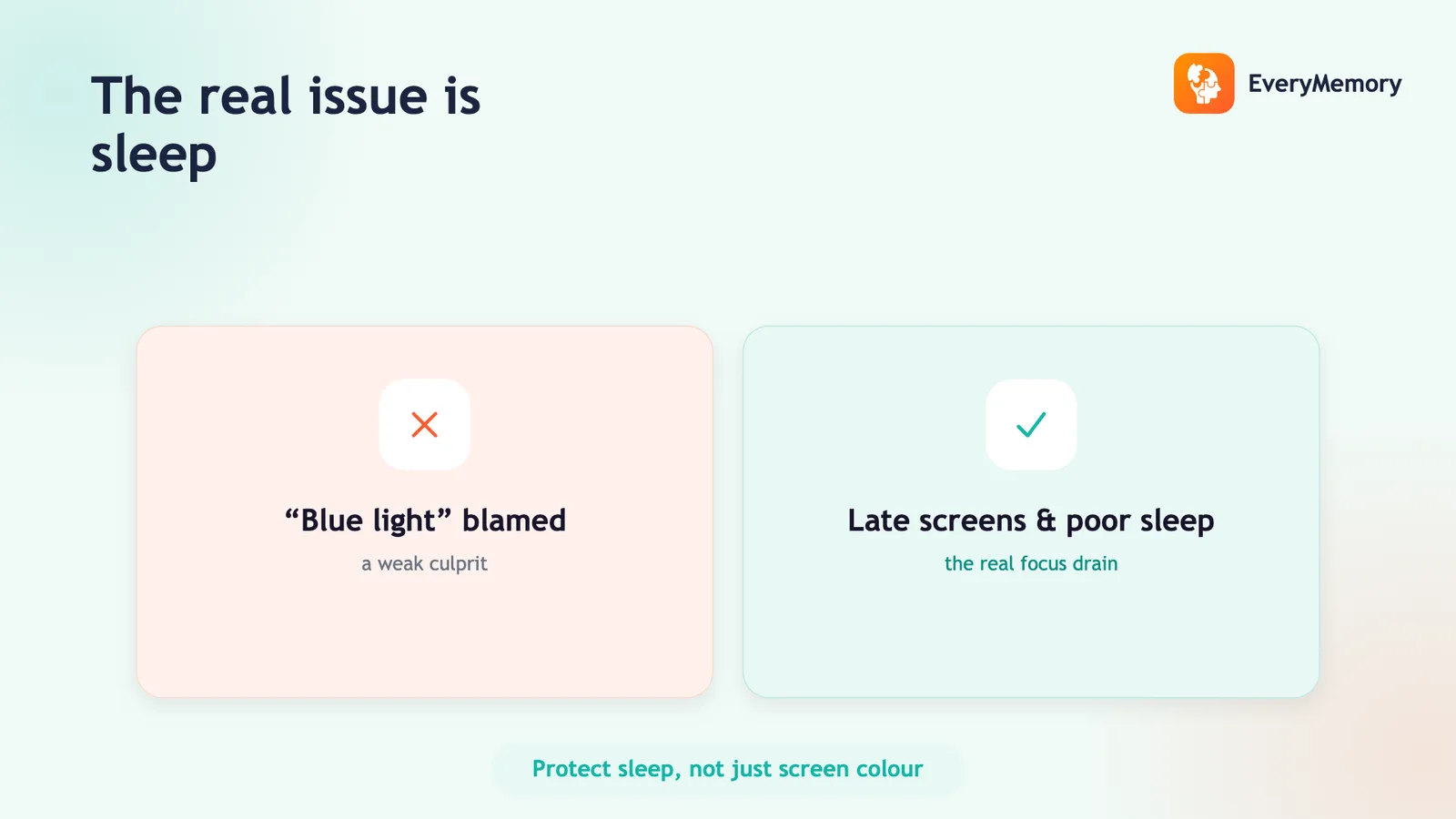
The clearest way screens hurt memory is indirect. Memories are consolidated during sleep, when the day's experiences are replayed and filed into long-term storage. Late-night scrolling shortens and delays sleep - not mainly because of blue light, whose effect is modest, but because engaging content keeps your mind alert when it should be winding down.
Lose an hour of the wrong kind of sleep and the next day's recall suffers. This is covered in depth in how sleep affects memory and the practical side in blue light and focus.
The myth and the reality
Sorting the genuine effects from the alarmist ones makes screen habits easier to fix.
| Common claim | What's actually true |
|---|---|
| Screens are rotting your memory | Screens don't damage memory tissue; fragmented attention and lost sleep are the real culprits. |
| Blue light is the main problem at night | Blue light's effect is modest; stimulating content keeping you awake matters far more. |
| More screen time always means worse memory | It depends on how you use it - focused, single-task use is fine; constant switching is the issue. |
| You need a full digital detox | You mainly need single-tasking while learning and a protected pre-sleep wind-down. |
Outsourcing memory: a real trade-off
When your phone holds every phone number, appointment, and fact, you practise recall less. This isn't damage - it's disuse. The information is simply stored externally instead of internally. For trivial details that's a sensible trade. For things you genuinely want to know, it means you have to deliberately practise recalling them, because the phone removed the everyday reps.
That's the case for keeping some recall a manual habit - remembering a few numbers, navigating a familiar route without the map, learning rather than just looking up.
Using screens without the memory cost
You don't have to quit screens to protect your memory. A few specific changes do most of the work:
- When learning something you want to keep, close other tabs and silence notifications - give it your single, undivided attention.
- Set a screen cutoff 30–60 minutes before bed so your mind can wind down for sleep.
- Read longer pieces in one pass instead of grazing across several at once.
- Practise recalling some things - numbers, names, routes - instead of reaching for the phone every time.
✅ Try this today - A single-tasking reading test
See the attention effect for yourself in ten minutes:
- Read an article for five minutes with notifications on and another tab open. Afterwards, write down everything you remember.
- Read a different, similar-length article for five minutes with the phone in another room and one tab open.
- Compare the two recall lists. The single-task read almost always wins - that gap is what fragmented attention costs your memory every day.
⚠ When to talk to a professional
This is general, non-medical lifestyle information, not a diagnosis or treatment for memory problems. If forgetfulness is getting noticeably worse or affecting daily life, speak to a doctor.