 EveryMemory
Brain Fog After Eating: Why It Happens
Feeling foggy or sleepy after a meal is common and usually harmless. Why it happens, which meals make it worse, and simple things that reduce it.
Part of the guide: Understanding Memory Loss and Forgetfulness: A Calm, Reassuring Guide →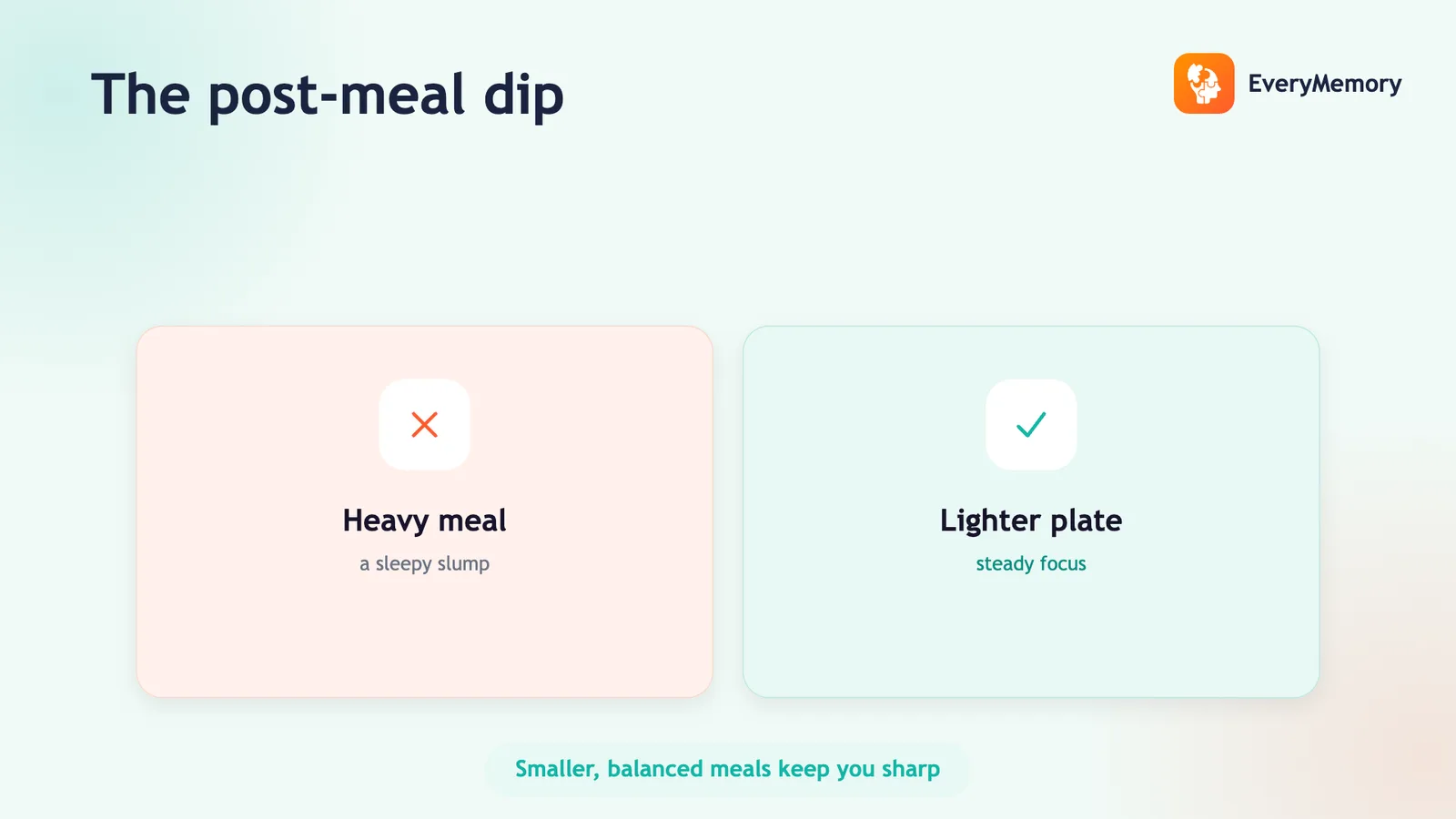
⚡ Quick answer
Feeling foggy or sleepy after a meal is common and usually harmless - it often follows large, heavy, or high-sugar meals, as blood-sugar swings and the body's shift toward digestion leave you less alert. Smaller, balanced meals, staying hydrated, and a short walk after eating tend to reduce it. Persistent, severe post-meal fog is worth mentioning to a professional.
Key takeaways
- Feeling foggy or sleepy after a meal is common and usually harmless.
- It often follows large, heavy, or high-sugar meals, from blood-sugar swings and the body shifting toward digestion.
- Smaller balanced meals, staying hydrated, and a short walk after eating reduce it.
- Severe fog, fog after most meals, or fog with other symptoms is worth a professional's view.
That heavy, foggy, slightly sleepy feeling after a big lunch is so common it has a nickname - the 'food coma'. It's usually nothing to worry about.
Here's why eating can leave you foggy, which meals make it worse, and what reduces it.
Why you feel foggy after eating
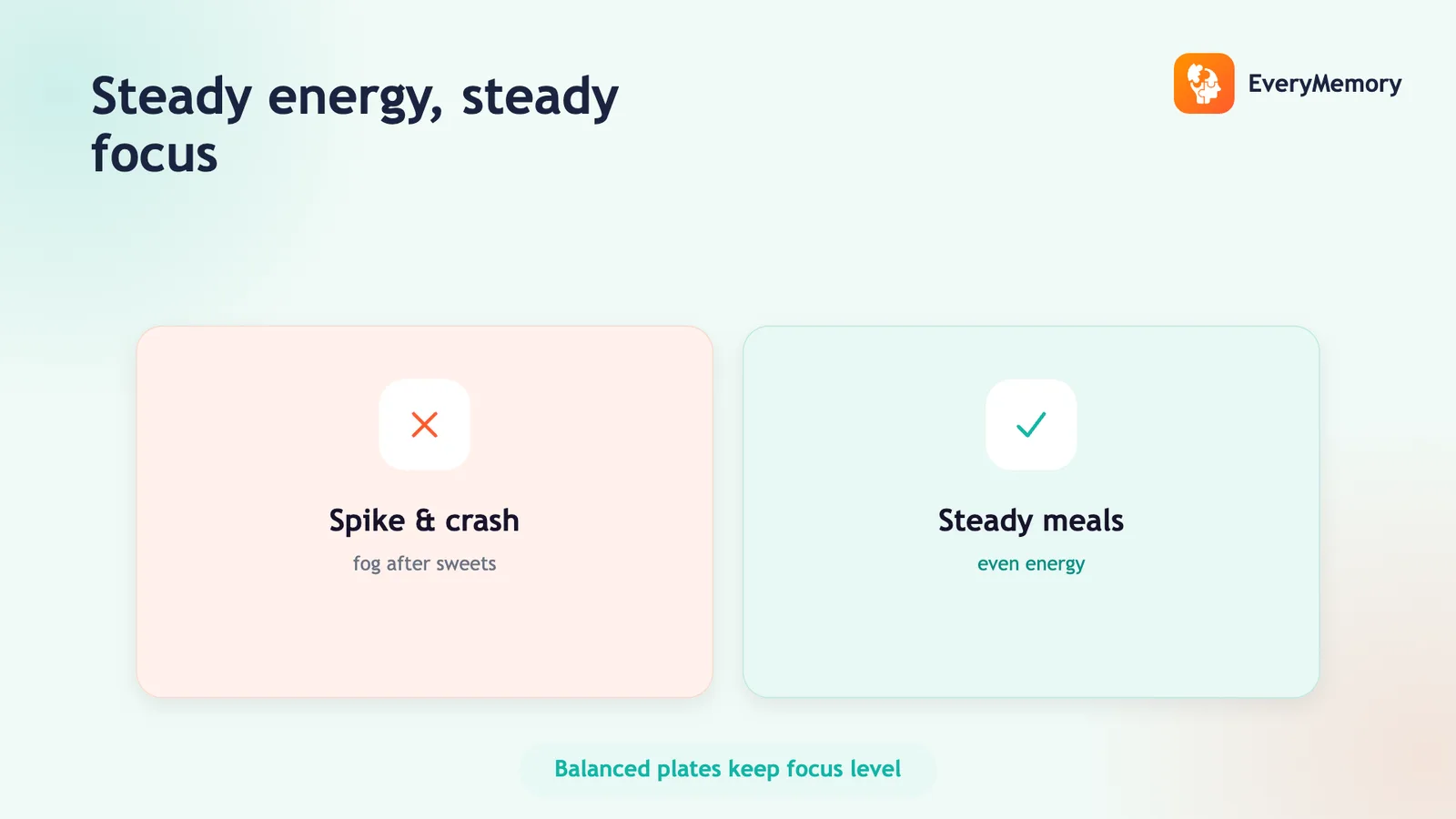
A few ordinary things combine after a meal. Big or sugary meals cause blood-sugar to spike then dip, and that dip often brings fog and sluggishness. The body also shifts energy toward digestion, and large meals can simply leave you feeling heavy and drowsy. Together they dull alertness for a while - and since focus drives memory, you take in less in that window.
Which meals make it worse
Large portions, heavy or rich food, and high-sugar or high-refined-carbohydrate meals are the usual culprits - the bigger the blood-sugar swing, the bigger the dip. It's closely related to how sugar affects memory and focus generally.
What helps
- Smaller, balanced meals - they avoid the big spike-and-crash.
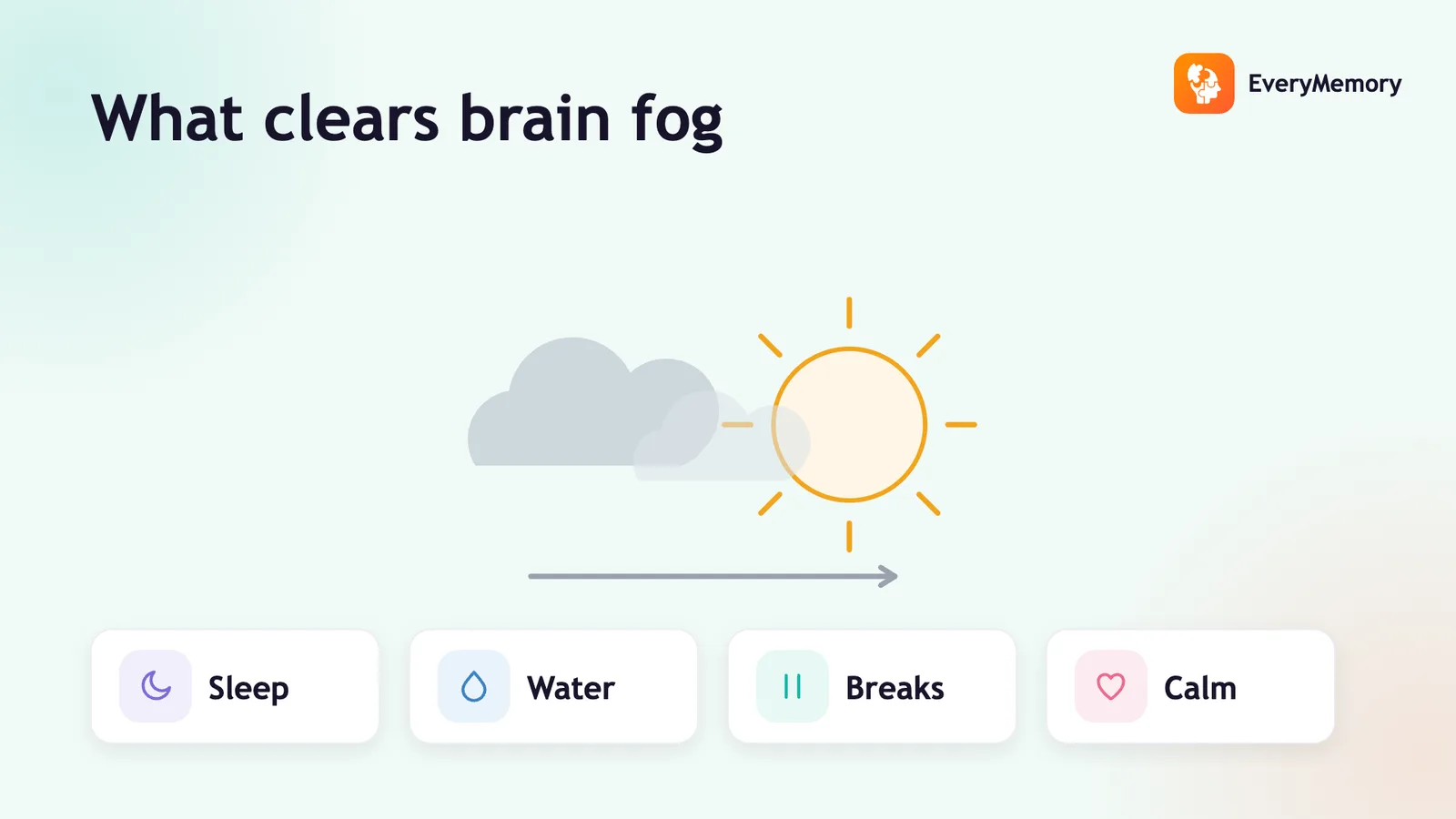
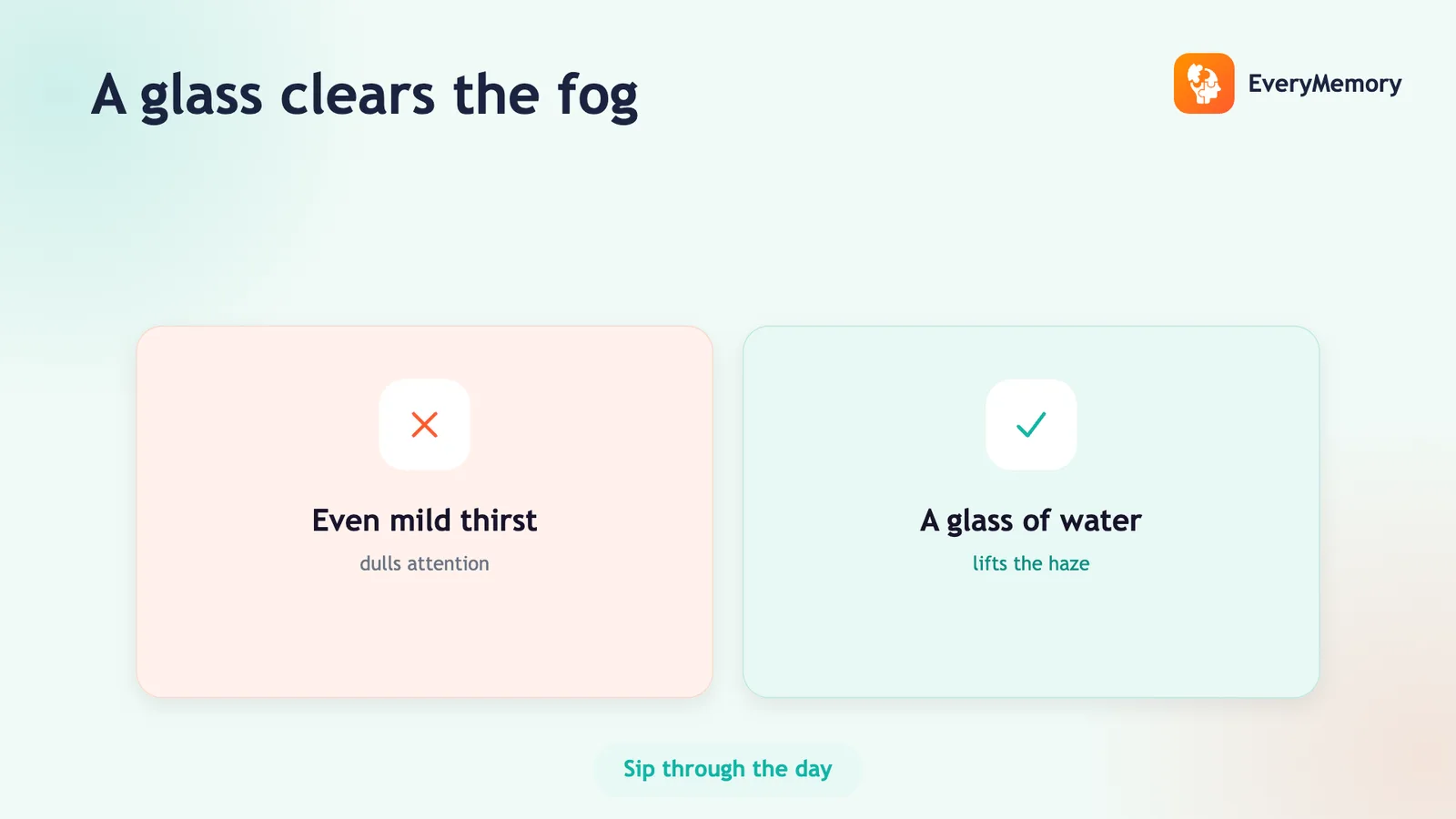
- Stay hydrated - mild dehydration adds to the fog.
- A short walk after eating - gentle movement steadies energy and lifts alertness.
- Don't skip then overeat - large gaps followed by a big meal worsen the swing.
When it's worth a mention
Occasional post-meal fog is normal. It's worth raising with a qualified professional if it's severe, happens after most meals, or comes with other symptoms - that's a pattern worth a proper look rather than guessing. The broader, non-meal causes of fog are in brain fog: causes and what helps.
⚠ When to talk to a professional
Occasional post-meal fog is usually harmless. Severe fog, fog after most meals, or fog with other symptoms is worth discussing with a qualified professional.