 EveryMemory
Brain Fog: Common Causes and What Can Help
That cloudy, slow-thinking feeling has a name - brain fog - and it's usually tied to everyday factors like poor sleep, stress, or dehydration that you can actually do something about.
Part of the guide: Understanding Memory Loss and Forgetfulness: A Calm, Reassuring Guide →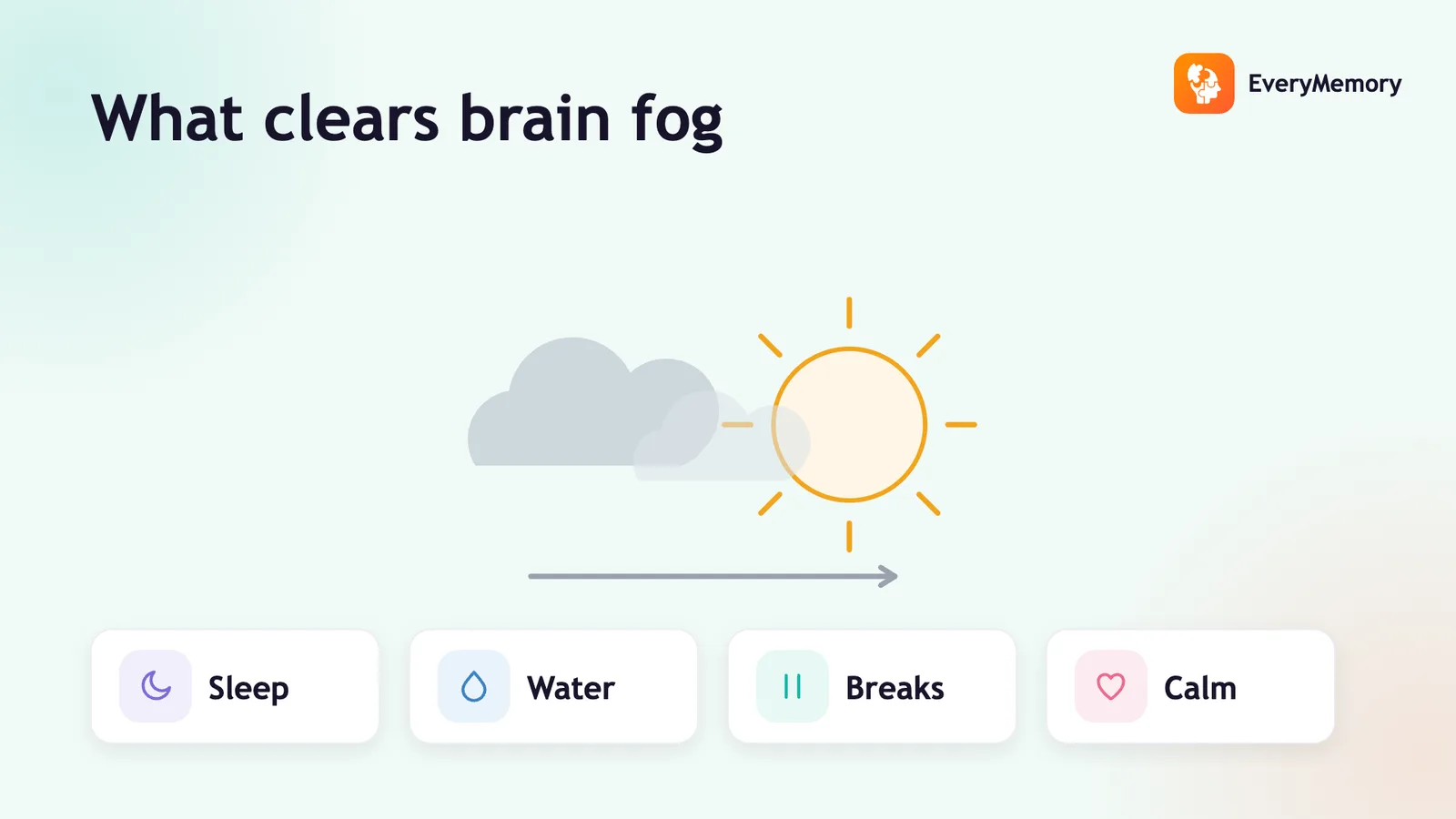
⚡ Quick answer
Brain fog is a symptom, not a diagnosis - a general term for mental fuzziness, difficulty concentrating, and slow or cloudy thinking. It's most often linked with everyday factors like insufficient sleep, ongoing stress, mild dehydration, low physical activity, doing too much at once, or recovering from illness. Addressing those underlying contributors is usually the most practical starting point.
Key takeaways
- Brain fog is a symptom, not a diagnosis - a term for cloudy, slow, or unfocused thinking.
- Poor sleep, ongoing stress, mild dehydration, and low movement are among the most common everyday contributors.
- Consistent basics - sleep, hydration, regular movement, and a manageable pace - are the most practical starting point.
- Sudden, severe, or persistent brain fog that doesn't improve with rest is worth discussing with a healthcare professional.
Most people know the feeling: you sit down to follow a conversation and your thoughts feel like they're moving through thick air. Words slip away mid-sentence. You re-read the same line twice and still can't quite land on it. This is often called brain fog - not a medical term, but a widely recognised description of that hazy, slow way of thinking that can settle in for a few hours or a few days.
The good news is that brain fog is usually tied to ordinary things that can shift - sleep, stress, hydration, pace of life. Understanding what drives it is the first step toward feeling sharper.
What brain fog actually feels like
Brain fog is not one single thing. People describe it as struggling to find words, feeling mentally slow, losing the thread of a conversation, or simply feeling "not quite yourself" upstairs. It can arrive as a flat, low-energy day or a more frustrating haze that makes ordinary tasks feel twice as hard.
It helps to separate foggy thinking from more serious memory concerns. Occasional fuzziness tied to a bad night of sleep or a hectic week is a very different pattern from changes that are persistent, worsening, or affecting daily independence. We cover that distinction in memory loss vs. normal aging.
Poor sleep: the most common culprit
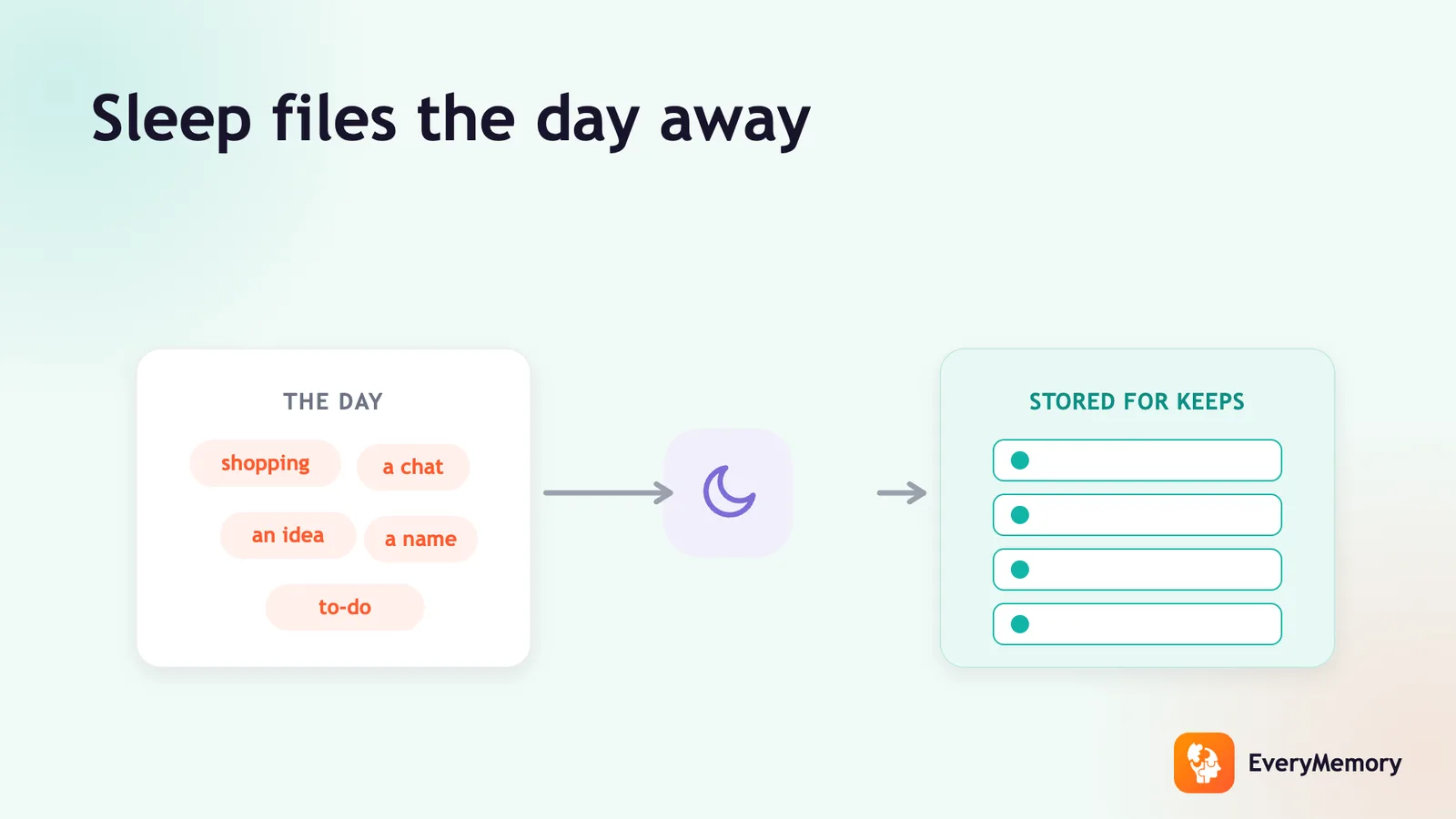
If there is one factor that reliably produces foggy thinking, it is insufficient or fragmented sleep. During sleep the brain consolidates memories, clears metabolic waste, and restores the chemical balance needed for clear thinking. When that process is cut short night after night, the effect on sharpness is cumulative and very noticeable.
Consistent short sleep - less than seven hours for most adults - tends to produce a persistent low-grade fog that people sometimes mistake for "just getting older." Our article on the sleep and memory connection explains why sleep matters so much and what helps when it's broken.
- Aim for 7–9 hours of sleep in a consistent window each night.
- A cool, dark room and a wind-down routine before bed make a measurable difference for many people.
- Waking frequently in the night - especially with snoring or gasping - is worth mentioning to a doctor, as sleep apnoea is a treatable cause of chronic mental fatigue.
Stress and mental overload
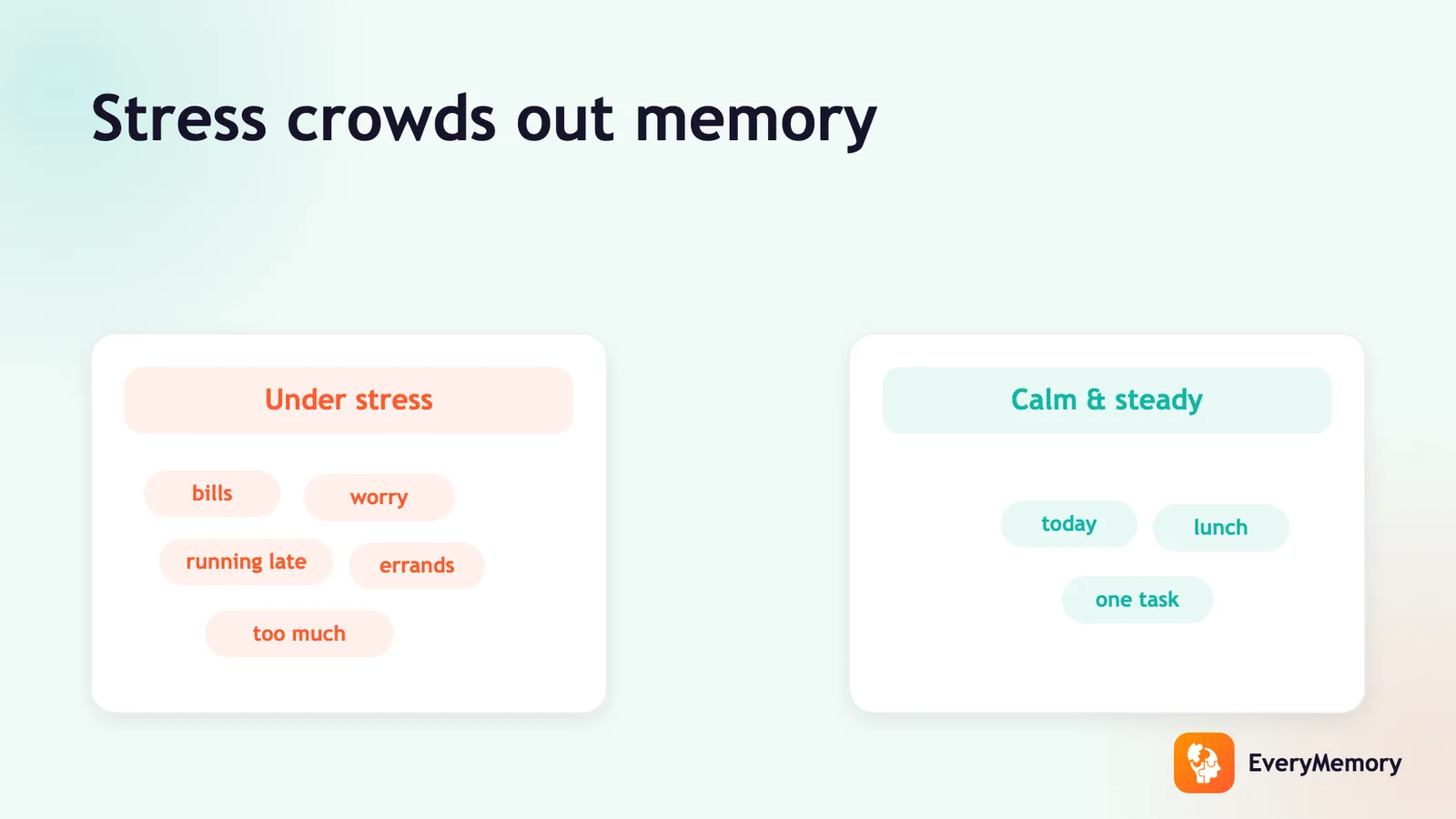
Sustained stress floods the brain with cortisol - a hormone that, over time, interferes with memory and concentration. It keeps the brain in a low-level alert state, exhausting and diverting resources away from the calm processing needed for clear thinking.
Mental overload produces a similar effect: too many open tasks, too many decisions, too much information at once. When working memory is overwhelmed, thinking slows and errors creep in. Our piece on whether stress makes you more forgetful covers this in practical detail - the problem is often not the stress itself but the lack of adequate recovery time.
Dehydration and low movement
Mild, everyday dehydration - the kind that builds up during a busy morning before you've thought to drink much - can noticeably affect concentration. Research from Penn State found that typical levels of dehydration, without any strenuous exercise, reduced people's ability to sustain attention on longer tasks. The brain is approximately 75% water, and even small deficits in fluid balance appear to affect how efficiently it operates.
Physical movement matters too. Sitting for long stretches reduces blood flow to the brain and tends to flatten mental energy. You don't need a structured workout - short, regular movement breaks (even a 10-minute walk around the block) are linked with better circulation, lower cortisol, and sharper alertness afterwards. Our article on walking and brain health covers why this habit is one of the most consistently supported in the research.
- Most adults benefit from roughly 6–8 cups of fluid daily, more in warm weather or with activity.
- If your urine is pale yellow, you're likely well hydrated. Dark yellow is a signal to drink more.
- Try a short walk or a few minutes of gentle movement whenever you notice your thinking start to drift.
Doing too much, and recovering from illness
Extended busy periods - packing too much into too many days, caring for family, or managing a difficult transition - are a surprisingly common source of brain fog. The mind needs genuine rest, not just sleep. When downtime disappears from the schedule, a low-level cognitive fatigue accumulates.
Recovery from illness is another frequent contributor. After a cold or flu, many people notice their thinking feels sluggish for days or weeks after the obvious symptoms have passed. This generally resolves with rest and time - but if fog appeared after illness and has persisted for weeks without improving, that's worth discussing with a doctor.
Gentle things that tend to help
Because brain fog usually has multiple contributors, the most effective approach is a small set of consistent habits rather than a single fix. Sleep, hydration, movement, and a manageable pace are the foundation.
- Eat regularly - skipping meals can drop blood sugar and deepen mental sluggishness.
- Limit alcohol, which fragments sleep and slows cognitive processing even in moderate amounts.
- Reduce multitasking - focusing on one thing at a time is genuinely less tiring than splitting attention.
- Spend time outdoors: gentle movement, fresh air, and a change of environment work together.
- Try a 10-minute memory workout to practise focused recall and sharpen attention.
Pairing these habits with a simple daily memory routine gives the brain regular, varied practice that goes beyond passive lifestyle changes.
| Common contributor | What often helps |
|---|---|
| Poor or broken sleep | Protect a consistent sleep routine |
| Stress and mental overload | Short breaks, one task at a time, time outdoors |
| Dehydration | Sip water through the day - see hydration and focus |
| Sitting too long | A short daily walk to reset |
| Doing too much at once | Lighten the load; finish one thing before the next |
| Recovering from a cold or illness | Rest and patience - fog usually lifts as you recover |
✅ Try this today - A simple brain-fog check-in
When your thinking feels unusually cloudy, run through this quick list before assuming the worst.
- Sleep check: Did you sleep fewer than 7 hours last night or wake frequently? If so, prioritise an early bedtime tonight - that's likely the main factor.
- Hydration check: Have you had at least 2–3 cups of fluid since waking? Drink a full glass of water now and notice whether you feel clearer in 20 minutes.
- Movement check: Have you been sitting for more than 90 minutes? Step outside or walk around your home for 10 minutes at a comfortable pace.
- Load check: Too many things in mind at once? Write them all down - getting them out of your head and onto paper frees up mental space immediately.
⚠ When to talk to a professional
If your brain fog is sudden, severe, rapidly worsening, or comes alongside other new symptoms like headaches, vision changes, or weakness, please speak with a healthcare professional promptly - it's always worth getting checked out. The same applies if foggy thinking has persisted for weeks without a clear everyday explanation.