 EveryMemory
Can Dehydration Affect Your Memory?
Even mild dehydration can leave you foggy and reduce focus and short-term memory - and it's quickly reversible. A simple thing to rule out first.
Part of the guide: How to Keep Your Brain Healthy: A Complete Lifestyle Guide →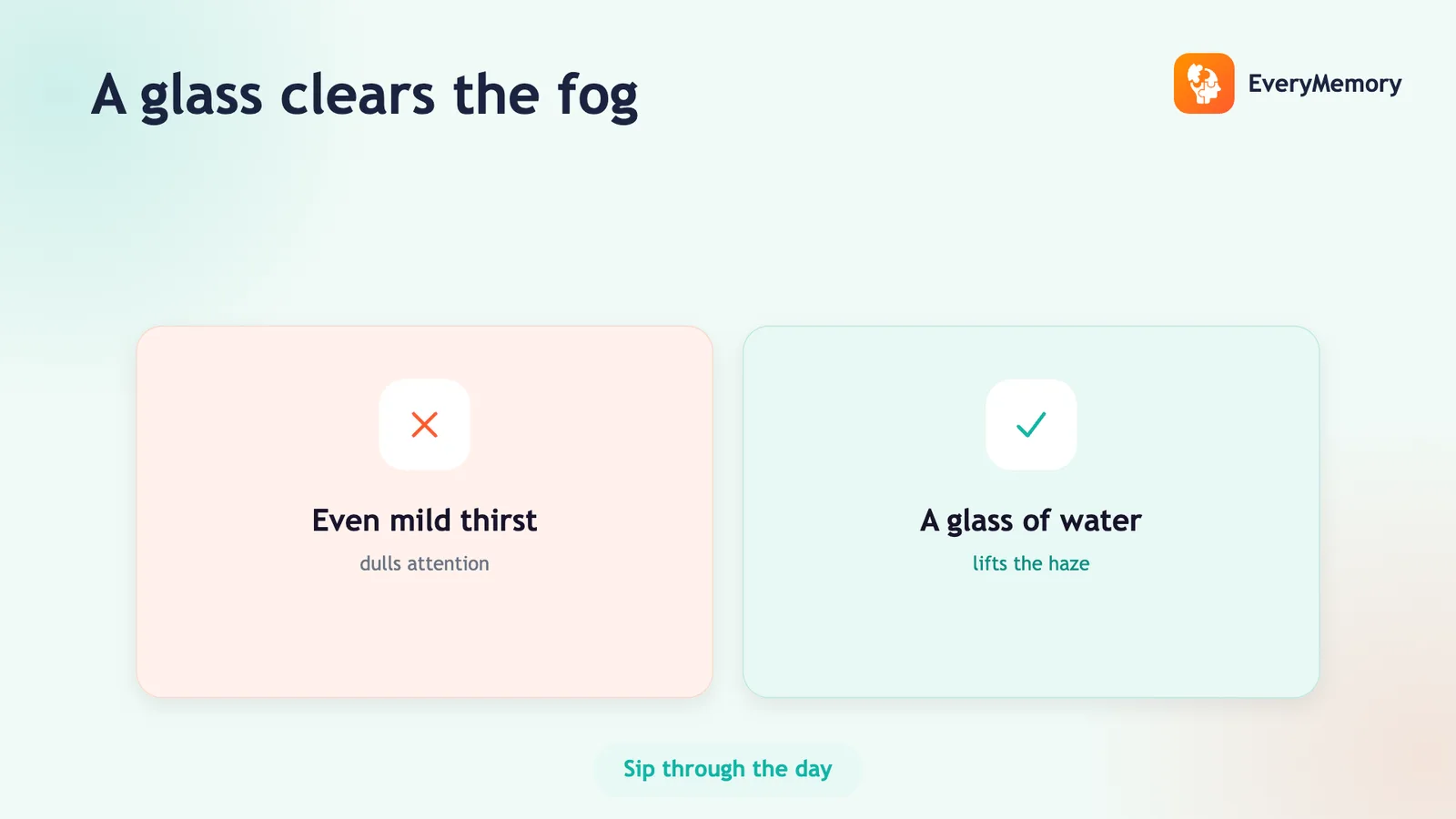
⚡ Quick answer
Yes - even mild dehydration can make you feel foggy and reduce concentration and short-term memory, because the brain needs adequate fluid to work efficiently. The good news is it's quickly reversible: drinking water restores it. If you're often foggy or tired, not drinking enough is a simple, common thing to rule out first.
Key takeaways
- Even mild dehydration can cause brain fog and reduce concentration and short-term memory.
- Thirst lags behind need, so the fog can build quietly and feel like a memory problem.
- It's quickly reversible - drinking water restores it - so it's worth ruling out first.
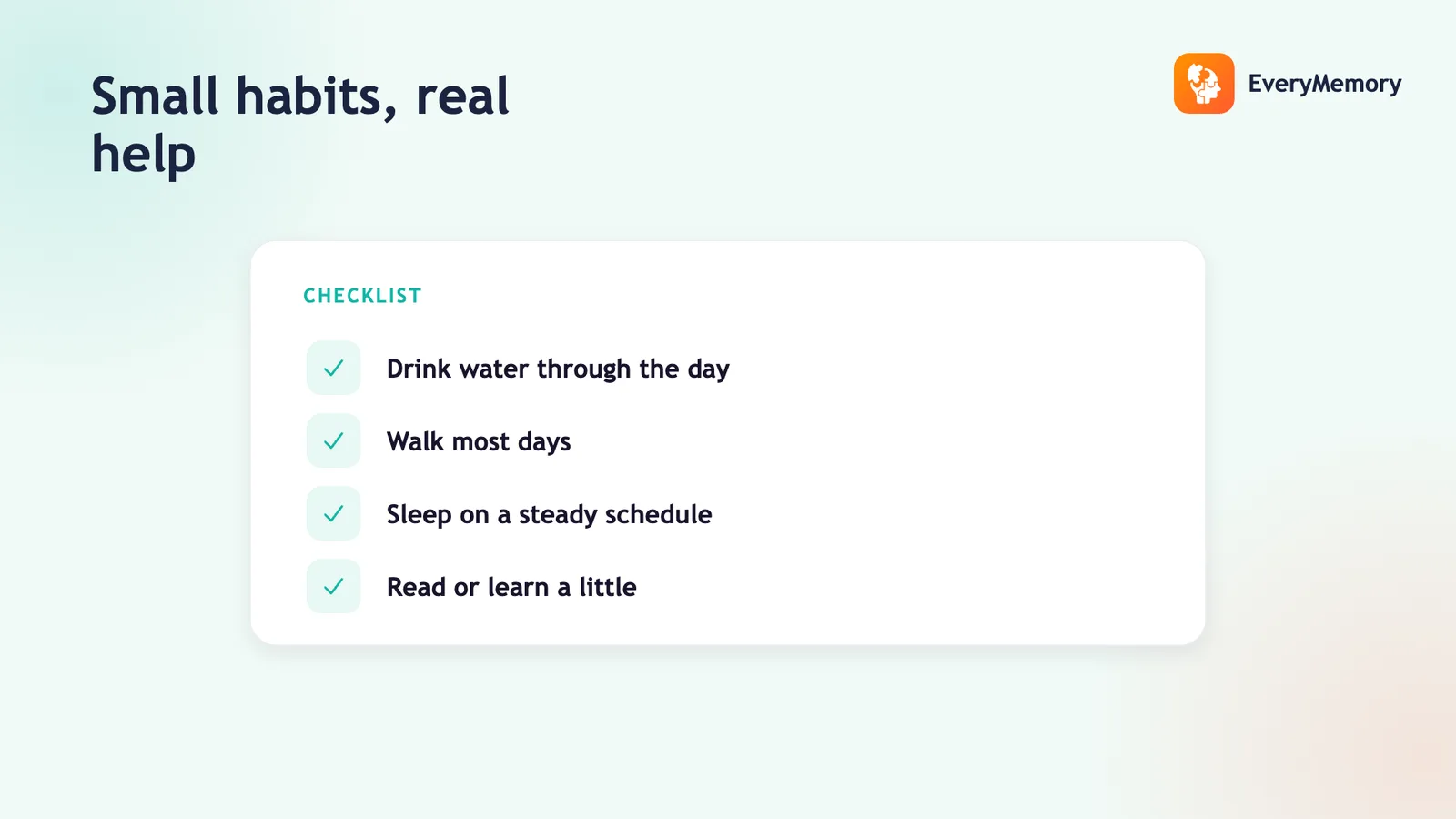
- Sip regularly rather than waiting for thirst, especially in warm weather or when focused.
Before blaming your memory for a foggy, unfocused afternoon, it's worth checking something simpler: how much you've had to drink.
Mild dehydration is one of the most common and most overlooked drains on concentration.
How dehydration affects the brain
Your brain depends on adequate fluid to function well. When you're even mildly dehydrated, many people notice reduced concentration, slower thinking, more fog, and a dip in short-term memory - alongside tiredness and headache. It's a common, low-grade drag on the attention that memory depends on.
It's easy to miss
Thirst lags behind actual need, and a busy day makes it easy to under-drink without noticing - especially in warm weather or when you're focused on something. So the fog can build quietly, feeling like a memory or focus problem when it's really a fluid one.
The easy fix
Because it's quickly reversible, hydration is worth ruling out first. Keep water within reach, sip regularly rather than waiting for thirst, and notice whether your focus lifts. If foggy afternoons are a pattern, this simple check often explains a surprising amount - alongside sleep and a steady diet.
⚠ When to talk to a professional
This is general wellness information. Persistent fog, fatigue, or concentration problems that don't improve with the basics are worth discussing with a qualified professional.