 EveryMemory
Does Sugar Affect Your Memory?
Sugar isn't a 'memory poison', but big blood-sugar swings can leave you foggy and unfocused. What actually matters is steady energy and overall diet.
Part of the guide: How to Keep Your Brain Healthy: A Complete Lifestyle Guide →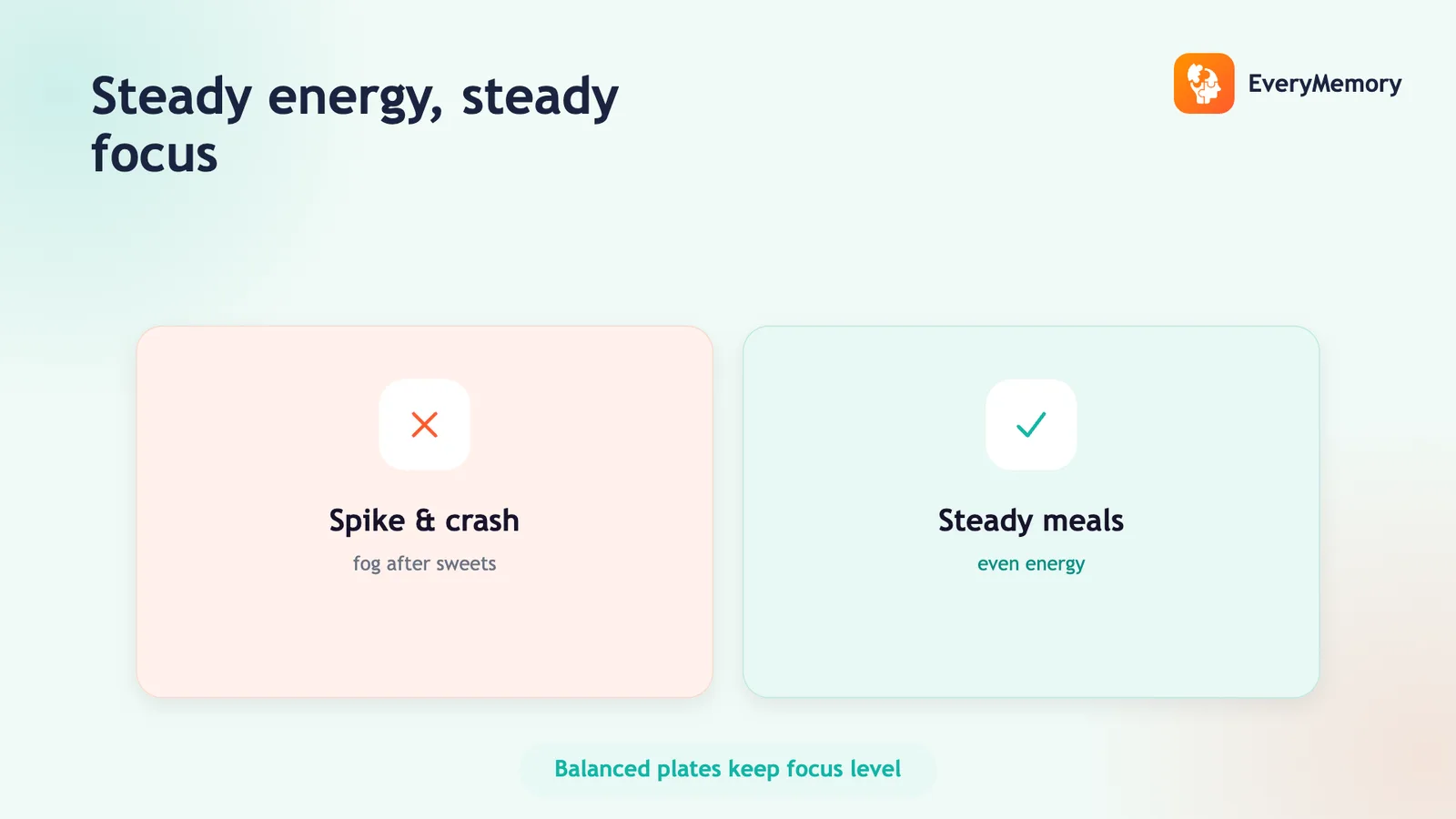
⚡ Quick answer
There's no evidence that a normal diet's sugar directly wrecks memory, but big blood-sugar swings - a sugary spike then crash - can leave you foggy and less able to concentrate, which means you take in less. A steady, balanced diet supports steadier focus and energy. The link is more about stable energy and overall diet than sugar being a 'memory poison'.
Key takeaways
- There's no good evidence a normal diet's sugar directly damages memory.
- Big blood-sugar swings - a spike then crash - can cause fog and poor focus, so you take in less during the dip.
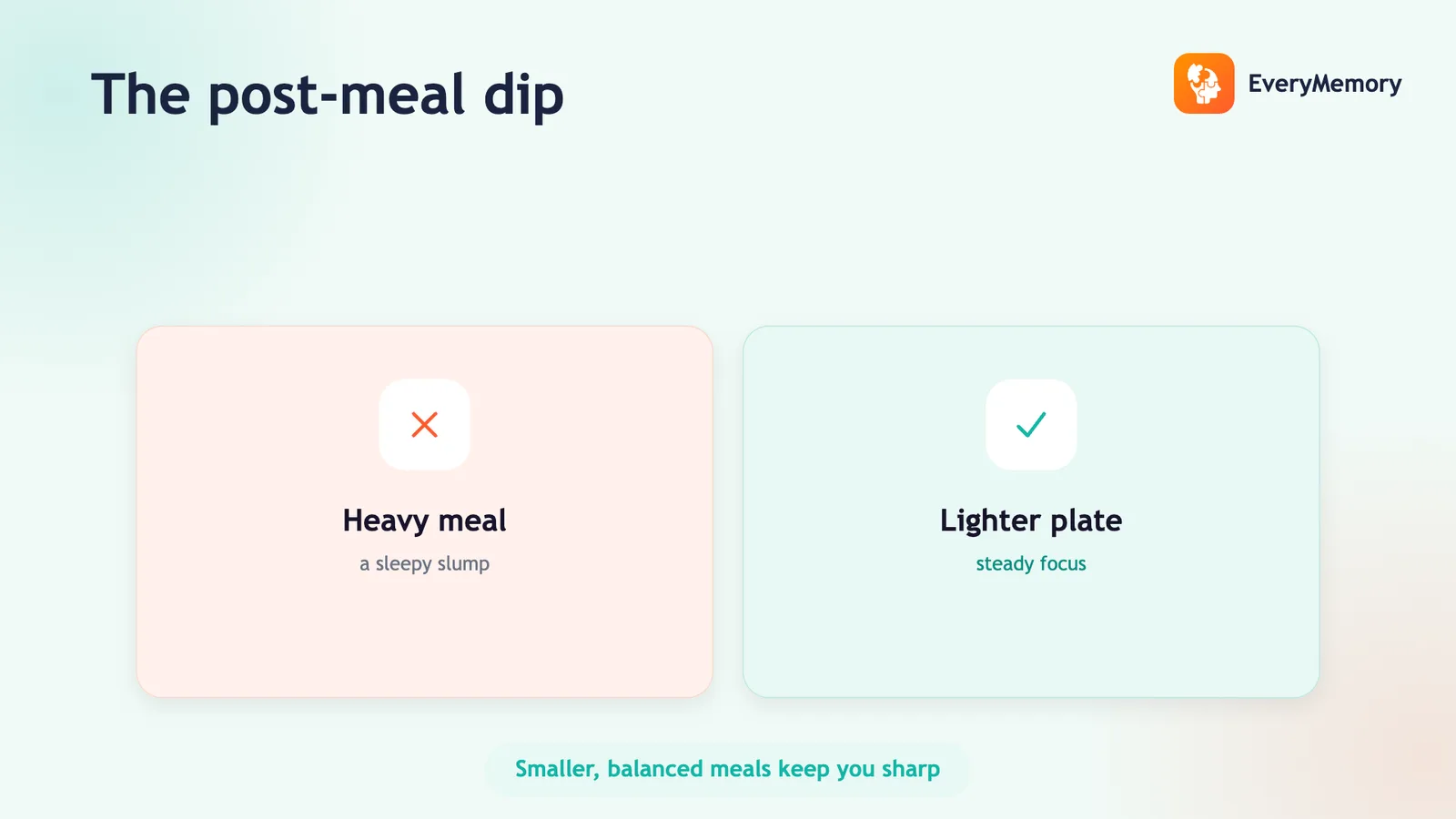
- Smaller, balanced meals give steadier energy and focus, which supports steadier remembering.
- Overall diet matters far more than cutting any single ingredient.
Sugar gets blamed for a lot, including 'brain fog' and a poor memory. The reality is more nuanced - and more useful - than 'sugar rots your brain'.
Here's what sugar actually does to your focus and memory, and what matters more.
The claim vs the reality
It's easy to find dramatic claims that sugar destroys memory. For everyday eating, that overstates it. What's better supported is indirect: how sugar affects your energy and focus in the short term, and how your overall diet supports your brain over the long term.
Blood-sugar swings and fog
A big hit of sugar can cause a spike then a crash, and that dip is when many people feel foggy, sluggish, and unable to concentrate. Since focus is the gateway to memory, feeling foggy means you take in and recall less in that window - closely related to brain fog after eating.
Steady energy helps memory
Smaller, balanced meals that avoid big swings tend to give steadier focus and energy through the day, which supports steadier remembering. It's less about banning sugar and more about avoiding the rollercoaster.
Overall diet matters more
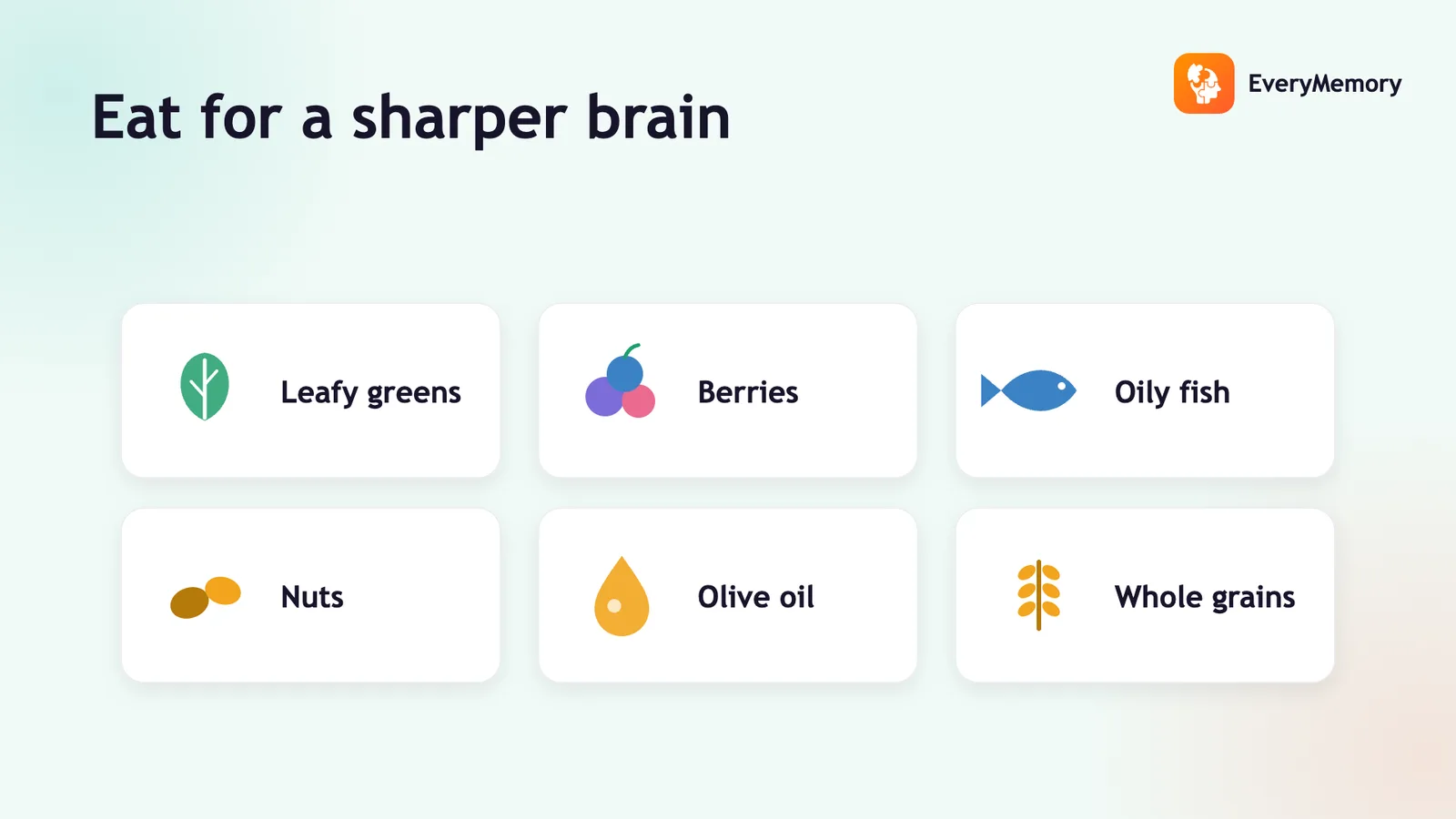
Day to day, the bigger lever is your overall eating pattern, not one ingredient - a balanced diet that supports steady energy and general health does more for your brain than cutting any single thing. See best foods for memory and brain health.
⚠ When to talk to a professional
This is general, non-medical information about everyday focus, not dietary or medical advice. For concerns about blood sugar, diet, or health conditions, speak with a qualified professional.