 EveryMemory
Cognitive Health: A Practical, Non-Medical Guide
Cognitive health, in everyday terms, is how well your thinking and memory serve you day to day - and it rests on the same ordinary habits that support the rest of you.
Part of the guide: How to Keep Your Brain Healthy: A Complete Lifestyle Guide →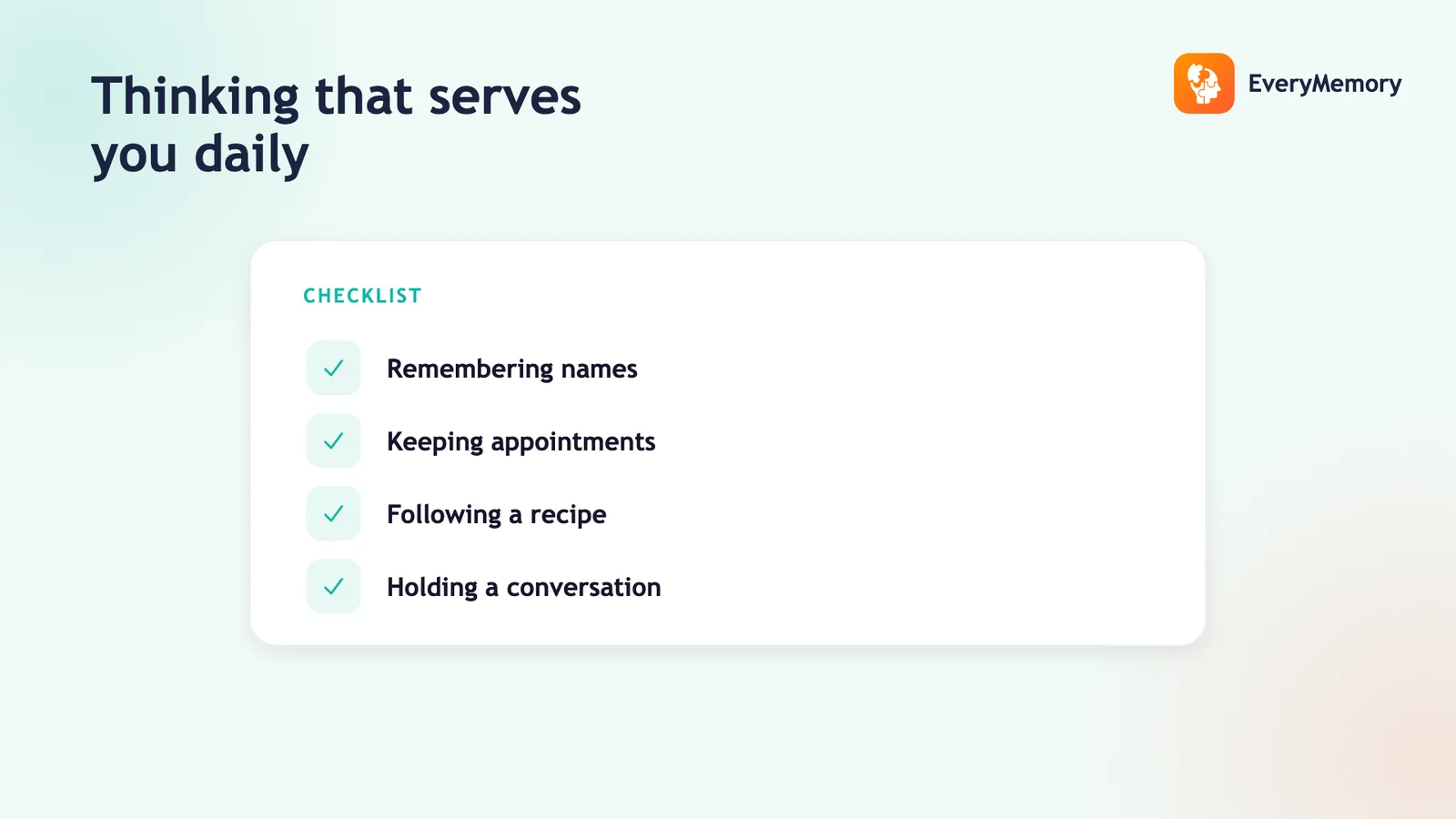
⚡ Quick answer
Cognitive health, in everyday non-medical terms, is how well your thinking and memory serve you day to day - your attention, recall, language, and problem-solving. You support it with the same ordinary habits that support your body: sleep, movement, learning, social contact, and managing stress. It's something to tend and track against your own past, not a clinical score.
Key takeaways
- Used here, cognitive health is everyday thinking and memory - not a clinical score.
- Support it with sleep, movement, learning, social contact, and managing stress.
- Light skill practice helps, but the benefit is specific, not a general boost.
- Know your own baseline and watch its trend; persistent concerns go to a professional.
Cognitive health is a broad term for how well the everyday machinery of thinking works for you - attention, memory, language, problem-solving, and the speed you bring to them. Used here it's an everyday, non-clinical idea: not a score a clinic assigns, but the practical sharpness you notice while living your life.
Framed that way, it's something you can support rather than something done to you. The levers are familiar - sleep, movement, learning, connection, managing stress - and they overlap, because what's good for the body and mood tends to be good for thinking too.
What cognitive health means here
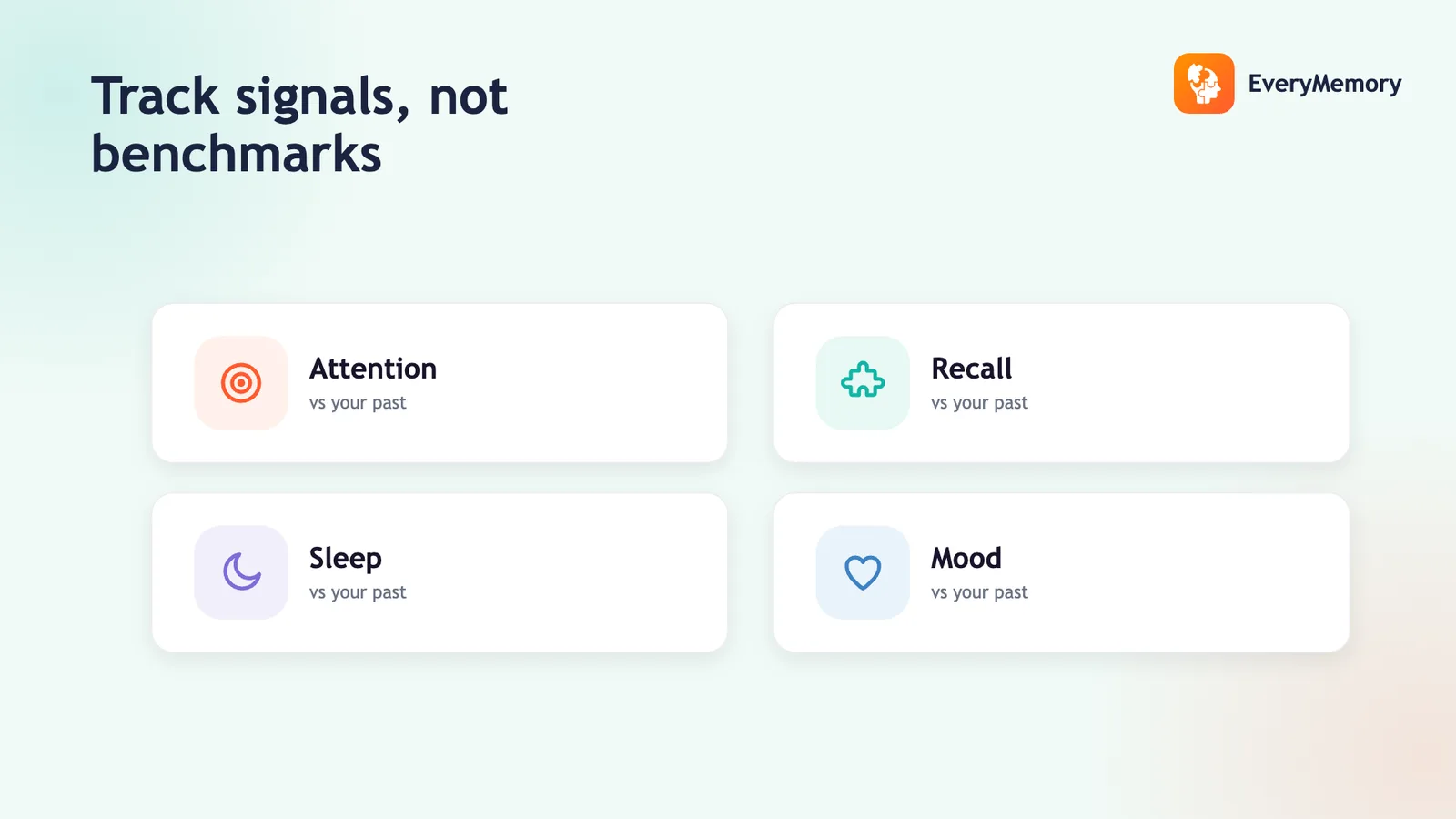
Think of cognitive health as a set of everyday abilities working together: paying attention, holding information in mind, recalling it, using language, and solving problems at a reasonable pace. When they're well supported, daily life simply feels smoother.
This is deliberately a non-clinical use of the term. A clinic might assess cognition formally; this guide is about the everyday version you can support and notice yourself. For the parts that make it up, see keep your brain active.
Everyday levers that support it
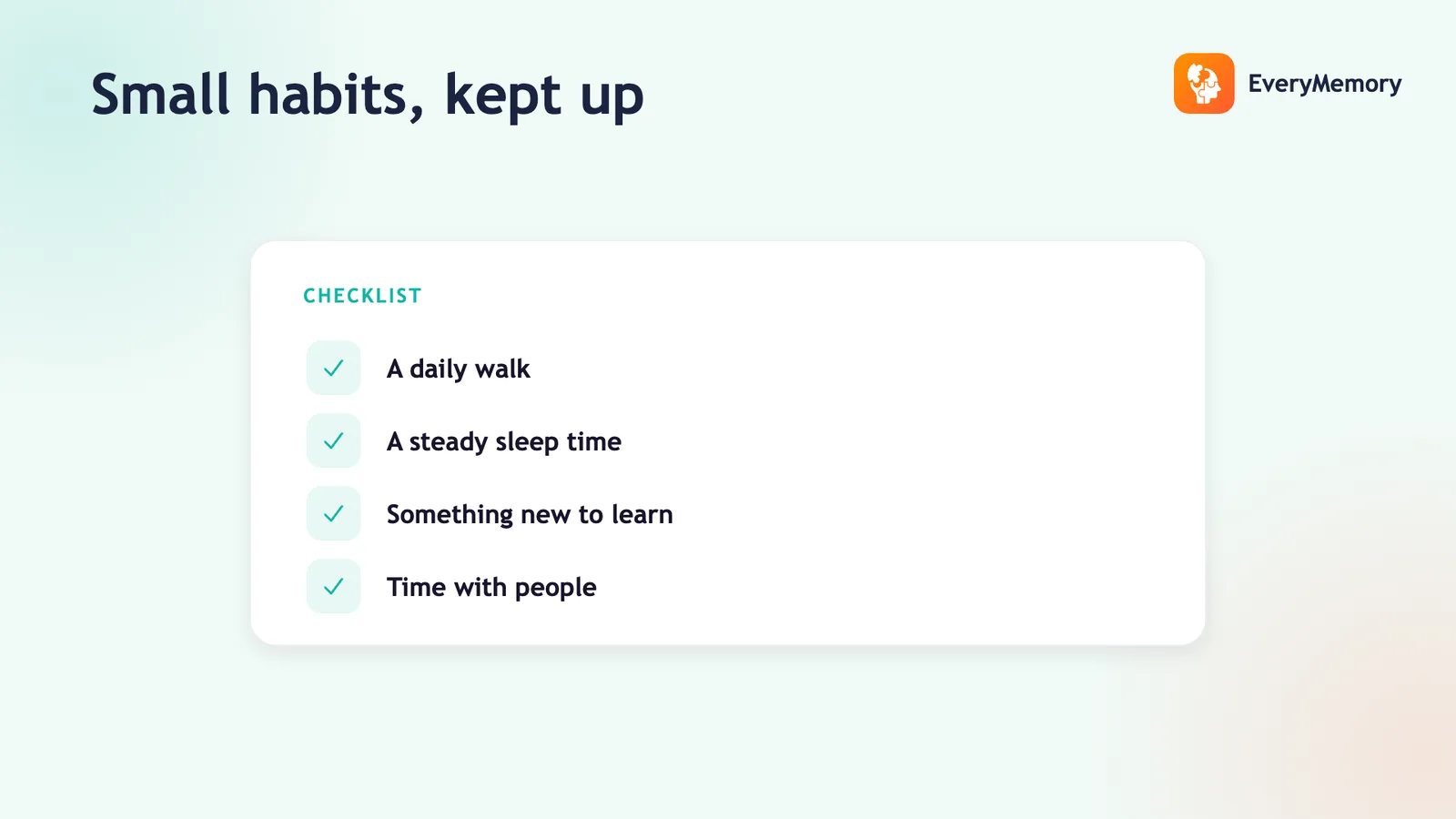
No single habit owns cognitive health; it rests on a handful that reinforce each other. Each supports thinking partly by supporting the body and mood it runs on.
| Lever | How it supports thinking |
|---|---|
| Steady sleep | Restores attention; consolidates learning |
| Regular movement | Improves blood flow, mood, and focus |
| Ongoing learning | Keeps attention and skills in active use |
| Social connection | Provides genuine cognitive exercise |
| Managing stress | Frees the attention memory depends on |
Train the skills, lightly
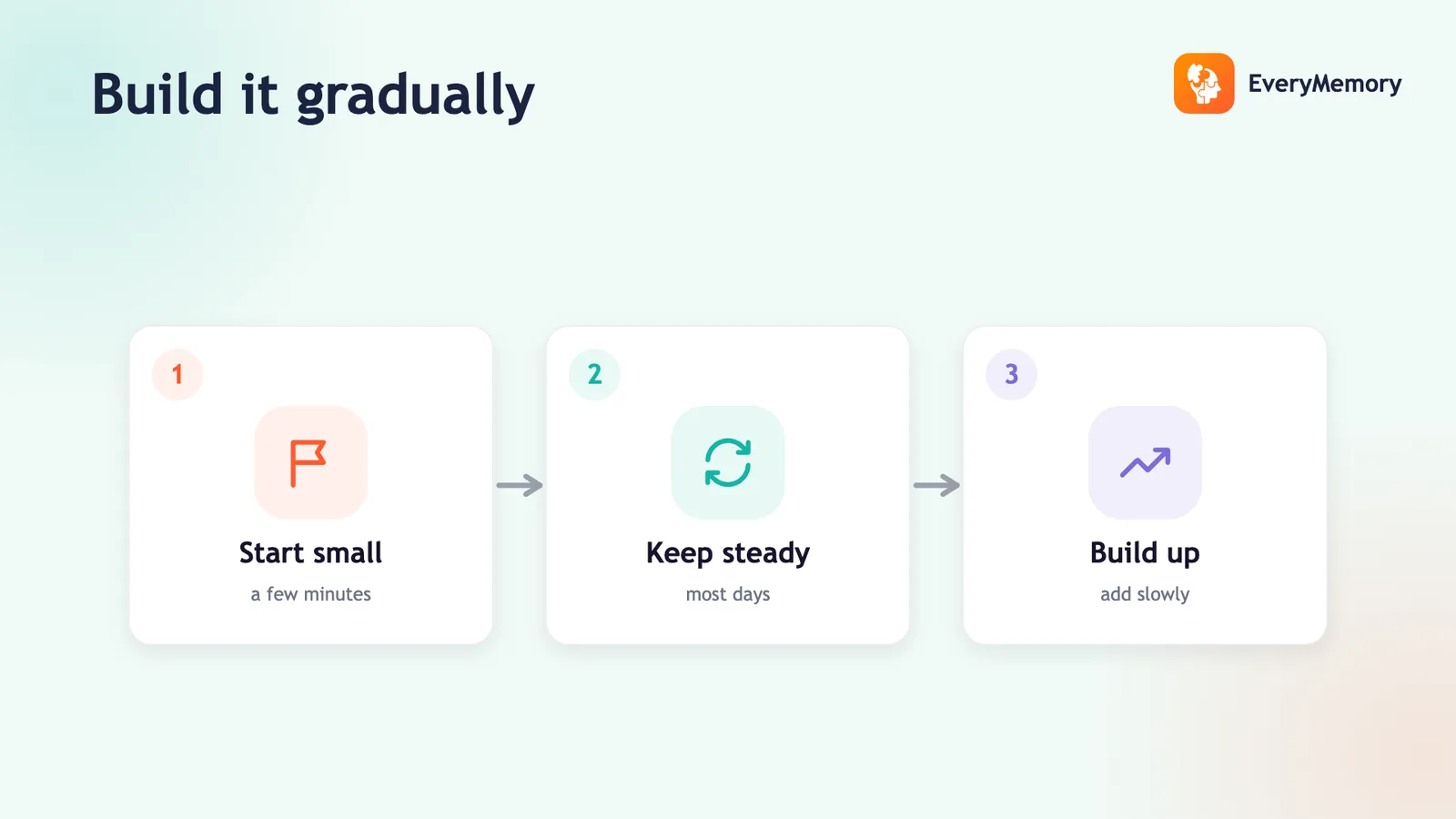
Alongside the habits, you can practise the underlying skills - attention and working memory respond to a little regular use. The honest caveat is that practising a skill mostly improves that skill and close relatives, not your thinking across the board.
So treat skill practice as one engaging strand of a broader active life, not the whole answer. Variety and mild challenge help more than grinding the same easy task. For ideas, see daily brain exercises.
Notice your own baseline
Because everyday thinking varies with sleep, stress, and the day, the most useful thing you can do is know your own baseline and watch its trend - not compare yourself to anyone else or to an invented norm. A simple repeatable self-check makes the trend visible and is reassuring far more often than not.
Keep it firmly non-medical. This is self-relative tracking, never a diagnosis. A gradual, persistent change that worries you - or that others notice - is a reason to talk to a doctor. For how these checks honestly work, see what is a non-medical memory check.
⚠ When to talk to a professional
This guide uses cognitive health in an everyday, non-clinical sense; it is not medical advice and not a way to assess, diagnose, prevent, or treat any condition. If you have a genuine or persistent concern about your thinking or memory, please speak with a doctor or qualified professional.