 EveryMemory
Does Multitasking Affect Your Memory?
Yes - multitasking is one of the most common reasons things slip your memory, because what you don't attend to in the moment never gets stored. Why it happens, and the fix.
Part of the guide: Understanding Memory Loss and Forgetfulness: A Calm, Reassuring Guide →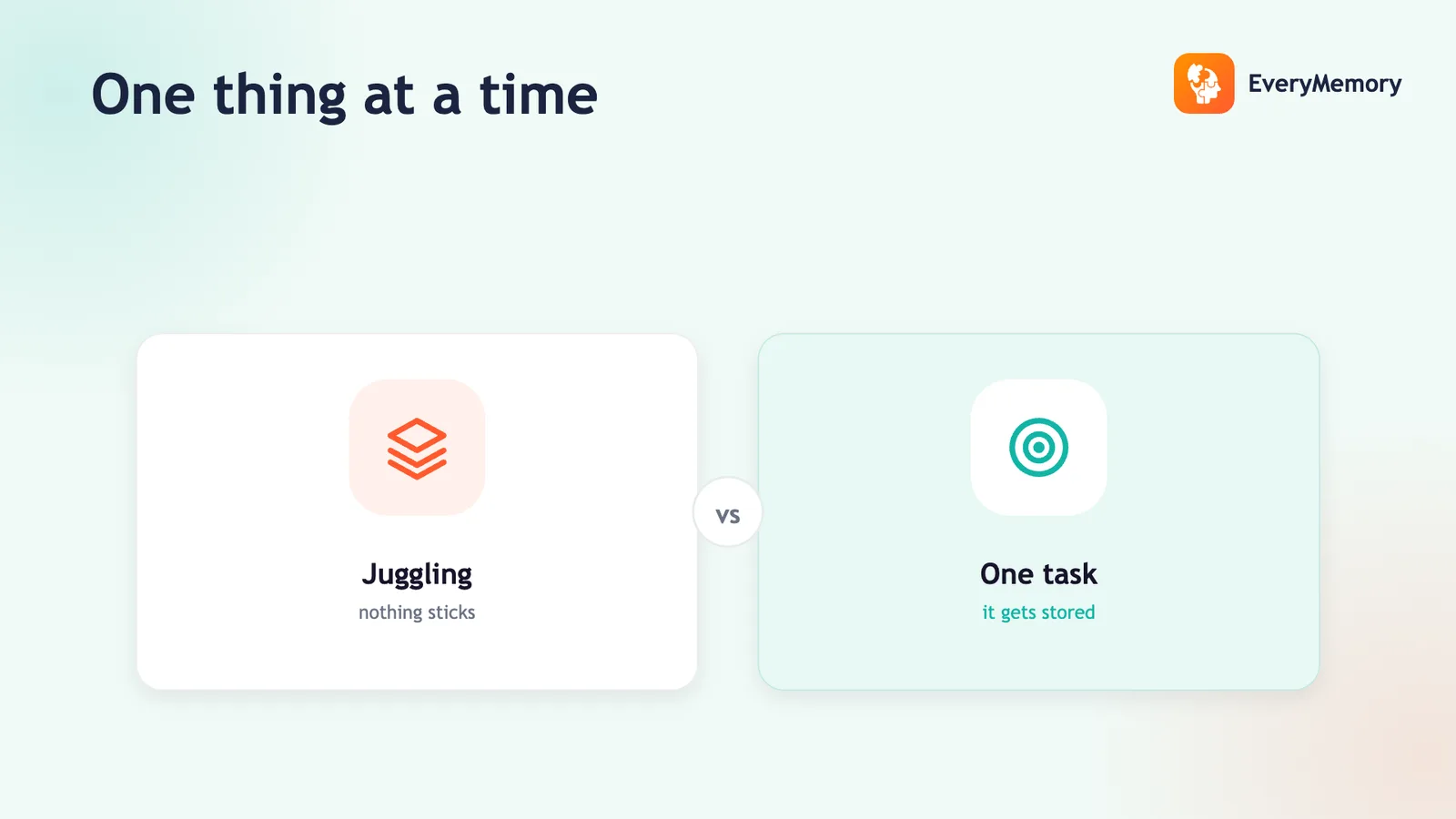
⚡ Quick answer
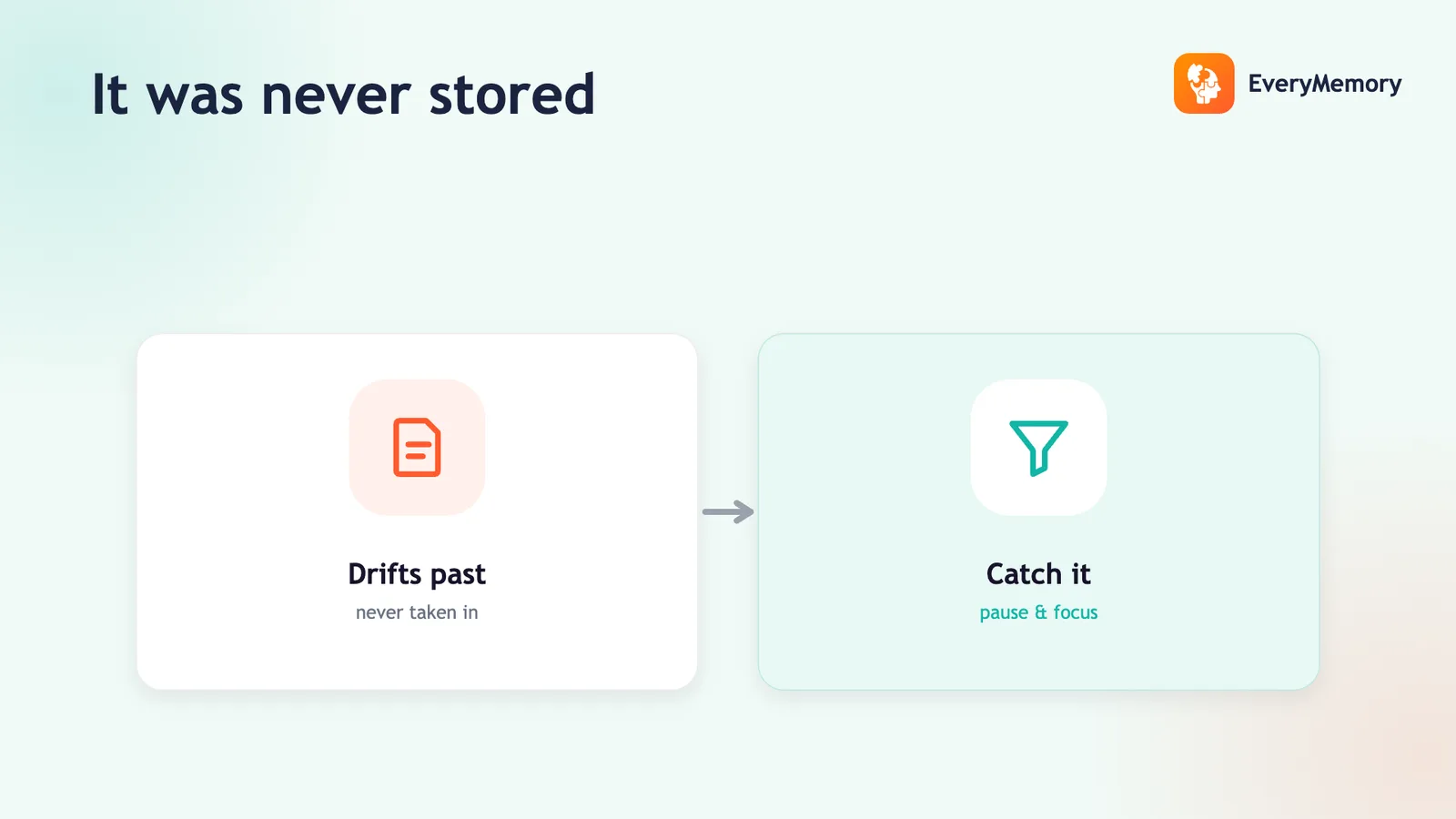
Yes - multitasking is one of the most common reasons things slip your memory. What feels like doing two things at once is really your attention switching rapidly between them, and information you're not attending to in the moment doesn't get stored. So you don't forget it later - it was never recorded. Doing one thing at a time is the simplest memory fix there is.
Key takeaways
- Yes - multitasking is one of the most common reasons things slip your memory.
- What feels like doing two things at once is really rapid task-switching; at any instant you attend to just one.
- Information you're not attending to as it happens never gets stored, so it was never a memory to lose.
- Single-tasking on what matters, batching similar tasks, and removing notifications prevent most of these slips.
If you forget things most on your busiest, most juggling days, multitasking is the likely culprit. It feels efficient, but for memory it's quietly corrosive.
Here's what multitasking actually does to memory, why it backfires, and the simple alternative.
Multitasking is really task-switching
Your brain can't truly focus on two demanding things at once. What it does instead is switch rapidly between them, giving each a sliver of attention in turn. It feels like simultaneous effort, but at any instant you're attending to just one - and missing the others.
Why that wrecks memory
Information only gets stored if you attend to it as it happens. While your attention is on task B, anything happening in task A - the name being said, where you set the keys - never encodes. There's no memory to recall later because none was formed. This is the same mechanism behind forgetting things so quickly.
The hidden switching cost
Every switch also leaves 'attention residue' - part of your mind stays on the last task as you start the next, so you never fully arrive at either. The result is slower, more error-prone work and weaker memory of all of it. What felt like doing more actually achieved less, remembered worse.
How to single-task instead
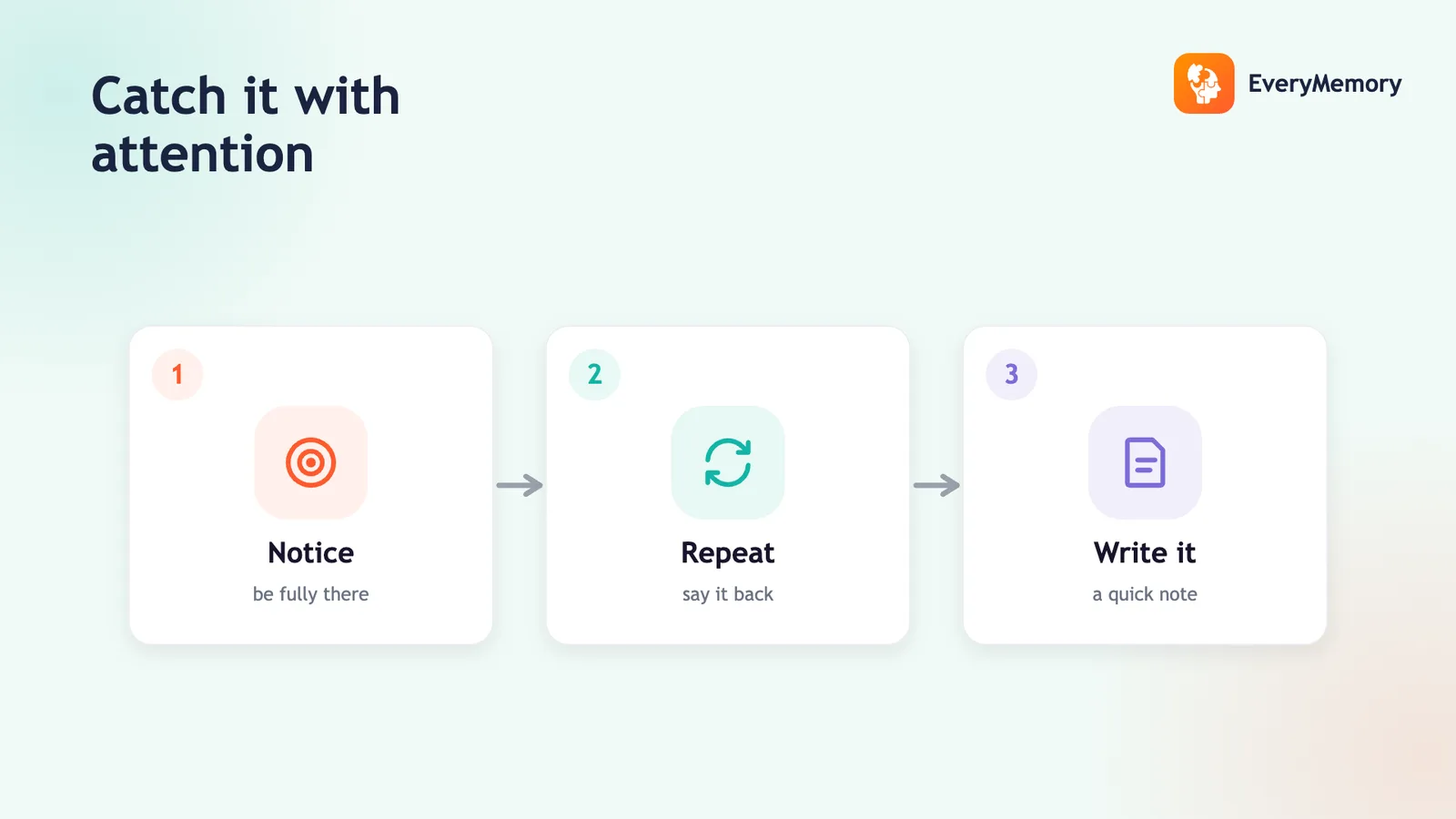
- Give the thing that matters its own moment. A name, an instruction, where you put something - three seconds of sole attention before moving on.
- Batch similar tasks so you're not switching contexts constantly.
- Remove the triggers - silence notifications and put the phone away while you focus.
- Finish one small thing before starting the next to cut the residue.
Building the focus this needs is itself trainable - see attention span.
Where it matters most
Single-tasking pays off most for the things people most often lose: catching a new name, registering where you set something down, and following instructions. These are exactly the moments multitasking sabotages, and exactly where a few seconds of sole attention prevents the slip. The wider fix is in how to stop forgetting things.