 EveryMemory
Does Music Help You Concentrate?
Music helps focus for some people and tasks and hurts it for others. When background music aids concentration, when it competes, and what kind works best.
Part of the guide: Brain Exercises for Seniors: The Complete Guide →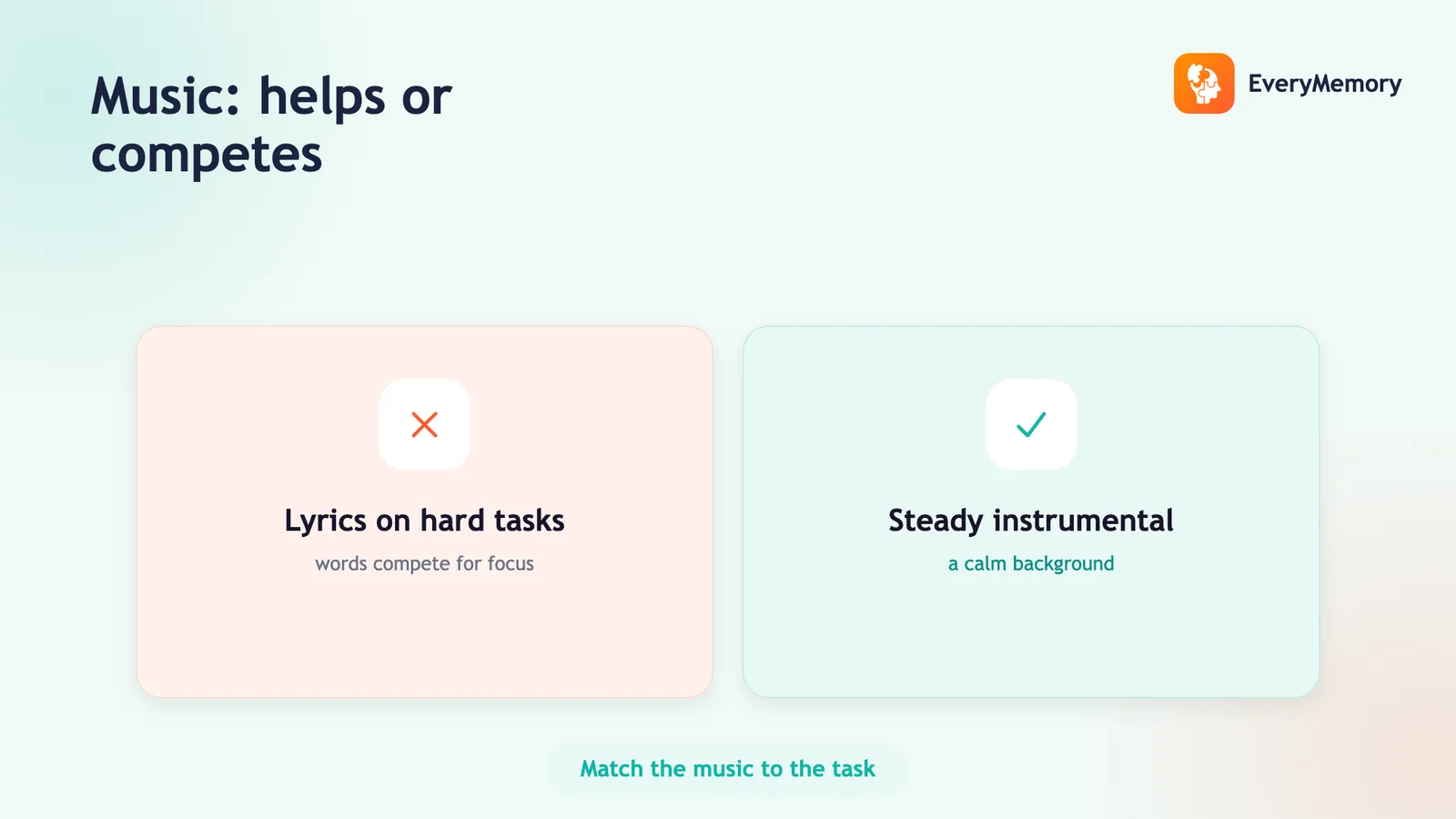
⚡ Quick answer
Music can help concentration for some people and tasks and hurt it for others. Lyric-free, steady background music can mask distracting noise and lift your mood, which aids focus on routine or repetitive work. But anything with words, or that's new and attention-grabbing, competes for the same mental resources you're using - especially when reading or writing.
Key takeaways
- Whether music helps concentration depends on the music and the task - there's no universal yes or no.
- Steady, familiar, lyric-free music can help by masking distractions and lifting mood for routine work.
- Music with lyrics competes with reading and writing because words use the same verbal channel.
- The real test: if you keep re-reading the same line it's hurting; if you're absorbed it's helping.
Some people can't work without music; others find it impossible with any. Both are right - whether music helps concentration genuinely depends on the music and the task.
Here's when it helps, when it hurts, and how to tell which it's doing for you.
The honest answer: it depends
There's no universal yes or no. Music's effect on focus shifts with the type of music, the kind of work, and the person. The useful question isn't 'does music help concentration?' but 'does this music help me with this task?'
When music helps
Steady, familiar, lyric-free music tends to help when it masks a distracting environment (an open office, a noisy home) or lifts your mood for routine, repetitive, or physical tasks. In those cases it fills attention that would otherwise wander to distractions, without competing for the part of your mind doing the work.
When music gets in the way
Music with lyrics competes directly with reading, writing, and language-heavy study, because words use the same verbal channel you're trying to study with. New, complex, or emotionally gripping music also pulls attention to itself. For demanding, focus-heavy work, that competition usually outweighs any benefit - the cost of divided attention is covered in does multitasking affect memory?
What kind works best
If music helps you, favour the kind that stays in the background: instrumental (no lyrics), familiar enough not to grab you, and steady rather than dynamic. Many people use ambient or instrumental tracks, or steady non-musical sound like white or brown noise, specifically to mask distractions without demanding attention.
The real test
Forget the studies and watch yourself: if you keep re-reading the same line, the music is costing you focus; if you're absorbed and the noise around you has faded, it's helping. And if focus is the real struggle, the bigger levers are removing distractions and single-tasking - see how to improve focus and concentration and how to concentrate on studying.