 EveryMemory
How to Improve Focus and Concentration
Concentration isn't mainly willpower - it's your environment and habits. Remove distractions, single-task in blocks, and protect sleep, and focus stops being a fight.
Part of the guide: Brain Exercises for Seniors: The Complete Guide →
⚡ Quick answer
To improve focus and concentration, remove distractions rather than fighting them, work in short single-tasked blocks with breaks, and protect your sleep - the foundation of attention. Concentration is trainable: practising sustained focus a little each day, and cutting the constant interruptions that fragment it, lengthens how long you can hold it.
Key takeaways
- Concentration is mostly environment and habits, not willpower - remove distractions rather than resisting them.
- Single-task in short defined blocks with real breaks instead of multitasking, which fragments focus.
- Protect the foundations: sleep, stress, and physical activity shape attention more than any trick.
- Focus is trainable - practising sustained, single-tasked attention a little each day lengthens it.
If focus feels harder than it used to, the usual cause isn't a failing brain - it's an environment built to interrupt you, plus habits that fragment attention. Both are fixable.
Here's how to improve focus and concentration in ways that actually hold.
Why concentration feels harder now
Notifications, open tabs, and a phone within reach train you to break focus every few minutes, and each switch leaves part of your mind on the last thing. The result is shallow, fragmented attention - not a broken brain, but an environment working against you. The fuller picture is in attention span.
Remove distractions, don't resist them
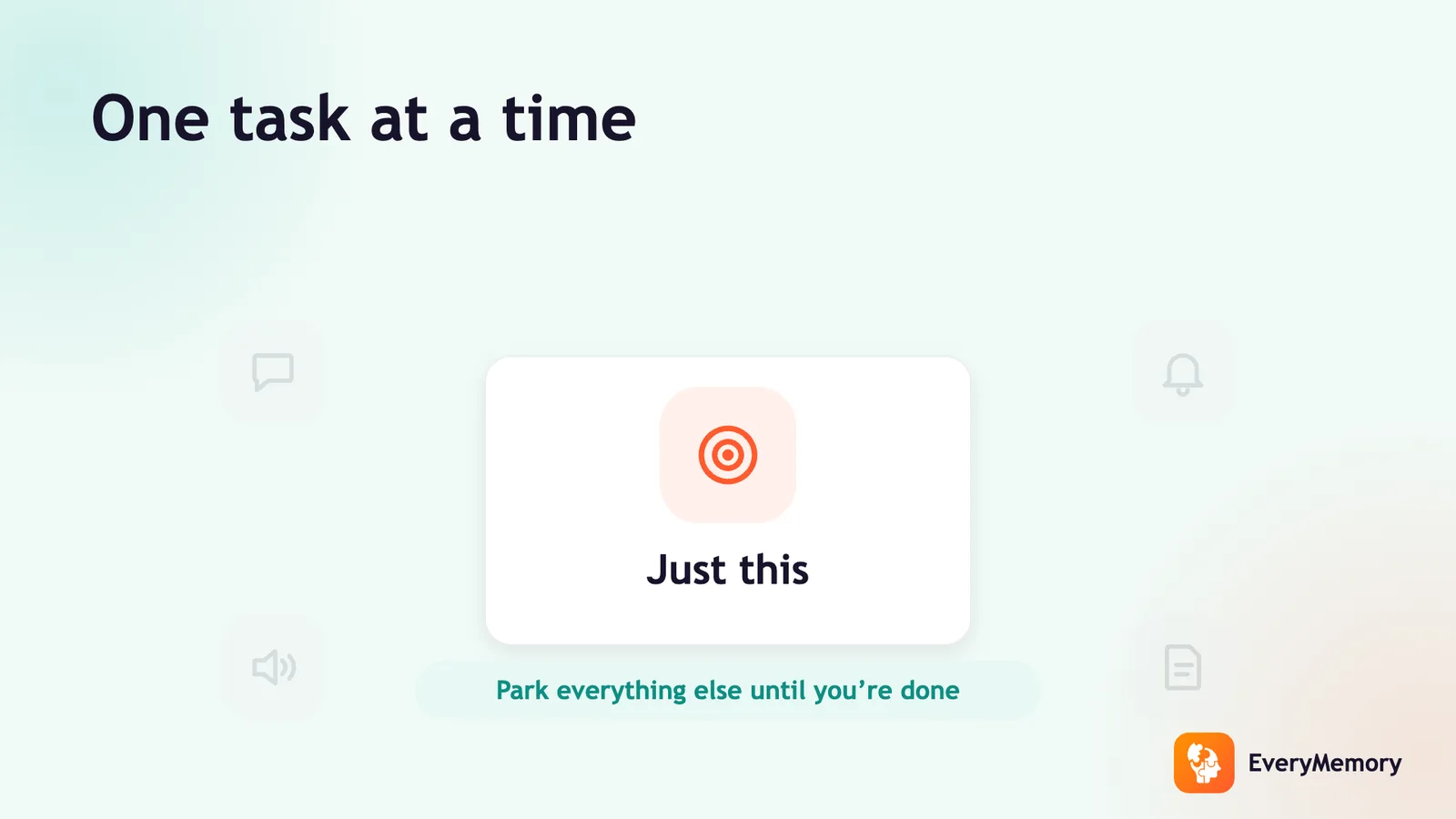
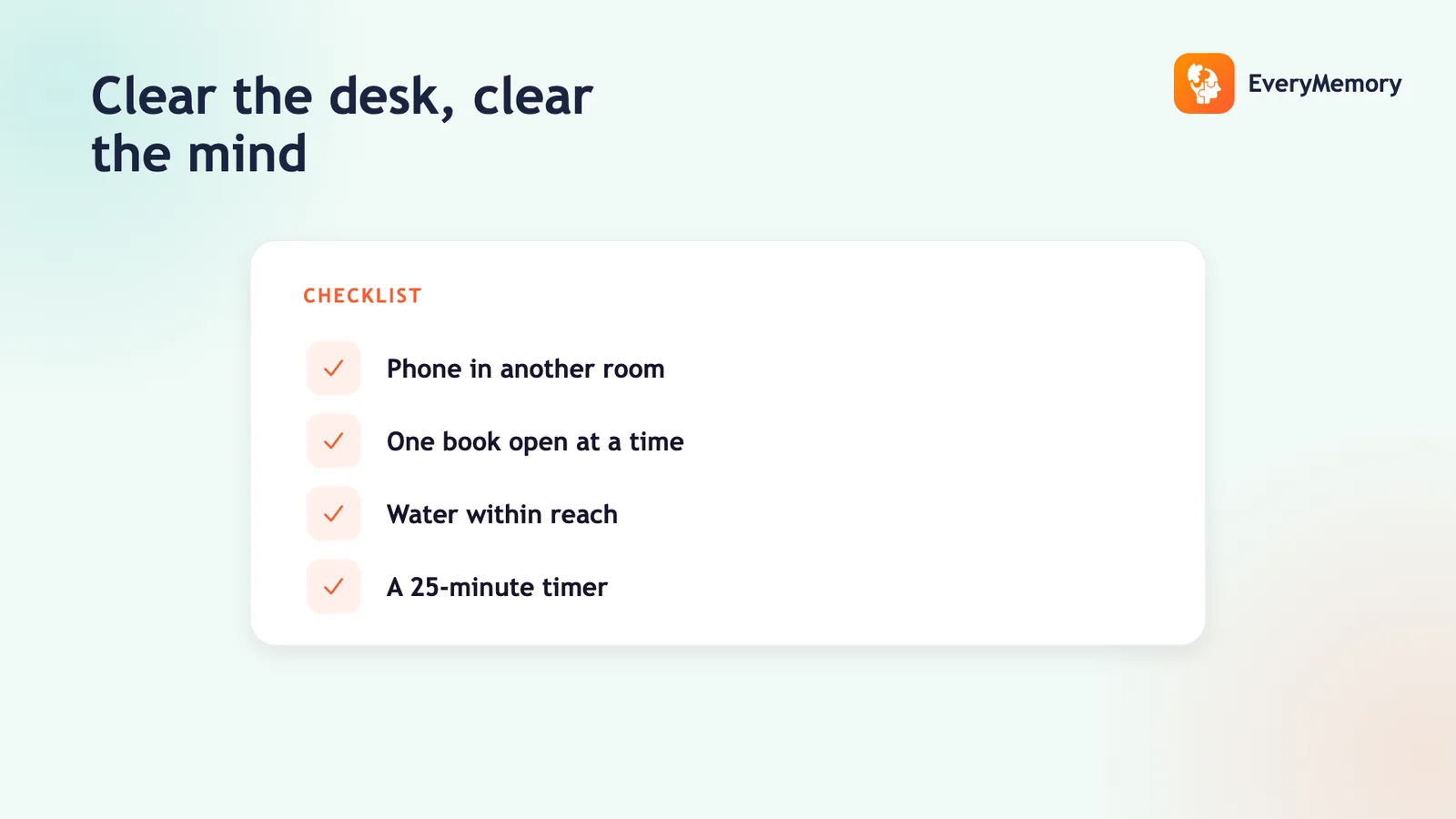
Willpower loses to a buzzing phone, and resisting it burns the focus you need. Win by distance: phone in another room, notifications off, one task on screen, a clear space. Removing the easy escapes is the single most effective thing you can do for concentration.
Single-task in short blocks
Multitasking is really fast switching, and it shreds focus - see does multitasking affect memory? Instead, give one thing your whole attention for a defined block with a real break after, like the Pomodoro technique. A short, bounded stretch is far easier to sustain than an open-ended one.
Mind the foundations
Sustained attention is one of the first things to suffer when you're underslept, stressed, or sedentary. Protect your sleep, manage stress, and move regularly - these do more for focus than any clever trick. Then let a task settle for a few minutes before deciding you 'can't focus today'.
Train it a little each day
Focus is a skill that grows with practice. Short daily sessions of sustained, single-tasked attention extend how long you can hold it - that's the idea behind the focus and attention workout. If poor focus appears suddenly, persists despite these changes, and disrupts daily life, it's worth a professional's input.