 EveryMemory
How to Concentrate on Studying
Concentration is mostly a setup problem. Remove distractions, make study active, and work in short blocks - and focus stops being a fight.
Part of the guide: Brain Exercises for Seniors: The Complete Guide →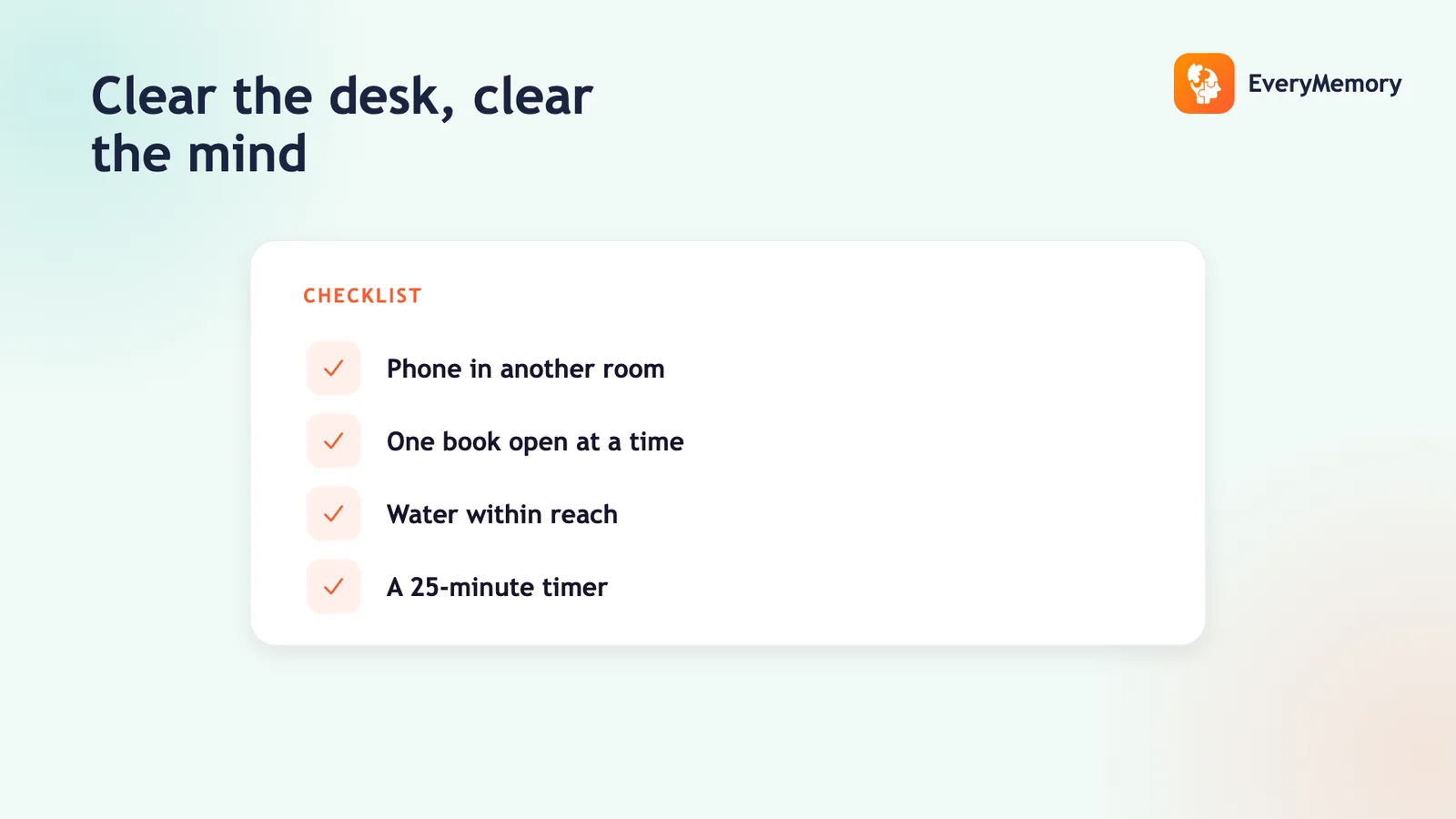
⚡ Quick answer
To concentrate on studying, remove distractions rather than resisting them - phone in another room, one tab, notifications off - and make the study itself active so your mind has to stay engaged. Work in short timed blocks with real breaks, start with the hardest task, and give your brain a few minutes to settle before deciding you can't focus.
Key takeaways
- Remove distractions instead of resisting them: phone in another room, one tab, notifications off.
- Make studying active (self-testing) so your mind has a reason to stay engaged.
- Work in short timed blocks with real breaks, and start with the hardest task while focus is fresh.
- Give a task a few minutes to become absorbing before deciding you can't focus.
Trying harder to focus rarely works for long. Concentration isn't mainly about willpower - it's about the conditions you study in and what you're actually doing while you study.
Get those right and focus largely takes care of itself. Here's how.
Remove distractions, don't resist them
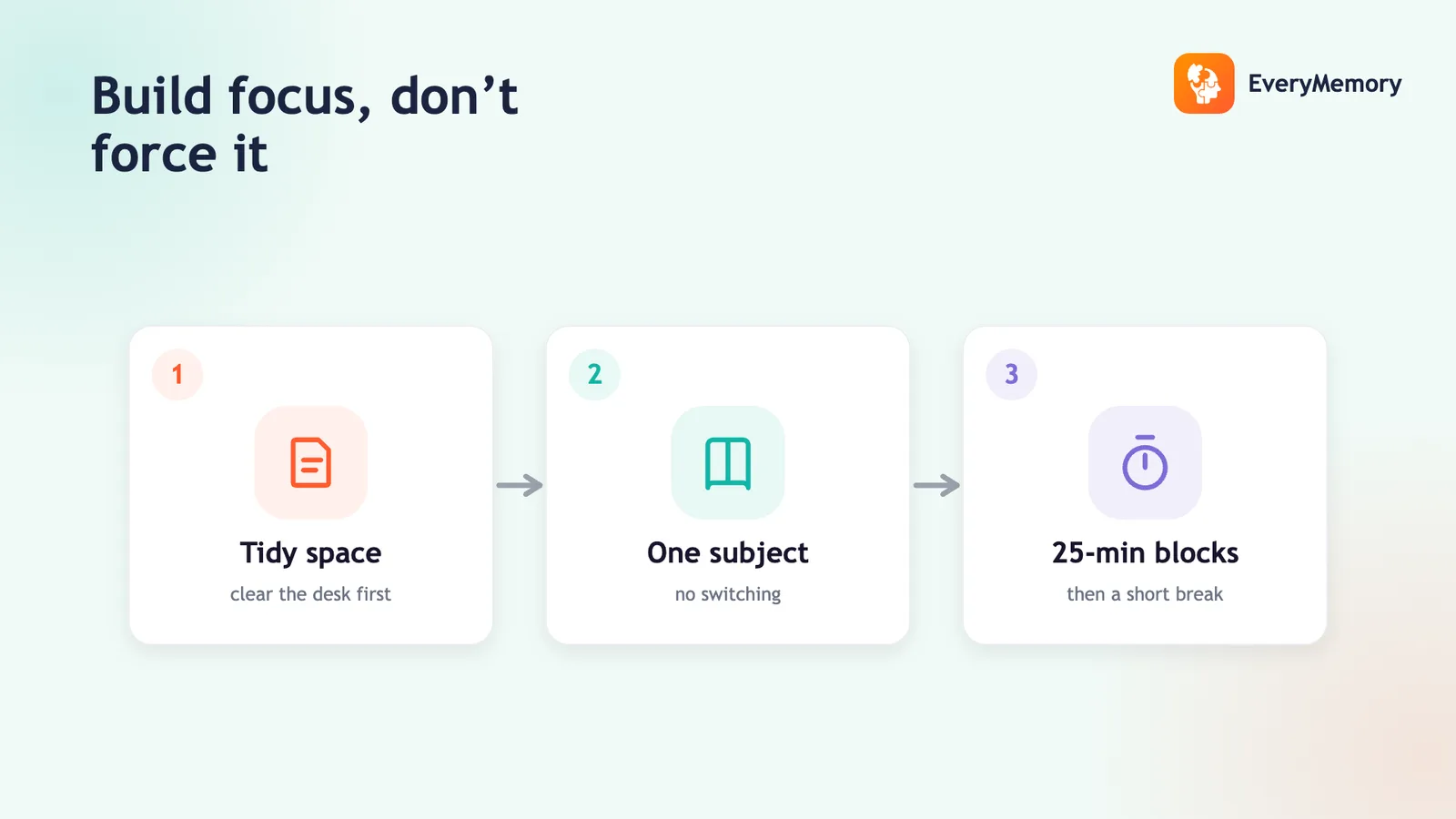
A phone you can see drains focus even unused, and resisting it costs the very attention you need for studying. Win by distance: phone in another room, one tab, notifications off, a clear desk. Removing the easy escapes beats out-willing them every time.
Make the studying active
A mind drifts when there's nothing to do but read. Give it a job: turn headings into questions, close the book and recall, work practice problems. When studying requires producing answers, attention follows naturally - this is the heart of active recall.
Work in short blocks with breaks
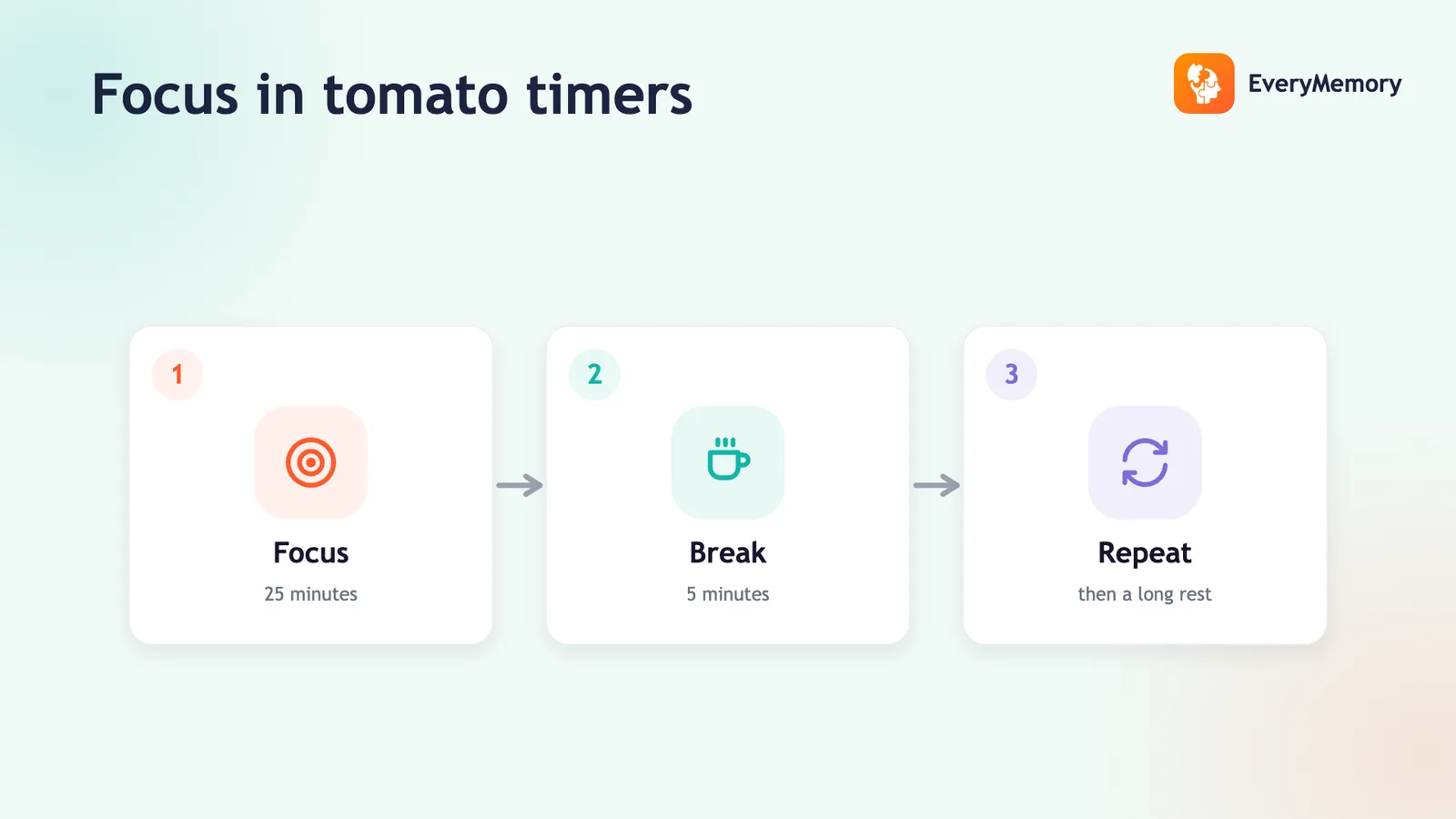
Open-ended 'study until done' invites drifting; a defined 25-minute block is easier to start and sustain, and a real break keeps focus from fading. The Pomodoro technique packages this neatly.
Start with the hardest thing
Focus is freshest at the start, so spend it on the task you're most tempted to avoid. Clearing the hardest thing early also removes the background dread that quietly pulls at your attention all session.
Let focus settle before judging it
Concentration doesn't switch on instantly - give a task a few minutes before deciding it's boring or you 'can't focus today'. And when an unrelated thought intrudes, jot it on a notepad to deal with later rather than chasing it. Building the underlying focus is itself trainable - see attention span.