 EveryMemory
Does Stress Cause Forgetfulness?
Yes - stress is one of the most common everyday causes of forgetfulness. Why a busy, worried mind forgets more, and what actually helps.
Part of the guide: Understanding Memory Loss and Forgetfulness: A Calm, Reassuring Guide →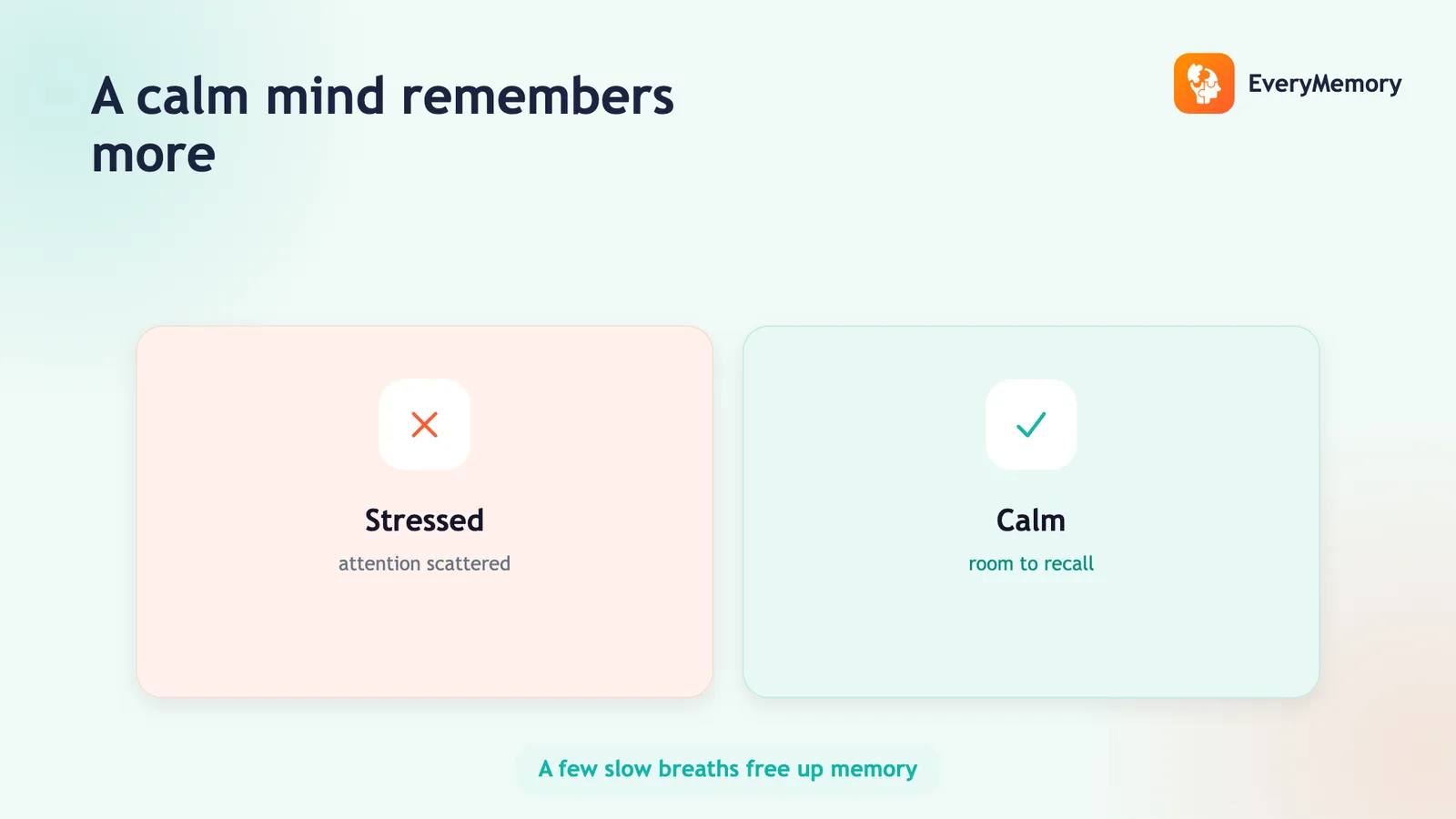
⚡ Quick answer
Yes - stress is one of the most common everyday causes of forgetfulness. When you're stressed or worried, your attention is occupied and your working memory has little room left to take in or recall information, so more slips through. This kind of forgetfulness is temporary and eases as the stress does; it isn't a sign of lasting memory decline.
Key takeaways
- Yes - stress is one of the most common everyday causes of forgetfulness.
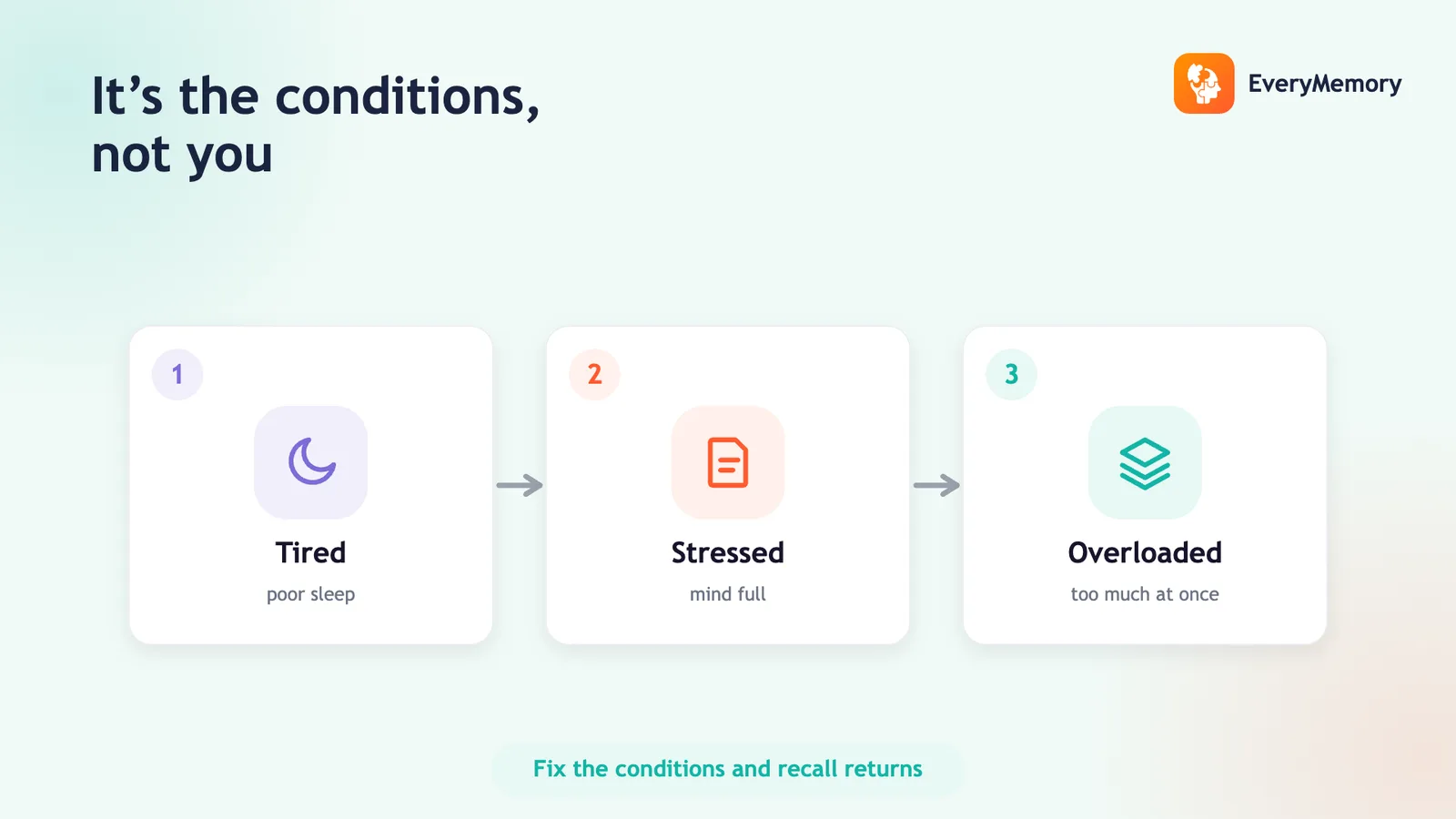
- A stressed, worried mind occupies the attention and working memory that storing and recalling depend on, so more slips through.
- It feels like memory loss but isn't - it's temporary and eases as the stress does.
- Lightening the load, single-tasking, protecting sleep, and taking real breaks ease it directly.
When life is stressful and you keep forgetting things, the two are almost certainly connected - and not in the way you fear. Stress doesn't damage your memory; it occupies the attention memory runs on.
Here's how stress and forgetfulness link up, why it's temporary, and what helps.
How stress crowds out memory
Forming and recalling memories takes attention and working-memory space. Stress and worry fill that space - your mind is busy running the worry, leaving little capacity for the name you just heard or the task you meant to do. The information never gets a fair chance to encode, so it slips. It feels like a failing memory; it's really a full one.
Why it feels like memory loss but isn't
Because the forgetting is real and frequent during stressful spells, it's easy to fear the worst. But the cause is the stress, not your memory - which is why it lifts as the pressure eases. A memory genuinely declining wouldn't track so closely with how stressed your week is.
What actually helps
- Lighten the load - fewer things competing for attention means more gets stored.
- Single-task - give one thing your focus at a time, especially what you want to remember.
- Protect sleep - stress and poor sleep compound each other; see how sleep affects memory.
- Offload to a list - don't ask a stressed working memory to hold dates and tasks.
- Take real breaks - short pauses restore the attention focus depends on.
These ease the forgetfulness directly, because they free up the capacity stress was eating.
When it's worth a closer look
Forgetfulness that rises and falls with your stress levels is ordinary. It's worth speaking with a qualified professional if memory problems persist even when life calms down, are steadily worsening, or are starting to disrupt daily life - or if the stress or low mood itself feels hard to manage.
⚠ When to talk to a professional
Stress-related forgetfulness is common and usually eases as stress does. If memory problems persist when life calms, steadily worsen, or disrupt daily life - or if stress or low mood feels unmanageable - talk to a qualified professional.