 EveryMemory
Emotional Wellbeing and Memory
How you feel and how well you remember are quietly linked - steady emotional wellbeing gives attention room to work, and looking after it supports everyday memory.
Part of the guide: How to Keep Your Brain Healthy: A Complete Lifestyle Guide →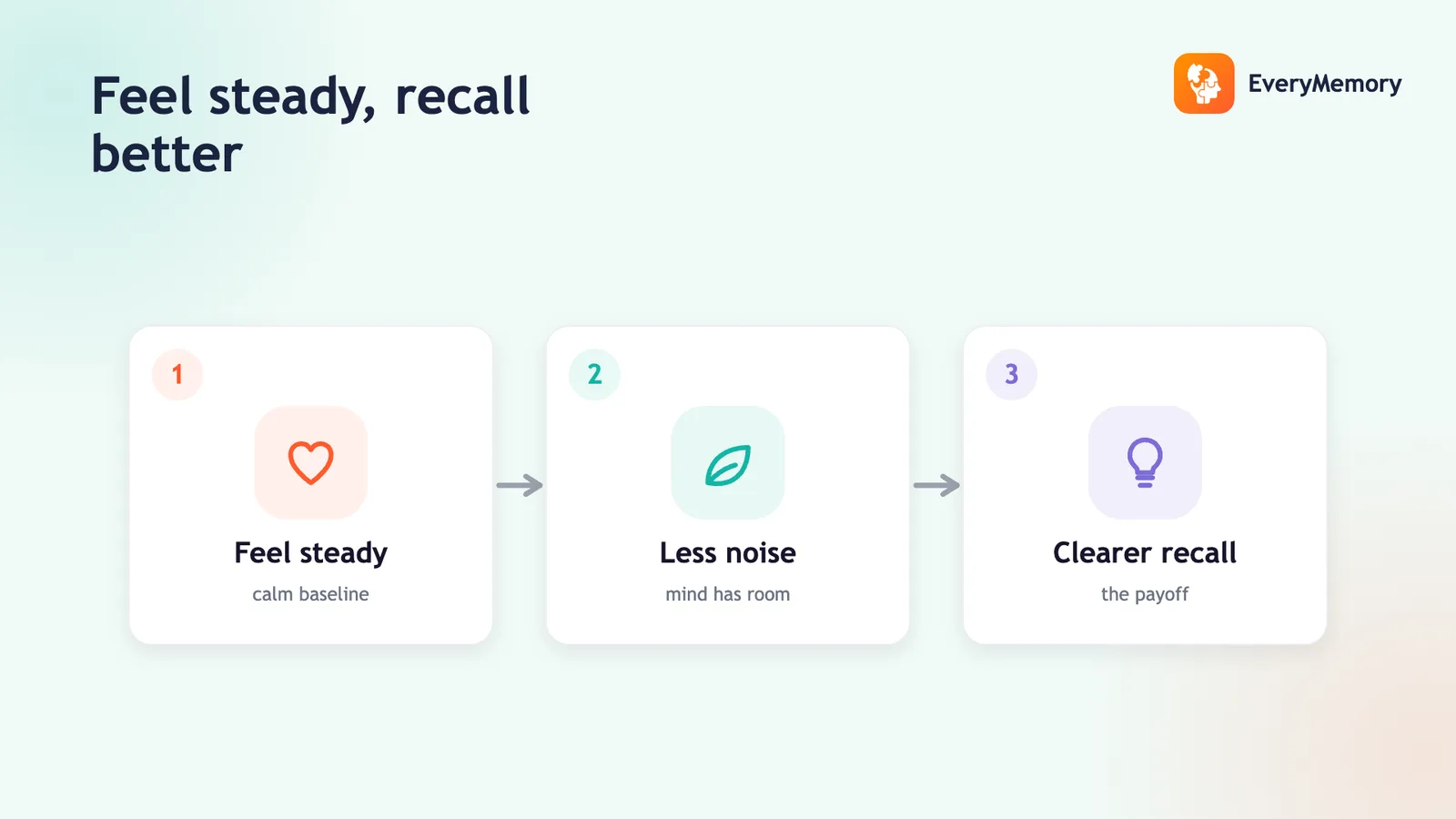
⚡ Quick answer
Emotional wellbeing supports memory through attention. When mood is steady, stress is manageable, and sleep is decent, your mind has the attention to take in and recall things smoothly. Low mood, worry, and poor sleep all split that attention, so memory feels patchy. Looking after wellbeing - sleep, movement, connection, calm - supports everyday recall.
Key takeaways
- Mood, stress, worry, sleep, and fatigue all affect memory through one gateway: attention.
- Steady sleep, movement, connection, and calm keep the conditions memory needs favourable.
- Wellbeing is a stack of small repeatable habits, not a single big fix.
- Persistent, severe, or distressing difficulties deserve proper professional support.
Memory doesn't happen in a sealed-off part of you, untouched by how you feel. Stress, low mood, worry, poor sleep, and loneliness all pull on attention - and attention is what memory is built from. So emotional wellbeing isn't a soft extra; it's part of the everyday machinery of remembering.
This piece pulls the cluster together: the threads of mood, stress, worry, sleep, and fatigue are really one story about attention. Look after the conditions, and you support the memory that depends on them - no medical claims required.
The common thread is attention
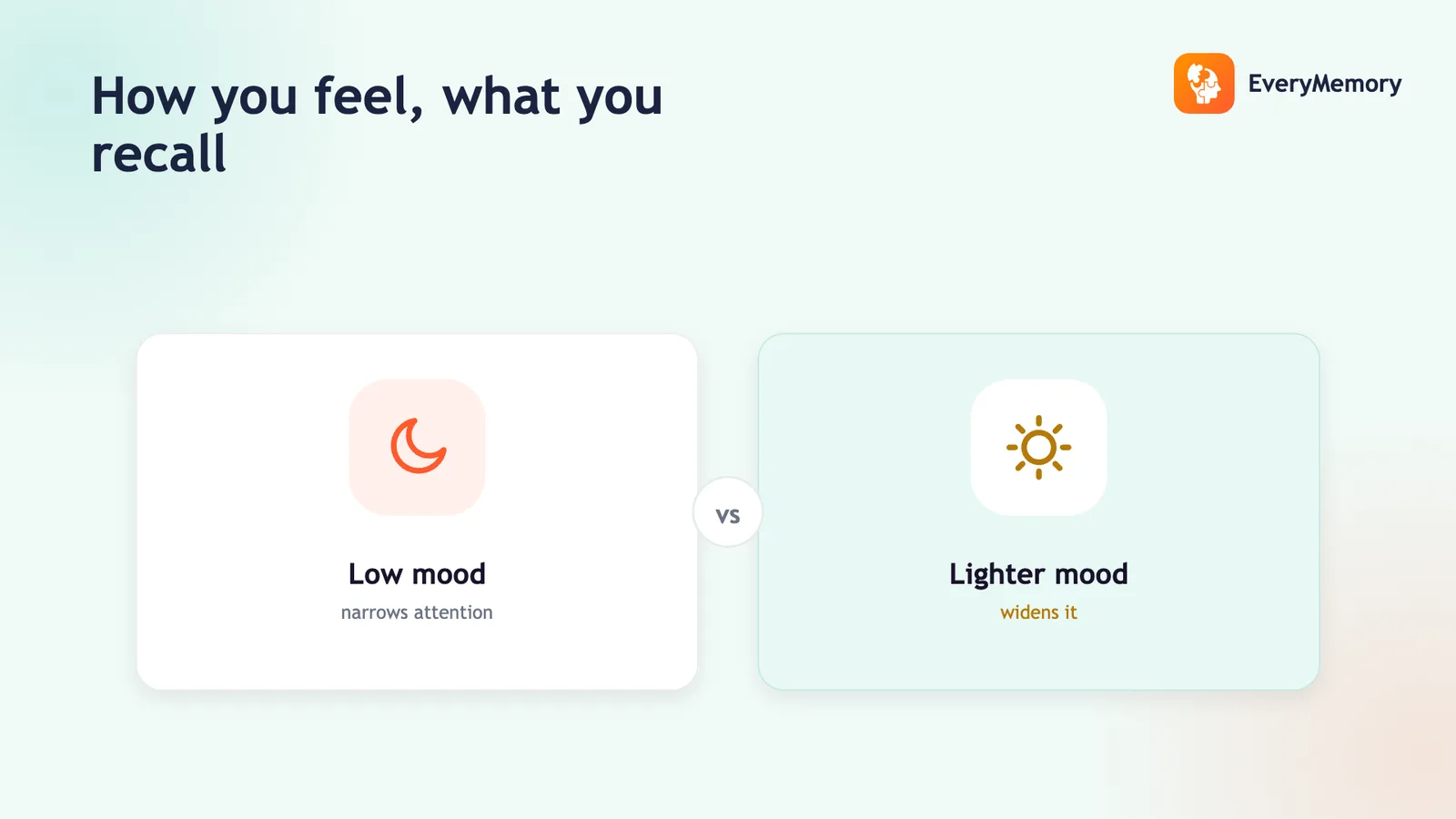
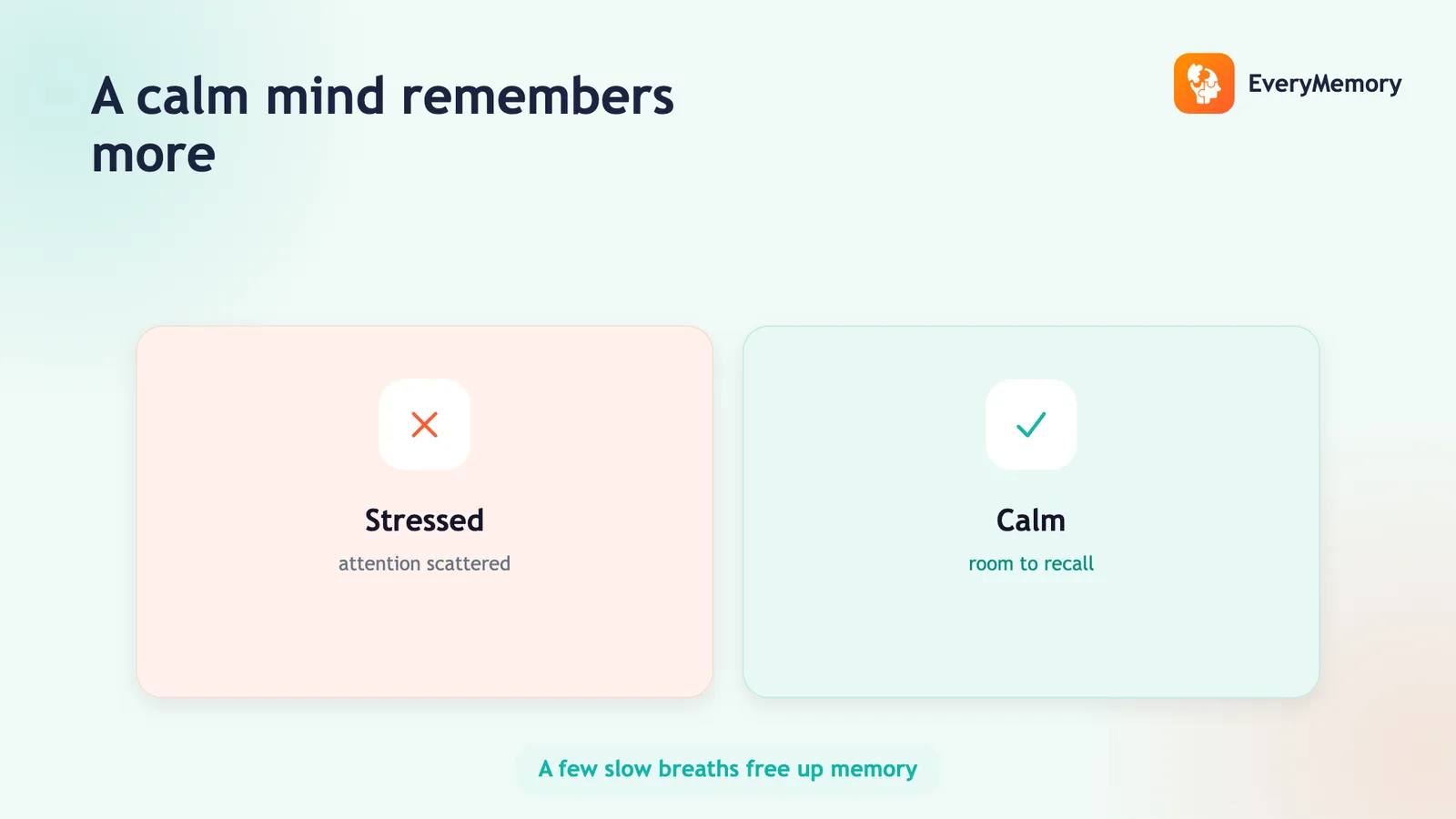
Pull on any of these threads and you reach the same knot. Stress crowds attention, low mood narrows it, worry occupies it, poor sleep thins it, and fatigue drains it. In every case the memory effect runs through the same gateway: how much attention is available to take things in.
That's genuinely good news, because attention responds to ordinary care. You don't have to fix everything - easing the pressure on attention from any direction tends to help recall. See does stress cause forgetfulness for the stress strand.
Everyday levers that support wellbeing
The same handful of basics quietly supports both mood and memory. None is a treatment; together they keep the conditions favourable.
| Lever | Why it supports memory |
|---|---|
| Steady sleep | Consolidates learning and restores attention |
| Movement and daylight | Lift mood and sharpen focus |
| Connection with people | Eases low mood's inward pull on attention |
| Calm practices (breath, mindfulness) | Settle the churn that splits focus |
| Small, finishable wins | Build momentum and a lighter mood |
Small habits, compounded
Wellbeing isn't a single big fix; it's a stack of small, repeatable habits. A steady wake-up time, a daily walk, a few slow breaths when the spin starts, one enjoyable thing each day - each is minor on its own, but together they keep attention in good shape, and memory rides on attention.
Pick one or two to start, not the whole list. The point is something you'll keep doing. For a light, regular anchor that fits this kind of routine, see keep your brain active.
Knowing when to reach out
Everyday dips in mood, bouts of stress, and rough nights are part of being human, and the memory wobble that comes with them usually settles as wellbeing returns. That's the normal, reversible pattern this whole cluster is about.
But emotional difficulties that are persistent, severe, or genuinely distressing - that don't lift, that disrupt your sleep, daily life, or sense of yourself - deserve proper support. Please speak with a doctor or qualified professional. Looking after wellbeing is a strength, and asking for help is part of it.
✅ Try this today - A simple daily wellbeing stack
A small, repeatable routine that supports both mood and memory.
- Keep one fixed wake-up time, even at weekends.
- Get outside for daylight and a short walk early in the day.
- When the mind races, take a minute of slow breathing with a long out-breath.
- Do one enjoyable, finishable thing daily - however small.
- Reach out to one person, and protect a steady wind-down before bed.
⚠ When to talk to a professional
This is general wellbeing information, not medical advice and not a treatment for depression, anxiety, or any condition. If emotional difficulties are persistent, severe, or distressing, please speak with a doctor or qualified professional.