 EveryMemory
Forgetting Names and Words: Why It Happens
Blanking on a name or losing a word mid-sentence is usually retrieval, not memory loss. Why both slip, and the different fixes each one needs.
Part of the guide: Understanding Memory Loss and Forgetfulness: A Calm, Reassuring Guide →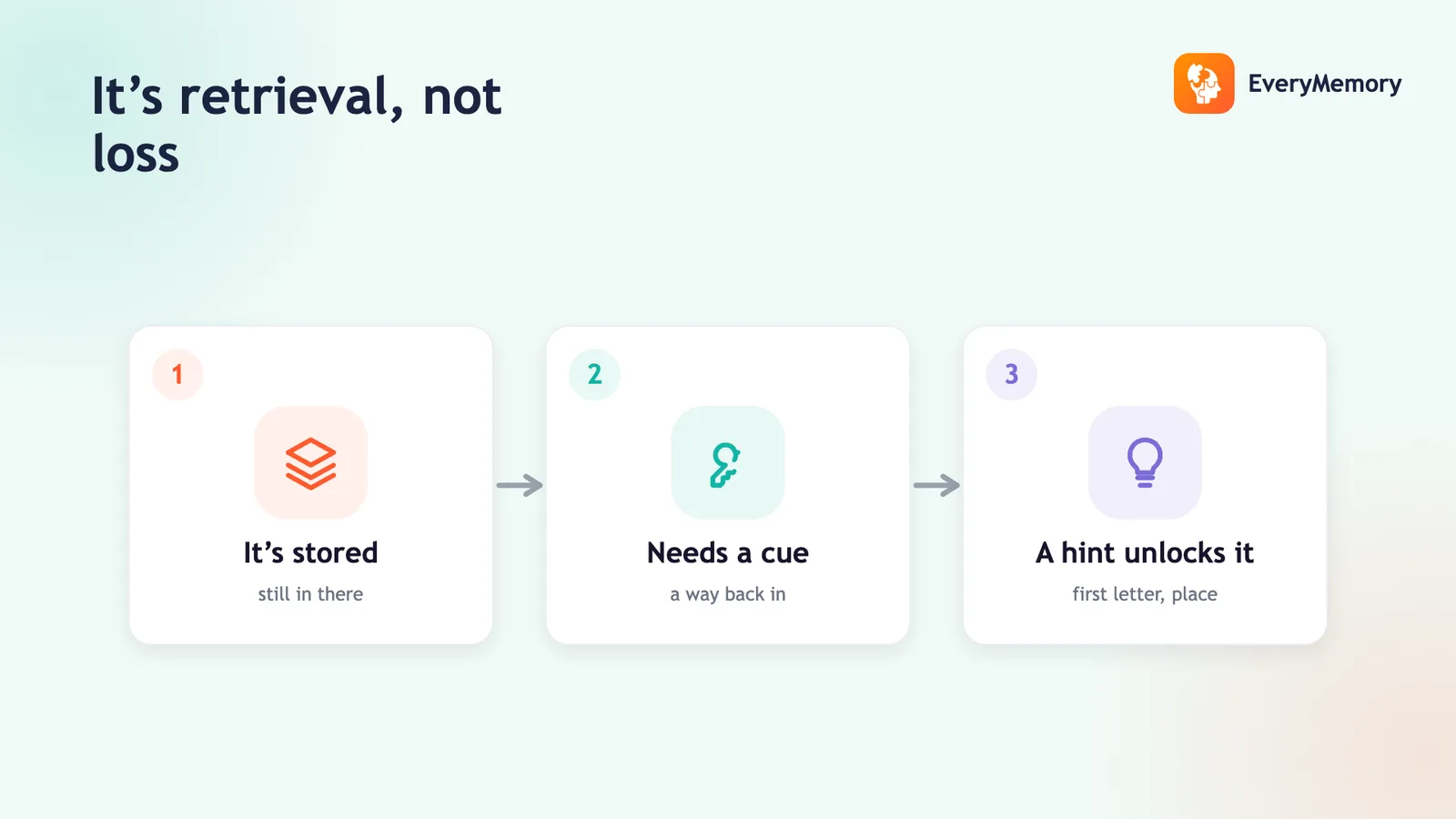
⚡ Quick answer
Forgetting names and words mid-conversation usually isn't memory loss - it's retrieval. Names are arbitrary labels with little to hook onto, and words sit on the 'tip of the tongue' when the meaning fires but the sound link is briefly weak. Both get worse with tiredness, stress, and age-related slowing, and both usually surface on their own once you stop straining.
Key takeaways
- Forgetting names and losing words mid-sentence is usually retrieval, not memory loss.
- Names slip because they're arbitrary labels with nothing to hook onto; words get stuck when meaning fires but the sound link is briefly weak.
- Both worsen with tiredness, stress and divided attention, and usually surface on their own once you stop straining.
- Fix names at the introduction (hear it, say it back, link it); fix stuck words by describing around them and letting go.
You greet a neighbour you've known for years and their name is simply gone. Mid-sentence, the word you want hovers just out of reach. Both feel like memory failing - and both are among the most common complaints people have about their minds.
In nearly every case it isn't memory loss. It's retrieval, and names and words slip for slightly different reasons, each with its own fix.
Why names slip so easily
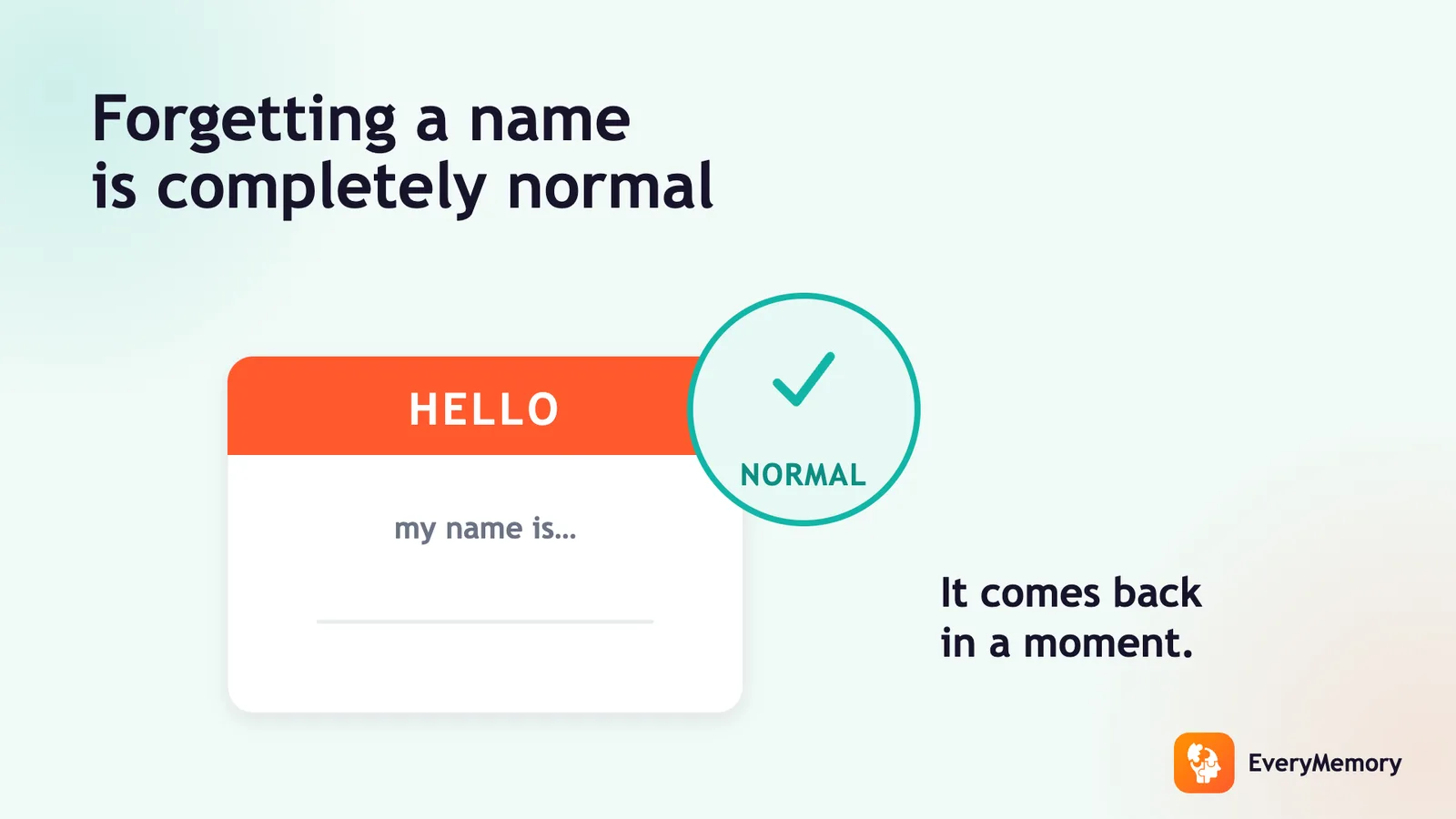
Names are uniquely hard because they're arbitrary. "Mr. Baker" doesn't bake; the name carries no built-in meaning for your brain to grab. You can remember everything about a person - their job, their dog, their last holiday - while the name itself, hanging from a single thread, vanishes. Psychologists call this the Baker/baker paradox. It's a normal quirk of how naming works, not a warning sign - covered in full in is it normal to forget names after 60?
Why words get stuck on the tip of your tongue
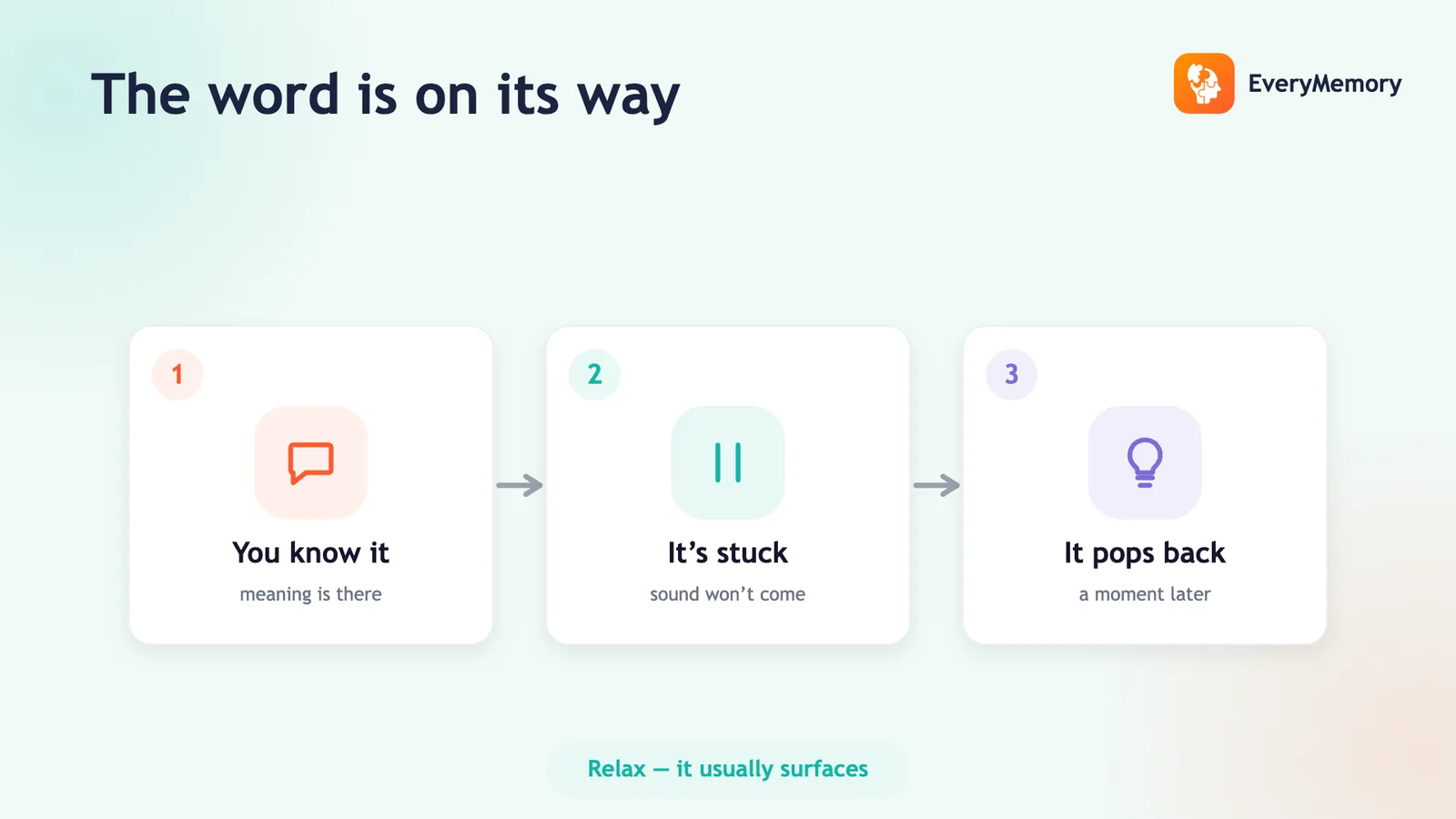
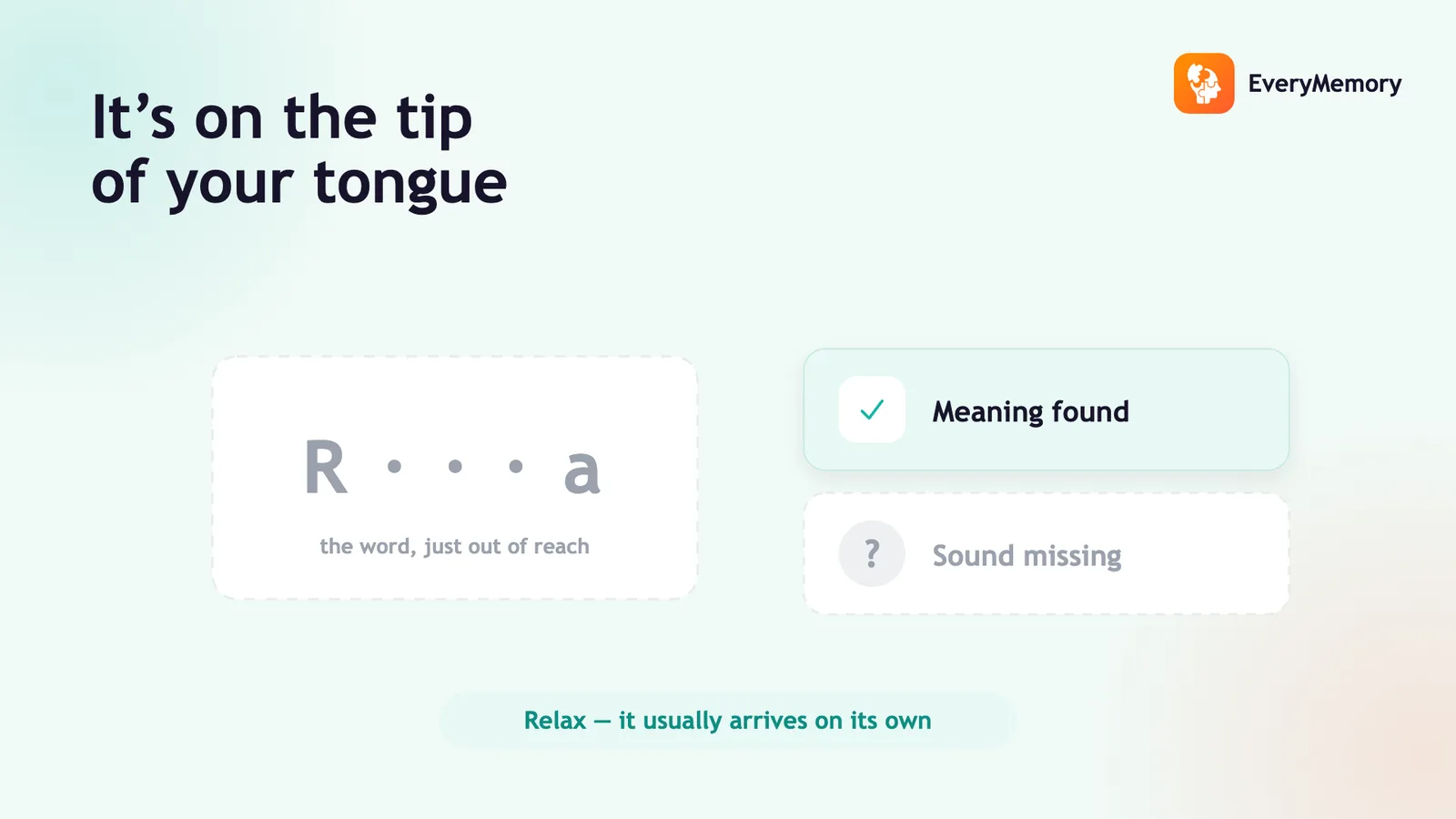
Your brain stores a word's meaning and its sound in different places. A tip-of-the-tongue moment is when the meaning fires but the link to the sound is momentarily weak - you know exactly what you mean, you just can't reach the word. The knowledge is fully intact; the connection is briefly faint. There's more on this in why you forget words while speaking and why words get stuck.
What makes both worse
Names and words slip more under the same conditions, all ordinary:
- Tiredness - retrieval is one of the first things to suffer when you're underslept.
- Stress and pressure - the harder you grasp, the more it hides.
- Divided attention - if you barely caught the name to begin with, there's little to retrieve.
- Age-related slowing - retrieval gets a touch slower over time, so the word surfaces later. This is normal.
Fixes for names
Most forgotten names were never properly stored, so the fix is at the introduction, not the recall:
- Actually hear it - pause and catch the name instead of moving straight to your reply.
- Say it back: "Good to meet you, Sarah." One repetition locks it in.
- Link it to the face or to something you can picture - a friend with the same name, a rhyme, an image.
- Use it once more before you part.
Fixes for stuck words
When a word is on the tip of your tongue, straining usually makes it worse by locking onto a wrong, similar word. Instead:
- Describe the meaning out loud - talking around it often springs the word free.
- Run through first letters of the alphabet; the right sound can trigger it.
- Let it go and move on - it almost always surfaces a minute or two later once you stop forcing it.
When it's worth a closer look
Occasional name- and word-finding trouble, worse when you're tired or stressed, is a normal part of how retrieval works. It's reasonable to speak with a qualified professional if it gets noticeably and steadily worse over weeks, starts to affect everyday conversation or tasks, or comes alongside confusion about familiar people or places - particularly if others notice before you do.
✅ Try this today - the say-it-back habit
One move for names, one for words:
- For names: the moment you hear one, use it back in your reply - 'Good to meet you, Sarah.'
- For a stuck word: stop straining, describe what you mean out loud, and let the word come.
- Notice how often the name sticks, and the word arrives, once you stop forcing it.
⚠ When to talk to a professional
Occasionally forgetting names and words is a normal feature of retrieval, not a sign of a medical problem on its own. If it is clearly and steadily worsening, disrupting everyday conversation, or noticed by others alongside confusion, talk to a qualified professional.