 EveryMemory
Is It Normal to Forget Names After 60?
Blanking on a familiar name is one of the most common memory complaints after 60 - and in most cases it's a normal feature of how recall works, not a warning sign.
Part of the guide: Understanding Memory Loss and Forgetfulness: A Calm, Reassuring Guide →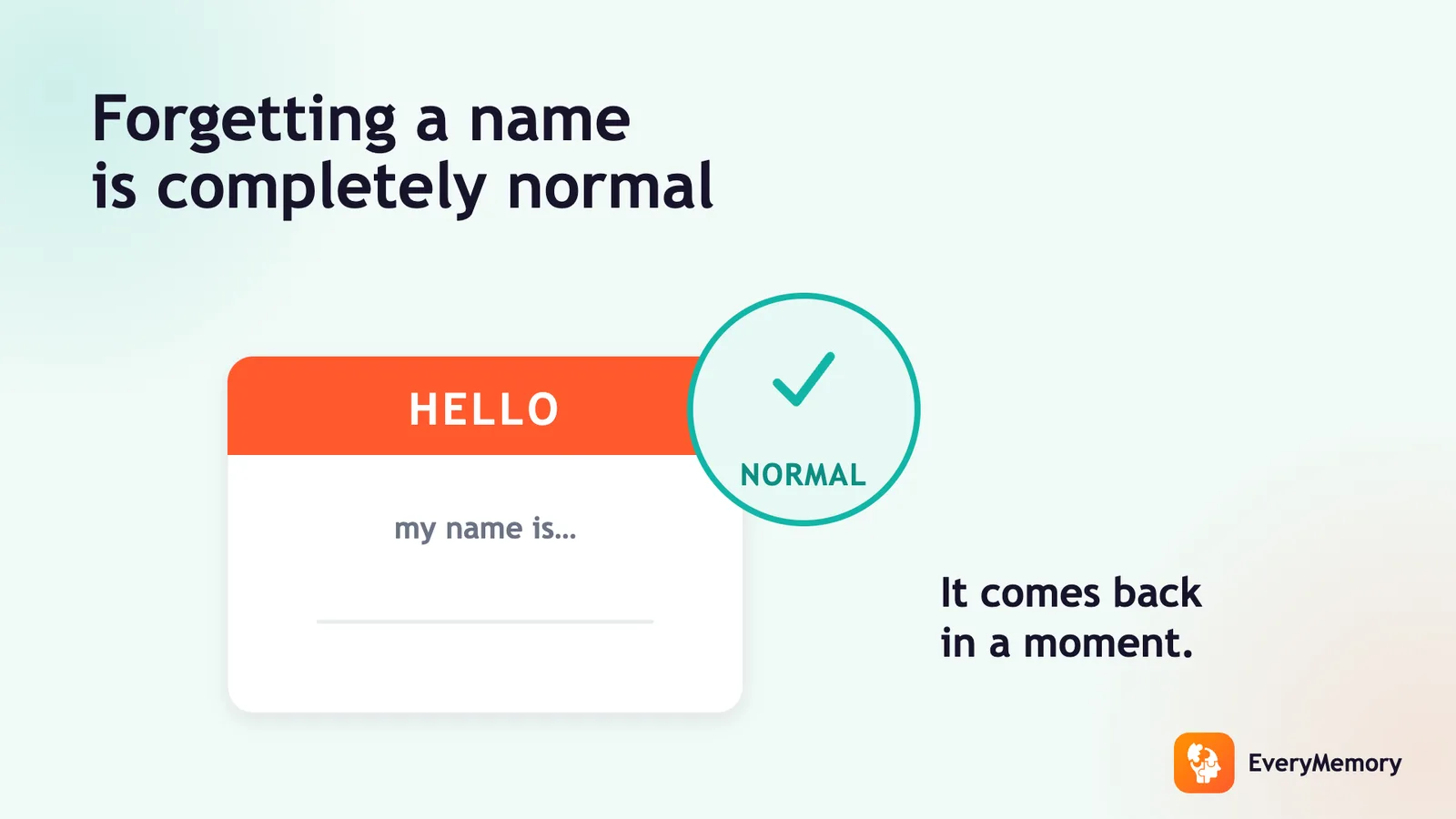
⚡ Quick answer
Yes - occasionally forgetting names is common and usually normal after 60. Names are arbitrary labels with almost nothing for your brain to grab onto, and retrieval naturally slows a little with age, so the name is still stored but takes longer to surface. It's worth paying closer attention if name-finding gets noticeably worse over a short period, affects the names of close family, or comes alongside confusion about familiar people or places.
Key takeaways
- Names are arbitrary labels with no built-in meaning, so the brain has almost nothing to anchor them to - making them the first detail to slip.
- Retrieval naturally slows a little with age, which is why a blanked name so often surfaces on its own minutes later once you stop straining for it.
- Most forgotten names were never properly stored - the introduction was rushed or your attention was elsewhere, so there was nothing to recall.
- Repeating a name aloud at introduction, linking it to a face, and using it once more before parting all measurably improve how well it sticks.
You spot a neighbour you've known for a decade, open your mouth to say hello - and their name is simply gone. You can picture their dog, recall the trip they took last summer, even remember the colour of their front door. But the name stays just out of reach, only to surface twenty minutes later when you've moved on to something else.
If that sounds familiar, you are in very good company. Trouble retrieving names is one of the first and most common memory changes people notice as they move through their fifties and sixties. The reassuring news is that, on its own, occasionally losing a name is usually a normal part of how memory works - not a sign that something is wrong.
Let's look at why names are uniquely slippery, how to tell ordinary name-blanking from changes worth a closer look, and a handful of practical techniques that genuinely help.
Why names are so easy to forget
Memory works by connection. You remember a fact best when it links to things you already know - a job hooks onto everything you understand about that job, a hobby connects to images, places, and feelings. Names give your brain almost none of that. The surname "Baker" doesn't tell you the person bakes; "Mr. Hill" doesn't live on a hill. A name is an arbitrary label stuck to a person, with no built-in meaning to hold it in place.
This is why you can remember everything about someone while the name itself vanishes. The biographical details have dozens of hooks; the name dangles from a single thread. Psychologists even have a term - the "Baker/baker paradox" - for the finding that people remember the word "baker" as an occupation far more easily than "Baker" as a surname, even though it's the exact same word.
On top of that, retrieval speed slows gently with age. The memory hasn't disappeared - the path to it is just a little slower to travel, which is exactly why the name so often pops up later, unbidden, once you've stopped straining for it.
Normal name-finding vs. a bigger concern
The single most useful distinction is between retrieving a name slowly and genuinely losing the knowledge of a person. Forgetting a name and recalling it later is typical. So is mixing up two names, calling a grandchild by their parent's name, or needing a beat to land on the right word.
- Usually normal: blanking on a name then recalling it; struggling with brand-new acquaintances; slower recall when tired, rushed, or distracted.
- Worth closer attention: forgetting the names of close family you see often, getting lost in familiar places, struggling to follow a conversation, or a clear decline that others notice over weeks or months.
This isn't a diagnostic checklist - it's a way to notice patterns. If you want a structured way to keep an eye on things over time, a non-medical memory check can help you watch your own trend without putting a clinical label on anything. And if you're noticing changes in a parent rather than yourself, our guide on helping an aging parent with memory concerns walks through what to do gently.
| Common & usually normal | Worth talking to a professional |
|---|---|
| Blanking on a name, then recalling it later | Forgetting the names of close family members |
| Mixing up two familiar names occasionally | No longer recognising familiar people at all |
| Taking a moment longer to find a word | Frequently losing common everyday words mid-sentence |
| Name-finding that's stable year to year | Name trouble that's clearly worsening and noticed by others |
The real reason most names never stick
Here's the part most people miss: a large share of "forgotten" names were never actually stored in the first place. Picture the moment of introduction. Someone says "This is Maria," and in that instant your attention is already racing ahead - what will I say, do I shake hands, where do I know this face from? The name washes past while you're busy. There was nothing to recall because nothing was encoded.
That's good news, because attention is something you can control. Slowing down for three seconds at the introduction does more for name memory than any clever trick performed afterward.
Techniques that actually work
Once you're genuinely paying attention, a few simple methods make names far stickier. These are the same techniques covered in depth in our names and faces memory exercise - practise them and they become automatic:
- Repeat it immediately. Say the name back out loud: "Nice to meet you, Maria." This forces you to actually process the sound instead of letting it slide by.
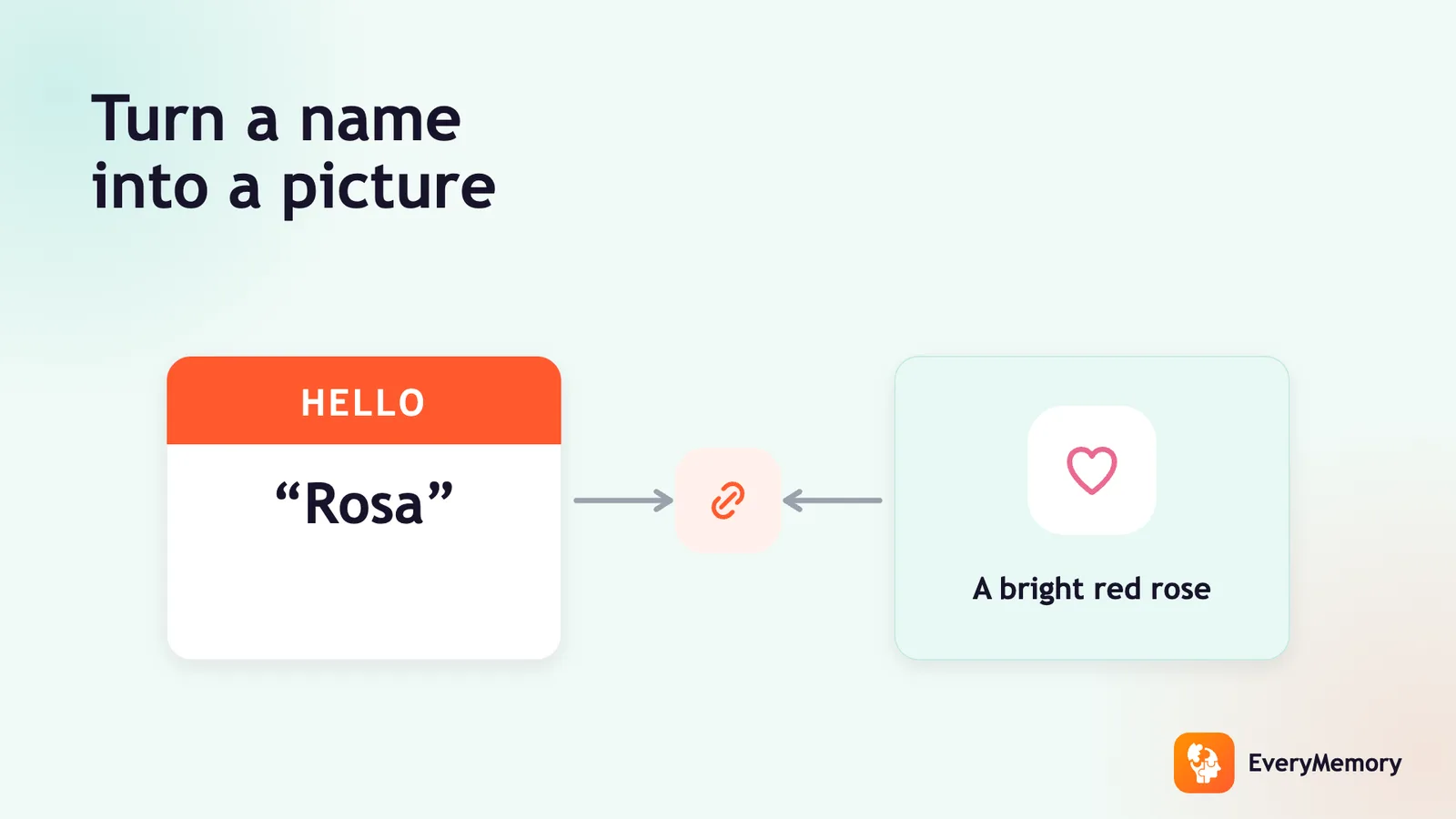
- Anchor it to a feature. Pick one distinctive thing about the face and tie the name to it with a vivid image - "Maria" with a bright smile, "Frank" with a frank, direct gaze.
- Use it again before you part. "Good talking with you, Maria." A second, spaced use nudges the name toward longer-term storage.
None of this requires a special memory or hours of practice. It's a habit, and like any habit it gets easier the more you repeat it.
When forgetfulness is really about something else
Before assuming name-blanking is "just age," it's worth ruling out the everyday culprits that quietly wreck recall at any age: poor sleep, stress, doing three things at once, and simple overload. A tired, distracted brain encodes almost nothing, so names slip straight through.
If you consistently sleep badly or feel stretched thin, that alone can explain a noticeable jump in forgetfulness. Our pieces on sleep and memory and stress and forgetfulness dig into why - and both are far easier to fix than people expect.
✅ Try this today - The 3-second name anchor
The next time you're introduced to someone, do these three things before the conversation moves on:
- Repeat the name back once, out loud: "Nice to meet you, Maria."
- Look at one feature of their face and silently link it to the name with a quick mental image.
- Use the name one more time before you part ways.
⚠ When to talk to a professional
This article is general, non-medical information, not a diagnosis. If name-finding is getting noticeably worse over weeks, affects the names of close family, or comes with confusion about familiar people or places, it's worth speaking with a qualified healthcare professional.