 EveryMemory
Hearing Loss and Memory: The Overlooked Link
Straining to hear quietly drains the attention memory depends on. Why untreated hearing loss is linked with memory difficulties - and why it's often addressable.
Part of the guide: How to Keep Your Brain Healthy: A Complete Lifestyle Guide →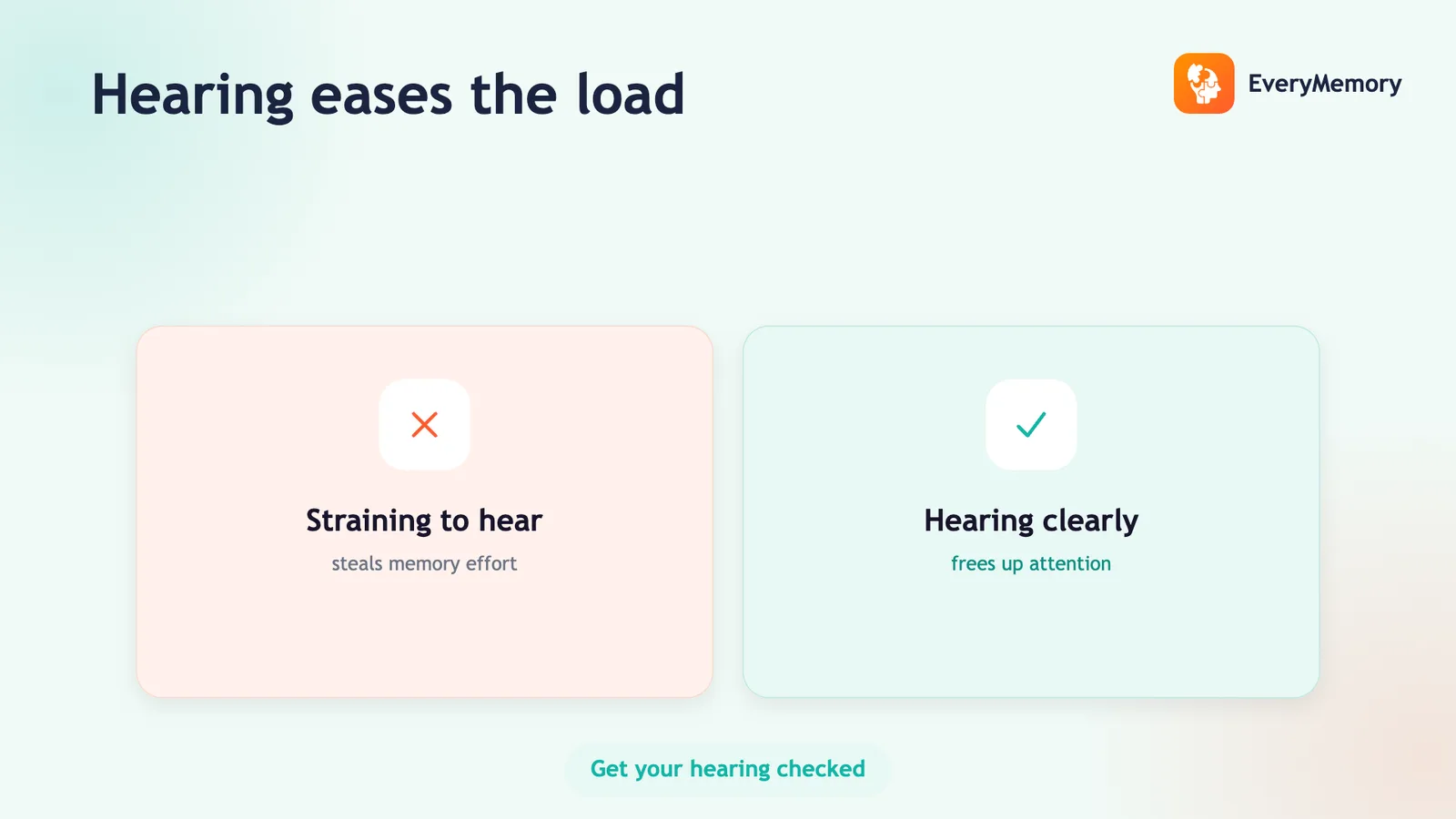
⚡ Quick answer
Untreated hearing loss is strongly linked with memory and thinking difficulties - not because it damages memory directly, but because straining to hear consumes attention that would otherwise go to understanding and remembering, and it can lead to social withdrawal. Addressing hearing, including with hearing aids if needed, can ease that load. It's one of the most overlooked supports for brain health.
Key takeaways
- Untreated hearing loss is linked with memory difficulties - not by damaging memory, but by draining the attention it depends on.
- Straining to hear consumes attention that would go to understanding and storing information, so conversations are harder to recall.
- Hearing difficulty also leads to social withdrawal, reducing the engagement that supports the brain.
- Because much of the impact is about attention, addressing hearing can ease the load - it's a simple thing to check.
One of the most overlooked influences on memory has nothing to do with memory itself: how well you can hear.
Here's the link between hearing and memory, and the reassuring part - it's largely about attention, and often addressable.
Why straining to hear hurts memory
When sounds are hard to make out, your brain works overtime just to piece together what was said - and that effort uses attention that would otherwise go to understanding and storing the information. So conversations become tiring and harder to recall, not because memory is failing but because too much of it was spent on hearing in the first place.
The withdrawal effect
Hearing difficulty also nudges people to withdraw - conversations become exhausting, so they're avoided. That reduces the social connection and mental engagement that support the brain (see social connection and brain health), compounding the effect over time.
The reassuring part
Because much of the impact is about attention and engagement rather than memory itself, addressing the hearing can ease the load - making conversations less effortful, easier to follow, and easier to remember, and keeping people socially engaged. It's one of the simplest, most overlooked things to check.
Get hearing checked
Hearing changes gradually, so it's easy to miss - others often notice before you do. If following conversations, especially in noisy places, has become harder, a hearing check is worth it as part of looking after your brain, alongside the habits in memory booster habits.
⚠ When to talk to a professional
This is general wellness information. For hearing concerns or memory changes affecting daily life, please see a qualified professional - a hearing test is a simple first step.