 EveryMemory
Social Connection and Brain Health
Staying socially connected is an underrated support for the brain - conversation exercises memory and attention, and connection lifts mood and lowers stress.
Part of the guide: How to Keep Your Brain Healthy: A Complete Lifestyle Guide →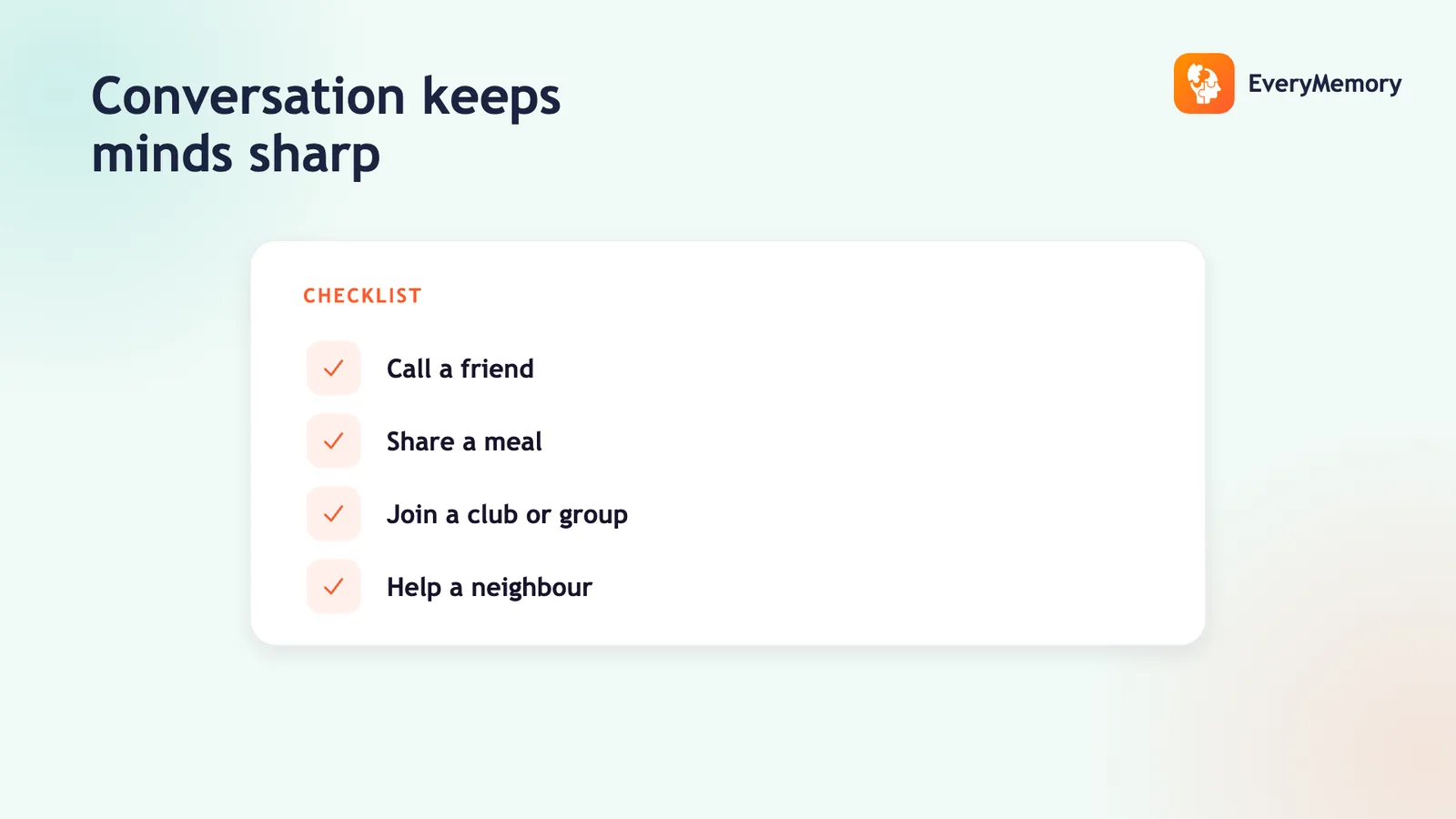
⚡ Quick answer
Staying socially connected is one of the underrated supports for brain health. Conversation and relationships keep the mind active - listening, recalling, and responding all exercise memory and attention - and connection supports mood and lowers stress, which help memory too. Loneliness, by contrast, is linked with poorer cognitive wellbeing.
Key takeaways
- Conversation is a complete mental workout - listening, recalling, finding words, and responding all exercise memory and attention.
- Connection also lifts mood and lowers stress, both of which support memory.
- Persistent loneliness is linked with poorer cognitive and emotional wellbeing and is worth addressing.
- Regular, modest contact counts - a standing call, a club, volunteering, or a shared hobby.
When people think about looking after their brain, they picture puzzles and diets - and forget one of the most powerful, enjoyable supports there is: other people.
Here's why staying socially connected is good for your brain, and easy ways to keep it up.
Why social connection helps the brain
A good conversation is a surprisingly complete mental workout: you listen, follow, recall shared history, find words, read tone, and respond in real time. That keeps attention and memory active in a way few solo activities match. On top of that, connection lifts mood and lowers stress - both of which support memory.
The everyday mechanism
Unlike a puzzle you can do on autopilot, people are unpredictable, so social interaction keeps you engaged and reaching. Recalling someone's news, picking up where you left off, and following a group conversation all exercise the same recall and attention you use everywhere else.
Loneliness is a risk worth taking seriously
Just as connection supports brain wellbeing, persistent loneliness is linked with poorer cognitive and emotional health. It's not a character failing - it's a health factor worth addressing, the same way you'd address sleep or activity. For families supporting an older relative, this matters especially; see helping an aging parent.
Simple ways to stay connected
It doesn't take a big social life - regular, modest contact counts: a standing call with a friend, a class or club, volunteering, a shared hobby, or simply chatting with neighbours. Pair it with the other everyday supports in memory booster habits.
⚠ When to talk to a professional
This is general wellness information. If loneliness, low mood, or memory concerns are affecting daily life, please reach out to a qualified professional.