 EveryMemory
How to Improve Your Memory After 60
The brain keeps forming new connections at any age. The handful of things that matter most for memory after 60 - and the techniques that offset slower recall.
Part of the guide: Understanding Memory Loss and Forgetfulness: A Calm, Reassuring Guide →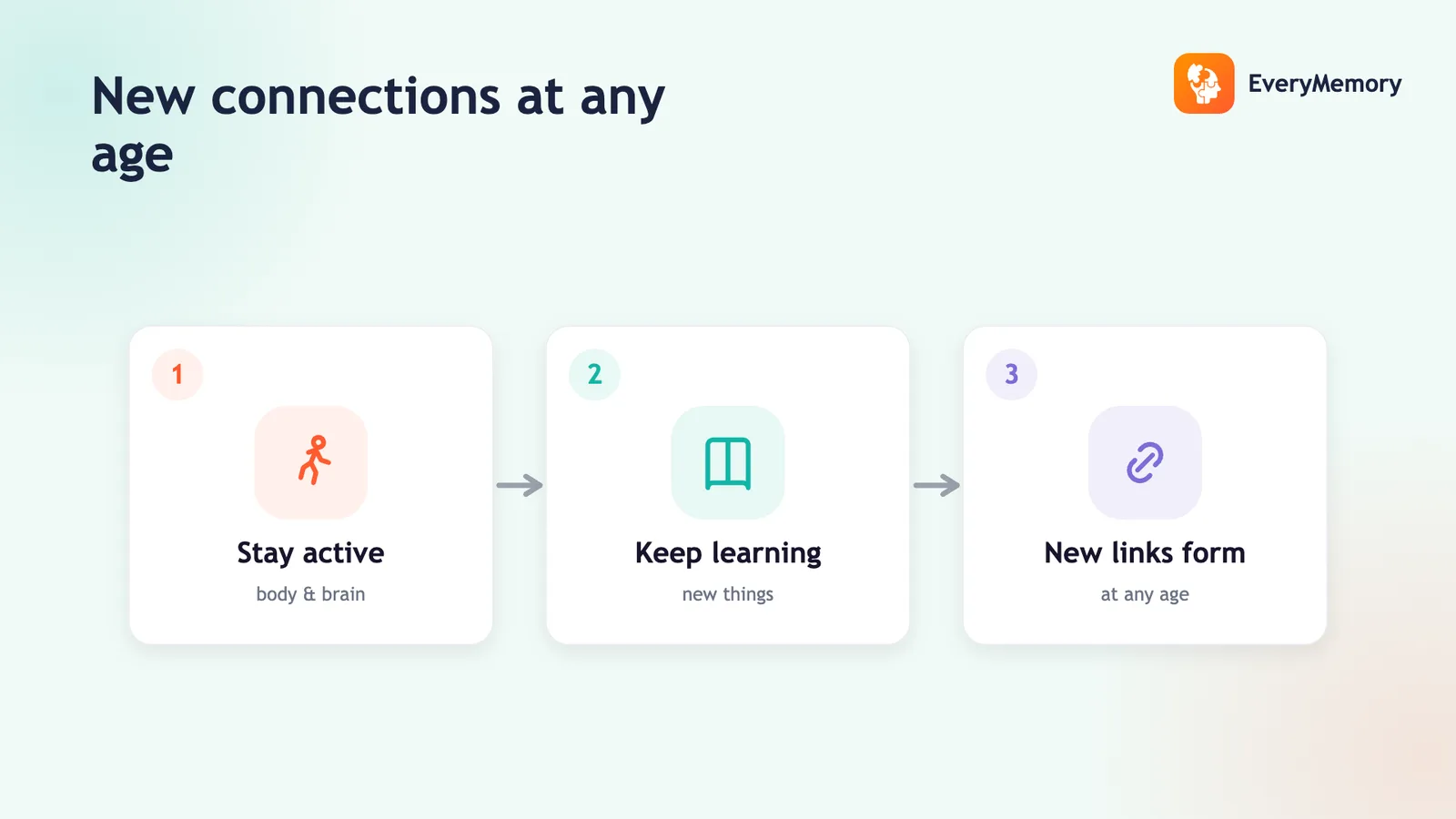
⚡ Quick answer
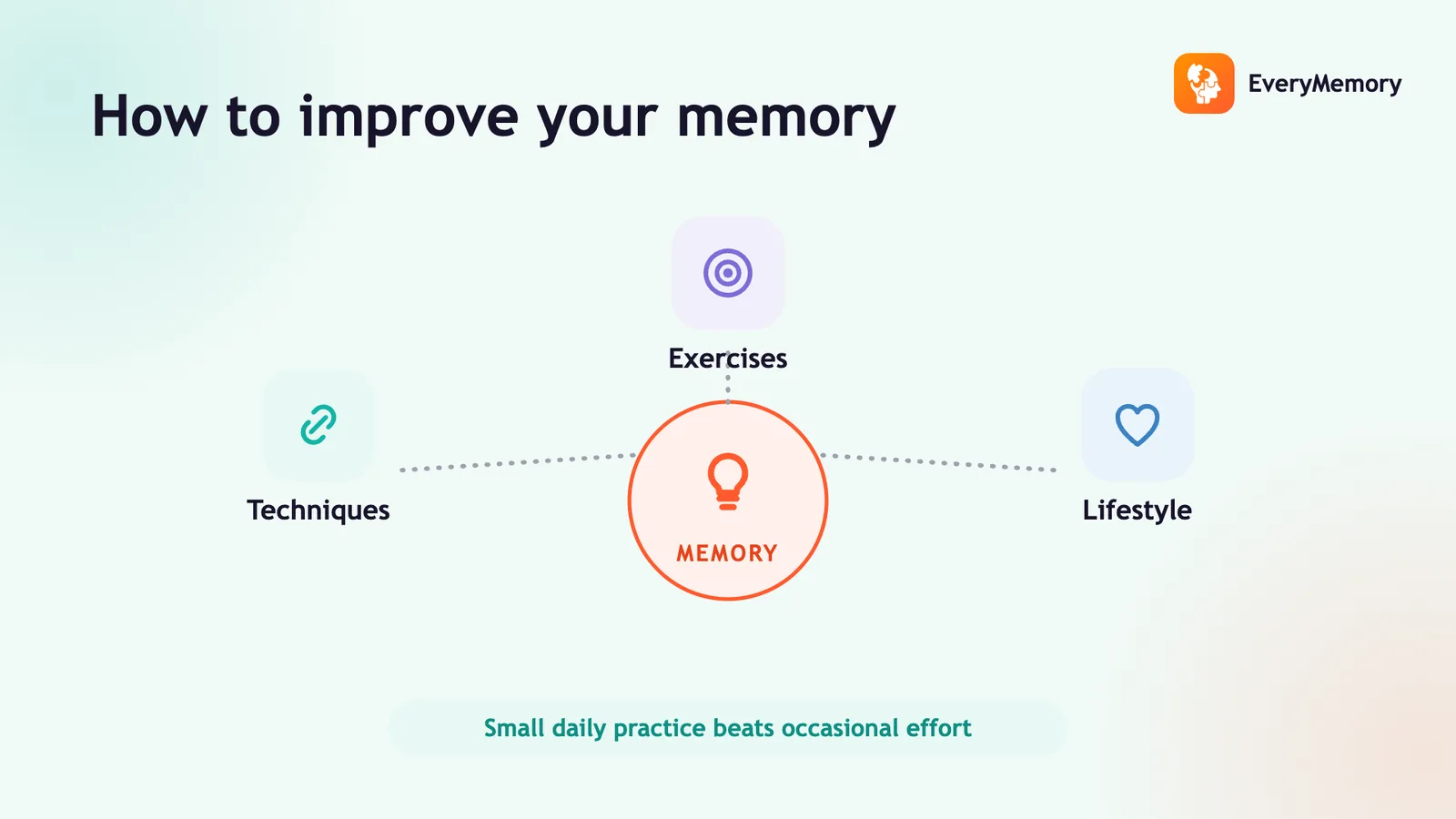
Improving your memory after 60 works much as it does at any age, with a few priorities that matter more: protect your sleep, stay physically active, keep learning new things, and use memory techniques to offset slower recall. Age slows retrieval a little, but the brain keeps forming new connections, so consistent, slightly challenging mental activity genuinely helps.
Key takeaways
- The brain keeps forming new connections at any age, so consistent, slightly challenging activity genuinely helps.
- The basics matter most: protect sleep, stay physically active, keep hearing and vision checked, stay social.
- Learning genuinely new things challenges the brain far more than repeating familiar puzzles.
- Memory techniques like association and the memory palace offset slower recall.
The idea that memory only goes downhill after 60 is half-true and badly misleading. Recall slows a little - but the brain keeps building new connections throughout life, and consistent, slightly challenging activity genuinely helps.
Here's where to put your effort: a few high-value basics, plus techniques that work around slower recall rather than fighting it.
What's realistic - and encouraging
After 60, retrieval is a bit slower and new learning needs more repetition, but the brain stays adaptable: it keeps forming connections in response to use. That's the whole basis for improvement at this stage - not reversing the clock, but keeping memory active and giving slower recall some support.
The basics that matter most
These do more for memory after 60 than any single exercise:
- Sleep - it consolidates memory; protect it. See how sleep affects memory.
- Physical activity - regular movement supports the brain; even walking counts. See walking and brain health.
- Hearing and vision - straining to hear or see steals attention from memory; keep them checked.
- Staying social - conversation and connection keep the mind engaged.
Keep learning new things
Novelty is what challenges the brain. Doing the same familiar puzzles is comfortable but does little; learning something genuinely new - a language, an instrument, a skill - stretches it. The effort of struggling with the unfamiliar is the part that helps.
Use techniques to offset slower recall
Slower retrieval is exactly what memory techniques are built to work around. Association and the memory palace give names, lists, and numbers the structure that slower recall benefits from - start with association and the memory palace. For names specifically, these three moves do most of the work.
Make it a small daily habit
Consistency beats intensity. A few minutes of effortful mental activity most days does more than an occasional long session. A ready-made structure helps - the brain exercises for seniors guide and a daily routine give you something to follow.
✅ Try this today - a 10-minute daily five
Five minutes of basics, five of practice:
- A short walk or any movement, even around the house.
- Learn three new words or facts, and recall them at lunch.
- Place a short list in a memory palace and walk it once.
⚠ When to talk to a professional
These habits support everyday memory and general wellness; they are not a treatment for any condition. If you notice memory changes that are steadily worsening or affecting daily life, talk to a qualified professional.