 EveryMemory
How Meditation Helps Focus
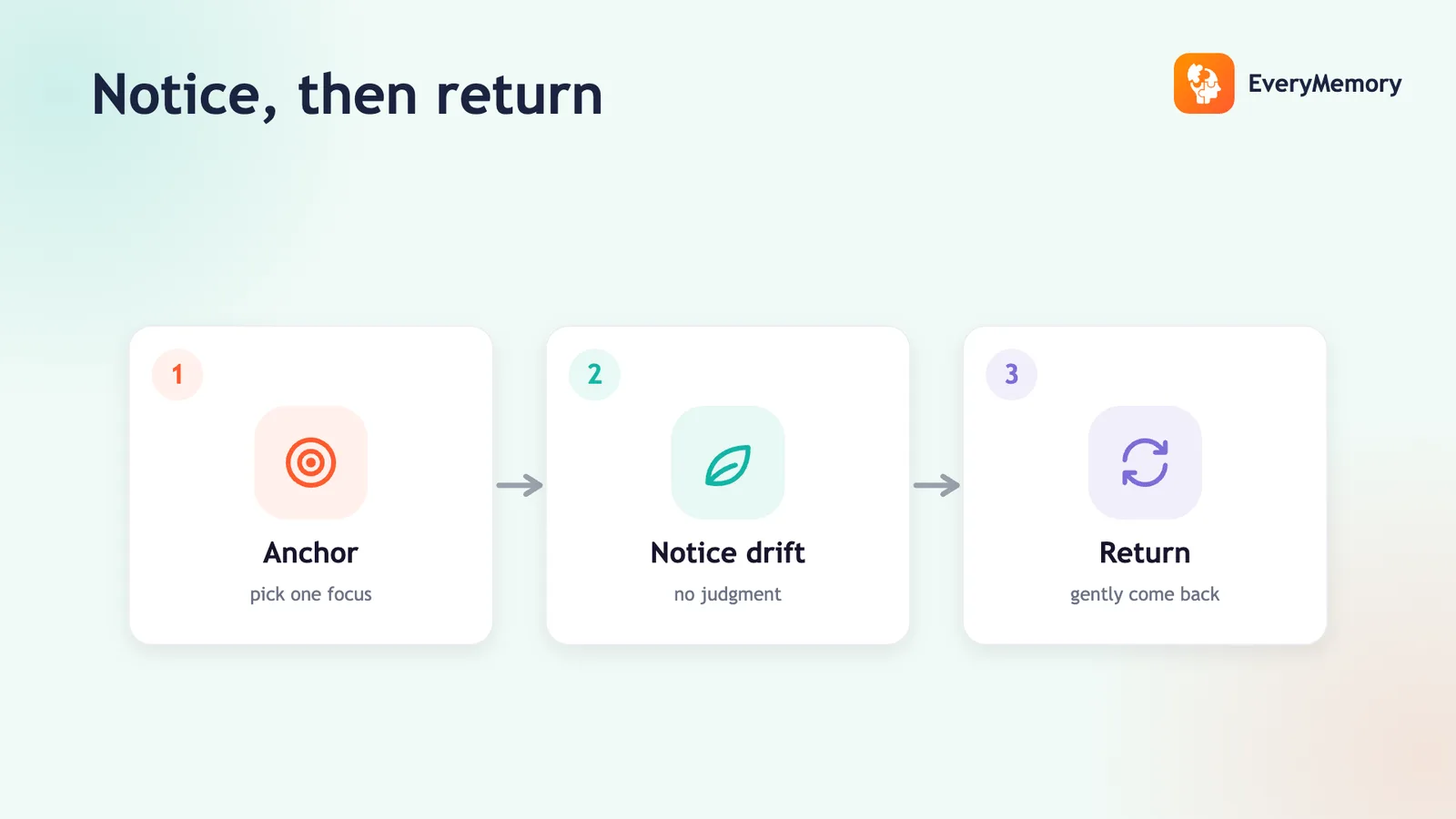
Meditation is focus practice with the noise removed - you choose an anchor, your mind drifts, you return - and that repeated return is what trains steadier attention.
Part of the guide: How to Keep Your Brain Healthy: A Complete Lifestyle Guide →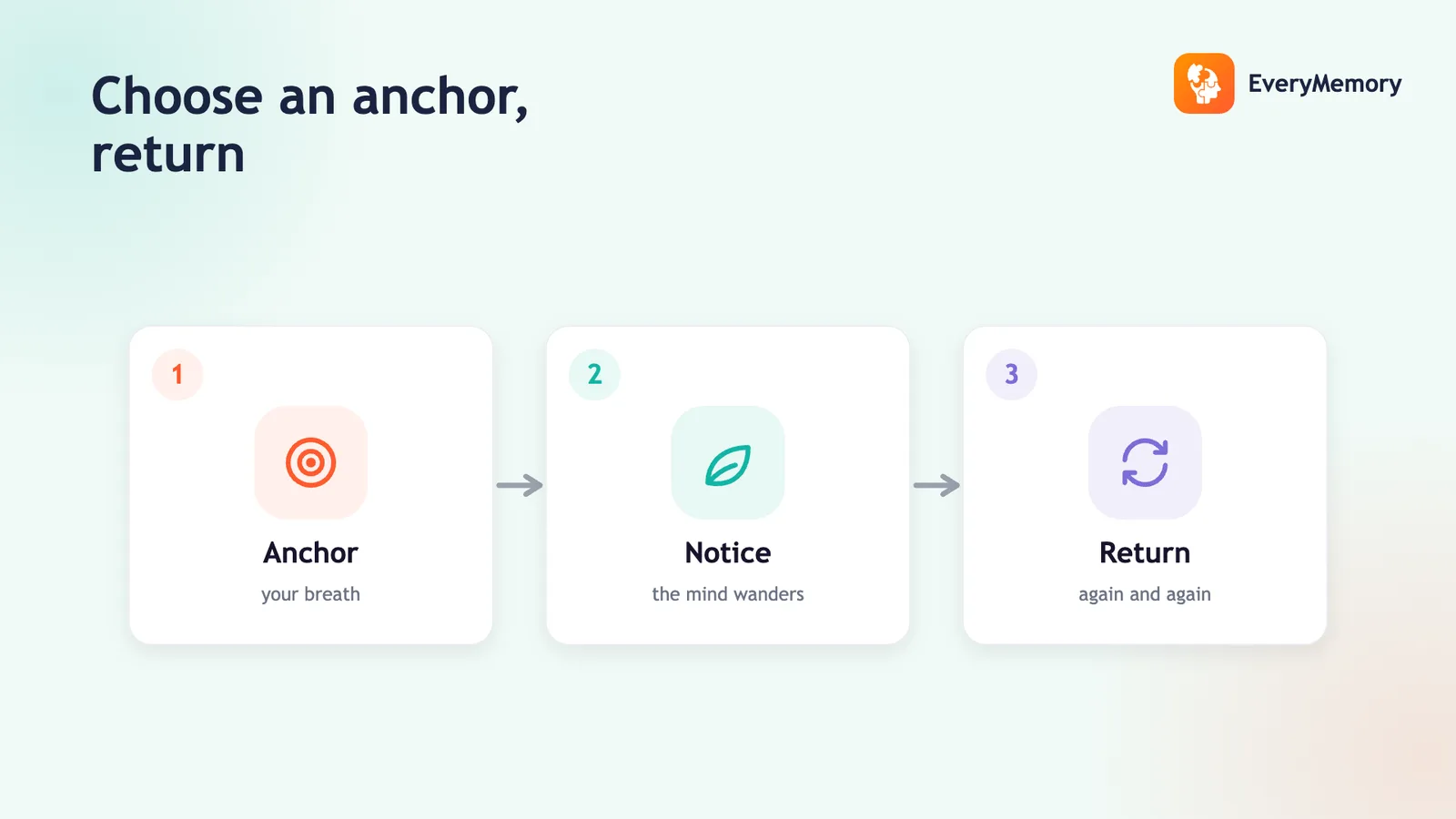
⚡ Quick answer
Meditation helps focus by training one repeated move: when your attention drifts from an anchor like the breath, you notice and bring it back. Each return strengthens the mental muscle behind concentration. A few minutes a day makes it easier to stay on tasks and catch yourself sooner when you wander - it's attention practice, not a treatment.
Key takeaways
- Meditation trains one move: notice the drift from an anchor and return.
- Each return strengthens the attention behind both focus and memory.
- A few minutes daily beats rare long sittings; wandering is the practice.
- It is attention practice, not a treatment for anxiety, depression, or any condition.
Meditation has a mystical reputation, but the focus-building part is mechanical and plain. You pick an anchor - usually the breath - and rest your attention on it. Your mind wanders. You notice, and you return. That single move, repeated, is the rep that strengthens attention, and stronger attention is the foundation of focus and memory alike.
You don't need beliefs, incense, or an hour a day. A few honest minutes of returning your attention, done regularly, is enough to make staying on task in ordinary life a little easier.
The mechanism, plainly
Focused-attention meditation has three steps on a loop: rest attention on an anchor, notice when it has wandered, return it. The wandering isn't a failure - it's the setup for the rep. Every return is one repetition of the exact skill you use to stay on a task in daily life.
Over time the noticing gets quicker, so in everyday situations you catch yourself drifting off a report or a conversation sooner and recover faster. That faster catch-and-return is what steadier focus actually feels like. See also mindfulness for focus.
Why focus and memory benefit together
Attention is the doorway to memory: you can only remember what you attended to. By training attention, meditation supports the front end of memory - you take in more of what's in front of you, so there's more to recall later.
There's a calming bonus, too. Time spent resting attention on an anchor is time not spent looping through worry, and a quieter mind has more attention to spare. The benefit is for everyday focus and wellbeing, not a fix for any condition.
Simple styles to start with
You don't need the perfect technique - just one you'll repeat. These are all beginner-friendly ways to practise the same return-to-anchor move.
| Style | What you do |
|---|---|
| Breath focus | Rest attention on the breath; return when it wanders |
| Counting breaths | Count breaths to ten, then start again at one |
| Body scan | Move attention slowly from head to toe |
| Sound anchor | Rest on ambient sound; return when thoughts pull you |
| Walking focus | Attend to each step and the feel of your feet |
Keeping the practice realistic
Start small and regular: two or three minutes daily beats a heroic weekend session you won't repeat. Anchor it to an existing habit - after coffee, before your laptop - so it has a reliable home. Expect wandering; it's the practice, not a sign you're bad at it.
One honest caution. Meditation is a focus and wellbeing practice, not a treatment for anxiety, depression, or any condition, and quiet sitting can sometimes surface difficult feelings. If those are persistent or distressing, please speak with a qualified professional rather than pushing through.
✅ Try this today - A five-minute focused-attention sit
The simplest meditation for building attention, no experience needed.
- Sit upright but comfortable and set a timer for five minutes.
- Rest your attention on the breath, perhaps at the nose or the belly.
- When you notice your mind has wandered, that noticing is a success.
- Gently return your attention to the breath, without judging the drift.
- Repeat for the full five minutes; each return is one rep of focus.
⚠ When to talk to a professional
Meditation here is a general focus and wellbeing practice, not medical advice or a treatment for any condition. If quiet practice brings up persistent or distressing feelings, please speak with a qualified professional.