 EveryMemory
Mindfulness for Focus
Mindfulness is really attention practice - noticing when your mind wanders and steering it back - and that one simple move is the foundation of clear, steady focus.
Part of the guide: How to Keep Your Brain Healthy: A Complete Lifestyle Guide →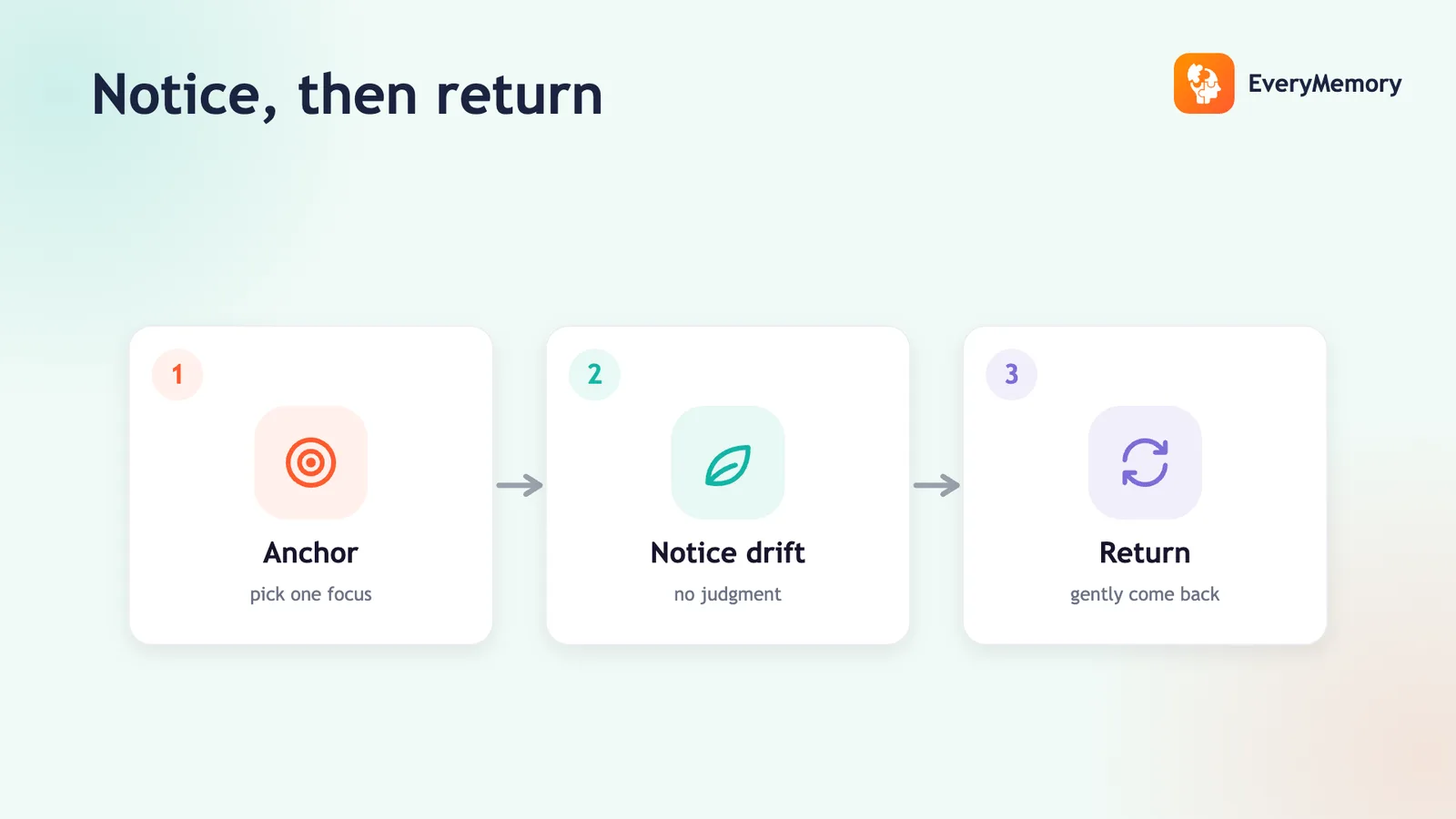
⚡ Quick answer
Mindfulness builds focus by training one simple move: noticing when your attention has wandered and gently bringing it back. Each return is a small rep for your concentration. A few minutes a day of resting attention on your breath or a single task - without judging the wandering - gradually makes it easier to stay on what you're doing.
Key takeaways
- Mindfulness is attention practice: notice the wander, gently return, repeat.
- Each return is one rep that makes everyday concentration steadier over time.
- Short, regular practice beats rare long sessions; wandering is expected, not failure.
- It is a focus and wellbeing practice, not a treatment for any condition.
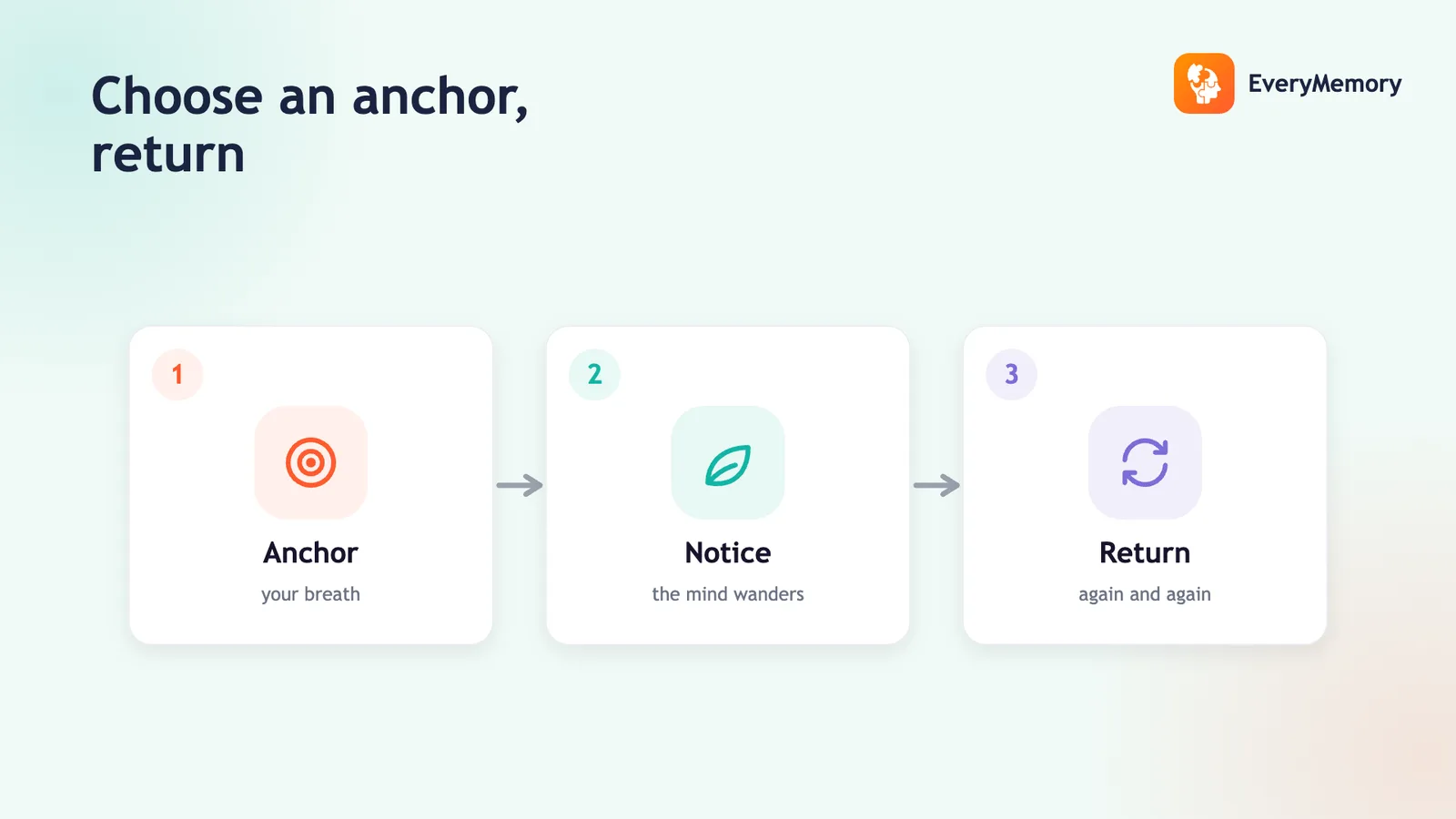
Strip away the wellness packaging and mindfulness is plain attention practice: you pick something to notice, your mind wanders off, and you notice that it wandered and come back. That return - done over and over - is the rep that quietly strengthens focus, the same way returning to a task builds the habit of staying on it.
You don't need to empty your mind or sit cross-legged for an hour. A few honest minutes of noticing-and-returning, done regularly, does more for everyday concentration than occasional marathon sessions you dread.
What mindfulness actually is
Mindfulness is paying deliberate, non-judgemental attention to the present - your breath, your body, or the task in hand. The goal isn't a blank mind; wandering is normal and expected. The practice is simply noticing the wander and returning, without scolding yourself for it.
That gentle return is the whole skill. Every time you catch your mind drifting and come back, you've done one rep of focus. Over weeks, catching the drift gets faster, which is exactly what steadier concentration feels like.
Why it helps concentration
Focus isn't about never being distracted - distraction is constant. It's about noticing the pull and choosing to return. Mindfulness rehearses that loop on purpose, so in daily life you catch yourself wandering off a report or a conversation sooner and recover faster.
There's a calming side-effect too. A mind that's busy noticing the present spends less time looping through worries, and a calmer mind has more room for attention. For more on the focus side, see how to improve focus and concentration.
Everyday vs formal practice
You can practise mindfully without ever "meditating." Both formal and informal versions train the same return-to-attention move; the right mix is whatever you'll actually keep doing.
| Formal practice | Everyday practice |
|---|---|
| Sit and follow your breath for a few minutes | Notice the warmth of your cup while you drink |
| A short guided session | Feel your feet on the floor as you walk |
| A body scan, head to toe | Fully listen during one conversation |
| Counting breaths up to ten, then restarting | Do the dishes paying attention to just the dishes |
Keeping it honest and small
Start with two or three minutes, not twenty. The aim is a habit you return to daily, and short-and-regular beats long-and-rare every time. Tie it to something you already do - after coffee, before opening your laptop - so it has a home in your day.
Two honest notes. Mindfulness is a focus and wellbeing practice, not a treatment for any condition. And if sitting quietly stirs up difficult feelings that are persistent or distressing, that's a reason to talk with a qualified professional, not to force the practice.
✅ Try this today - A three-minute breath focus
The simplest way to practise the noticing-and-returning move.
- Sit comfortably and set a timer for three minutes.
- Rest your attention on the feeling of breathing - wherever you notice it most.
- When your mind wanders (it will), simply notice that, without judgement.
- Gently bring your attention back to the breath. That return is the practice.
- When the timer ends, notice how your attention feels before standing up.
⚠ When to talk to a professional
Mindfulness here is a general focus and wellbeing practice, not medical advice or a treatment for anxiety, depression, or any condition. If quiet practice brings up persistent or distressing feelings, please speak with a qualified professional.