 EveryMemory
The Pomodoro Technique for Studying
Study in focused 25-minute blocks with short breaks. Why this simple timer method beats open-ended sessions - and how to adapt it to you.
Part of the guide: How to Improve Your Memory: The Complete Beginner's Guide →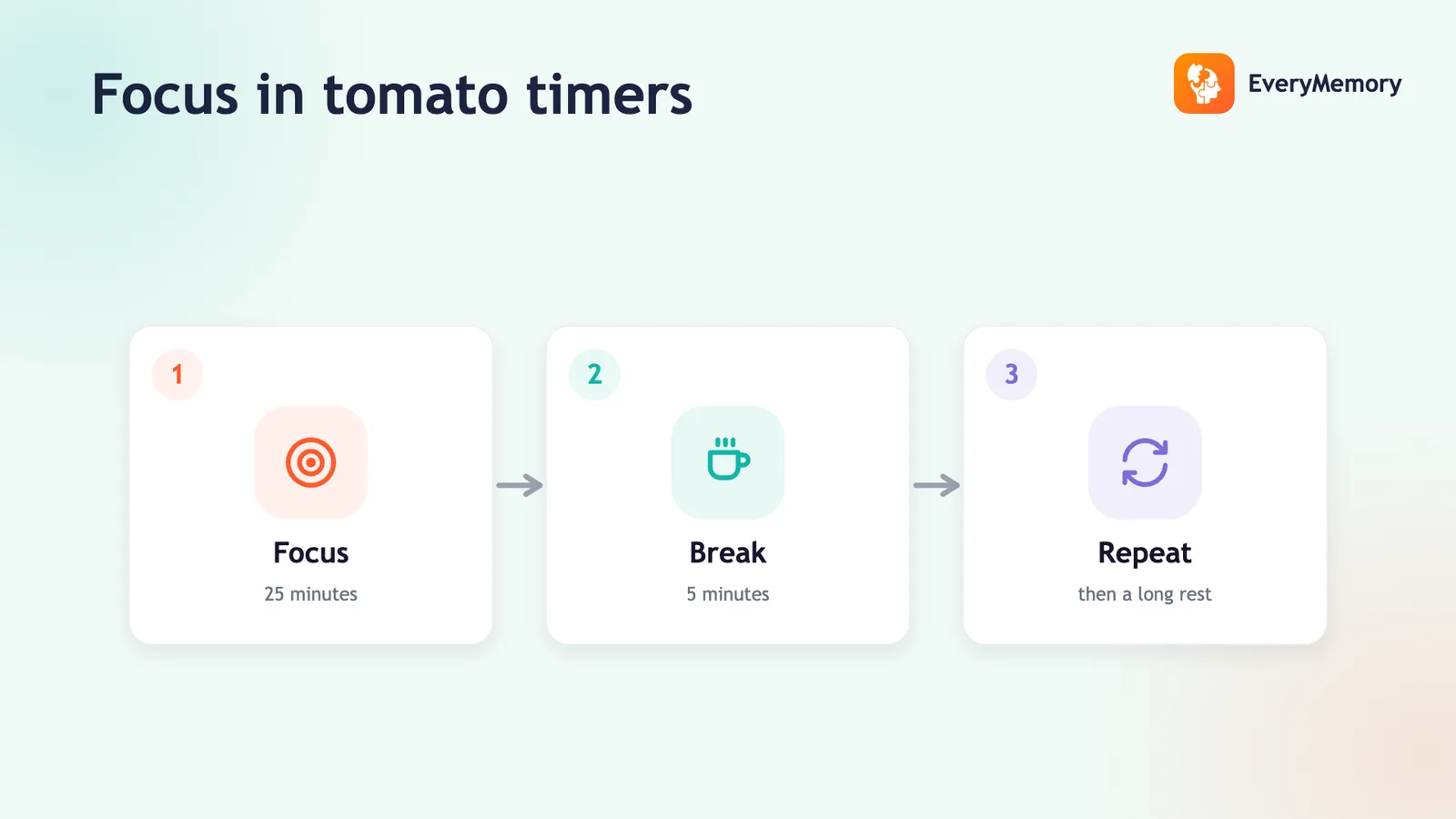
⚡ Quick answer
The Pomodoro Technique breaks study into focused 25-minute blocks separated by 5-minute breaks, with a longer break every four blocks. It works because a short, defined stretch is easier to start and sustain than an open-ended session, and regular breaks keep focus from fading. Adjust the lengths to suit you - the principle is focused block, real break, repeat.
Key takeaways
- The Pomodoro Technique is focused 25-minute blocks separated by 5-minute breaks, with a longer break every four.
- A defined short block is easier to start and sustain than an open-ended session, which beats procrastination.
- Scheduled breaks keep focus from fading, so you stop while still fresh rather than grinding to a halt.
- Adjust the lengths to suit you, don't skip breaks, and keep breaks off your phone.
The Pomodoro Technique sounds almost too simple to matter - set a timer, work, take a break. But that structure quietly solves two of studying's biggest problems: starting, and staying focused.
Here's how it works and how to make it fit you.
What it is
Pick one task, set a timer for 25 minutes, and work on only that until it rings. Take a 5-minute break, then start another block. After four blocks, take a longer break of 15–30 minutes. Each 25-minute block is called a 'pomodoro' (Italian for tomato, after the kitchen timer the method's creator used).
Why it works
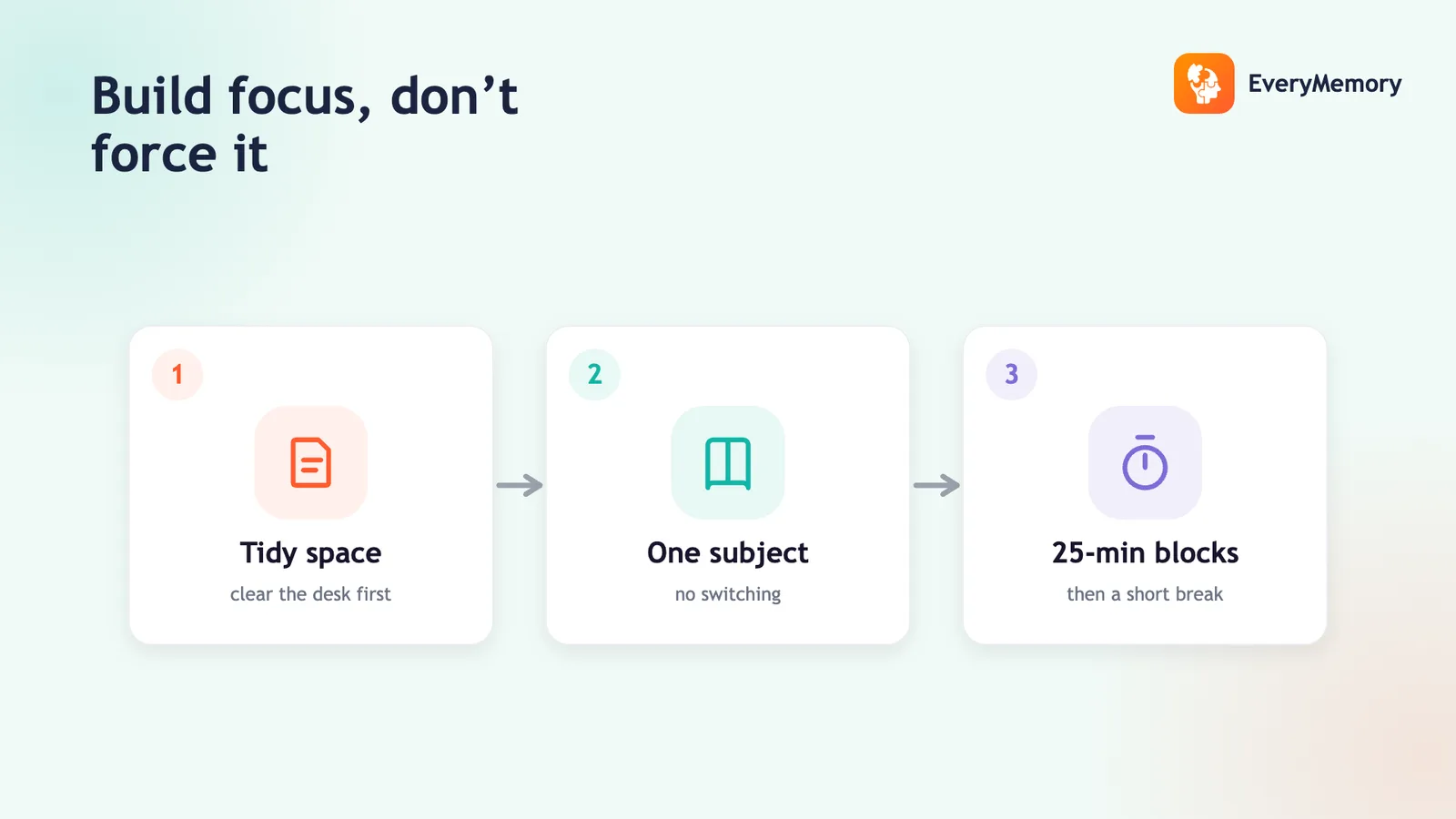
A defined 25-minute commitment is far easier to begin than a vague 'study all evening', which beats procrastination at the start. Once you're in, the ticking timer protects the block from distractions, and the scheduled break arrives before your focus runs down - so you stop while still fresh rather than grinding to a halt. Removing distractions first makes each block far more effective; see how to concentrate on studying.
How to do it
- Choose one specific task for the block.
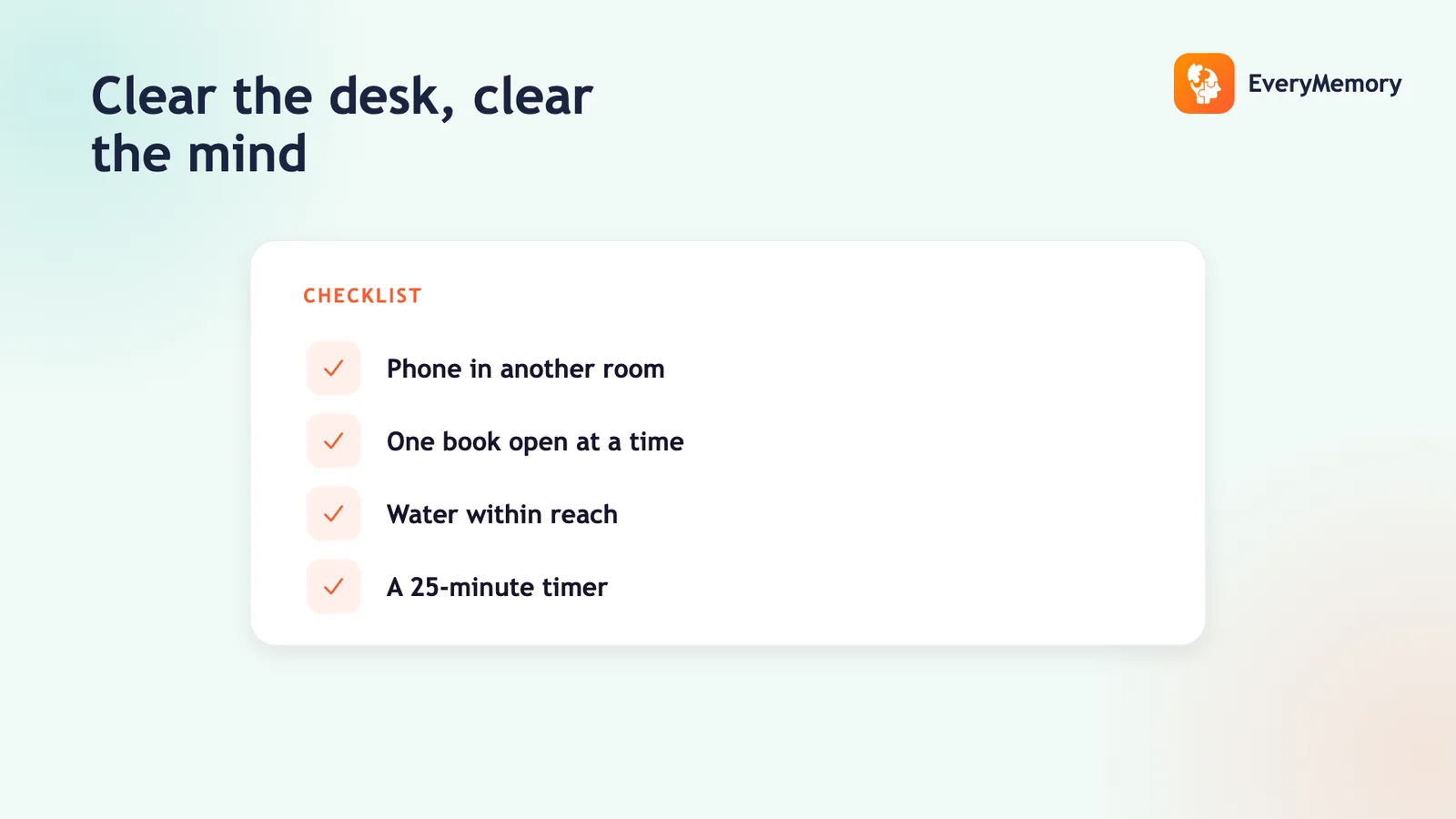
- Set a 25-minute timer and work on only that - phone away, one tab.
- When it rings, take a 5-minute break away from the screen.
- After four blocks, take a longer 15–30 minute break.
Adapt the timings
Twenty-five minutes isn't sacred. If you settle into deep focus and 25 feels too short, try 45–50 with a 10-minute break; if focus is hard, start with 15. The principle is what matters - a defined focused block followed by a real break - not the exact numbers.
Common mistakes
Two things undo it: skipping breaks (you lose the recovery that keeps focus fresh) and spending breaks on your phone (which fragments attention rather than resting it). Use breaks to stand, stretch, or look away - and treat the technique as a focus habit you build, like any other (making it a habit).