 EveryMemory
How to Keep Your Mind Sharp as You Age
Some changes in thinking are a normal part of getting older, and a handful of steady habits - movement, learning, connection, sleep - help you stay sharp through them.
Part of the guide: How to Keep Your Brain Healthy: A Complete Lifestyle Guide →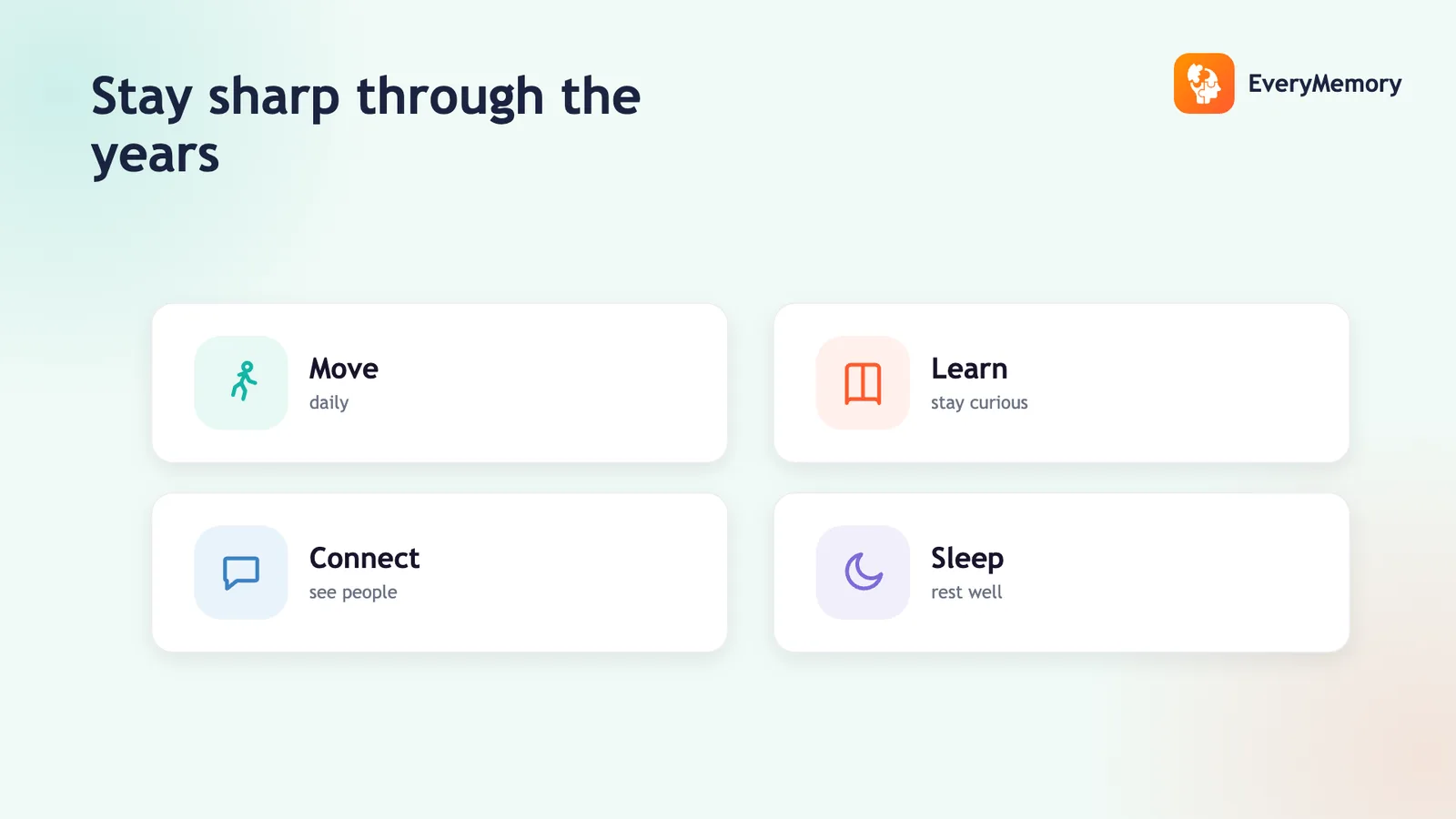
⚡ Quick answer
To keep your mind sharp as you age, stay physically active, keep learning new things, stay socially connected, sleep well, and protect your attention from constant interruption. Some slowing is a normal part of aging, not a problem to fix. These everyday habits support memory and focus; persistent or worsening changes are worth raising with a professional.
Key takeaways
- Some slowing is a normal part of aging; knowledge and judgement often hold steady.
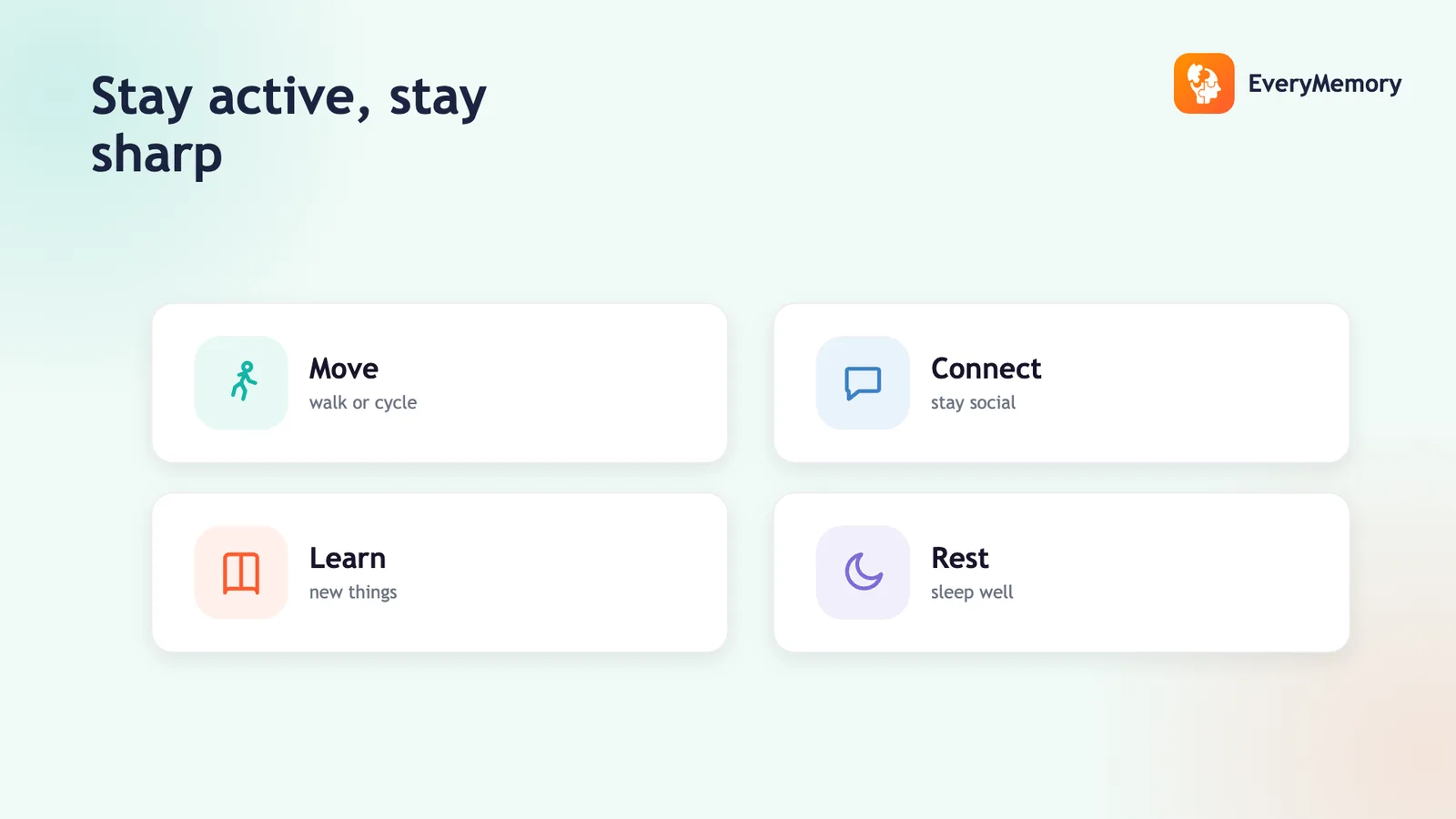
- Movement, learning, social contact, and sleep are the most reliable everyday levers.
- Keep skills in use with variety and mild challenge, not the same easy puzzle.
- A gradual, persistent change you or others notice is worth a calm chat with a doctor.
Thinking changes a little with age - some things, like rapidly juggling new information, can take a touch longer, while others, like vocabulary and judgement, often hold steady or improve. Knowing this takes the worry out of an occasional slow moment: a name that takes a beat to arrive is usually ordinary, not a warning.
What you do day to day matters more than the calendar. The habits that keep the mind sharp later are the same ones that support it at any age - staying active, learning, connecting, and sleeping well - practised steadily rather than crammed.
What's normal with age
Most people find that recalling a name takes a little longer, or that learning something brand new needs more repetitions than it once did. That's a normal shift in processing speed, not a sign something is wrong. Meanwhile knowledge, vocabulary, and the judgement that comes from experience usually stay strong.
The practical upshot is to lean on strategies rather than strain. Use lists and a fixed spot for keys, give yourself a moment to retrieve a word, and don't read a single forgotten name as proof of anything. For where the line sits, see am I getting more forgetful.
Habits that keep the mind sharp
The evidence-backed levers are unglamorous and overlapping - each supports the brain partly by supporting the body and mood.
| Habit | Why it helps |
|---|---|
| Regular movement | Improves blood flow, mood, and focus |
| Keep learning new things | Engages attention and keeps skills in use |
| Stay socially connected | Conversation is real cognitive exercise |
| Protect sleep | Restores attention; consolidates learning |
| Manage stress and mood | Frees up the attention recall depends on |
Keep using the skills
Skills you stop using get rusty, so staying mentally engaged matters - but engagement that's varied and a little challenging beats the same easy puzzle on repeat. Mix things up: a new recipe, a different route, a hobby that stretches you slightly, a language you dabble in.
Daily life is full of opportunities if you choose the harder option occasionally - taking the stairs of the mind, so to speak. For structured ideas, see daily brain exercises and brain health after 60.
Watch your own trend
Because everyday memory naturally varies with sleep, stress, and the day, the most reassuring thing you can do is watch your own trend rather than over-read any single foggy afternoon. A simple self-check, repeated under similar conditions, shows whether things are steady - which they usually are.
And the honest line: a gradual, persistent change that worries you, or one that others around you notice, is worth a conversation with a doctor - not alarm, just a sensible check. For how to read your own pattern, see memory score: how to read your progress.
✅ Try this today - A weekly stay-sharp routine
A light, repeatable set that keeps the main levers in play.
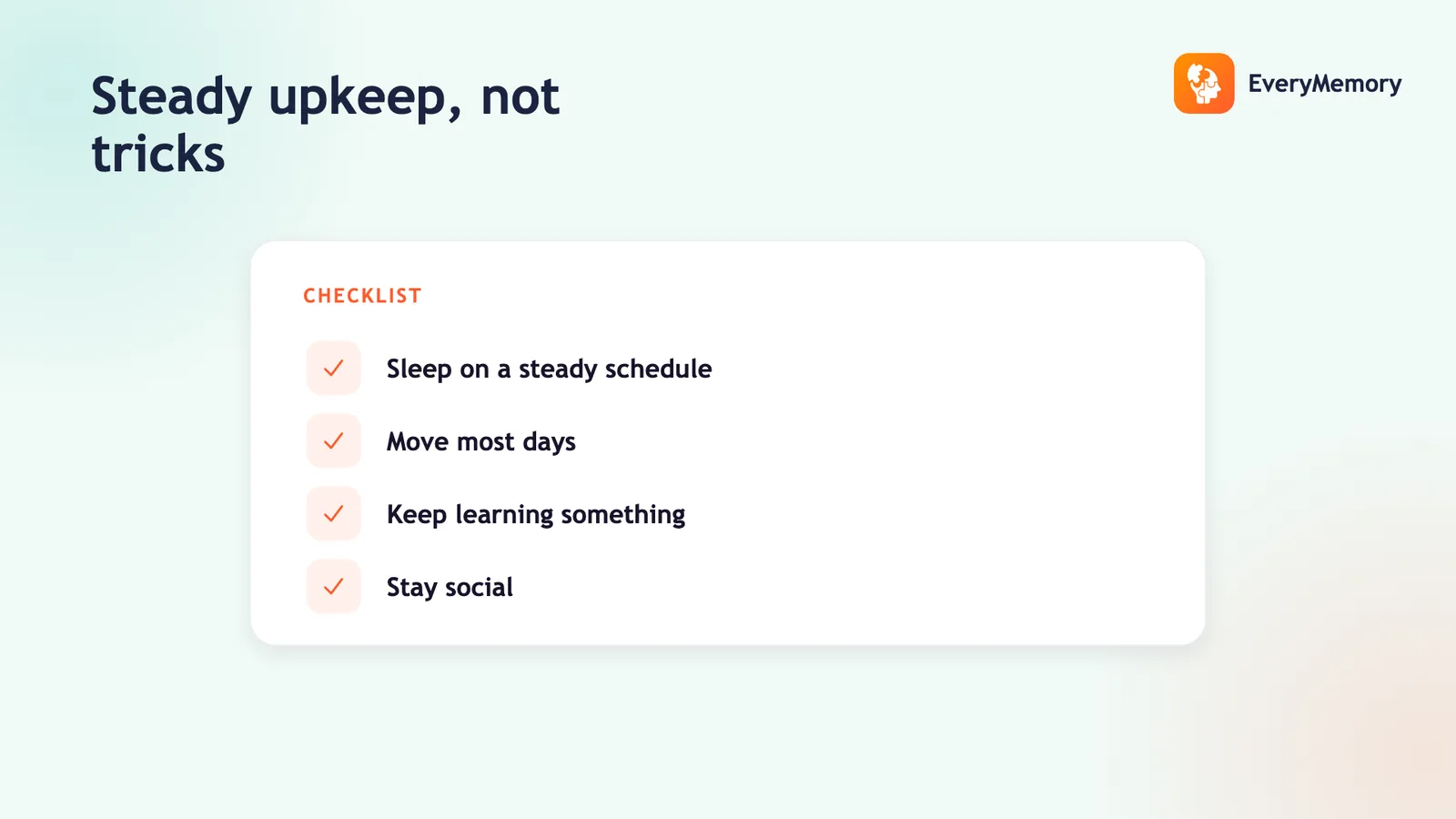
- Move most days - a walk counts; aim for something that lifts your pulse a little.
- Learn one new small thing each week and practise it a few times.
- Book one social activity into the week, however brief.
- Keep a steady sleep and wake time across the week.
- Once a week, do the same short self-check to watch your own trend.
⚠ When to talk to a professional
This is general information about everyday aging, not medical advice and not a way to diagnose, prevent, or treat any condition. If you notice a gradual, persistent change in memory or thinking - or others do - please speak with a doctor or qualified professional.