 EveryMemory
How to Memorize Numbers
Memorize numbers by chunking them into small groups and converting digits into vivid images with the major system, turning abstract figures into a memorable story.
Part of the guide: How to Improve Your Memory: The Complete Beginner's Guide →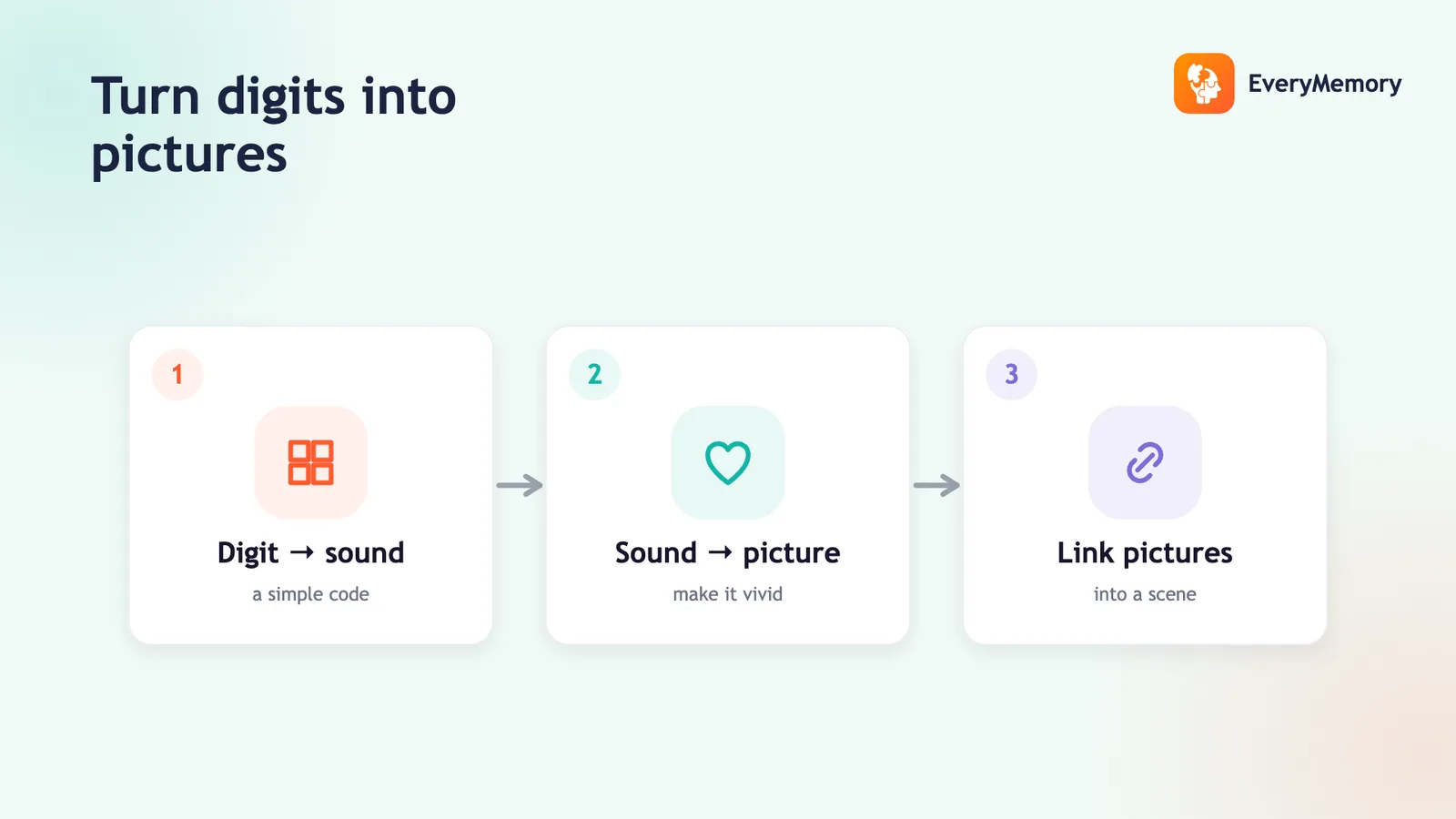
⚡ Quick answer
To memorize numbers, first chunk a long string into small groups of two to four digits, the way phone numbers are formatted. For more, convert digits into images using the major system, which maps each digit to a consonant sound - so 32 becomes "moon," 15 a "towel." Link those images into a quick story and an abstract number becomes a vivid scene you can recall in order.
Key takeaways
- Chunk long strings into small groups, the way phone numbers are formatted.
- Use the major system to turn digits into consonant sounds, words, then images.
- Link the images into an absurd story to preserve order and meaning.
- Use a peg system when a digit's exact position needs to be recalled.
Numbers are the hardest thing to memorize because they're pure abstraction - a digit has no meaning, no image, nothing for the brain to grab. That's why a phone number you don't write down is gone in seconds.
The fix is to stop treating digits as digits. Two techniques do it: chunking long strings into small groups, and converting digits into images so a number becomes a picture you can't forget. Here's how to use both, from a phone number to the digits of pi.
Start with chunking
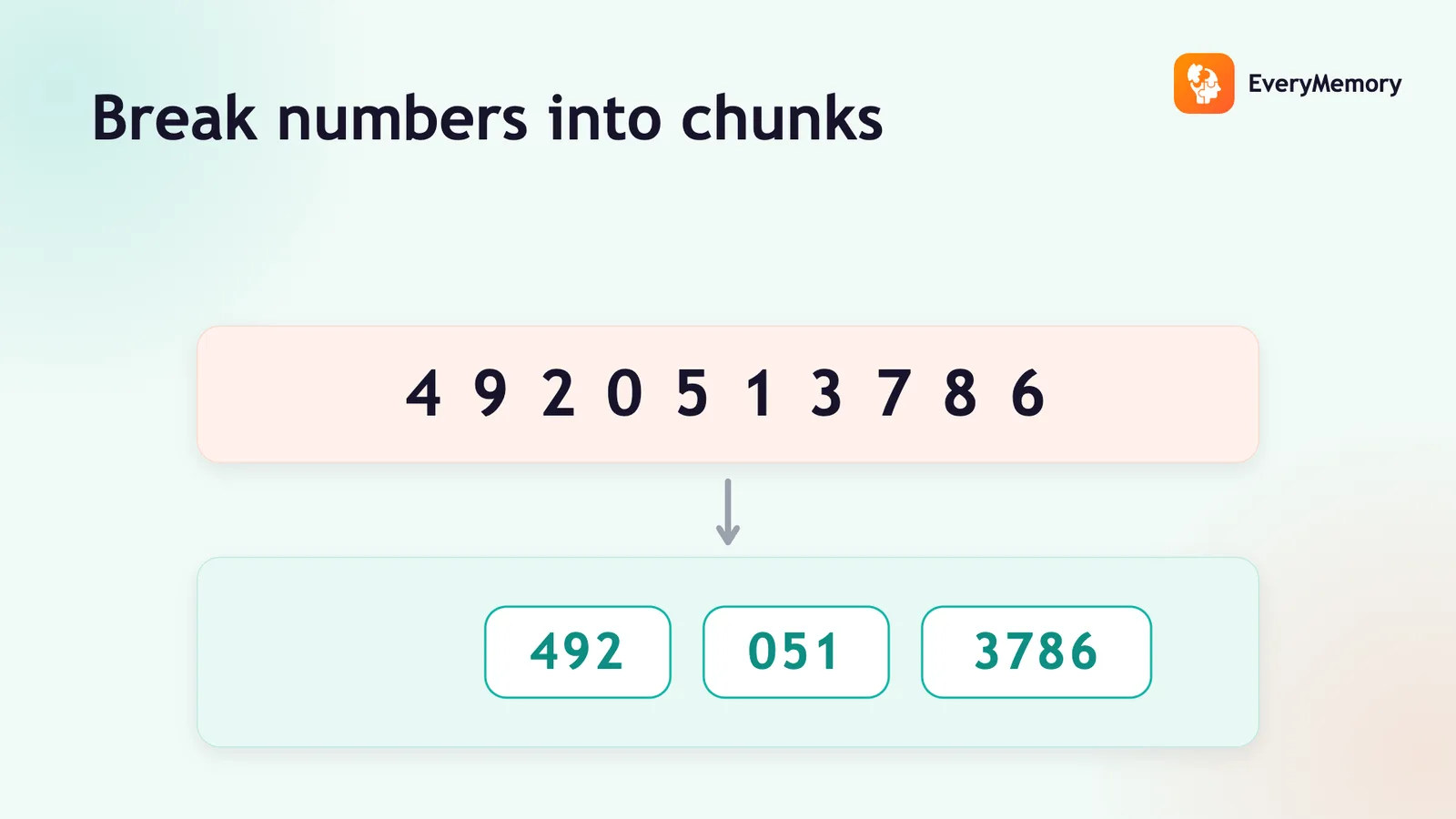
Working memory holds only a few items, but a chunk counts as one. Break a long number into groups - 4 8 1 5 1 6 2 3 becomes 4815-1623, two chunks instead of eight loose digits. It's why phone numbers and card numbers are formatted in groups. For short numbers you only need to hold briefly, chunking alone often does the whole job.
Turn digits into images with the major system
For longer or permanent numbers, chunking isn't enough - you need to make digits memorable. The major system maps each digit to a consonant sound, which you flesh out with vowels into a word, and a word into an image.
| Digit | Sound | Memory hook |
|---|---|---|
| 0 | s, z | "zero" starts with z |
| 1 | t, d | t has one downstroke |
| 2 | n | n has two legs |
| 3 | m | m has three legs |
| 4 | r | "four" ends in r |
| 5 | l | L is 50 in Roman numerals |
So 21 is "net," 34 is "mare," 12 is "tin." The vowels are free, so you bend the sounds into a vivid noun. Now a pair of digits is a picture, not an abstraction.
Link the images into a story
Convert each chunk to an image, then chain the images into a little story in order. For 21-34, picture a net dropped over a mare. The story preserves the sequence and makes the whole number one connected scene instead of disconnected pairs. This is the link method applied to numbers - and the more absurd the scene, the better it holds.
Use a peg system for positions
When a digit's position matters - like remembering that the 5th digit of something is a 7 - a peg system helps. You pre-memorize a fixed image for each position (one-bun, two-shoe, three-tree) and attach each digit's image to its peg. It takes setup, but it lets you recall any position directly rather than counting from the start. This is how memory athletes hold long random strings.
Match the method to the number
Different numbers call for different tools, so pick by length and how long you need it.
| Number | Best method |
|---|---|
| Phone number (brief) | Chunking into groups of 3 to 4 digits. |
| PIN or code (kept) | Major system - two short words you won't forget. |
| Long string (pi, ID) | Major system images linked into a story, or a peg system. |
| A date | Major system on the year, anchored to the event's image. |
Like any technique, the major system is fast once it's automatic - practising it is itself a good brain exercise.
✅ Try this today - Memorize an 8-digit number with images
Take any 8-digit number and try this:
- Chunk it into two-digit pairs, e.g. 31-52-14-23.
- Using the major-system sounds above, turn each pair into a vivid noun.
- Chain the four images into one absurd story in order - then recall the number by replaying the story.