 EveryMemory
Stress and the Brain
Short bursts of stress can sharpen you, but when it lingers it crowds out the attention memory depends on - here's the honest link and what genuinely helps.
Part of the guide: How to Keep Your Brain Healthy: A Complete Lifestyle Guide →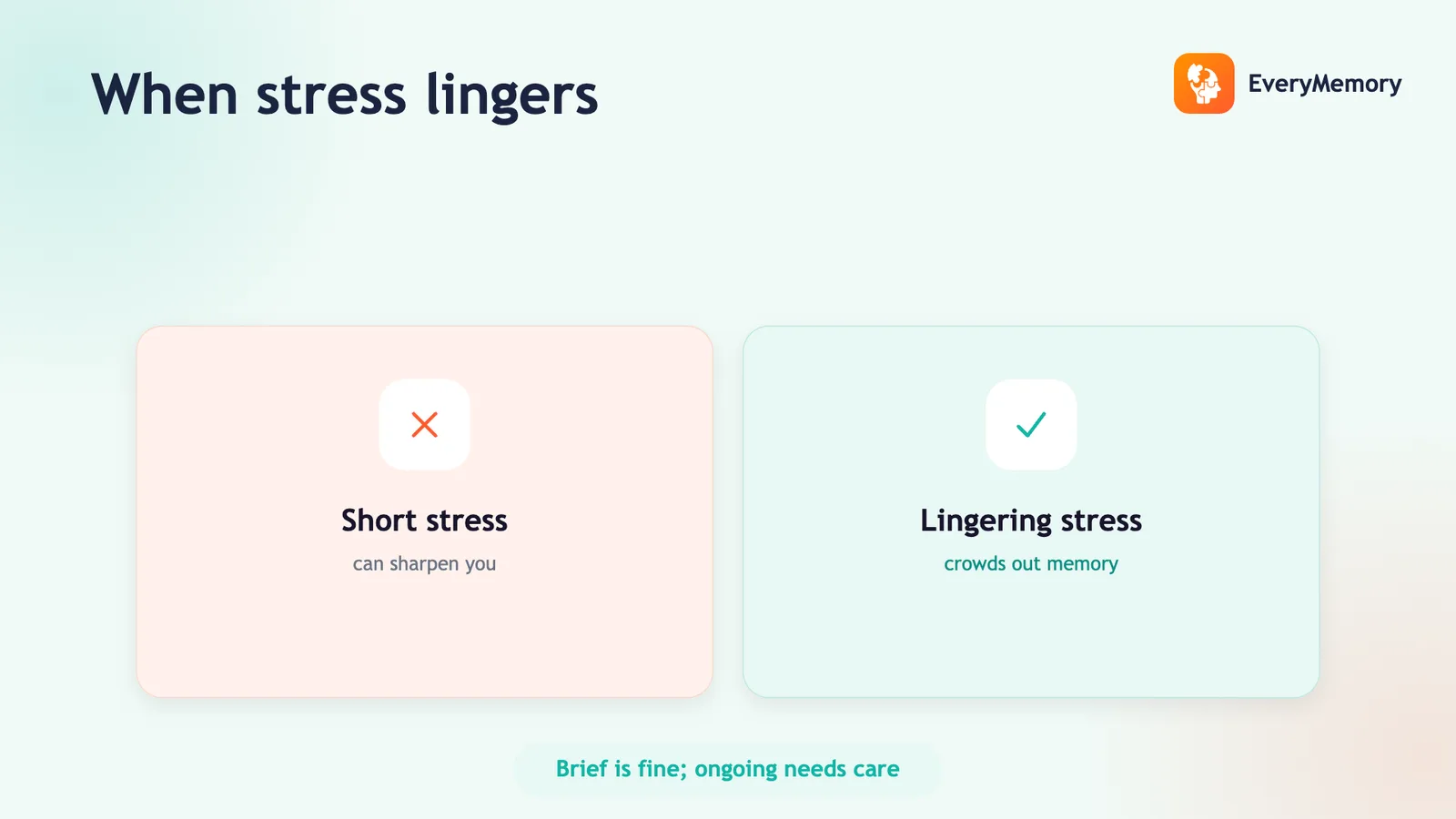
⚡ Quick answer
Short-term stress can sharpen focus, but ongoing stress works against memory. When your mind is braced and racing, attention is split, so new information often isn't taken in properly and recall feels slippery. The effect is mostly about crowded attention rather than lost memories, and it tends to ease as stress settles and you give your brain quiet, single-tasking time.
Key takeaways
- Short bursts of stress sharpen focus; ongoing stress that never switches off crowds out attention.
- Most of stress's memory effect is split attention, so things are never fully encoded.
- Match everyday stress signs to small responses like slow breathing and single-tasking.
- Stress that is persistent, severe, or distressing warrants a qualified professional.
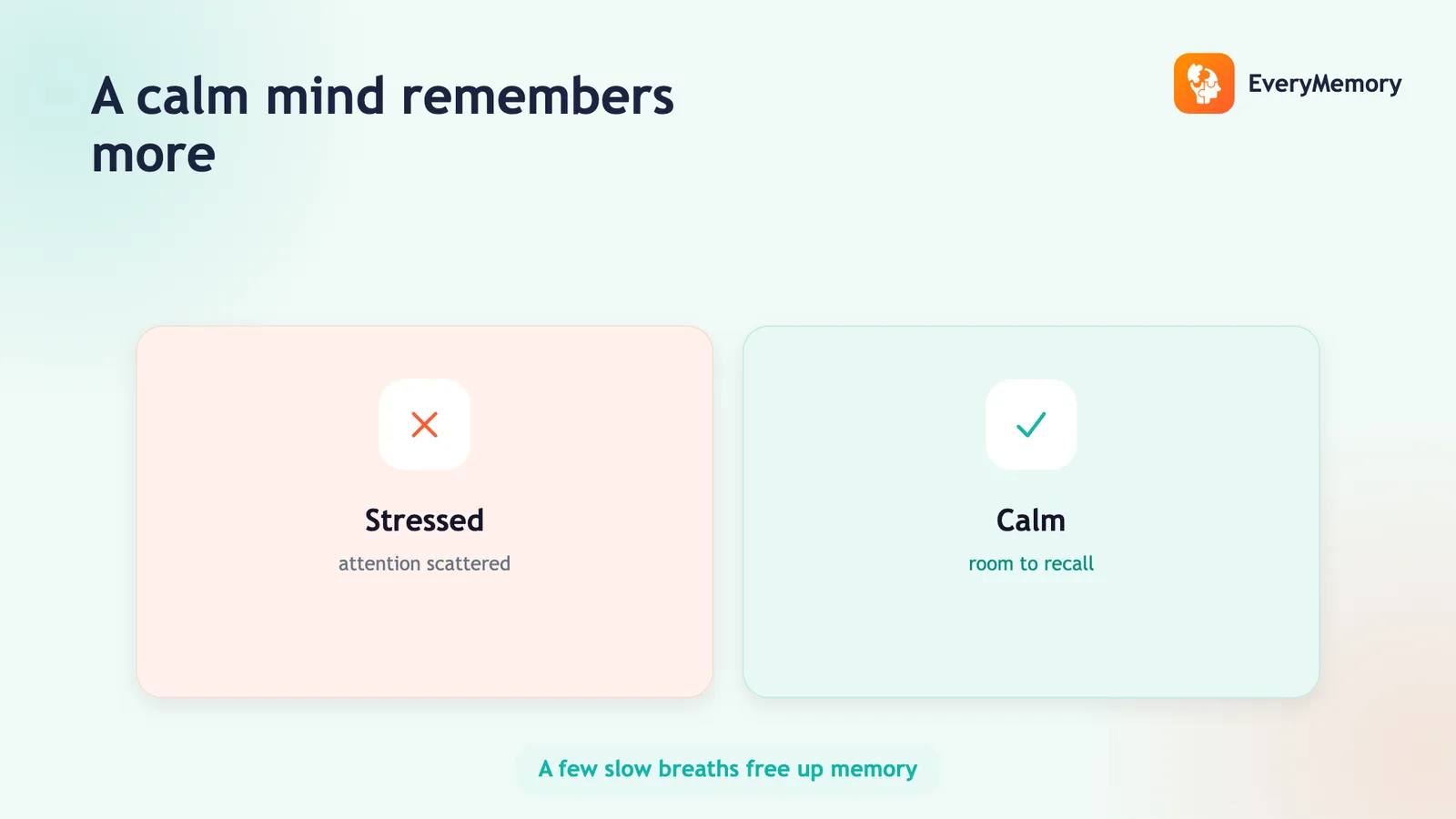
Stress isn't the enemy of a good memory - at least not always. A jolt of pressure before a deadline can sharpen attention and help you focus on what matters. The problem starts when stress stops switching off, because a brain that's braced for threat has little spare capacity for the quiet work of remembering.
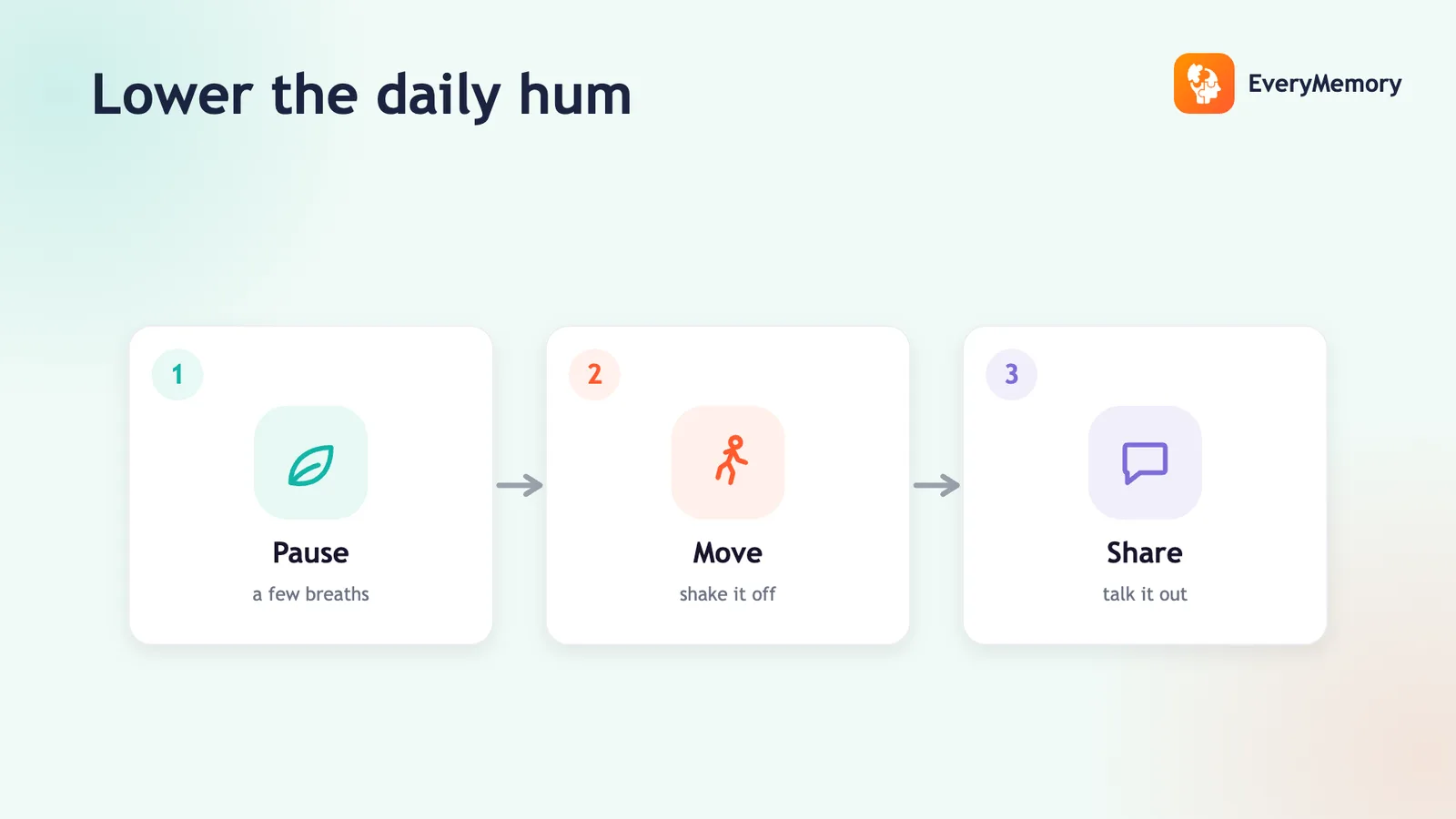
Understanding the difference between a useful burst and a constant hum is the practical bit. Once you see how ongoing stress eats into attention, the everyday fixes - pauses, breathing, offloading what's on your mind - make a lot more sense.
Good stress, bad stress
A short, contained burst of stress raises alertness and can actually help you concentrate and remember a high-stakes moment. This is the version that gets you to the airport on time. It rises, you act, it falls - and your brain returns to baseline.
Trouble comes when stress doesn't switch off. A mind that stays on alert keeps running background threat-checks, and that constant hum is what crowds out attention. The issue is less about any single stressful event and more about pressure that never fully lifts.
How ongoing stress touches memory
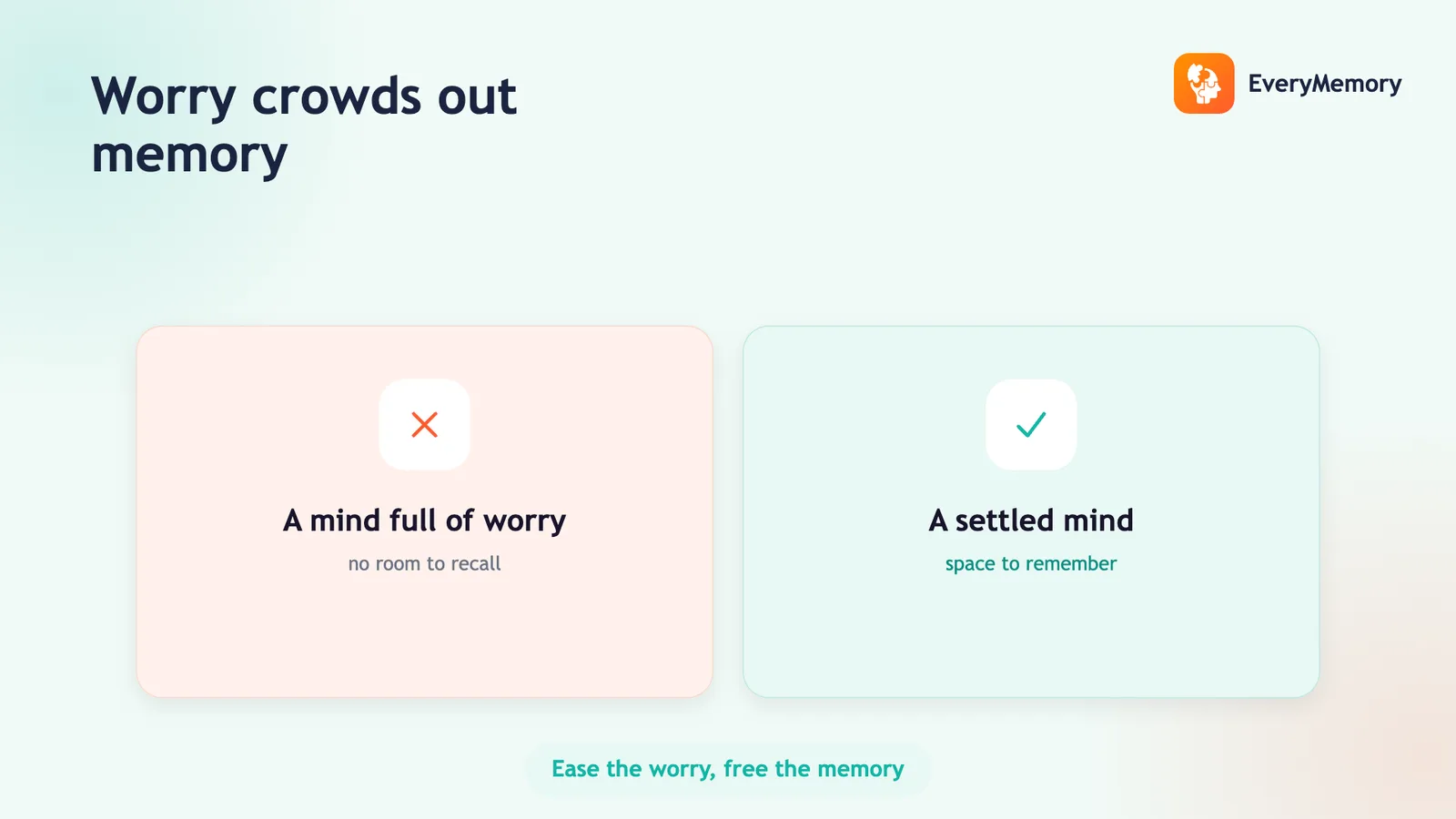
Most of stress's effect on memory runs through attention. When part of your mind is occupied with worry, less is available to encode what's in front of you - so the name, the instruction, or where you put your keys was never fully registered. It feels like forgetting, but often the memory was never formed.
Retrieval suffers too: under pressure the right word can hide just out of reach, then surface the moment you relax. None of this is damage, and it tends to lift as stress settles. For a focused look, see does stress cause forgetfulness.
Stress signs and what helps
Naming what stress is doing makes it easier to act. Match the everyday sign to a small, practical response rather than waiting for the pressure to vanish on its own.
| Stress sign | What can help |
|---|---|
| Racing thoughts that won't settle | Slow breathing; write the loop down on paper |
| Walking into a room and forgetting why | Pause, single-task, finish one thing before the next |
| Re-reading the same line over and over | Step away for a few minutes, then return |
| Word on the tip of your tongue | Stop chasing it; relax and let it surface |
| Snapping at small things | A short walk or break before the next task |
When to take it further
Everyday stress responds well to everyday tools, and the forgetfulness that comes with it usually eases as life settles. That's a normal, reversible pattern, not a sign of decline.
But stress that's persistent, severe, or genuinely distressing - affecting your sleep, mood, or daily life - is worth discussing with a qualified professional rather than managing alone. For practical, non-clinical starting points, see how to reduce stress.
✅ Try this today - A 90-second reset
A quick way to drop the background hum before it eats your focus.
- Stop what you're doing and unclench your jaw and shoulders.
- Breathe in for a count of four, then out slowly for a count of six.
- Repeat for six breaths, letting the out-breath be longer than the in-breath.
- Name the one task you'll return to, out loud if you can.
- Pick that single task back up - just that one - before opening anything else.
⚠ When to talk to a professional
This is general information about everyday stress, not medical advice and not a treatment for any anxiety or stress disorder. If stress is persistent, severe, or distressing, please talk to a doctor or qualified professional.