 EveryMemory
How to Remember Numbers (Chunking and Beyond)
Long numbers overwhelm working memory. Chunking, meaningful patterns, and a simple digit-to-image system make phone numbers, PINs, and dates easy to hold.
Part of the guide: How to Improve Your Memory: The Complete Beginner's Guide →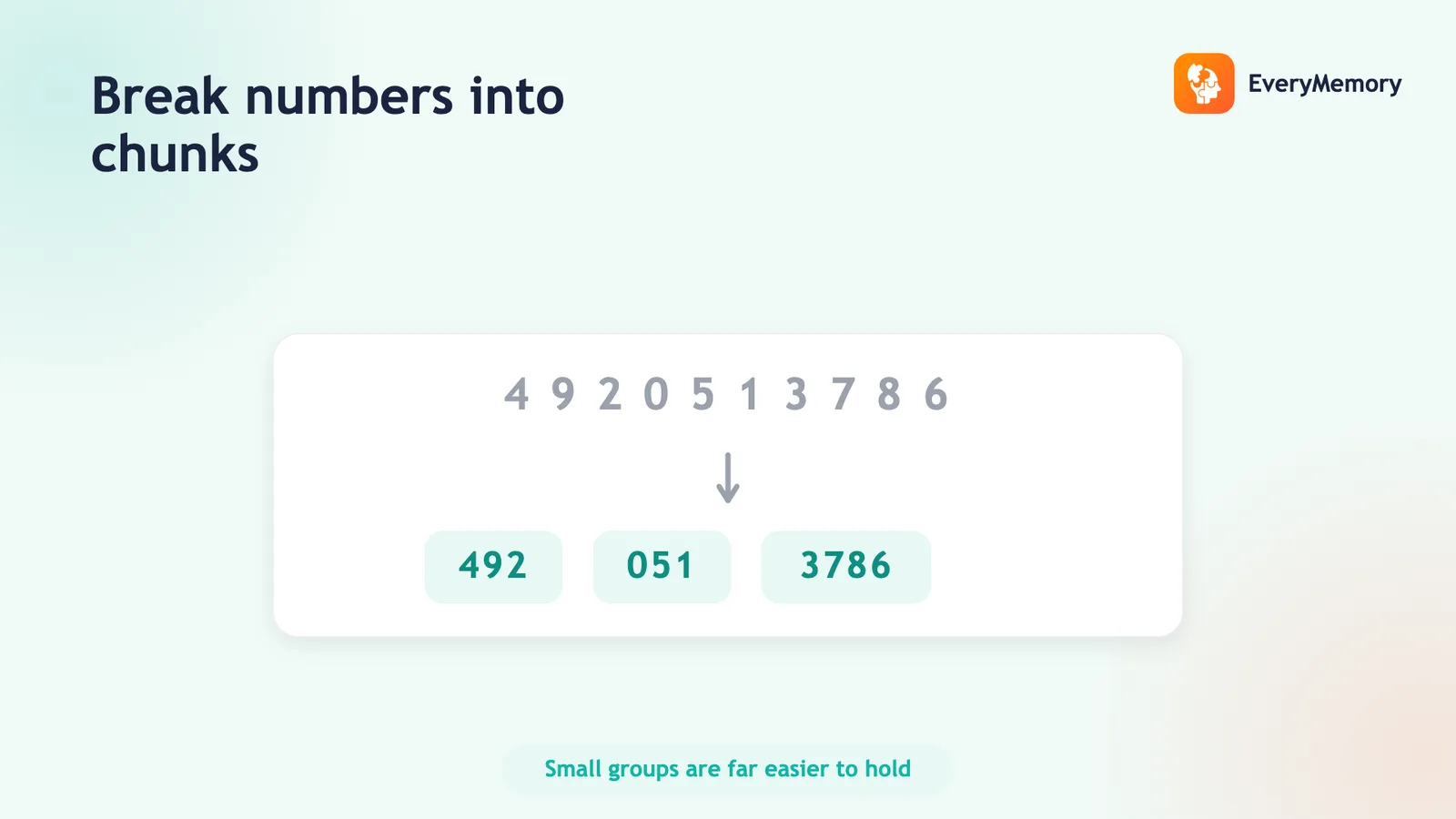
⚡ Quick answer
To remember numbers, break them into small chunks (phone numbers already do this), turn each chunk into a meaningful date or pattern, and for longer numbers use a system that converts digits into images. Your working memory only holds a few items at once, so grouping a long number into a handful of meaningful chunks is what makes it manageable.
Key takeaways
- Numbers are hard because working memory counts each digit as a separate item and holds only a few at once.
- Chunk a long number into 2–4 groups (as phone numbers already do) to turn an impossible list into a short one.
- Make each chunk meaningful - a year, an age, a pattern - so there's less to memorise by force.
- For chunks with no meaning, convert digits into fixed images and link them, optionally placed in a memory palace.
A string of digits is about the hardest thing to hold in mind - no meaning, no order beyond itself, and longer than working memory can carry.
The fix is to stop treating a number as a long string and start treating it as a few meaningful pieces. Here's how, from the everyday to the advanced.
Why numbers are so hard
Working memory holds only a few items for a few seconds, and every single digit counts as an item. A ten-digit number blows straight past that limit, which is why it's gone before you can dial it. The trick isn't a better memory - it's fewer, bigger items.
Start with chunking
Chunking groups digits into a few larger units. '5 5 5 0 1 9 2' is seven items; '555-0192' is two. You already do this with phone numbers and card numbers. For any number, split it into 2–4 chunks and you've turned an impossible list into a short one.
Make the chunks mean something
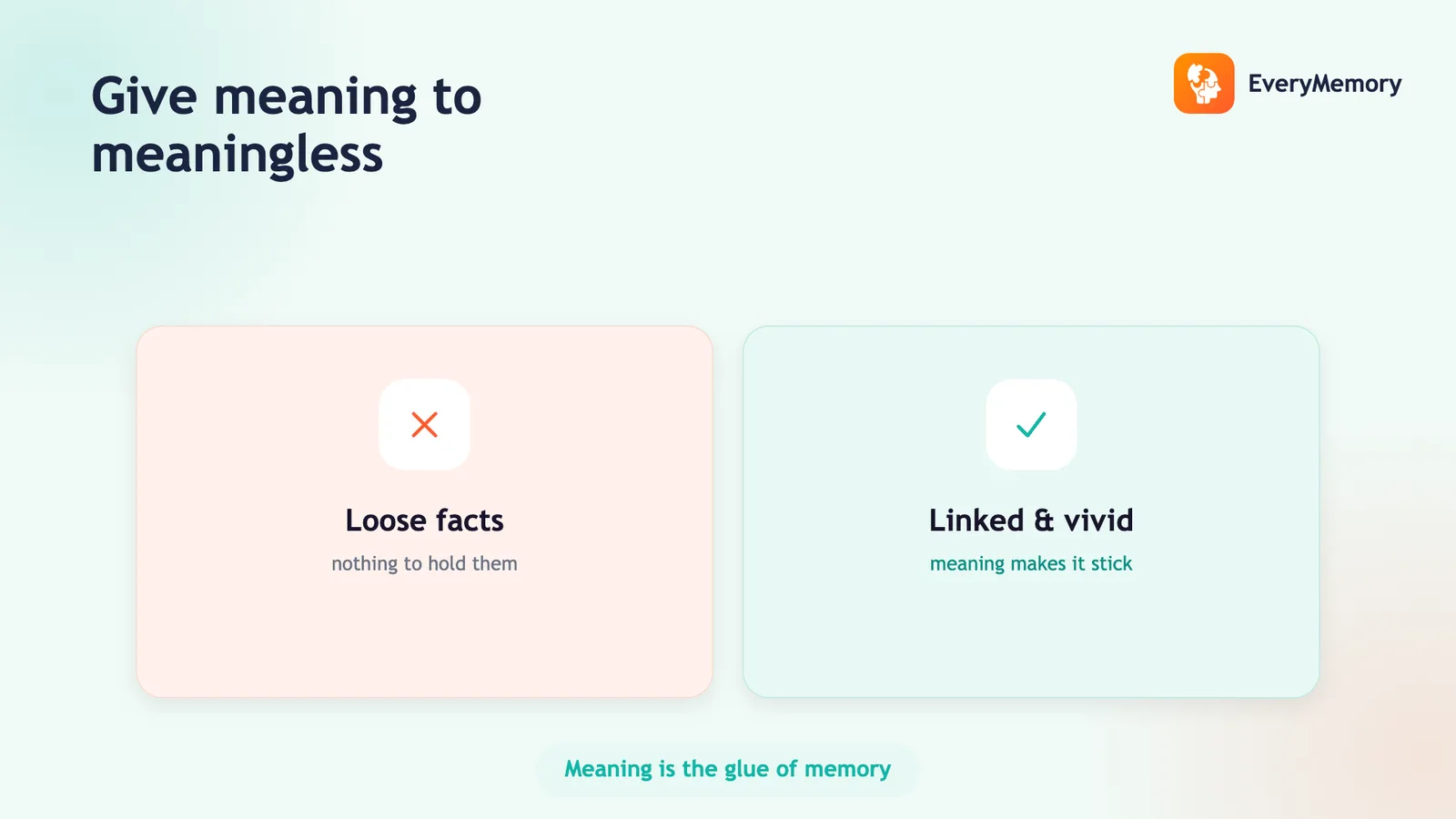
A chunk sticks far better when it means something. '1945' is easier than '1-9-4-5' because it's a year you know. Hunt for meaning in each chunk: a birth year, an age, a familiar address, a pattern (doubles, a run). The more chunks you can anchor to something you already know, the less there is to memorise.
For longer numbers: turn digits into images
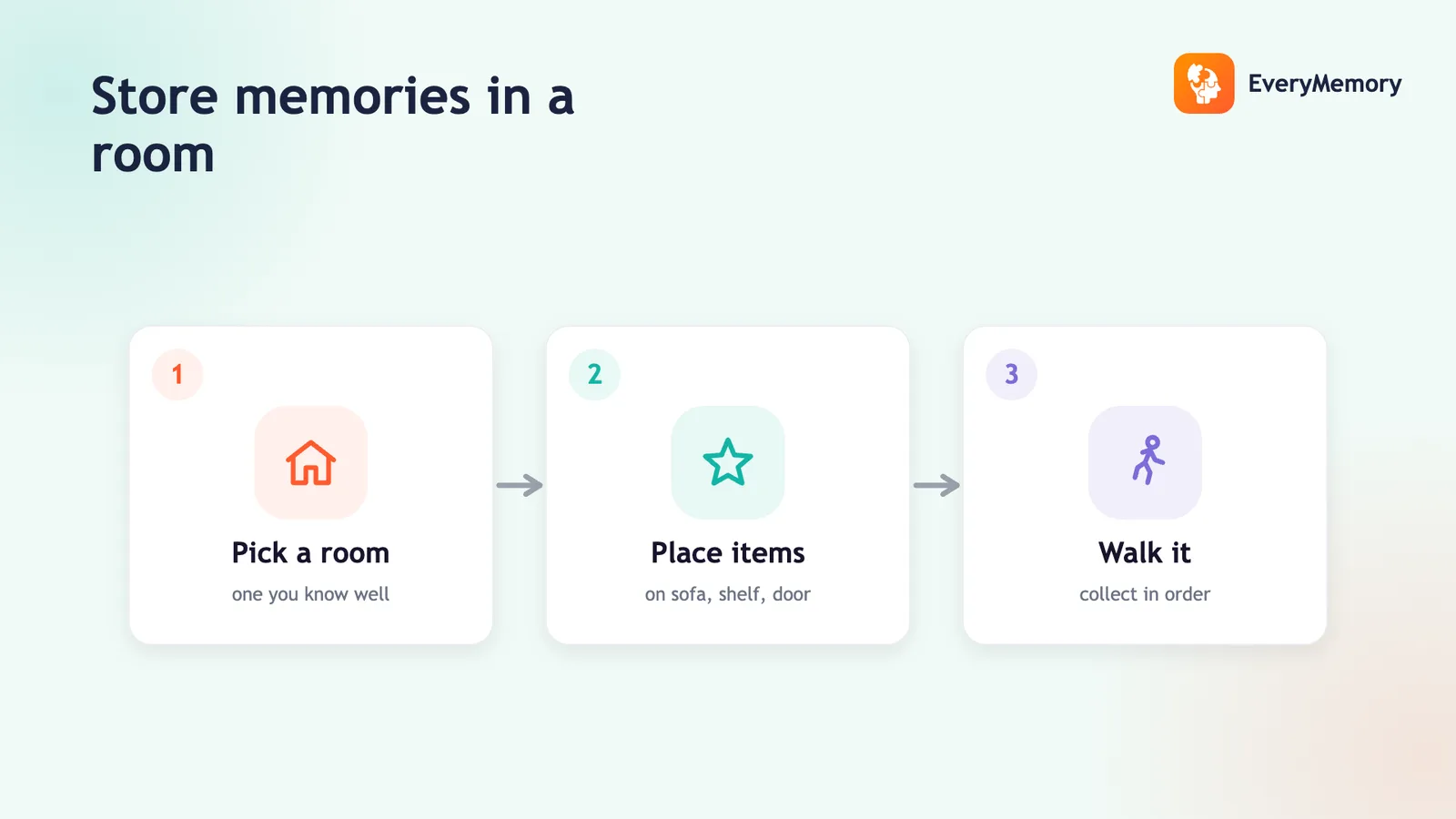
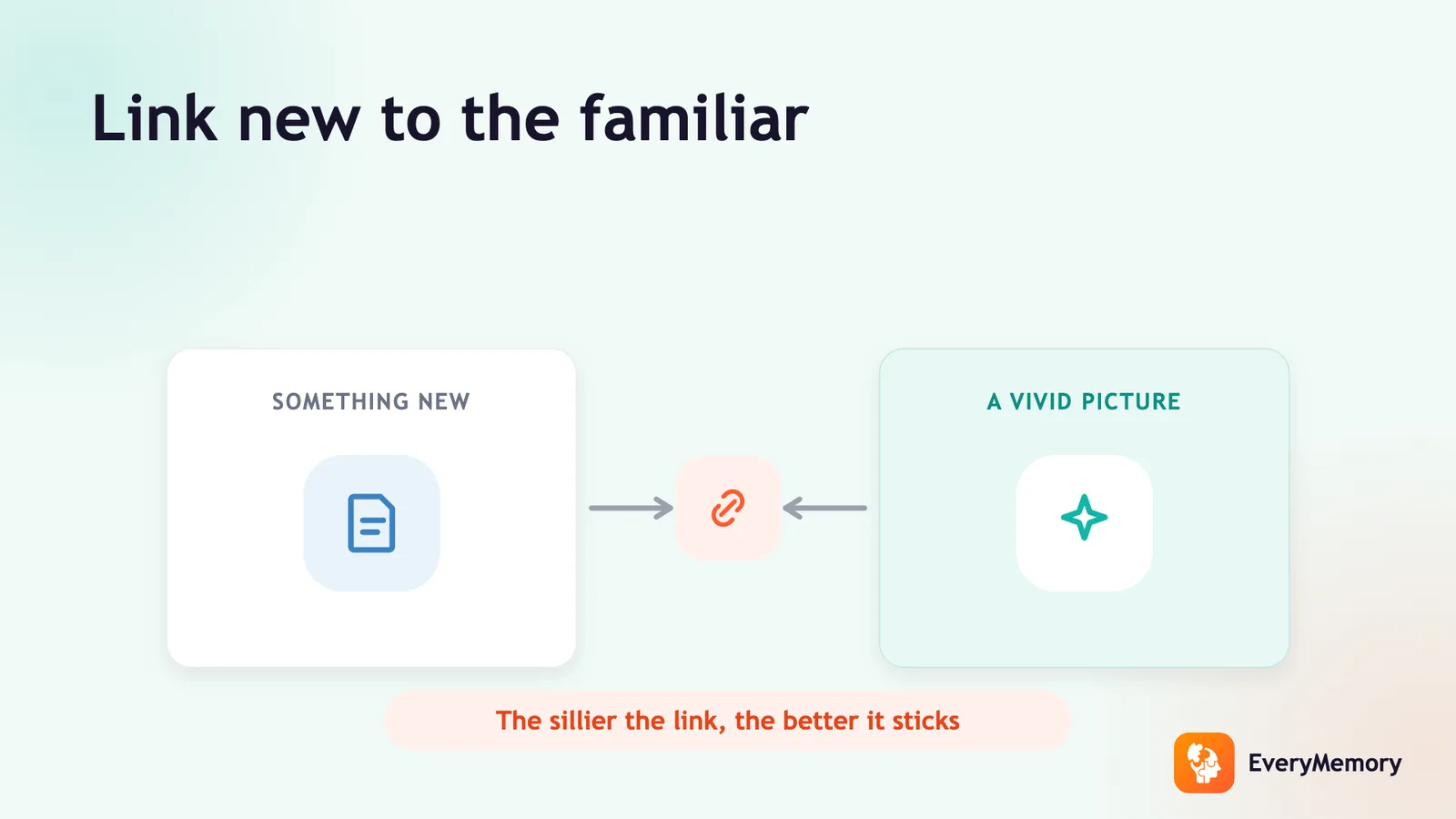
When there's no natural meaning, convert digits into pictures. The simplest version is a fixed image for each digit (0 = a ball, 1 = a candle, 2 = a swan…). String the images into a quick scene and you've turned a number into a story. Memory athletes use a fuller version (the Major System) that maps digits to consonant sounds and builds words - powerful, but the digit-image version is enough for everyday numbers and pairs naturally with the memory palace.
Practise on real numbers
Use numbers you actually need: a new PIN, a friend's number, an appointment date. Chunk it, find meaning, picture the odd chunk. A few real reps build the habit faster than drills.
✅ Try this today - chunk a phone number
Take a number you want to keep:
- Split it into 2–4 chunks.
- Find meaning in each chunk - a year, an age, a pattern.
- For any chunk with no meaning, picture each digit as an object and link them.
- Recall the whole number from the chunks an hour later.