 EveryMemory
Memory Techniques: The Complete Guide
Every memory technique shares one idea: give meaningless information meaning and structure. A plain map of the techniques that work, what each is for, and where to start.
Part of the guide: How to Improve Your Memory: The Complete Beginner's Guide →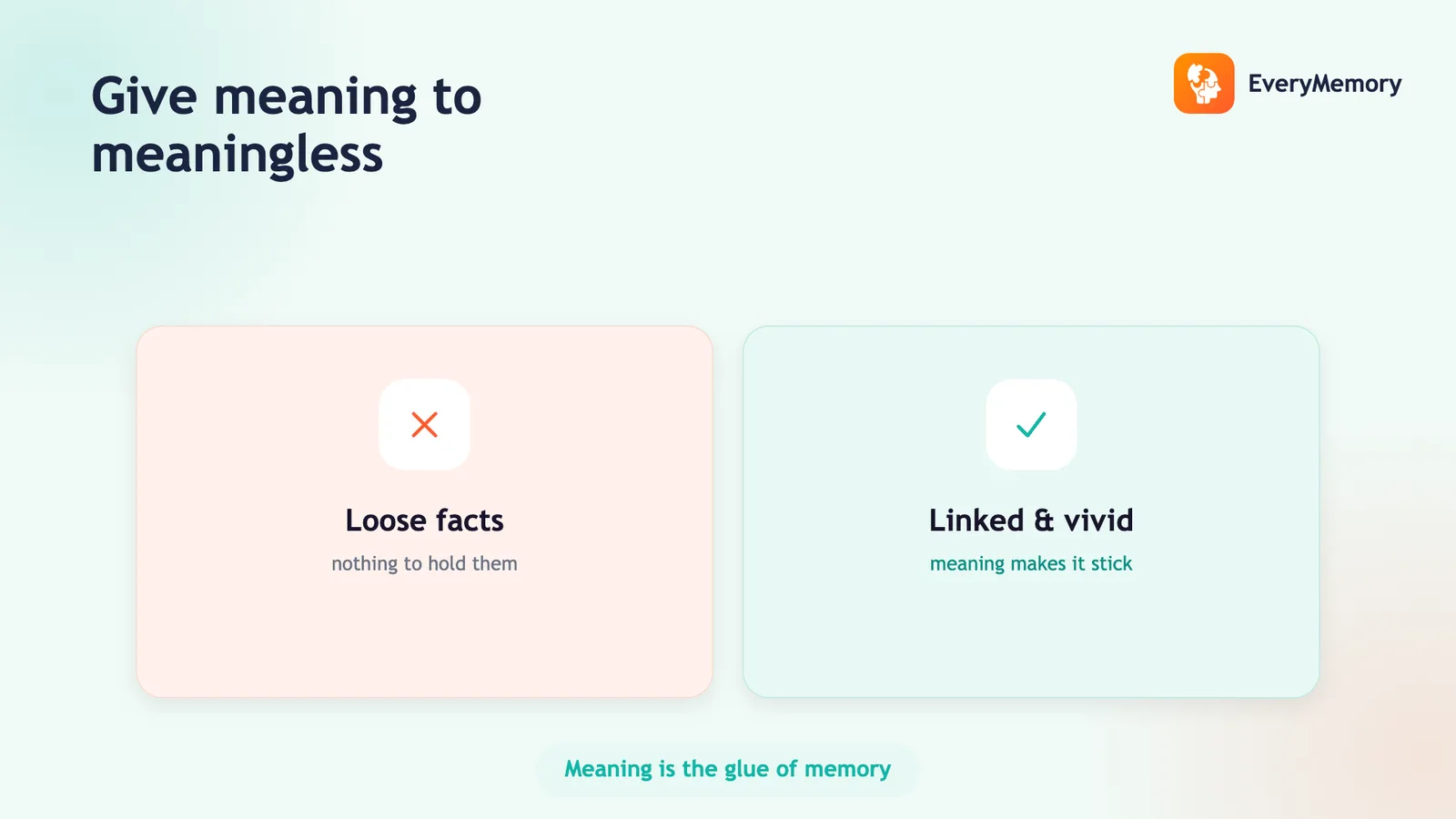
⚡ Quick answer
Memory techniques are deliberate methods for encoding information so it's easier to recall - turning facts into vivid images, linking them into stories or familiar places, or grouping them into patterns. They all share one idea: give meaningless information meaning and structure, because your brain holds onto meaning, not raw data. The main techniques are association, the memory palace, the link and story method, chunking, the peg system, and mnemonic devices like acronyms.
Key takeaways
- Every memory technique works by giving arbitrary information meaning or structure - the two things memory holds onto.
- The core techniques are association, the memory palace, link and story, chunking, the peg system, and mnemonics like acronyms.
- Match the tool to the material: palace or pegs for ordered lists, chunking for numbers, acronyms for short fixed lists, association for names.
- For understanding rather than rote recall, retrieval and spacing matter more than any mnemonic.
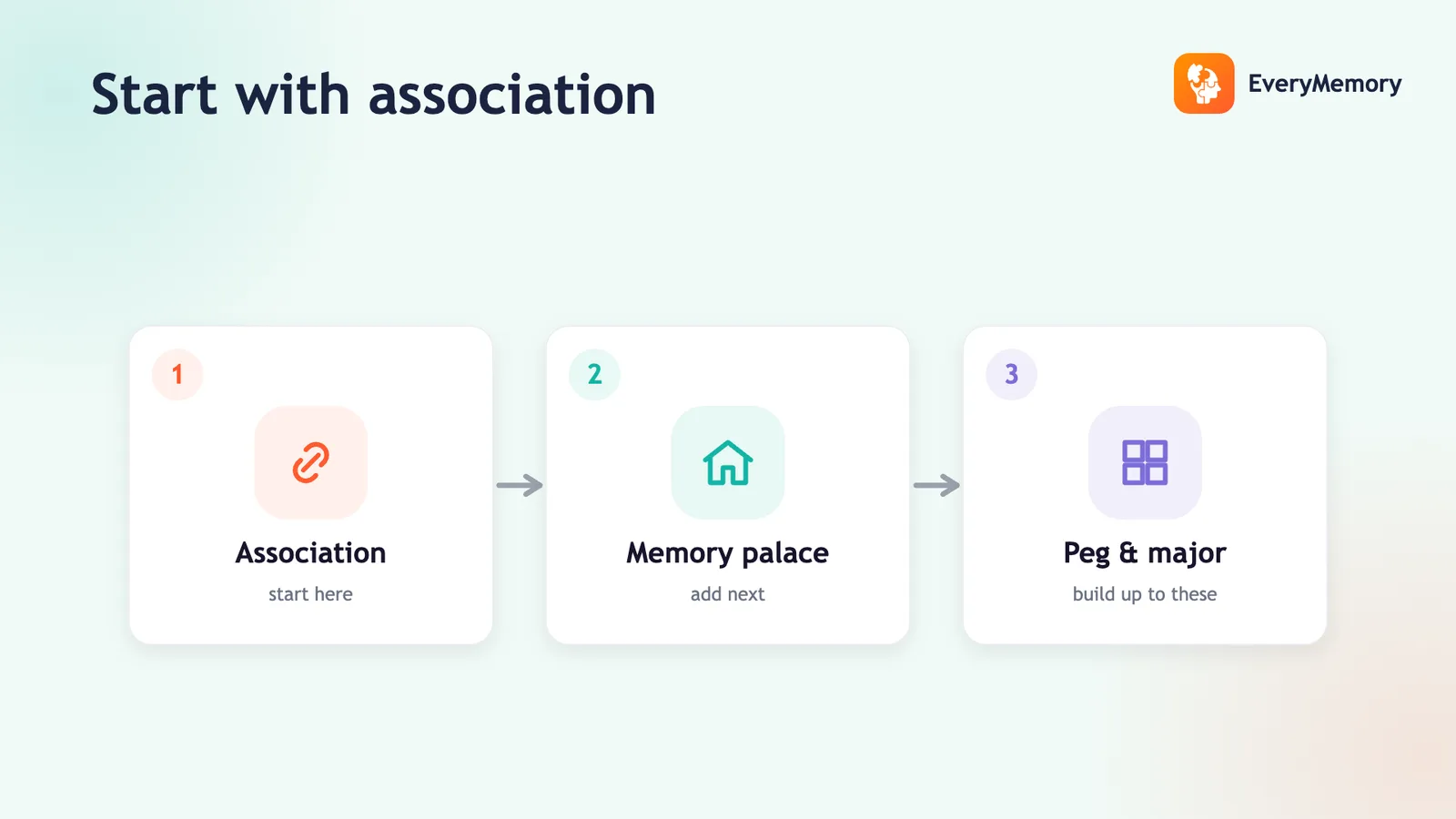
- Start with association, add the memory palace, and practise on small real tasks before learning more.
Memory techniques look like tricks, but they all run on a single principle: your brain holds onto meaning and structure, not raw data. Every technique below is a different way of giving arbitrary information one or both.
This is the map. It explains how the techniques relate, what each is best at, and which to learn first - with a deeper guide linked for each.
Why memory techniques work
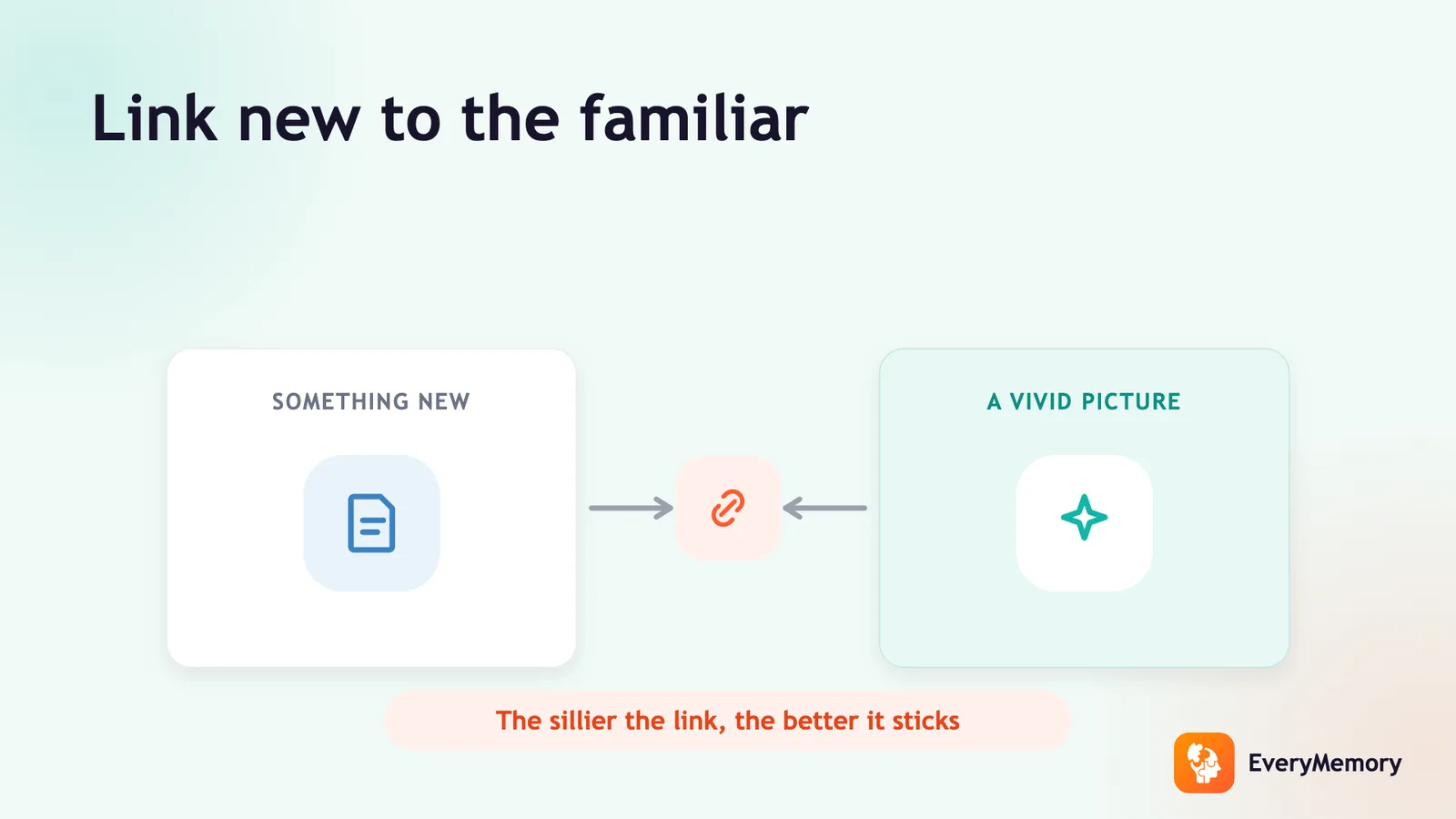
Left alone, your memory struggles with anything arbitrary - a name, a number, a list in order. These have no built-in meaning to grab and nothing connecting them to what you already know, so they fade fast. Every technique fixes that by adding meaning (turning a fact into a vivid image or a connection) or structure (grouping, ordering, or placing it), or both.
None of them raise some fixed memory capacity. They change the form of the information into something your brain holds easily.
The core techniques, at a glance
| Technique | Best for | Guide |
|---|---|---|
| Association | The foundation of all the others - linking new to known | Association |
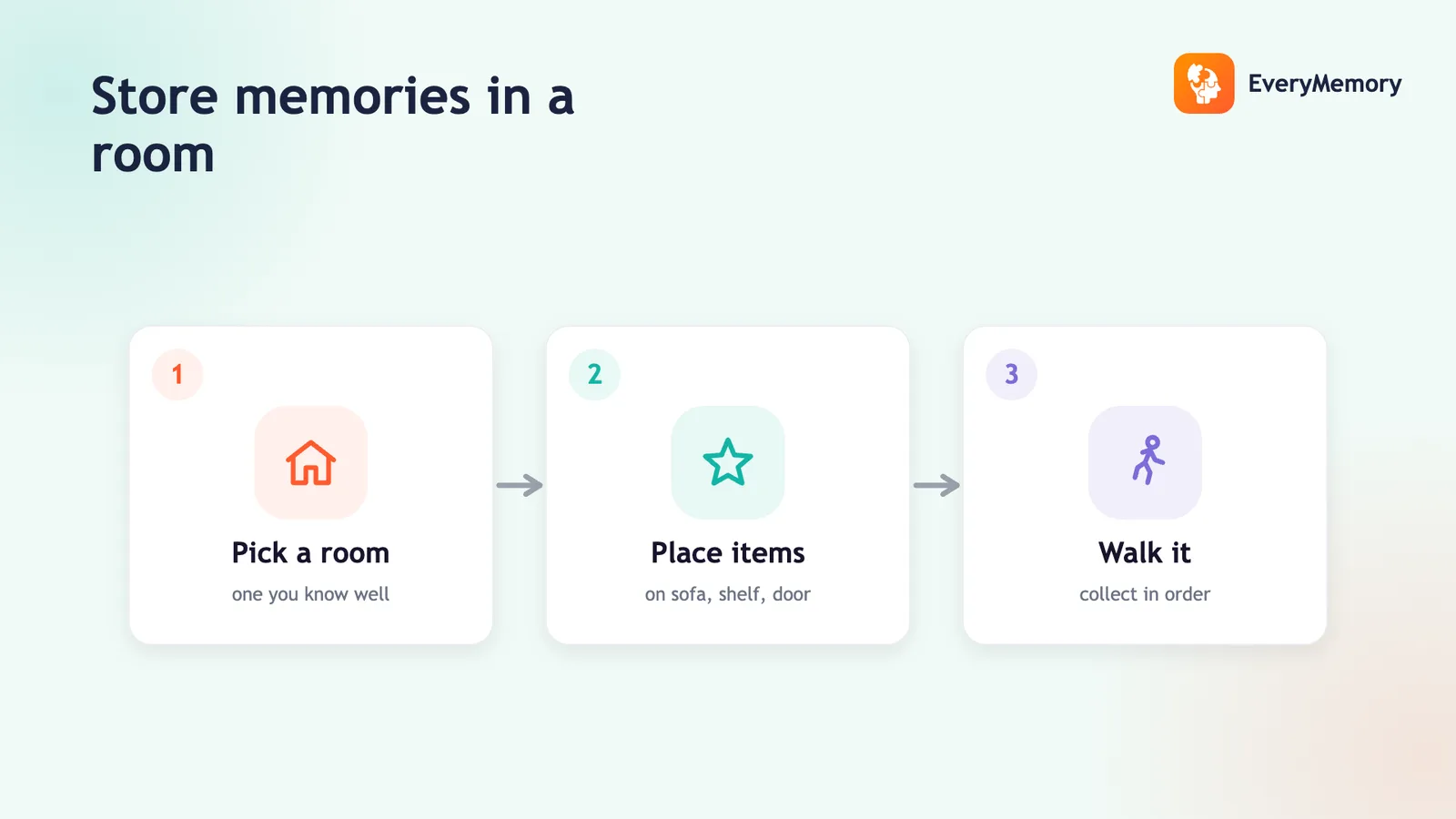
| Memory palace | Ordered lists, speeches, sequences | Memory palace |
| Link & story | Short lists, errands, steps | Link & story |
| Chunking | Numbers and long strings | Remember numbers |
| Peg system | Numbered or ordered lists you reuse | Peg system |
| Acronyms & acrostics | Short fixed lists recalled verbatim | Acronyms |
How to choose the right one
Match the tool to the material. Need a list in order? Memory palace or pegs. A quick errand list? Link and story. A phone number or PIN? Chunking. A short formula you must recall word-for-word? An acronym. For names and faces, association plus attention does most of the work - see remembering names and faces.
For understanding rather than rote recall, techniques matter less than retrieval and spacing - covered in improving retention.
Where to start
Don't try to learn all of these at once. Begin with association, because every other technique is built on it, then add the memory palace. Practise on small, real tasks for a week before adding a third. The step-by-step path is in how to learn memory techniques.