 EveryMemory
How to Sleep Better for Memory
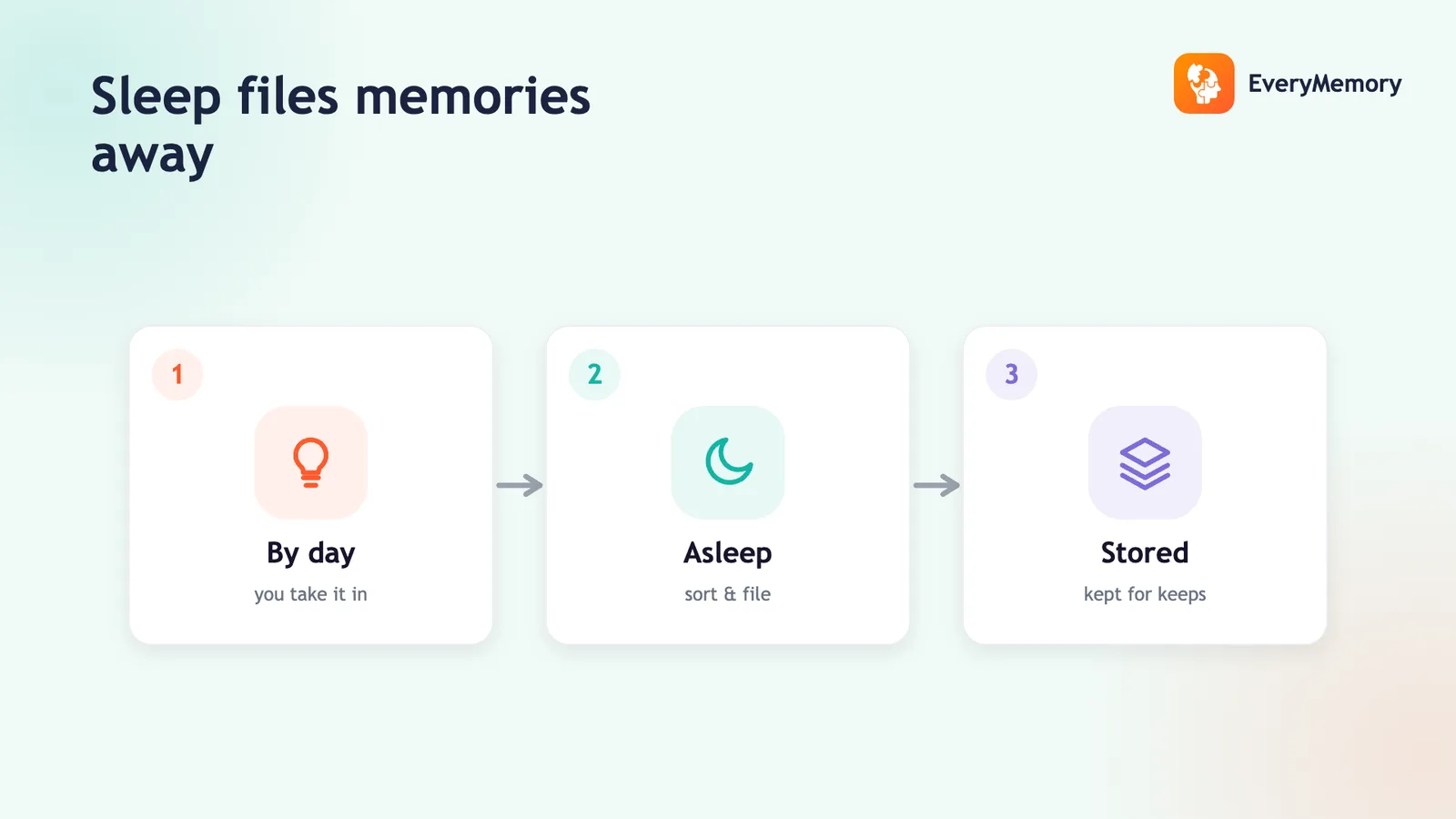
Sleep is when the brain files away what you learned, so a few steady habits around bedtime can do more for everyday recall than any single trick.
Part of the guide: How to Keep Your Brain Healthy: A Complete Lifestyle Guide →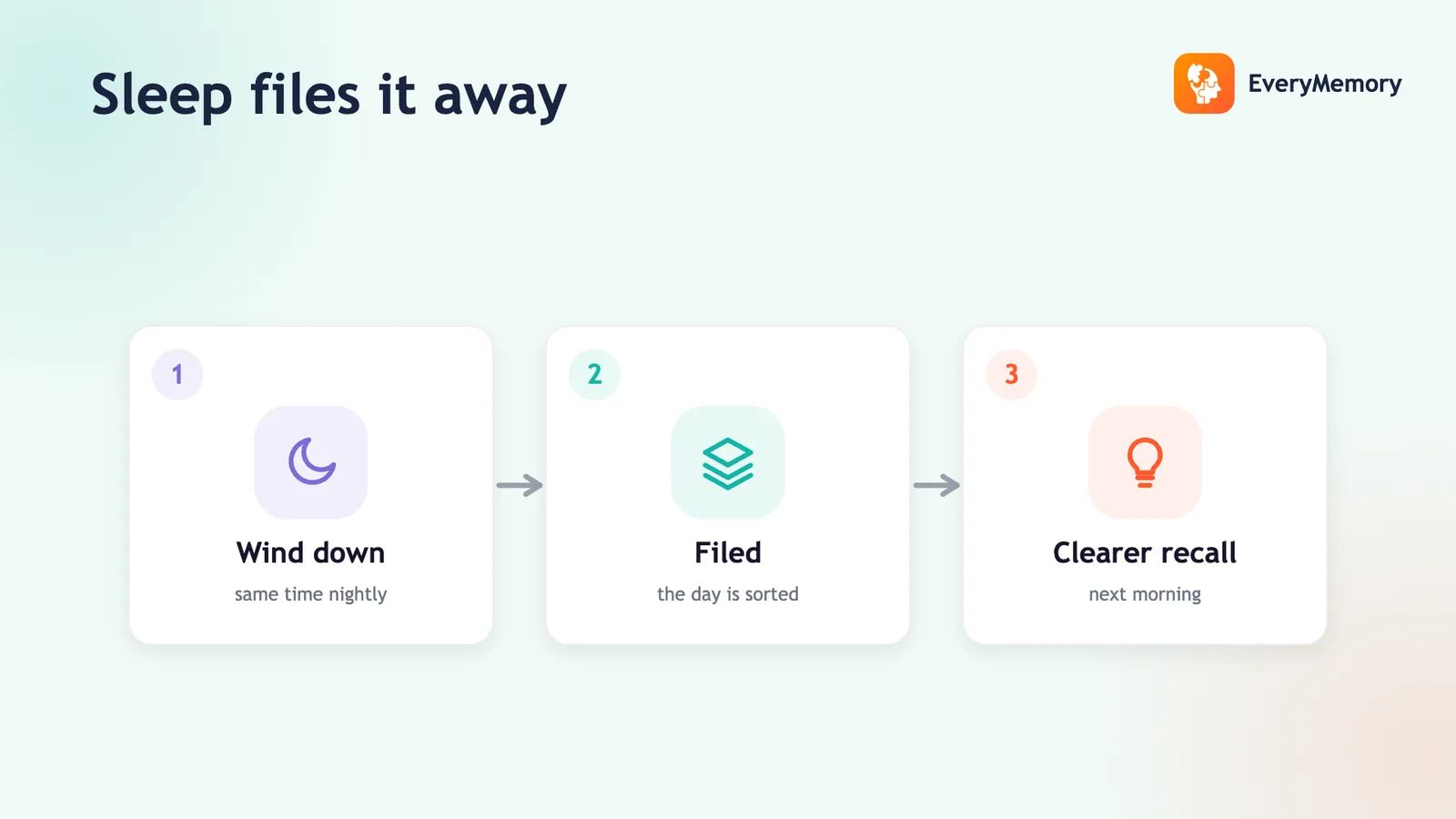
⚡ Quick answer
To sleep better for memory, keep a consistent wake-up time, dim lights and step away from screens in the last hour, and keep the bedroom dark, quiet, and cool. Cut caffeine after early afternoon, get daylight in the morning, and use a short wind-down routine. Steady sleep gives the brain the undisturbed time it needs to consolidate the day's learning.
Key takeaways
- Sleep is when the brain consolidates the day's learning, so short or broken nights leave recall patchy.
- A consistent wake-up time, morning daylight, and a dark, cool, quiet room do most of the work.
- A short, repeatable wind-down routine signals the brain that sleep is coming.
- Persistent, unrefreshing sleep despite good habits is a conversation for a doctor, not a blog.
Sleep is not downtime for the brain. While you rest, the day's experiences get sorted, strengthened, and tucked into longer-term storage - a process that simply doesn't happen as well when sleep is short or broken. That's why a poor night so often shows up the next day as a name on the tip of your tongue or a fact that won't come.
The good news is that better sleep mostly comes from a handful of unglamorous habits rather than expensive gadgets. Build a steadier routine around bedtime and the brain gets the consistent, undisturbed window it needs to do its filing.
Why sleep matters for memory
During sleep the brain replays and stabilises what you took in while awake, moving fragile new memories into more durable storage. Deep sleep and dreaming sleep each play a part, which is why both short nights and broken nights leave recall patchy. You learn during the day, but a lot of the saving happens overnight.
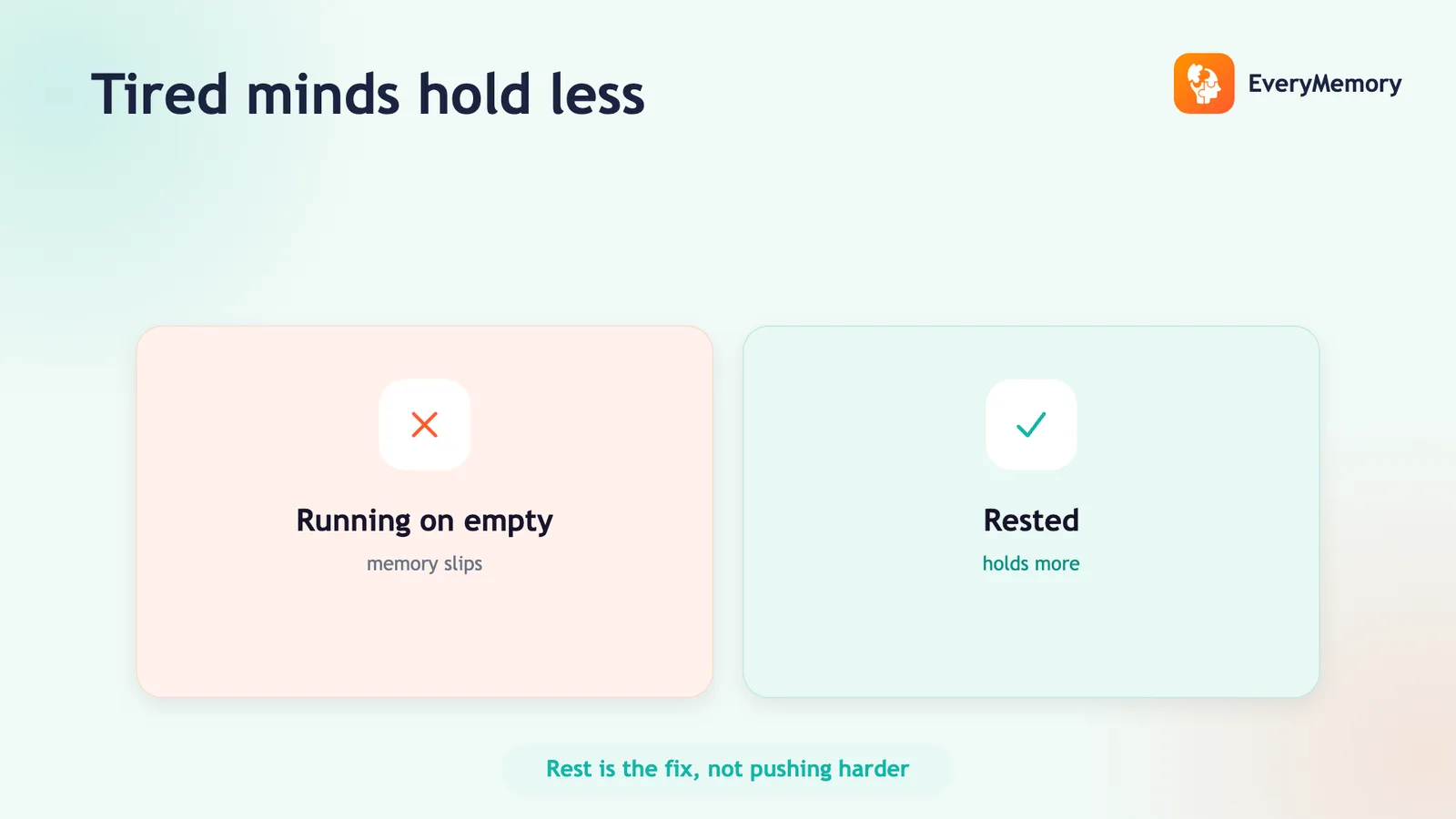
When sleep is thin, the next-day cost is mostly about attention. A tired brain wanders, misses details at the moment of learning, and never encodes them properly - so the memory was never really formed to begin with. For the fuller picture, see how sleep affects memory.
Sleep-hygiene habits that help
None of these is dramatic on its own; together they nudge your nights toward deeper, less interrupted sleep. Pick two or three to start with rather than overhauling everything at once.
| Do | Avoid |
|---|---|
| Wake at the same time daily, weekends included | Sleeping in for hours to "catch up" |
| Get bright daylight within an hour of waking | Bright screens in the last hour before bed |
| Keep the bedroom dark, quiet, and cool | A warm, cluttered, or noisy room |
| Finish caffeine by early afternoon | Coffee, cola, or strong tea after mid-afternoon |
| Wind down with a calm routine | Working or scrolling in bed until you crash |
Build a wind-down routine
Your brain takes cues from repetition. A short, predictable sequence before bed signals that the day is closing, so sleep arrives faster and with less tossing. The content matters less than the consistency - pick a few calm things and do them in the same order most nights.
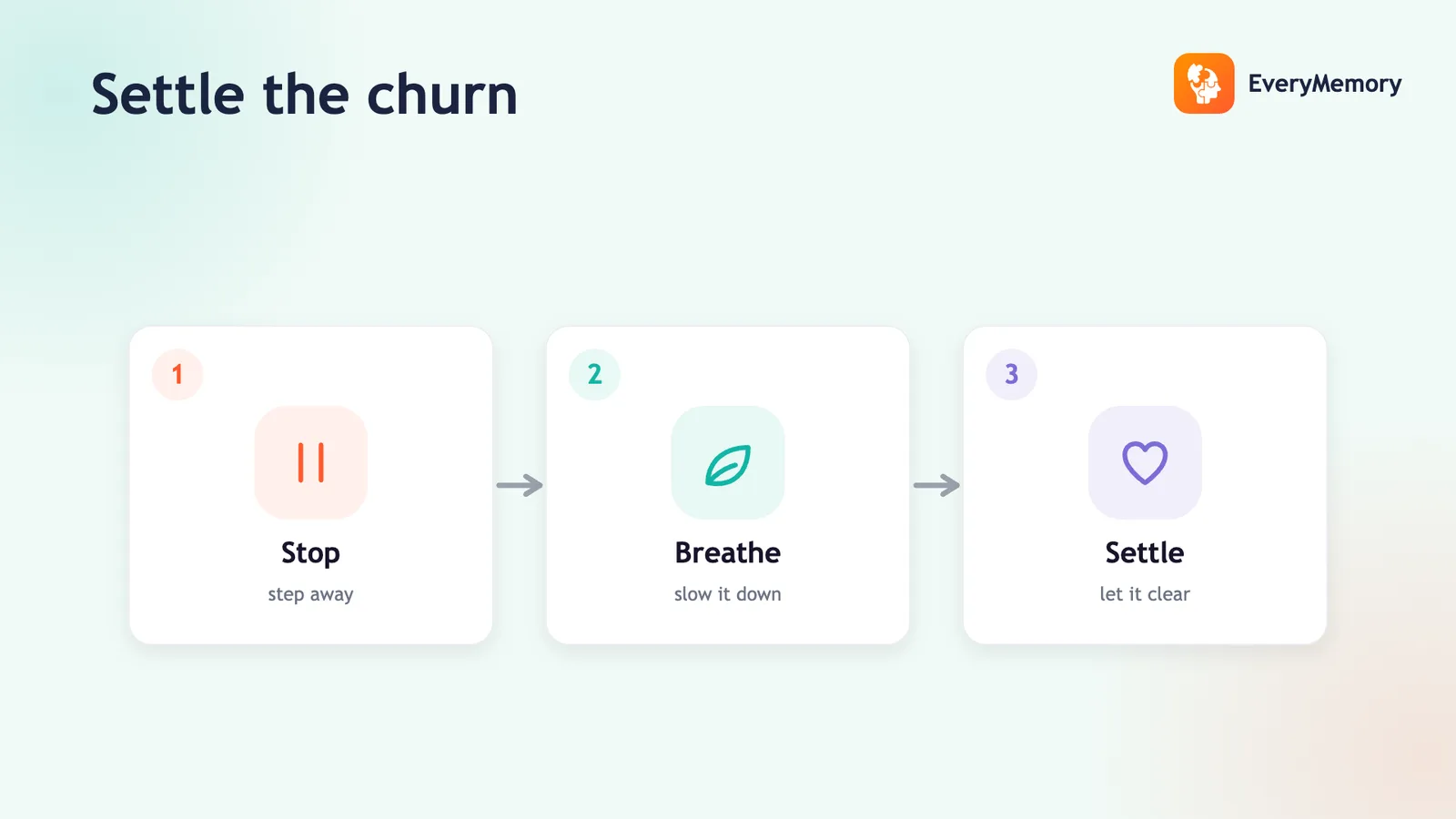
Keep it screen-light and low-stimulation. Reading a paper book, a warm shower, gentle stretching, or a few slow breaths all work. If your mind starts spinning through tomorrow's tasks, write them down so your brain can stop rehearsing them - more on that in how to relax your mind.
When sleep stays broken
Everyone has rough nights, and one or two won't undo your memory. But sleep that's reliably short, broken, or unrefreshing despite good habits is worth taking seriously - and it's a conversation for a doctor, not a blog. Persistent sleep trouble can have many causes, and a qualified professional can look properly.
In the meantime, be kind to a tired brain. Lean on lists and reminders on low-sleep days, single-task instead of juggling, and don't read too much into one foggy afternoon. A steady daily habit also helps you notice your own patterns - see keep your brain active.
✅ Try this today - A 30-minute wind-down
A simple, repeatable sequence to teach your brain that sleep is coming.
- Set a nightly alarm 30 minutes before your target sleep time as a "start winding down" cue.
- Dim the lights and put screens away, or switch them to a warm, low-brightness setting.
- Empty your head onto paper: jot tomorrow's tasks and any worries so you stop rehearsing them.
- Do one calm thing - read, shower, or stretch - in the same order each night.
- Get into bed only when sleepy, and keep your wake-up time fixed regardless of how the night went.
⚠ When to talk to a professional
This is general wellbeing information, not medical advice, and not a treatment for insomnia or any sleep disorder. If poor sleep is persistent, severe, or affecting your daily life, please speak with a doctor or qualified professional.