 EveryMemory
Mental Fatigue and Memory
When your mind is worn out, encoding falters and everything feels harder to hold - mental fatigue is a real drain on memory, and the fix is usually rest, not effort.
Part of the guide: How to Keep Your Brain Healthy: A Complete Lifestyle Guide →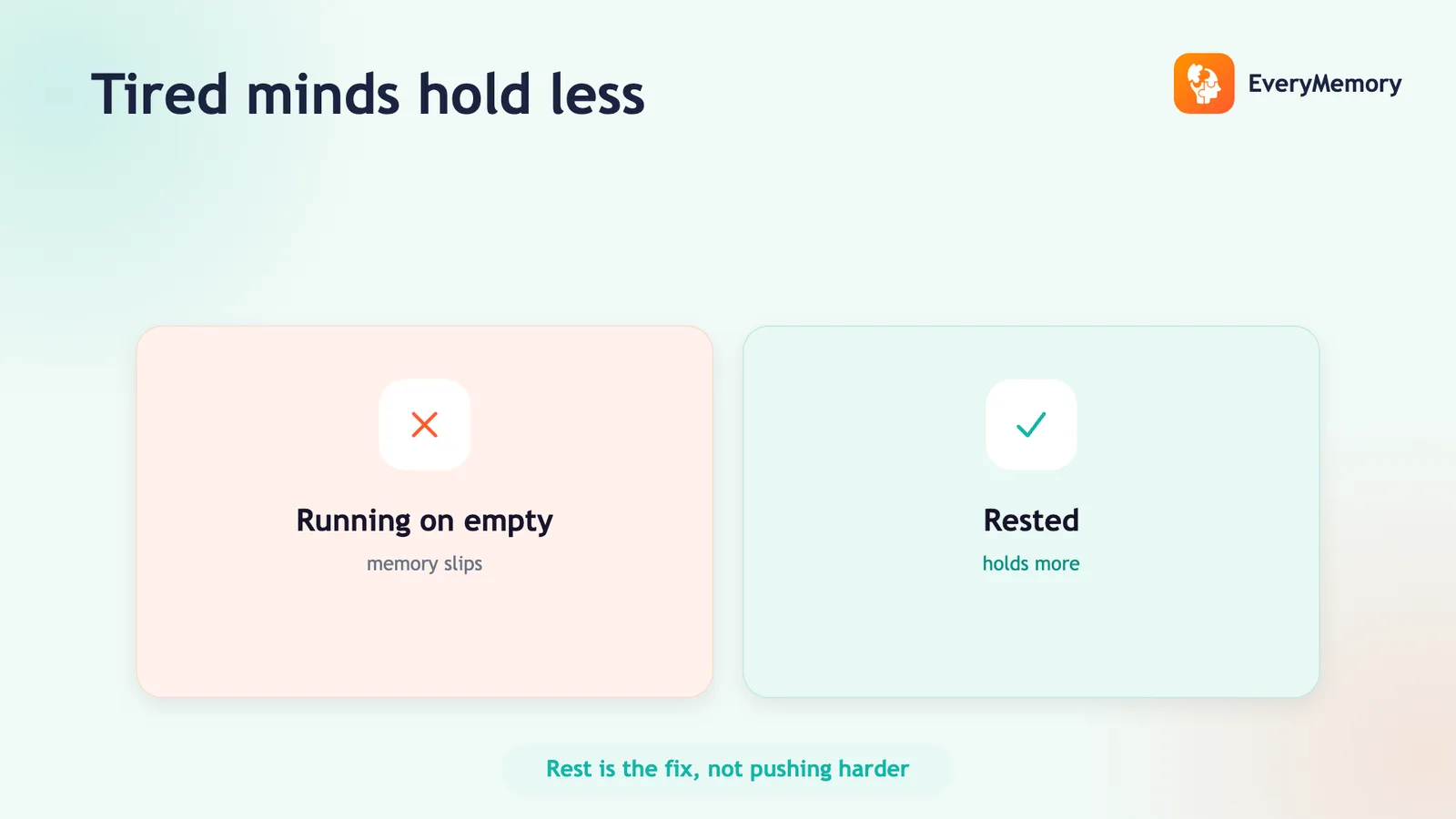
⚡ Quick answer
Mental fatigue hurts memory because encoding new information takes attention, and a tired mind has less to give - so details slip past and aren't stored. It's a temporary drain, not damage. Short breaks, single-tasking, stepping outside, and good sleep restore the attention recall depends on, and the forgetfulness eases as you recover.
Key takeaways
- A tired mind has a thinner attention budget, so new details aren't stored.
- The shortfall is at the moment of learning, so straining to recall later won't help.
- Low-stimulation breaks recharge attention; a phone scroll does not.
- Fatigue that sleep won't touch, or comes with other symptoms, needs a doctor.
Push your mind hard enough and it starts to drag - thoughts slow, attention slips, and small things stop sticking. Mental fatigue is the everyday wear that builds up over a long day of focus, decisions, and screens. It's not a character flaw or a memory problem; it's a tired brain doing tired-brain things.
The reason it matters for memory is simple: encoding new information takes attention, and a fatigued mind has less to spend. Most of the forgetting that comes with exhaustion lifts with the right kind of rest - which is usually more than just pushing through.
What mental fatigue does to memory
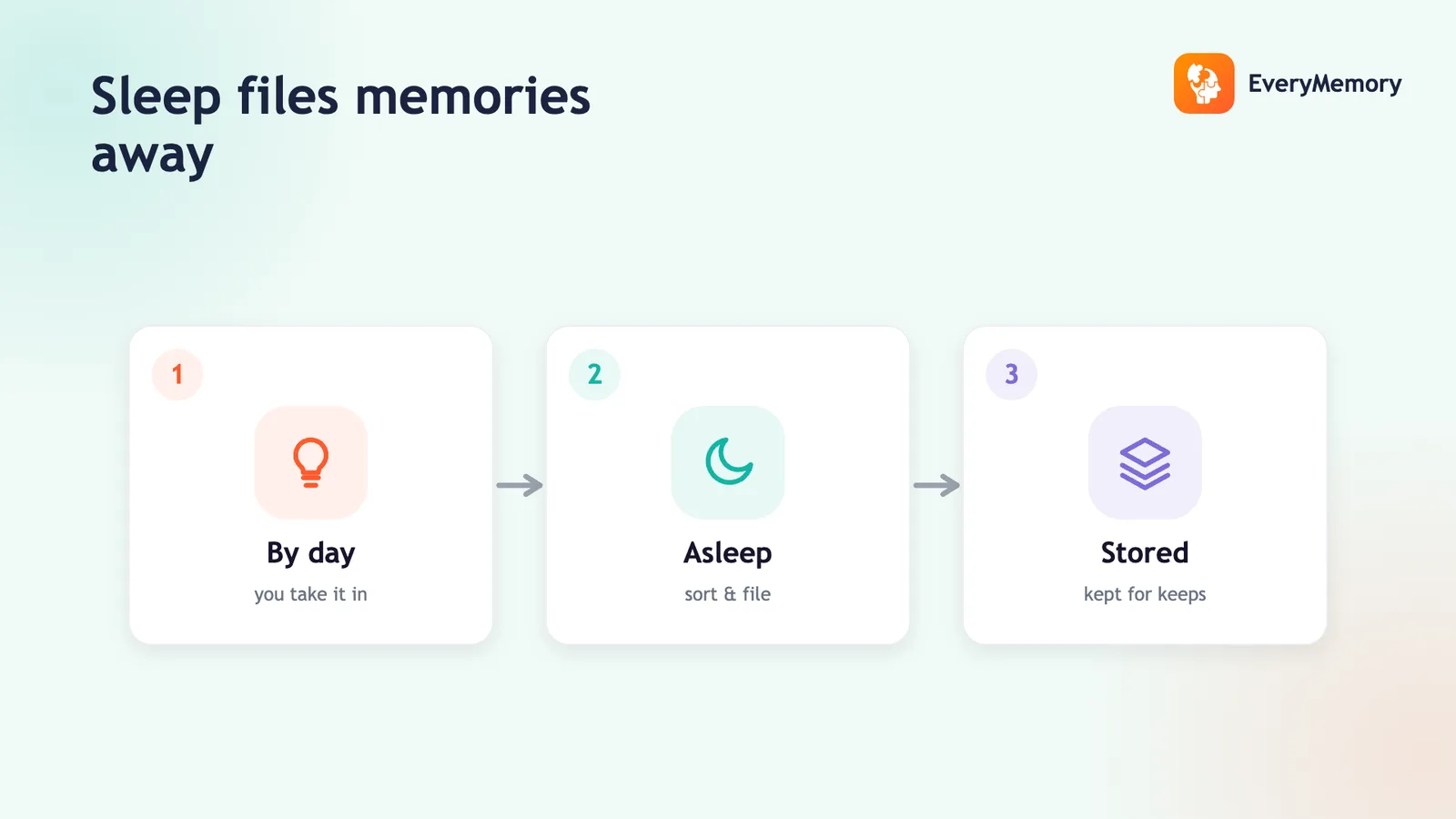
Memory starts with attention: to remember something, you first have to take it in properly. A fatigued mind has a thinner attention budget, so information gets registered weakly or missed entirely - which is why a tired afternoon is full of half-heard instructions and dropped details.
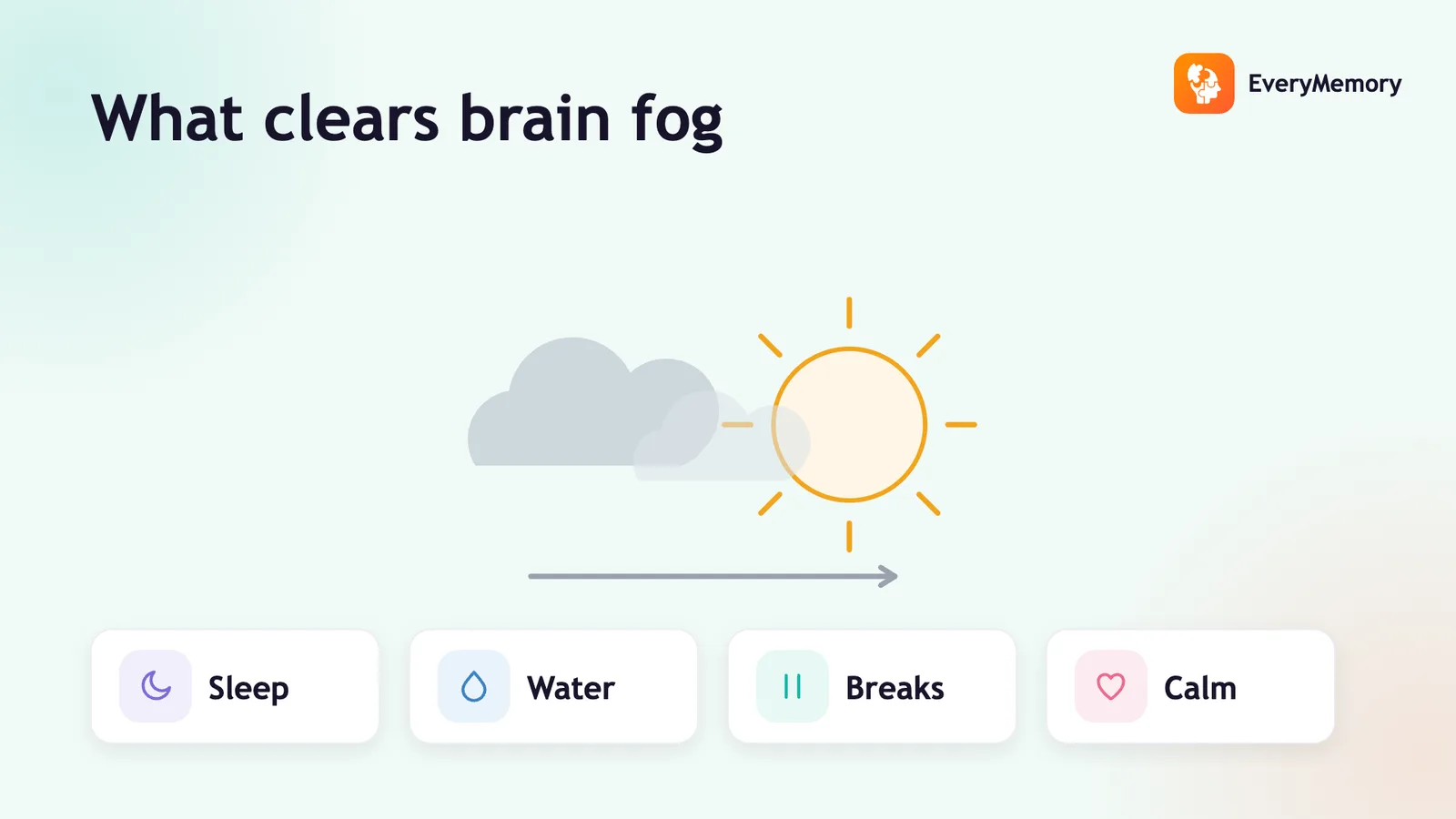
The shortfall is at the moment of learning, not in storage, so straining to recall later doesn't help. The real fix is upstream - restore the attention, and encoding improves. This overlaps with what people feel as brain fog.
Fatigue signs and what restores you
Naming the kind of tired you are points you at the right rest. Pushing harder is usually the wrong answer.
| Sign of mental fatigue | What restores attention |
|---|---|
| Re-reading the same paragraph | A short break away from the screen |
| Simple decisions feeling hard | Step outside; daylight and a brief walk |
| Careless slips and typos creeping in | Single-task; slow down for one thing |
| Irritable and foggy by afternoon | A proper lunch and a few minutes off |
| Nothing sticking by end of day | Stop early; protect that night's sleep |
Rest that actually recharges
Not all breaks restore attention equally. Swapping a work screen for a phone screen barely counts - your attention is still being pulled, just by something else. The breaks that recharge tend to be low-stimulation: a walk, looking out a window, a few slow breaths, a real change of scene.
Work with your attention rather than against it. Short, regular breaks before you're completely drained keep the tank from emptying, and single-tasking spends the budget more efficiently than juggling. For protecting attention from interruptions, see how to avoid distractions.
Fatigue vs something more
Ordinary mental fatigue comes and goes with effort and rest, and it clears after a good night's sleep and an easier day. That's the normal, reversible kind, and the memory dip clears with it.
Tiredness that's constant, that sleep doesn't touch, or that comes with other persistent or distressing symptoms is a different matter - and that's a reason to see a doctor, not to push harder. A qualified professional can look into causes that simple rest won't fix.
✅ Try this today - A focus-and-break rhythm
A simple rhythm that spends attention without draining it dry.
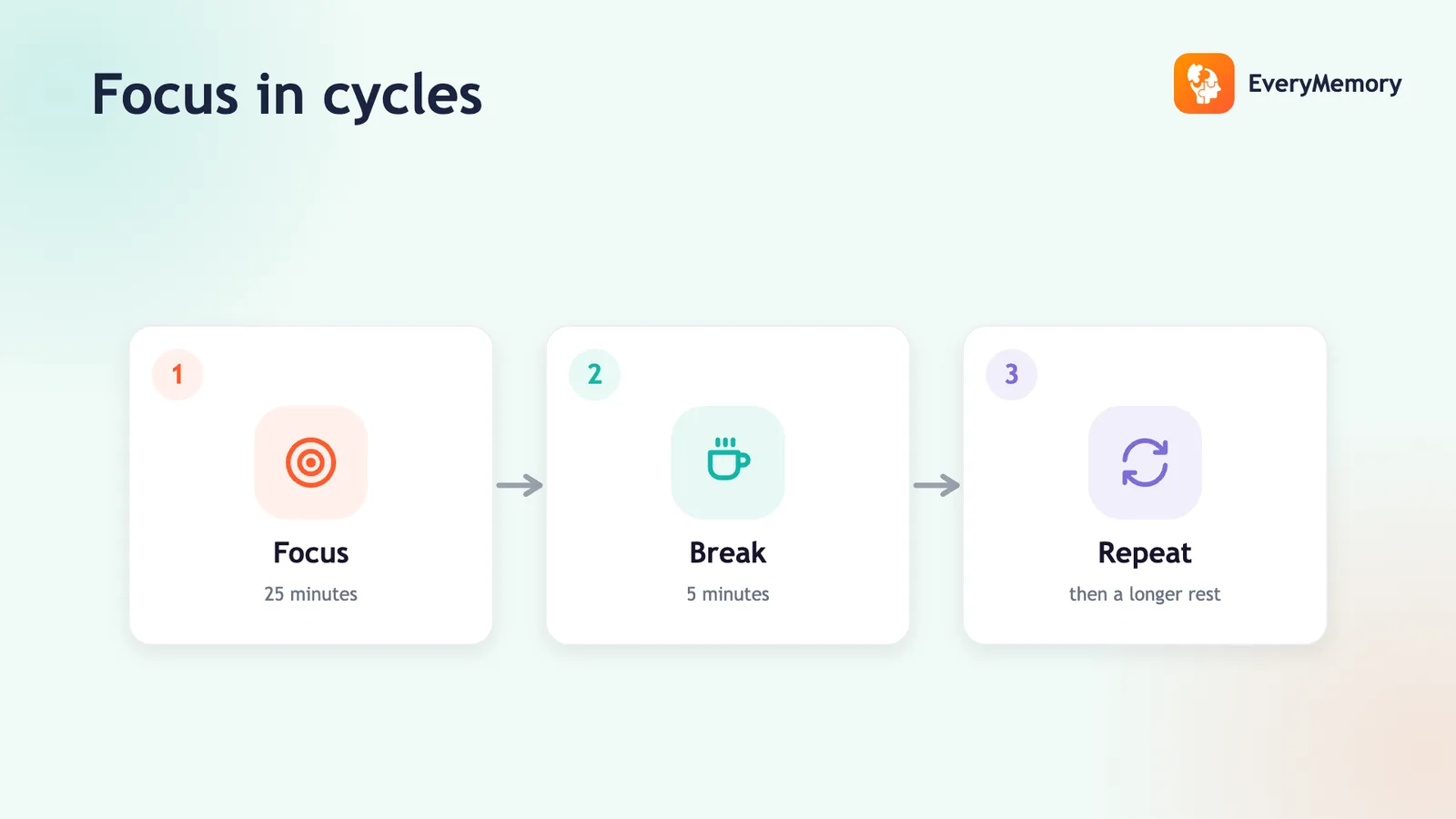
- Choose one task and work on just that for around 25 minutes.
- When the timer ends, stop - even mid-flow - and take a five-minute break.
- Make the break low-stimulation: stand, stretch, look out a window, breathe.
- Skip the phone scroll; it tires attention rather than resting it.
- After a few rounds, take a longer break with a walk or some daylight.
⚠ When to talk to a professional
This is general information about everyday mental tiredness, not medical advice and not a diagnosis of any condition. If fatigue is persistent, severe, unrelieved by rest, or comes with other distressing symptoms, please speak with a doctor or qualified professional.