 EveryMemory
How to Take Notes That Help You Remember
Notes help memory when they make you process and rephrase, not transcribe. How to take notes worth reviewing - and why the review matters more than the notes.
Part of the guide: How to Improve Your Memory: The Complete Beginner's Guide →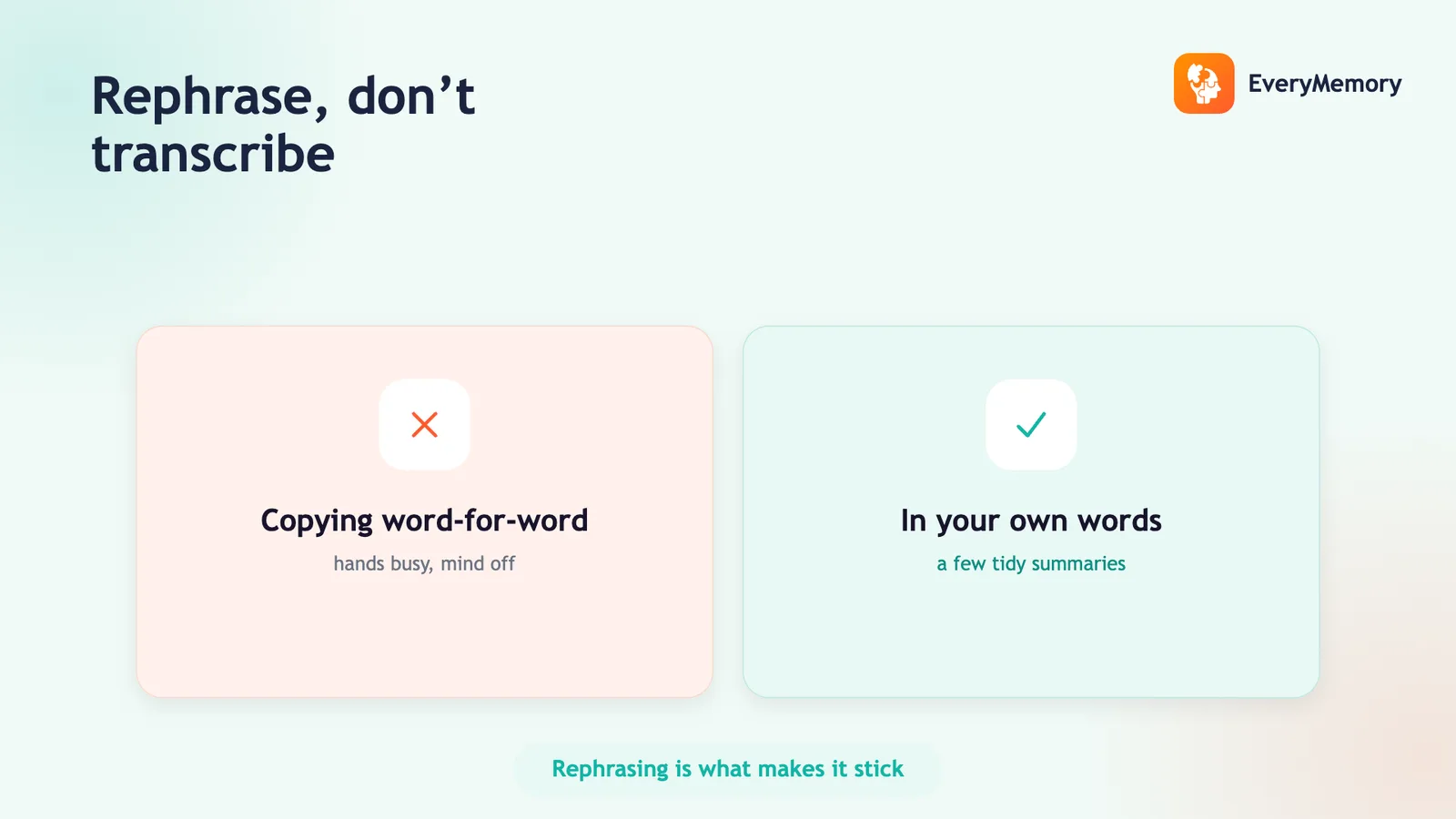
⚡ Quick answer
Notes help you remember when they make you process and rephrase information, not transcribe it. Write in your own words, keep them brief, and leave room to add recall questions later. The real value isn't the notes themselves - it's reviewing them by testing yourself, not rereading. Methods like the Cornell system build that in.
Key takeaways
- Notes help memory when they make you process and rephrase information in your own words, not transcribe it.
- Keep notes brief and organised so you can scan and self-test on them later.
- The Cornell method adds a cue column and summary, turning notes into a built-in self-test.
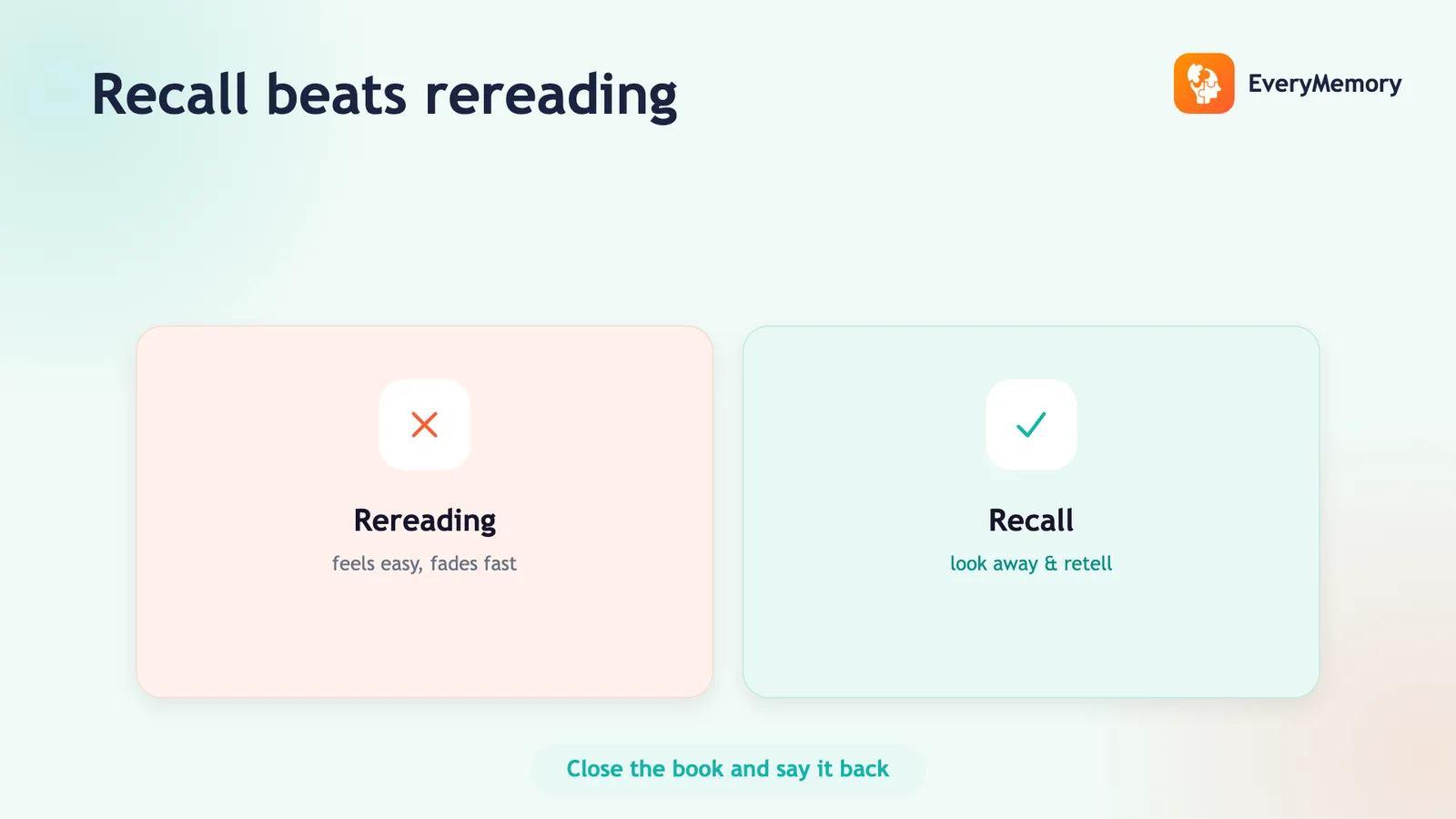
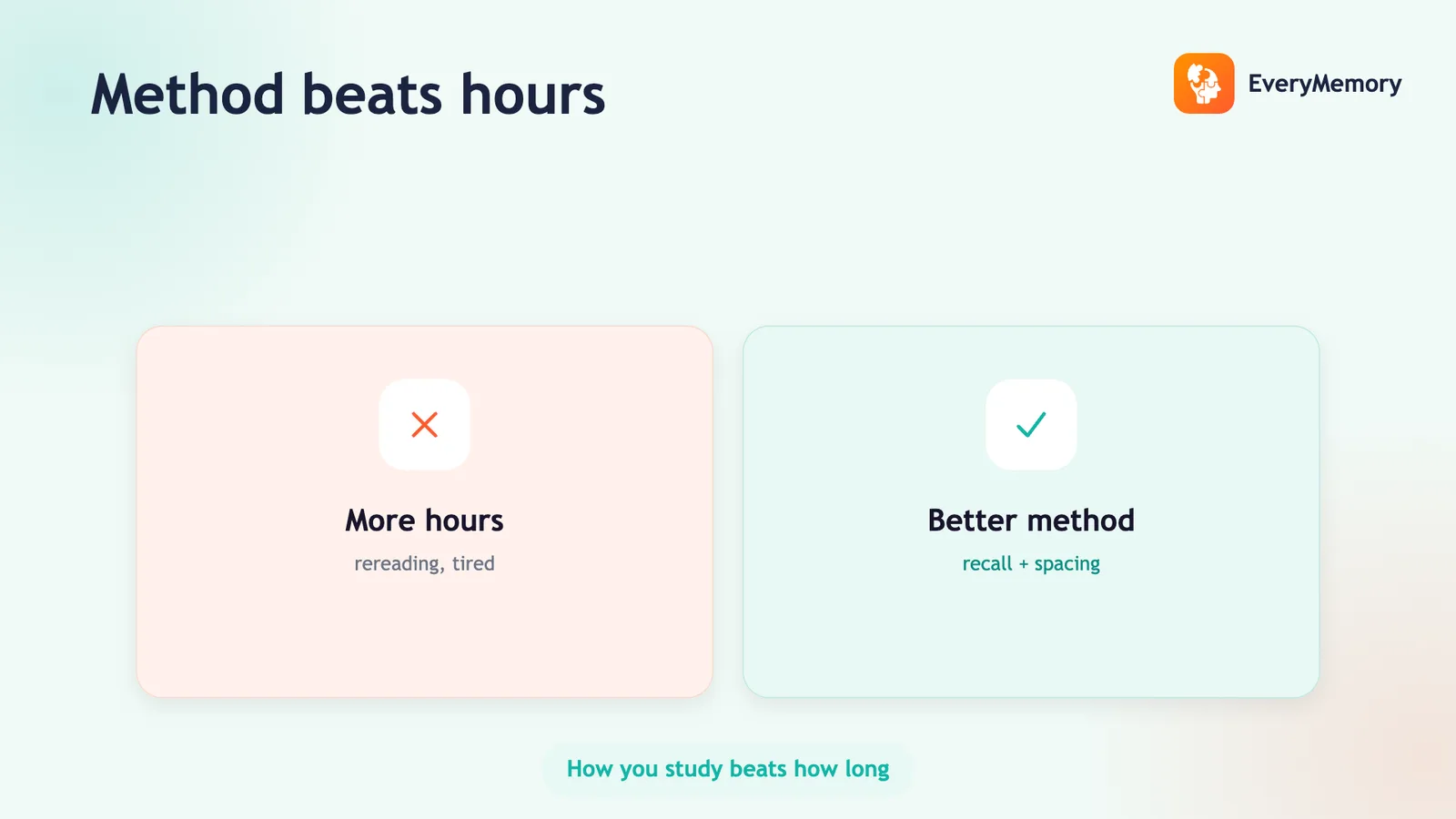
- The real value is reviewing by recall, not rereading - testing yourself on your notes is where the learning happens.
Most note-taking is closer to transcription than learning - writing down what's said as fast as possible, then never really using it. Notes only help your memory when the writing makes you think.
Here's how to take notes worth keeping, and the step most people skip that makes them work.
Notes are for processing, not transcribing
Writing something word-for-word lets it pass straight through without engaging your understanding. The value of note-taking comes from the effort of selecting what matters and putting it into your own words - that processing is itself a form of learning, the same 'elaboration' that powers effective study.
Rephrase in your own words
Don't copy; translate. Summarise each idea in your own phrasing, which forces you to understand it rather than just record it. Brief notes in your own words are worth far more than pages of verbatim copying you'll never reread.
Keep them brief and organised
Capture key points, not every word - headings, short phrases, and a clear structure you can navigate later. Notes you can actually scan and test yourself on beat exhaustive notes that are too dense to use.
Try the Cornell method
A simple, durable system: divide the page into a narrow left column, a wide right column, and a strip at the bottom. Take notes in the right column, then afterwards write recall questions or cues in the left column and a one-line summary at the bottom. The cues turn your notes into a ready-made self-test.
The point is the review
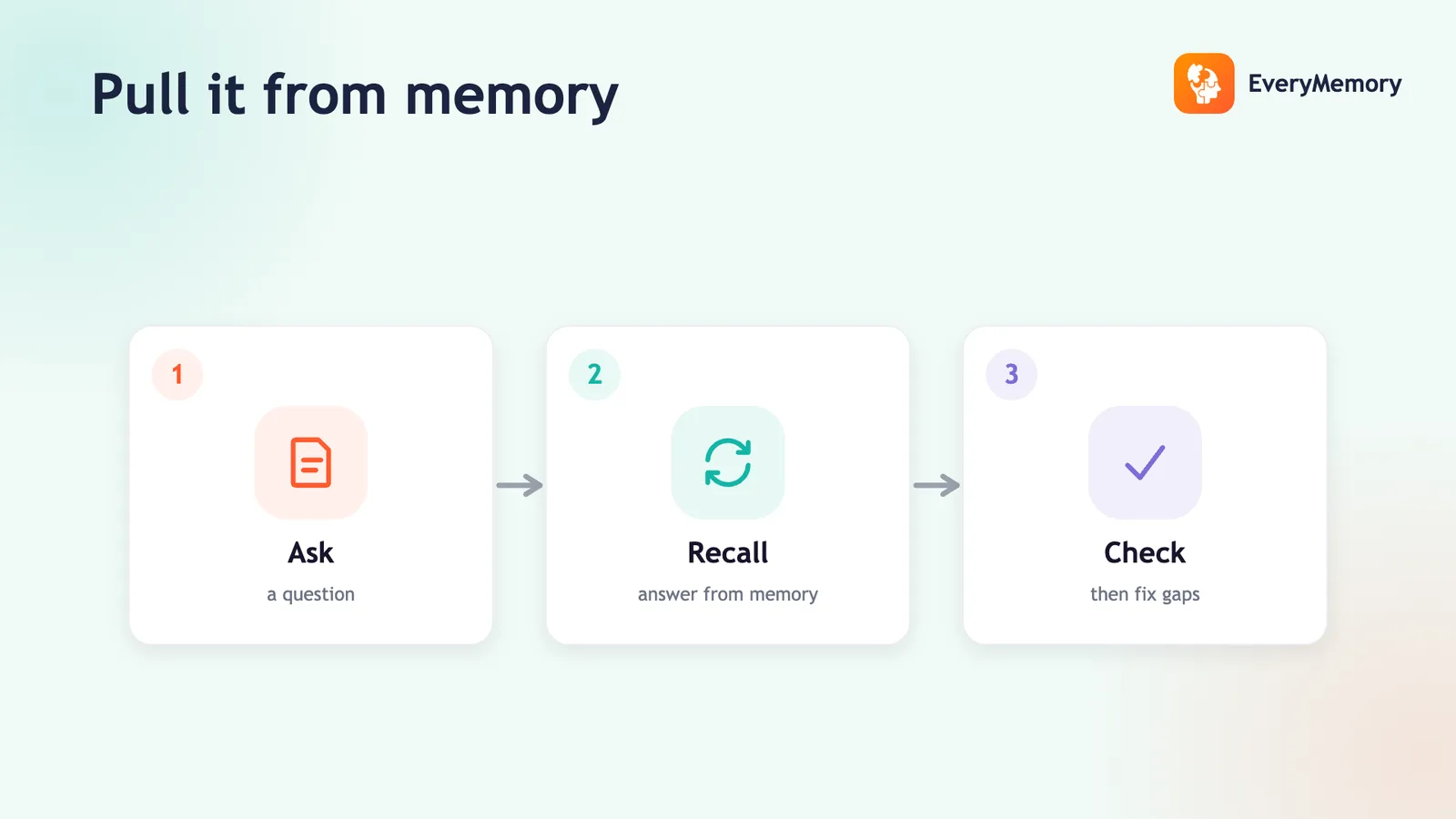
Notes don't lodge in memory by being written - they do it by being recalled. Cover your notes and answer the cue questions from memory, then check. Rereading notes feels productive and teaches little; testing yourself on them is where the learning happens, exactly as in active recall.