 EveryMemory
Hydration and Brain Function
Even mild dehydration is linked with poorer concentration and a slower, foggier feeling - staying hydrated is a small, real lever on day-to-day focus and memory.
Part of the guide: How to Keep Your Brain Healthy: A Complete Lifestyle Guide →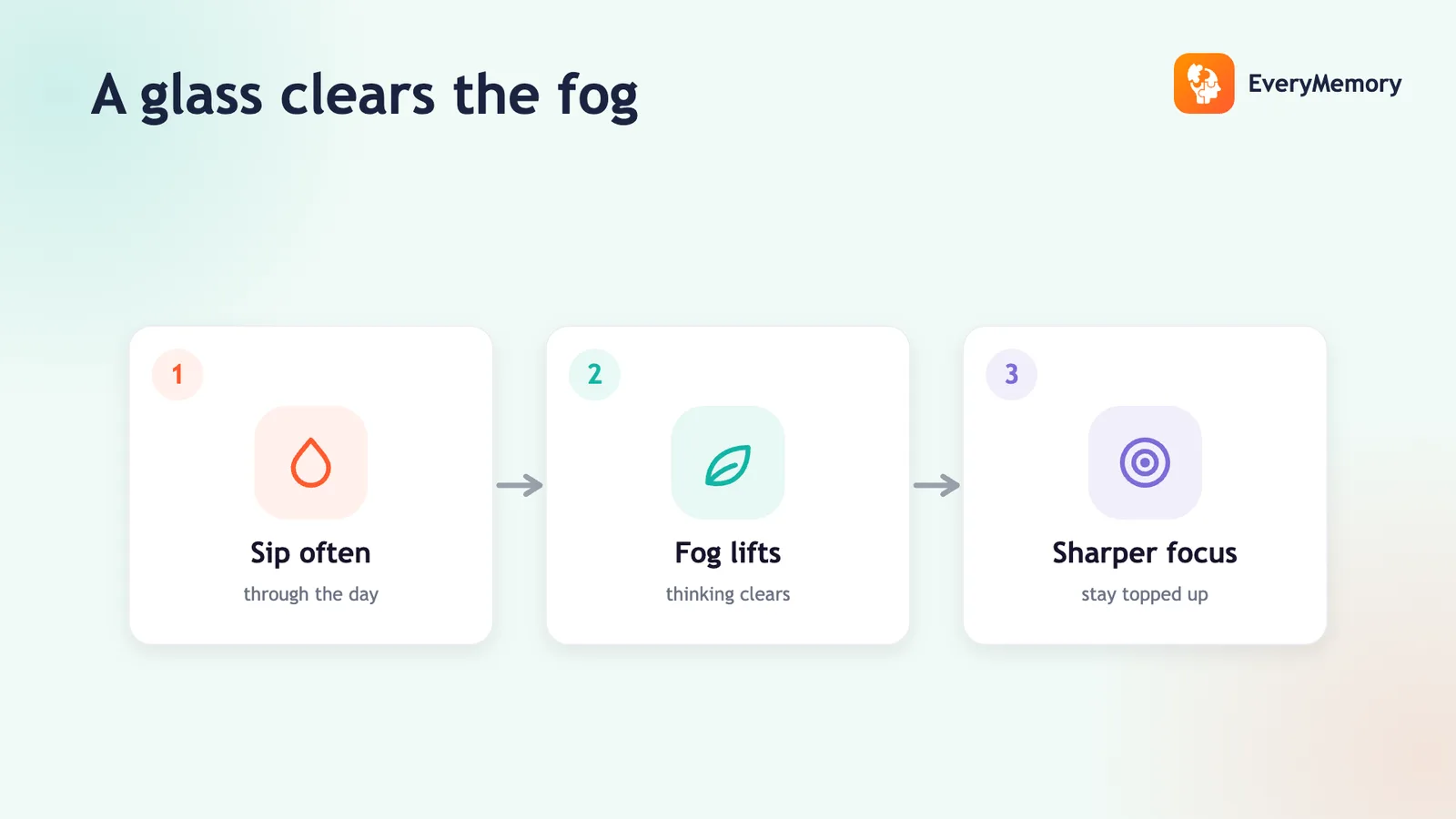
⚡ Quick answer
Hydration supports brain function because even mild dehydration is linked with poorer concentration, slower reaction time, and a foggier feeling. The effect is modest but real, and it shows up before you feel very thirsty. Most people do fine drinking to thirst across the day; the practical fix for fog is simply not letting yourself get noticeably dry.
Key takeaways
- Even mild dehydration is linked with poorer concentration and a foggier feeling.
- The effect is modest but real and can appear before you feel very thirsty.
- There's no magic number; drinking to thirst across the day works for most people.
- Hydration removes a small drag on focus - it doesn't add intelligence.
Hydration is the brain habit that's easy to overlook because it's so basic. You don't think of a glass of water as cognitive maintenance - but the brain is mostly water, and it's sensitive to even small shortfalls.
Let's be honest about the size of the effect: hydration won't transform your memory, and you can't drink your way to genius. But mild dehydration genuinely dents concentration and adds to that slow, foggy feeling - and fixing it is about as easy as a brain habit gets.
Why the brain is sensitive to water
The brain is roughly three-quarters water, and it depends on a steady fluid balance to work well. When that balance dips even mildly, studies link it with reduced concentration, slower reaction time, more errors on attention tasks, and a heavier, foggier subjective feeling.
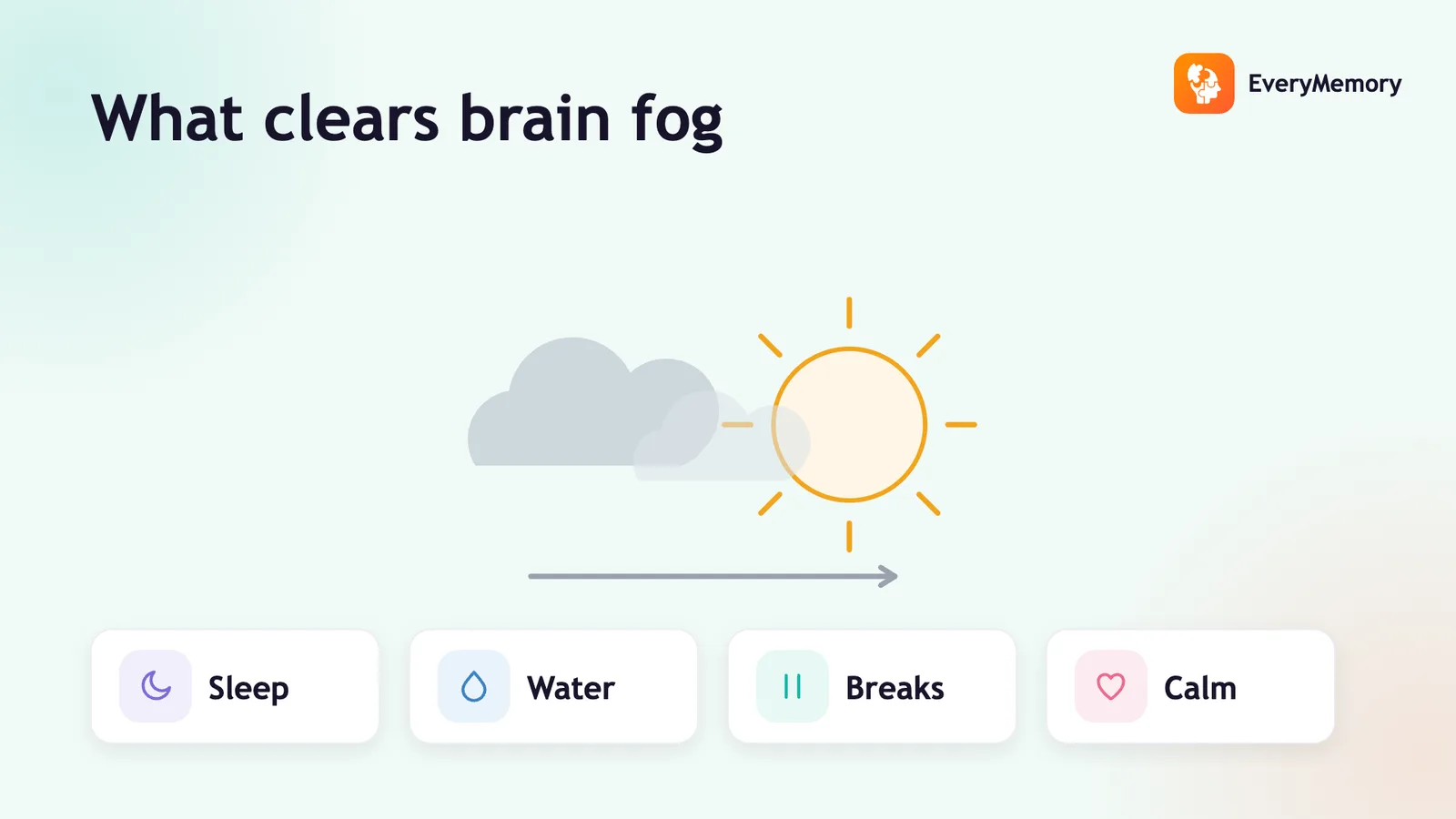
Notably, these effects can appear before strong thirst kicks in - which is why a fuzzy late-afternoon slump sometimes lifts surprisingly fast after a glass of water. This is a recurring factor in brain fog.
Keep the effect in proportion
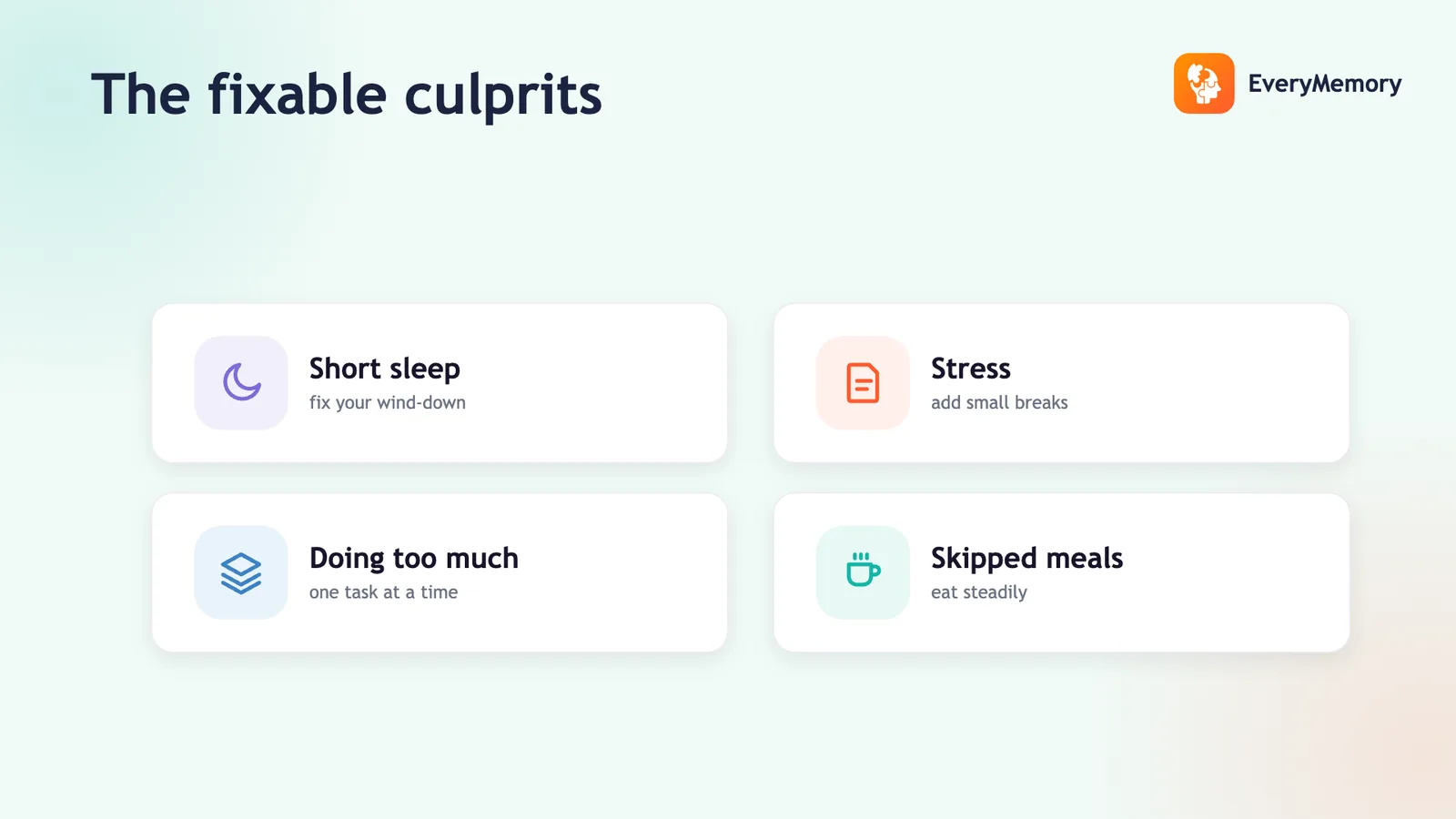
It's worth being honest about scale. Hydration is a small lever, not a large one. It won't fix poor sleep, chronic stress, or a fragmented attention habit - those matter far more, and are listed in what harms your memory. Think of hydration as removing a small, avoidable drag on focus, not as a path to peak performance.
The upside is how cheap and easy it is. Few brain habits cost less effort for a real, if modest, return.
Myth versus reality
| Common claim | What's actually true |
|---|---|
| You must drink exactly 8 glasses a day | There's no magic number; needs vary by body, climate, and activity. |
| Drinking more water boosts your IQ | It doesn't - hydration removes a drag, it doesn't add intelligence. |
| Only water counts toward hydration | Most drinks and water-rich foods count too. |
| You should drink before you feel thirsty, always | For most people, drinking to thirst across the day works fine. |
| Mild dehydration has no effect on focus | False - even mild shortfalls are linked with poorer concentration. |
A sensible approach to hydration
You don't need to track ounces. A few simple habits keep you out of the foggy zone:
- Drink across the day rather than in big infrequent gulps - a steady supply beats catching up.
- Use pale-yellow urine as a rough guide; dark usually means you're behind.
- Have water within reach where you work, so it's the default reach.
- Up your intake in heat, during exercise, and when you've had alcohol or lots of caffeine.
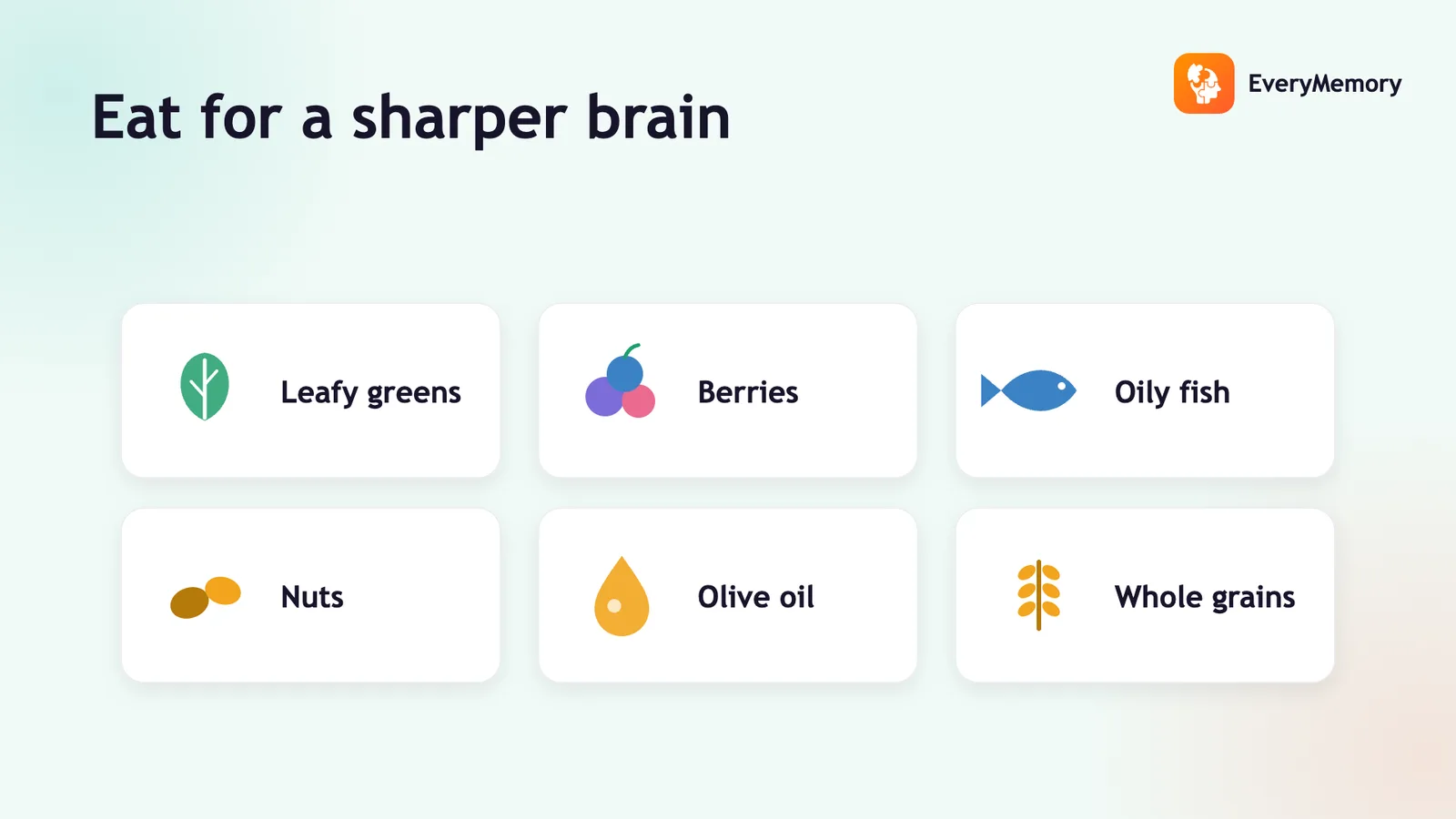
Pair it with the rest of the basics - sleep, movement, steady meals - and you've removed several small drags on focus at once. The food side is in best foods for memory.
✅ Try this today - Test the afternoon-fog fix
See whether mild dehydration is part of your slump:
- Next time you hit a foggy mid-afternoon, note how focused you feel on a scale of 1 to 10.
- Drink a large glass of water and wait 20 minutes.
- Re-rate your focus. If it lifts noticeably, hydration was part of the drag - and an easy one to keep ahead of.
⚠ When to talk to a professional
This is general, non-medical lifestyle information, not medical advice. Hydration supports day-to-day focus; if you have persistent brain fog, excessive thirst, or memory concerns, please see a doctor.