EveryMemory
Why Routine Matters for Focus
A predictable daily structure reduces the mental load of decision-making, freeing up attention for the things that actually matter. Here's how to build one that works.
Part of the guide: How to Keep Your Brain Healthy: A Complete Lifestyle Guide →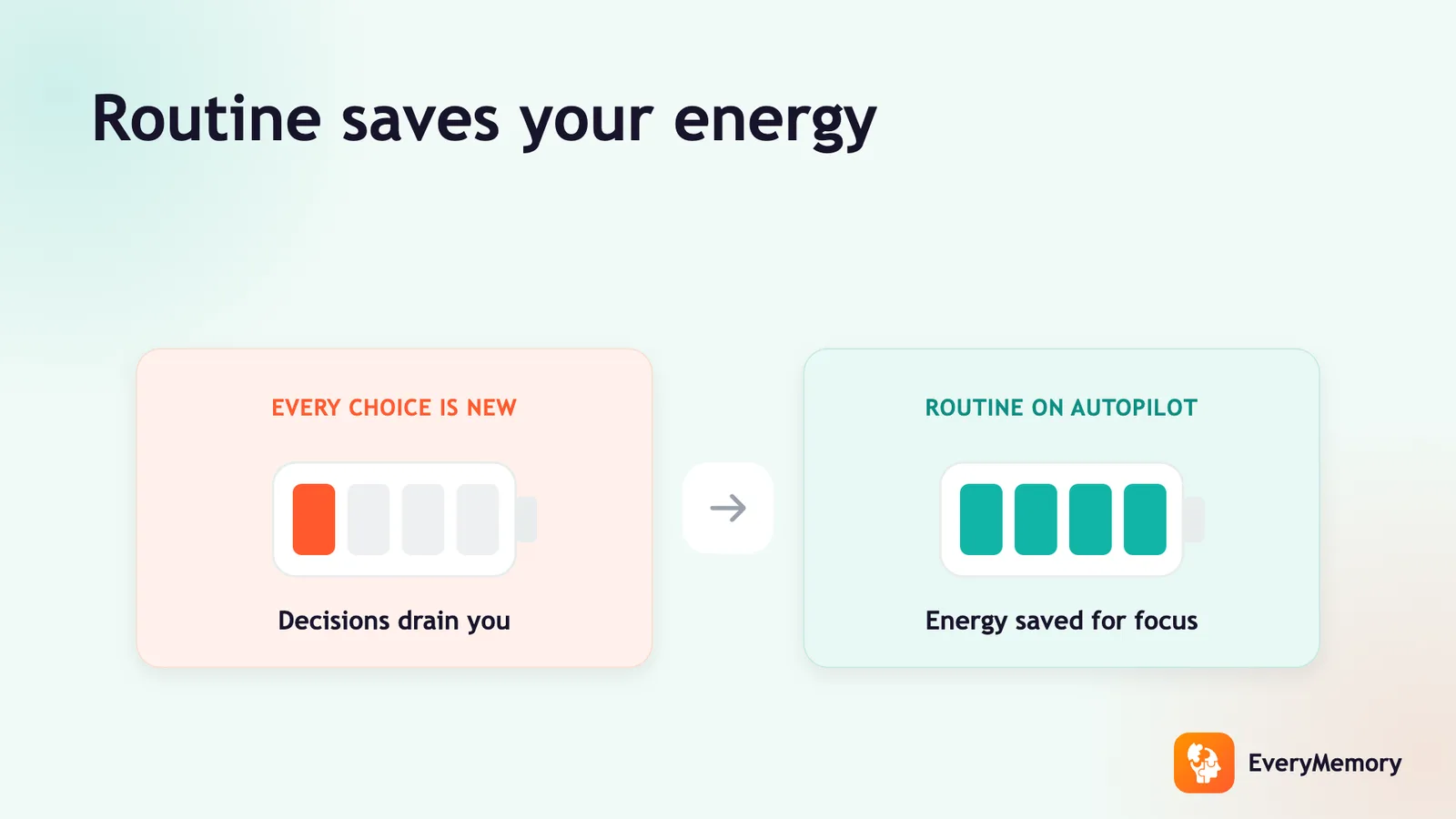
⚡ Quick answer
Routine supports focus by removing dozens of small daily decisions from your mental plate, preserving attention for what matters. It also creates reliable cues for memory-supporting habits like exercise, sleep, and brain practice - making them far easier to sustain over time.
Key takeaways
- Routine reduces daily decision-making, preserving attention for tasks that actually require it rather than spending it on navigation and choices.
- A predictable structure also lowers background stress from an unstructured day, and chronic mild stress is one of the quieter contributors to forgetfulness.
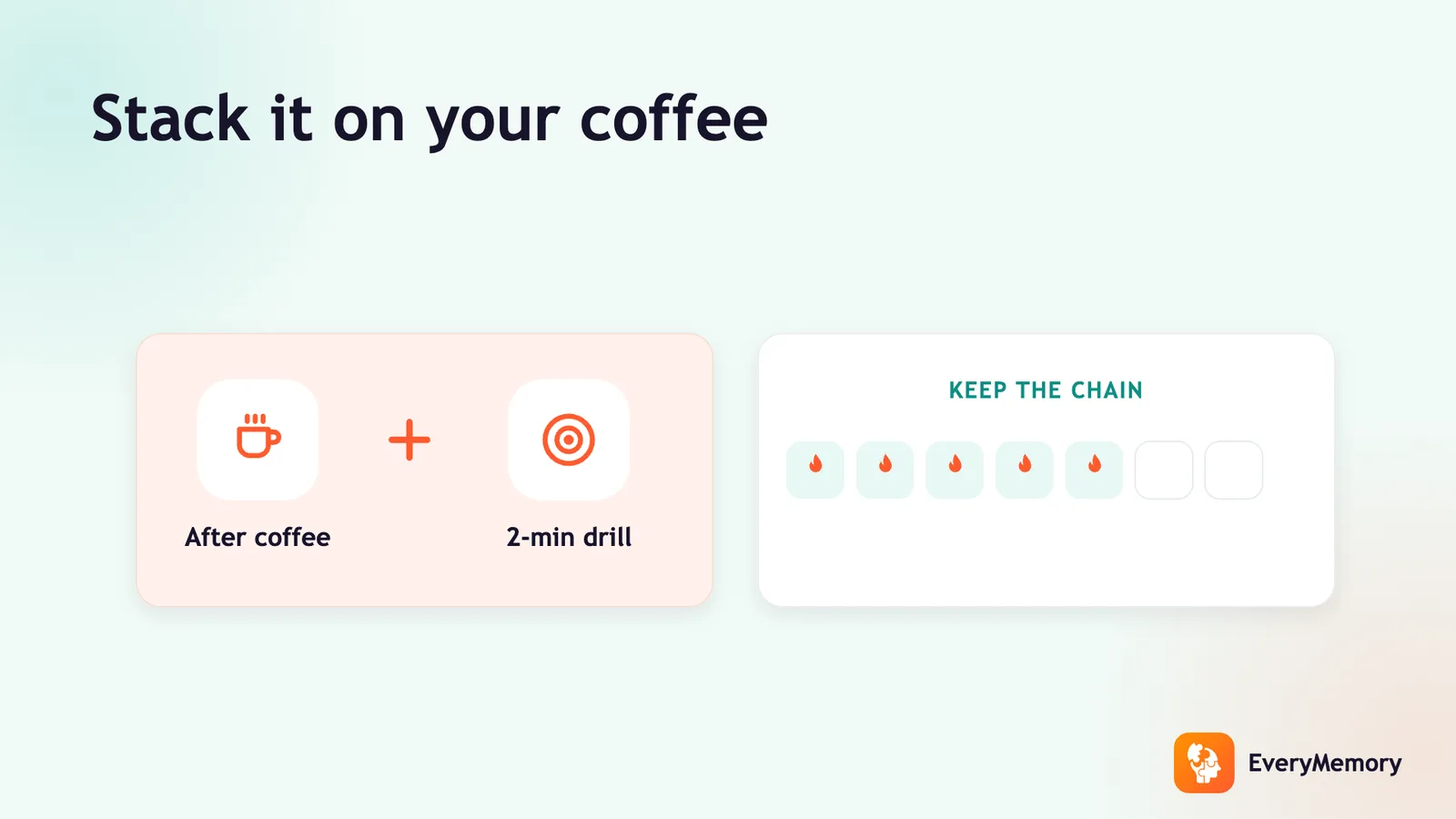
- Attaching a new memory habit to an existing daily anchor - coffee, a regular walk, a meal - makes it far more likely to stick than planning it at a floating time.
- A well-established routine acts as a safety net on difficult days, keeping habits alive even when motivation or energy is low.
Most people think about routine as a productivity tool - a way to get more done. But for focus and memory, routine serves a different and equally important purpose: it reduces the amount of mental energy your brain spends just navigating the day.
Every small decision uses a little attention. When you decide automatically - because the structure is already in place - you preserve that attention for the things that actually require it. That's the real case for routine, and it's one of the simplest and most underrated supports for cognitive sharpness as you get older.
What routine does to the brain
The brain is wired to automate repeated patterns. When you do something in the same way at the same time, it gradually becomes a habit - a sequence that runs with minimal conscious effort. That matters because conscious attention is a limited resource. Every time you make a deliberate choice, you spend a little of it.
A morning routine where you always make coffee, then take a short walk, then spend 10 minutes on brain exercises requires almost no decision-making once it's established. The same activities done at random times, worked around every day, drain far more energy than the activities themselves. The routine is doing cognitive work on your behalf.
This is especially relevant after retirement, when the external structure of a work schedule disappears. Many people find that without the scaffolding of fixed commitments, their days become less focused and their sense of mental sharpness declines - not because anything has changed neurologically, but because the structure that was holding their attention patterns together is gone.
Routine and memory: a closer look
Routine supports memory in two distinct ways. First, it creates reliable cues. If you always review a mental list of the day's plans over morning coffee, that coffee becomes a trigger for a recall habit. Cues are the foundation of how habits work, and they're also how memory anchors information to context.
Second, a predictable routine reduces the low-level background stress of an unstructured day. Mild but persistent uncertainty - "what am I supposed to be doing?" - is one of the quieter contributors to forgetfulness, because stress hormones interfere with how the brain encodes and retrieves information. Our article on stress and forgetfulness explains this mechanism clearly.
If you're working on building a deliberate memory practice, routine is the delivery mechanism. A habit is far easier to maintain when it's anchored to an existing time and context rather than floating free. Our guide on building a memory training habit covers exactly this.
The anatomy of a focus-supporting routine
Not all routine is equally useful for focus. The most effective daily structures share a few qualities:
- A fixed morning anchor. A consistent start - whether that's a walk, a simple exercise, a quiet cup of tea, or a short brain workout - sets the tone for the day and reduces the drift that leads to low-focus afternoons.
- Protected time for demanding tasks. If there are things that require sustained attention - correspondence, reading, problem-solving - a fixed window when you reliably do them, at the time of day when you're sharpest, is worth building in deliberately.
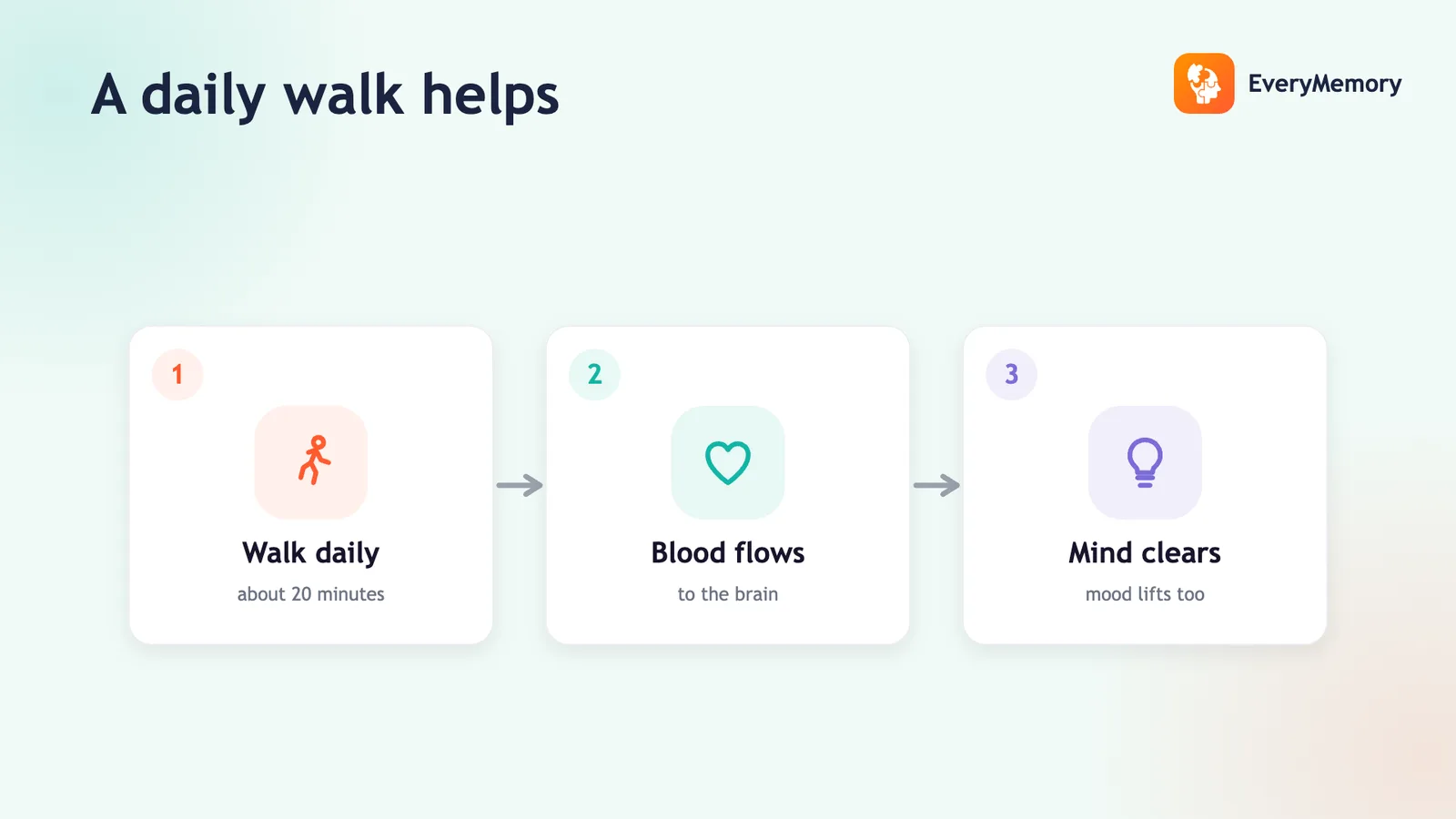
- Physical movement at a regular time. As covered in our article on walking and brain health, consistent movement supports the conditions for focus. Attaching it to a fixed slot in the day makes it happen reliably.
- A wind-down pattern before sleep. Sleep consolidates the day's memories, and the brain transitions into quality sleep more easily from a predictable pre-sleep routine.
Why most routines fail - and what to do differently
Most routine-building attempts fail not because the routine is wrong but because it's too ambitious. A plan that requires 90 minutes of new behaviour each morning will collapse the first week a disruption occurs. A modest routine that fits inside what already exists is far more durable.
The most practical approach is to build onto existing anchors rather than create a new structure from scratch:
- Identify two or three things you already do consistently every day - a meal, a coffee, a regular call.
- Attach one new behaviour to each of these. The existing habit becomes the trigger.
- Start with the smallest possible version of the new behaviour. Two minutes of recall practice after breakfast beats a 20-minute plan you skip.
- Track it for two weeks on a paper calendar. The visual chain of completed days becomes its own motivation.
Our simple daily memory routine article gives you a concrete starter template you can slot in.
Routine as a safety net for difficult days
One of the least-discussed benefits of a strong routine is what it does on bad days. When motivation is low, energy is short, or you're dealing with something stressful, a well-established routine provides a floor. You don't need to decide or motivate - you just follow the pattern, and even a partial run-through keeps the habit alive and your brain engaged.
This is particularly valuable for older adults whose days may be disrupted by health appointments, family responsibilities, or seasonal changes in mood and energy. The routine doesn't need to be perfect to be protective.
Tracking focus patterns over time
Once a routine is in place, it becomes much easier to notice what actually affects your focus and sharpness. If you skip your morning walk and notice concentration suffers, that's useful data. If a poor night's sleep consistently flattens the next day's recall, that's worth tracking. Our guide on tracking memory changes month by month gives you a simple, non-medical way to build that picture.
✅ Try this today - Build your focus anchor in 10 minutes
Set a timer for 10 minutes and do the following:
- Write down three things you already do at roughly the same time every day - even something as simple as making coffee or checking your phone.
- Choose one new focus-supporting habit you want to build: a short brain exercise, a 10-minute walk, a moment of quiet review of the day ahead.
- Decide which existing habit it will follow, and for the next seven days, do it immediately after that trigger - no exceptions, even if you only manage two minutes.